Huang Jinsha, Yang Jiaolong, Shen Yan, Jiang Haiyang, Han Chao, Zhang Guoxin, Liu Ling, Xu Xiaoyun, Li Jie, Lin Zhicheng, Xiong Nian, Zhang Zhentao, Xiong Jing, Wang Tao
Department of Neurology, Union Hospital, Tongji Medical College, Huazhong University of Science and Technology Wuhan, China.
Department of Neurology, Renmin Hospital, Hubei University of Medicine Shiyan, China.
Front Mol Neurosci. 2017 Jan 31;10:13. doi: 10.3389/fnmol.2017.00013. eCollection 2017.
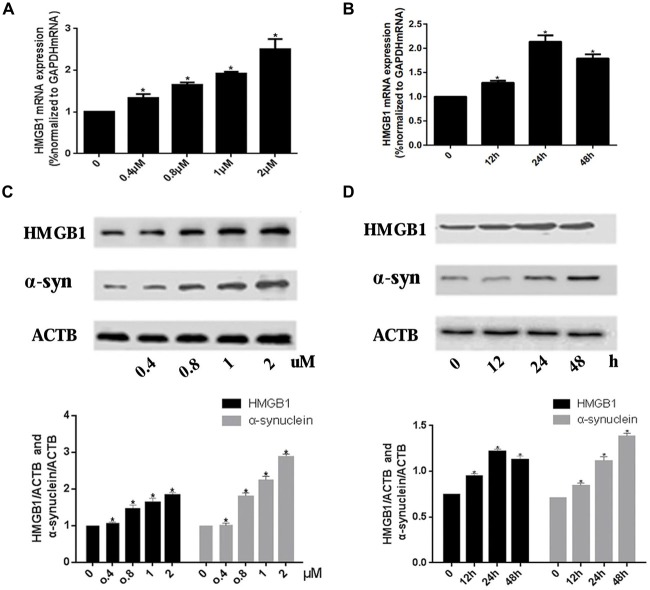
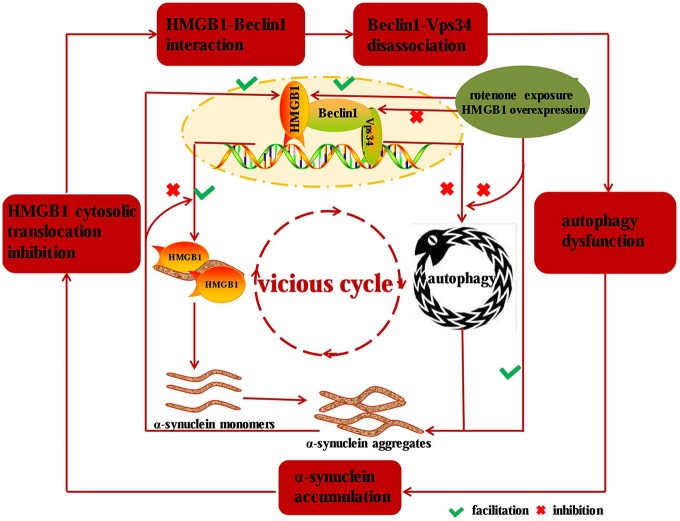
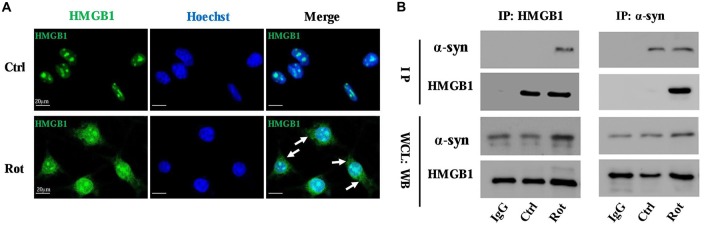
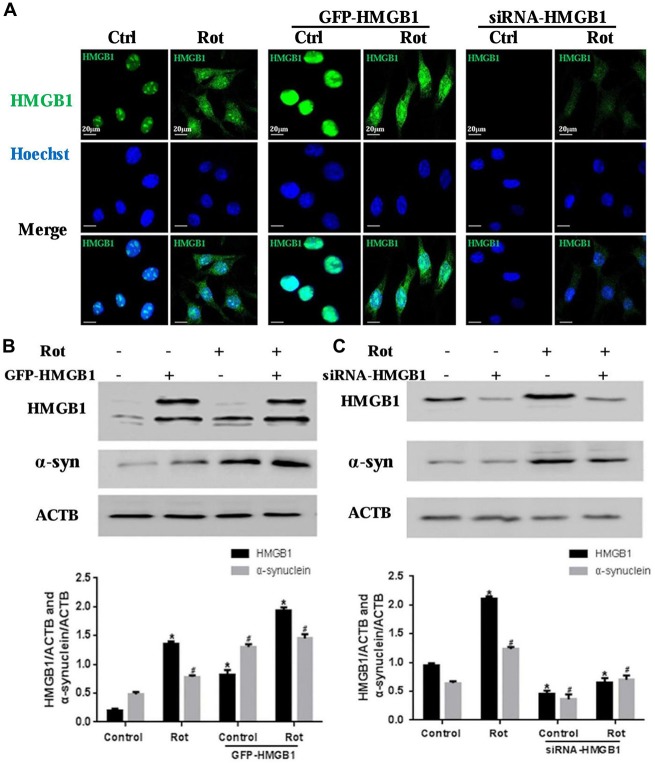
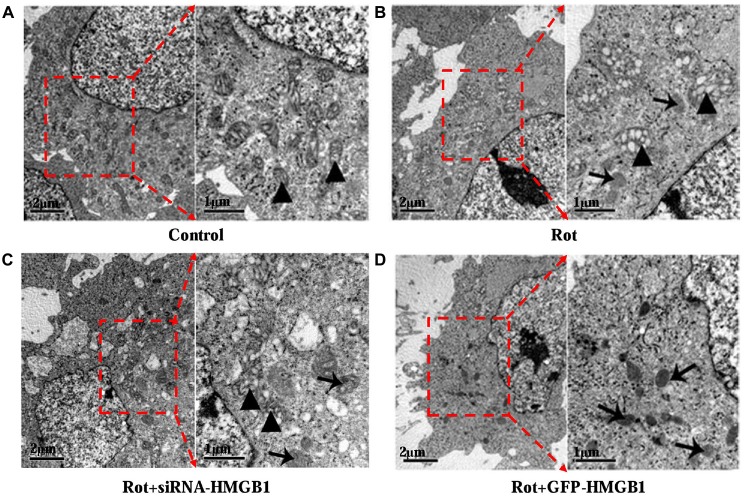
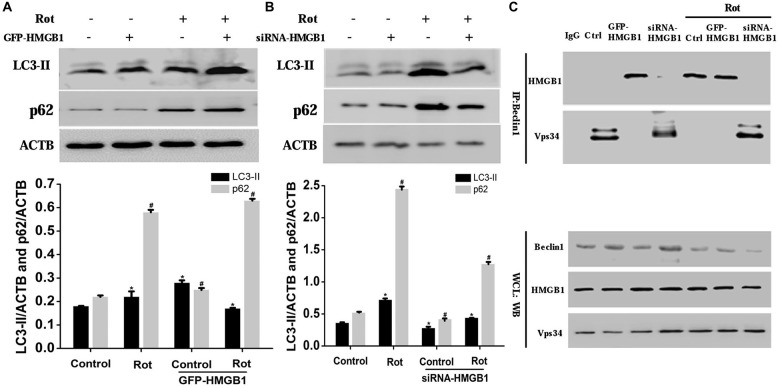
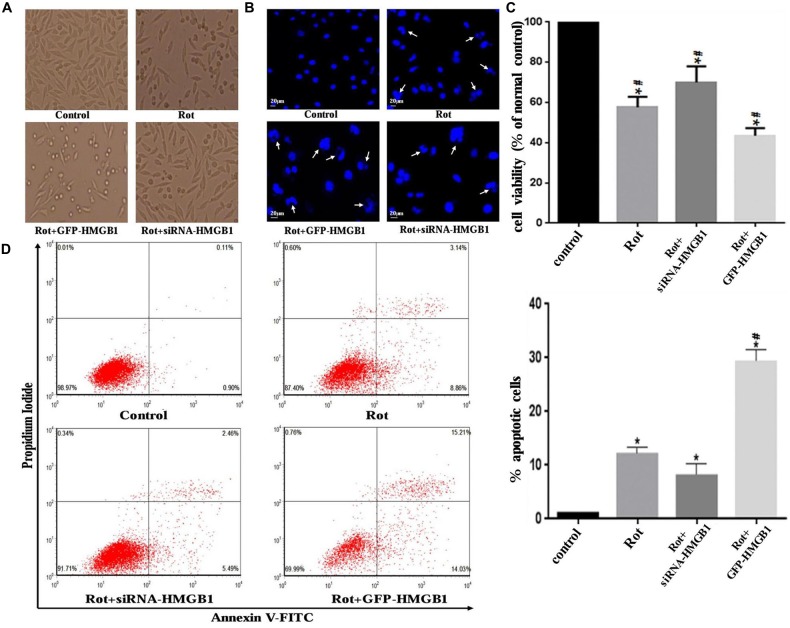
Parkinson's disease (PD), a progressive neurodegenerative disorder, is characterized by irreversible dopaminergic neuron loss and intra-neuronal α-synuclein aggregation. High mobility group box 1 (HMGB1) has been proven to be involved in autophagy dysfunction induced by α-synuclein accumulation, and the Beclin1-vacuolar protein sorting 34 (Vps34) complex is of great importance to the initiation of autophagy. Nevertheless, the concrete interaction mechanism between HMGB1, α-synuclein and autophagy remains elusive, especially in the context of PD. Here in this study, we investigated the interaction between HMGB1 and α-synuclein in rotenone-induced PD cell models and their roles in autophagy flux. Results revealed elevated expression and cytosolic translocation of endogenous HMGB1 upon rotenone exposure. Besides, HMGB1 was found to be able to co-localize and interact with α-synuclein. Moreover, it had also been proven that HMGB1 could aggravate α-synuclein aggregation induced autophagy dysfunction via perturbing Beclin1-Vps34 complex formation. Based on these findings, we propose that HMGB1 is involved in rotenone-induced dopaminergic cell death via interacting with α-synuclein, perturbing the autophagy process, aggravating protein aggregation and finally propelling dopaminergic neurons to move from morbidity to mortality.
帕金森病(PD)是一种进行性神经退行性疾病,其特征是多巴胺能神经元不可逆性丧失和神经元内α-突触核蛋白聚集。高迁移率族蛋白B1(HMGB1)已被证明参与由α-突触核蛋白积累诱导的自噬功能障碍,并且Beclin1-液泡蛋白分选34(Vps34)复合物对自噬的起始非常重要。然而,HMGB1、α-突触核蛋白与自噬之间具体的相互作用机制仍不清楚,尤其是在帕金森病的背景下。在本研究中,我们在鱼藤酮诱导的帕金森病细胞模型中研究了HMGB1与α-突触核蛋白之间的相互作用及其在自噬流中的作用。结果显示,鱼藤酮处理后内源性HMGB1的表达升高且发生胞质转位。此外,发现HMGB1能够与α-突触核蛋白共定位并相互作用。而且,还证明了HMGB1可通过干扰Beclin1-Vps34复合物的形成来加重α-突触核蛋白聚集诱导的自噬功能障碍。基于这些发现,我们提出HMGB1通过与α-突触核蛋白相互作用、干扰自噬过程、加重蛋白质聚集并最终促使多巴胺能神经元从发病走向死亡,从而参与鱼藤酮诱导的多巴胺能细胞死亡。