Mingasson Tom, Duval Tanguy, Stikov Nikola, Cohen-Adad Julien
NeuroPoly Lab, Institute of Biomedical Engineering, Polytechnique MontrealMontreal, QC, Canada; Signal Processing Department, École Centrale de NantesNantes, France.
NeuroPoly Lab, Institute of Biomedical Engineering, Polytechnique Montreal Montreal, QC, Canada.
Front Neuroinform. 2017 Jan 31;11:5. doi: 10.3389/fninf.2017.00005. eCollection 2017.
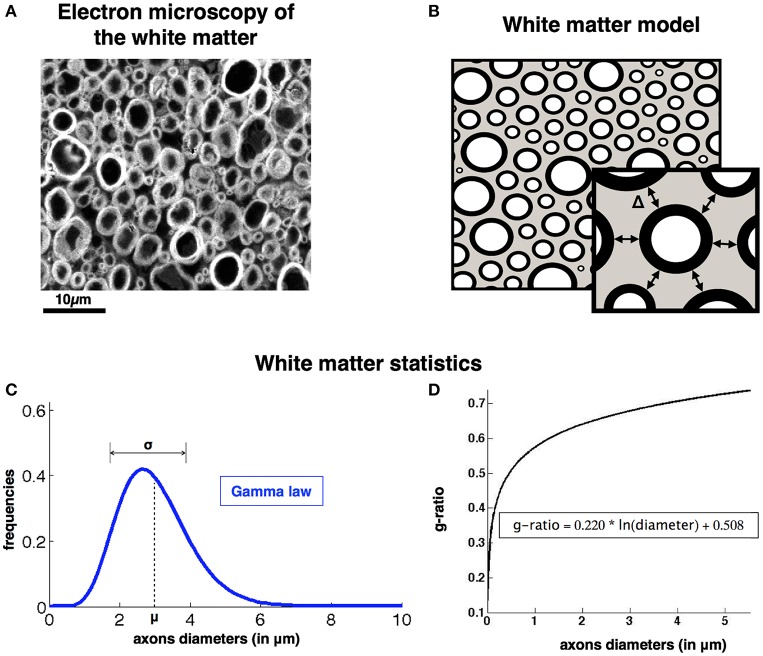
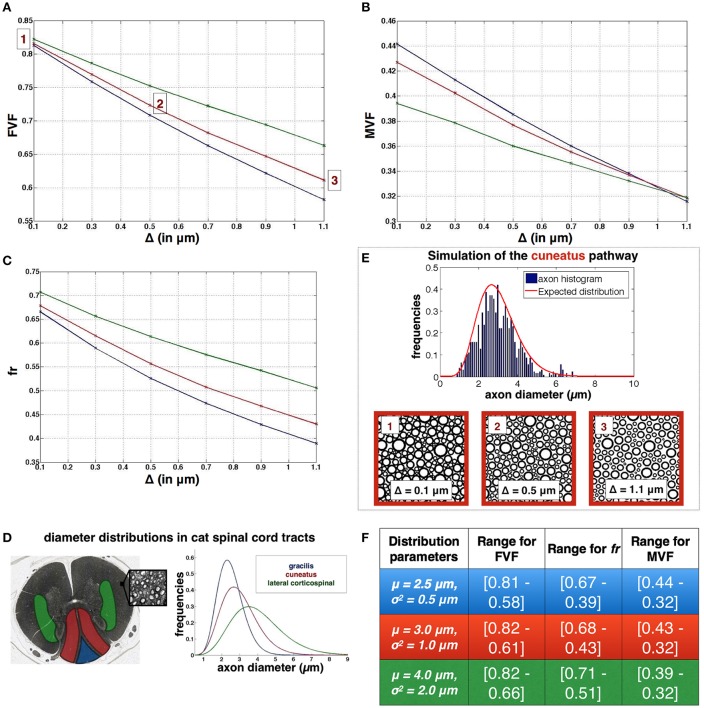
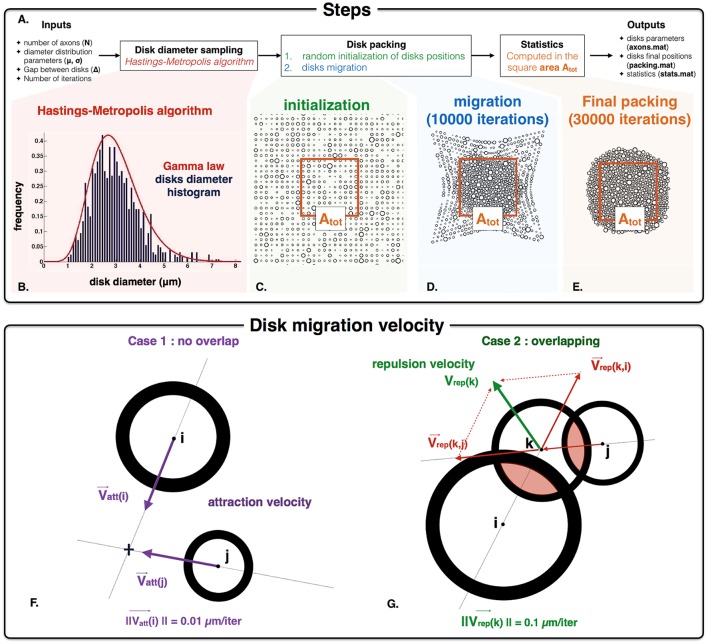
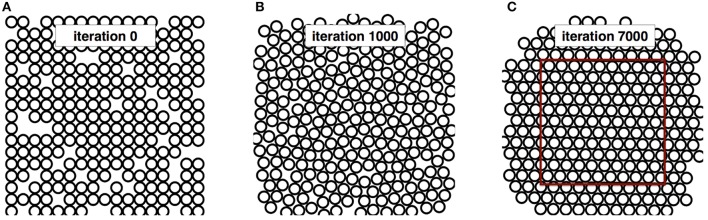
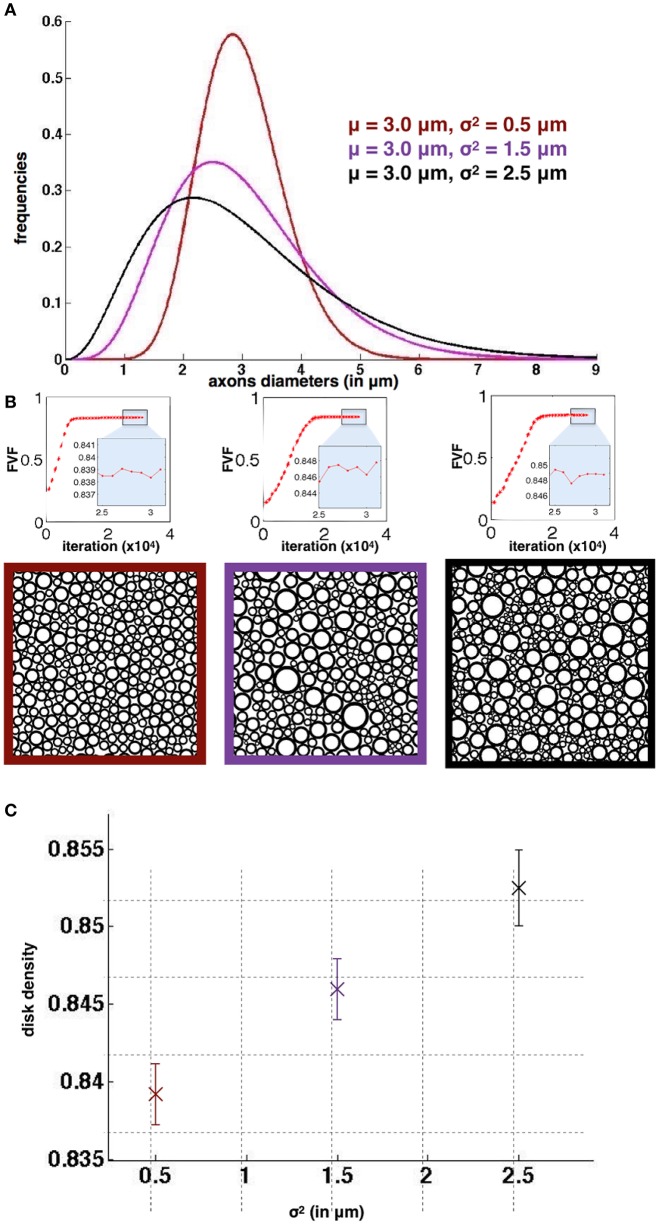
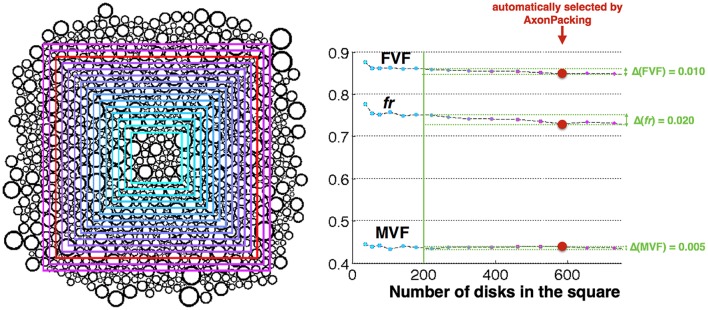
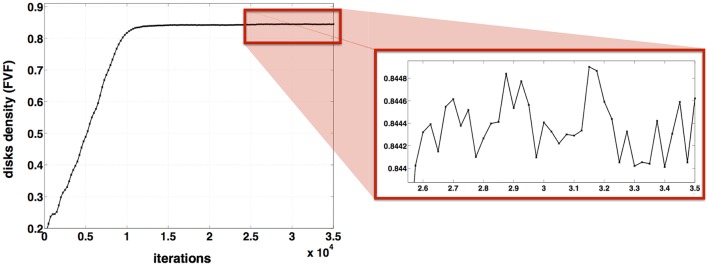
AxonPacking: Open-source software for simulating white matter microstructure.Validation on a theoretical disk packing problem.Reproducible and stable for various densities and diameter distributions.Can be used to study interplay between myelin/fiber density and restricted fraction. Quantitative Magnetic Resonance Imaging (MRI) can provide parameters that describe white matter microstructure, such as the fiber volume fraction (FVF), the myelin volume fraction (MVF) or the axon volume fraction (AVF) via the fraction of restricted water (). While already being used for clinical application, the complex interplay between these parameters requires thorough validation via simulations. These simulations required a realistic, controlled and adaptable model of the white matter axons with the surrounding myelin sheath. While there already exist useful algorithms to perform this task, none of them combine optimisation of axon packing, presence of myelin sheath and availability as free and open source software. Here, we introduce a novel disk packing algorithm that addresses these issues. The performance of the algorithm is tested in term of reproducibility over 50 runs, resulting density, and stability over iterations. This tool was then used to derive multiple values of FVF and to study the impact of this parameter on and MVF in light of the known microstructure based on histology sample. The standard deviation of the axon density over runs was lower than 10 and the expected hexagonal packing for monodisperse disks was obtained with a density close to the optimal density (obtained: 0.892, theoretical: 0.907). Using an FVF ranging within [0.58, 0.82] and a mean inter-axon gap ranging within [0.1, 1.1] μm, MVF ranged within [0.32, 0.44] and ranged within [0.39, 0.71], which is consistent with the histology. The proposed algorithm is implemented in the open-source software AxonPacking (https://github.com/neuropoly/axonpacking) and can be useful for validating diffusion models as well as for enabling researchers to study the interplay between microstructure parameters when evaluating qMRI methods.
用于模拟白质微观结构的开源软件。在理论圆盘堆积问题上的验证。对于各种密度和直径分布具有可重复性和稳定性。可用于研究髓鞘/纤维密度与受限分数之间的相互作用。定量磁共振成像(MRI)可以提供描述白质微观结构的参数,例如纤维体积分数(FVF)、髓鞘体积分数(MVF)或轴突体积分数(AVF),通过受限水的分数()。虽然已经用于临床应用,但这些参数之间复杂的相互作用需要通过模拟进行彻底验证。这些模拟需要一个逼真的、可控的且可适应的白质轴突及其周围髓鞘的模型。虽然已经存在执行此任务的有用算法,但它们都没有将轴突堆积的优化、髓鞘的存在以及作为免费开源软件的可用性结合起来。在此,我们引入一种新颖的圆盘堆积算法来解决这些问题。该算法的性能在50次运行中的可重复性、最终密度以及迭代过程中的稳定性方面进行了测试。然后使用该工具得出FVF的多个值,并根据基于组织学样本的已知微观结构研究此参数对和MVF的影响。运行中轴突密度的标准差低于10,并且对于单分散圆盘获得了接近最佳密度(获得值:0.892,理论值:0.907)的密度下的预期六边形堆积。使用范围在[0.58, 0.82]内的FVF和范围在[0.1, 1.1]μm内的平均轴突间间隙,MVF范围在[0.32, 0.44]内,范围在[0.39, 0.71]内,这与组织学一致。所提出的算法在开源软件AxonPacking(https://github.com/neuropoly/axonpacking)中实现,可用于验证扩散模型,以及使研究人员在评估定量MRI方法时研究微观结构参数之间的相互作用。