
在脂多糖反应性米色样锚定缺陷中通过异基因干细胞移植治疗婴儿炎症性肠病和自身免疫
Treatment of Infantile Inflammatory Bowel Disease and Autoimmunity by Allogeneic Stem Cell Transplantation in LPS-Responsive Beige-Like Anchor Deficiency.
作者信息
Bakhtiar Shahrzad, Gámez-Díaz Laura, Jarisch Andrea, Soerensen Jan, Grimbacher Bodo, Belohradsky Bernd, Keller Klaus-Michael, Rietschel Christoph, Klingebiel Thomas, Koletzko Sibylle, Albert Michael H, Bader Peter
机构信息
Division for Pediatric Stem-Cell Transplantation and Immunology, University Hospital Frankfurt , Frankfurt/Main , Germany.
Center for Chronic Immunodeficiency, University Hospital , Freiburg , Germany.
出版信息
Front Immunol. 2017 Jan 31;8:52. doi: 10.3389/fimmu.2017.00052. eCollection 2017.
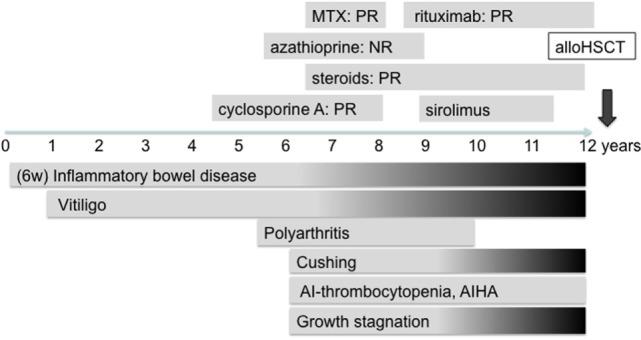
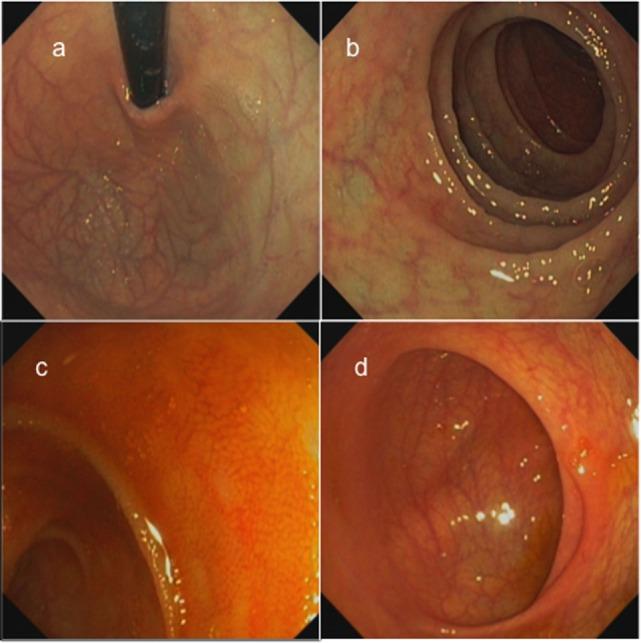
Inflammatory bowel disease (IBD) in young children can be a clinical manifestation of various primary immunodeficiency syndromes. Poor clinical outcome is associated with poor quality of life and high morbidity from the complications of prolonged immunosuppressive treatment and malabsorption. In 2012, mutations in the lipopolysaccharide-responsive beige-like anchor (LRBA) gene were identified as the cause of an autoimmunity and immunodeficiency syndrome. Since then, several LRBA-deficient patients have been reported with a broad spectrum of clinical manifestations without reliable predictive prognostic markers. Allogeneic hematopoietic stem cell transplantation (alloHSCT) has been performed in a few severely affected patients with complete or partial response. Herein, we present a detailed course of the disease and the transplantation procedure used in a LRBA-deficient patient suffering primarily from infantile IBD with immune enteropathy since the age of 6 weeks, and progressive autoimmunity with major complications following long-term immunosuppressive treatment. At 12 years of age, alloHSCT using bone marrow of a fully matched sibling donor-a healthy heterozygous LRBA mutant carrier-was performed after conditioning with a reduced-intensity regimen. During the 6-year follow-up, we observed a complete remission of enteropathy, autoimmunity, and skin vitiligo, with complete donor chimerism. The genetic diagnosis of LRBA deficiency was made post-alloHSCT by detection of two compound heterozygous mutations, using targeted sequencing of DNA samples extracted from peripheral blood before the transplantation.
幼儿炎症性肠病(IBD)可能是多种原发性免疫缺陷综合征的临床表现。临床预后不佳与生活质量差以及长期免疫抑制治疗和吸收不良并发症导致的高发病率相关。2012年,脂多糖反应性米色样锚定蛋白(LRBA)基因突变被确定为一种自身免疫和免疫缺陷综合征的病因。从那时起,已有数例LRBA缺陷患者被报道,其临床表现广泛,缺乏可靠的预测性预后标志物。少数病情严重的患者接受了异基因造血干细胞移植(alloHSCT),并取得了完全或部分缓解。在此,我们介绍了一名LRBA缺陷患者的详细病程及移植过程,该患者自6周龄起主要患有婴儿IBD伴免疫性肠病,长期免疫抑制治疗后出现进行性自身免疫并伴有主要并发症。12岁时,在采用低强度预处理方案后,使用完全匹配的同胞供体(健康的杂合LRBA突变携带者)的骨髓进行了alloHSCT。在6年的随访期间,我们观察到肠病、自身免疫和皮肤白癜风完全缓解,且供体嵌合体完全形成。通过对移植前从外周血提取的DNA样本进行靶向测序,检测到两个复合杂合突变,从而在alloHSCT后做出了LRBA缺陷的基因诊断。


 Zotero 插件