Lecourieux Fatma, Kappel Christian, Pieri Philippe, Charon Justine, Pillet Jérémy, Hilbert Ghislaine, Renaud Christel, Gomès Eric, Delrot Serge, Lecourieux David
Centre National de la Recherche Scientifique, Institut des Sciences de la Vigne et du Vin, UMR Ecophysiologie et Génomique Fonctionnelle de la Vigne Villenave d'Ornon, France.
Institut National de la Recherche Agronomique (INRA), Institut des Sciences de la Vigne et du Vin, UMR Ecophysiologie et Génomique Fonctionnelle de la Vigne Villenave d'Ornon, France.
Front Plant Sci. 2017 Jan 31;8:53. doi: 10.3389/fpls.2017.00053. eCollection 2017.
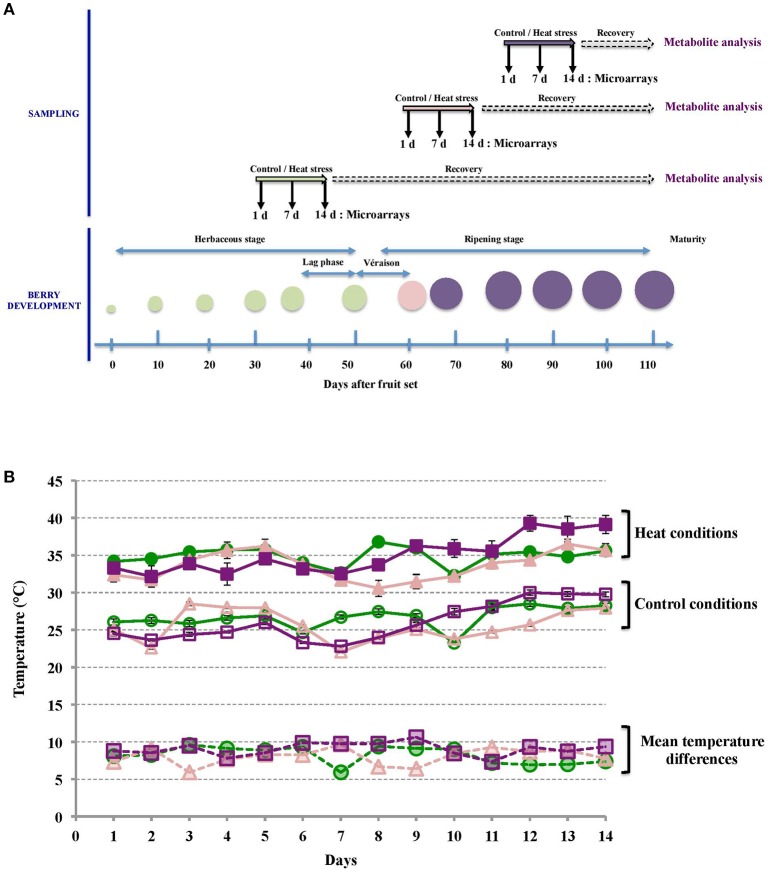
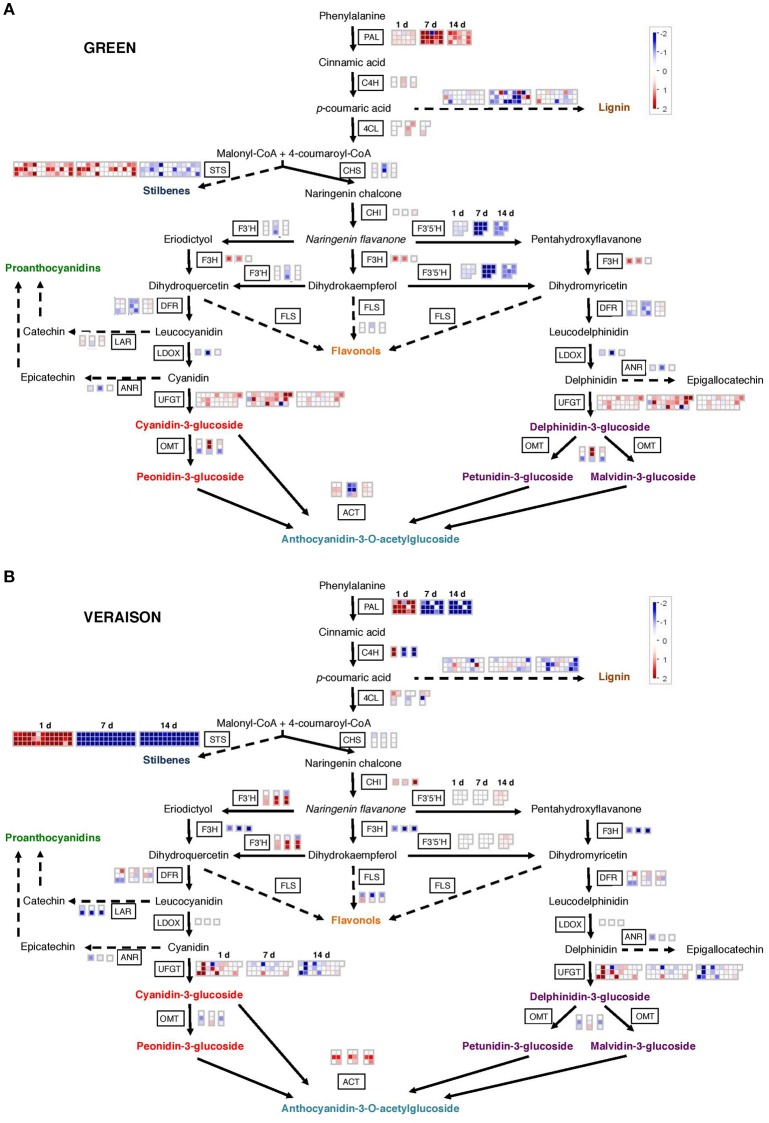
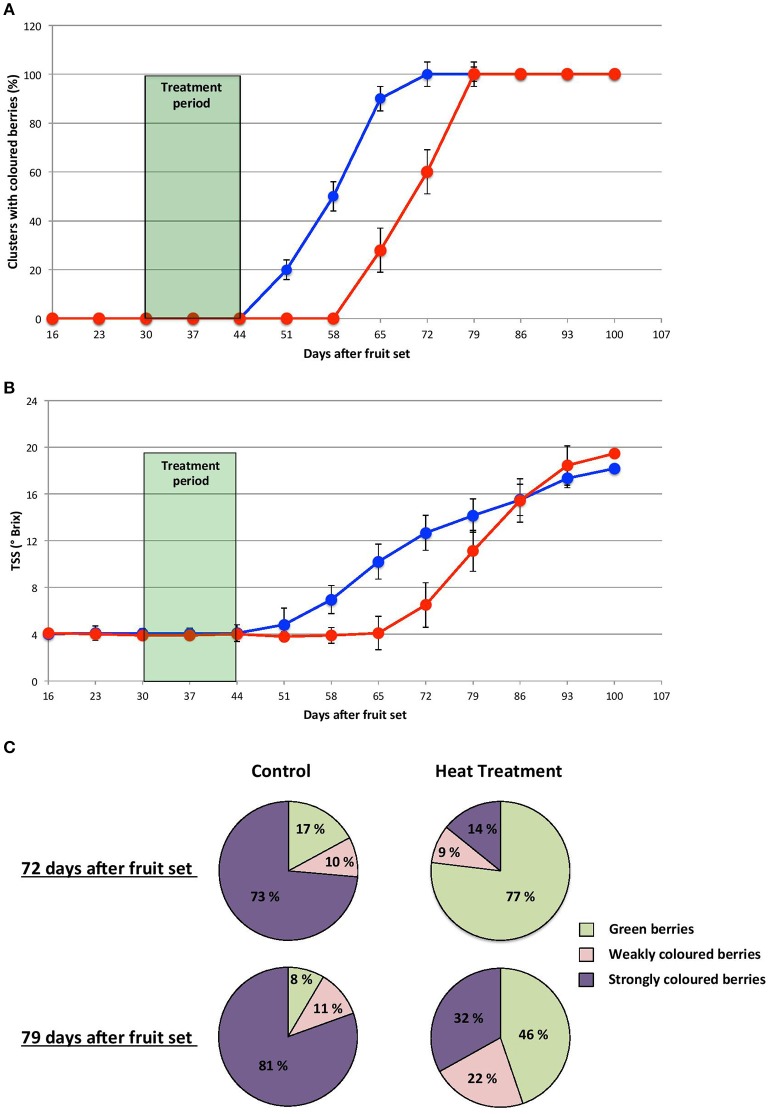
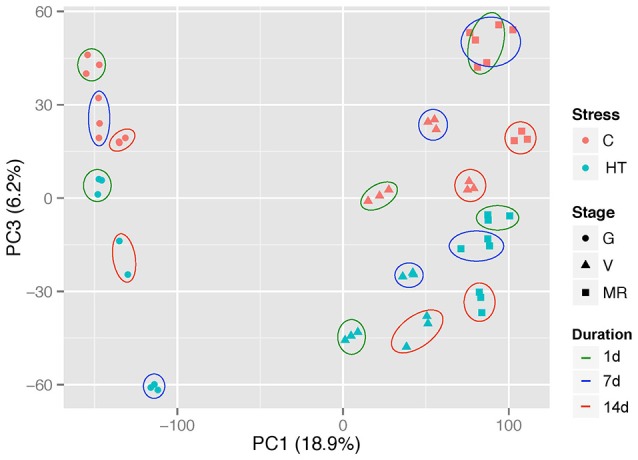
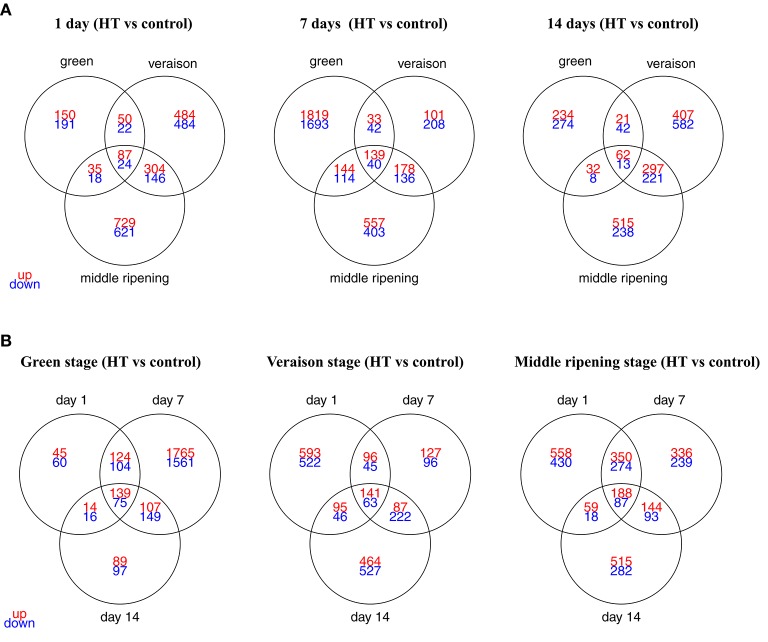
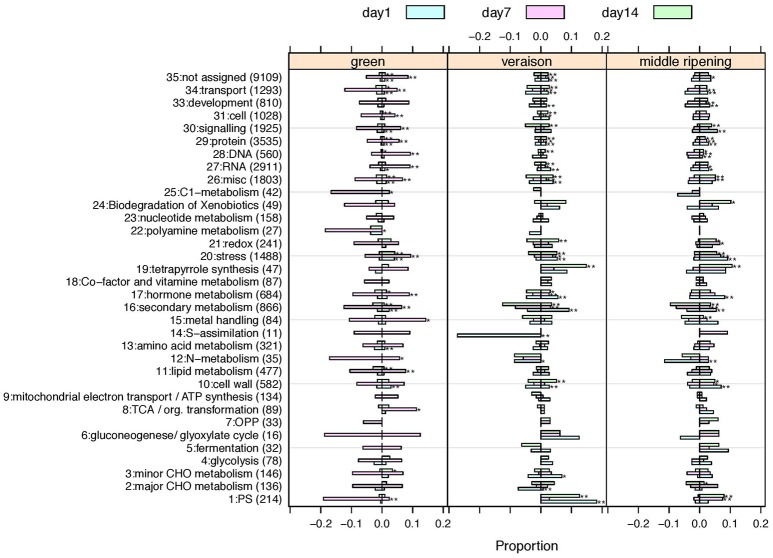
Reproductive development of grapevine and berry composition are both strongly influenced by temperature. To date, the molecular mechanisms involved in grapevine berries response to high temperatures are poorly understood. Unlike recent data that addressed the effects on berry development of elevated temperatures applied at the whole plant level, the present work particularly focuses on the fruit responses triggered by direct exposure to heat treatment (HT). In the context of climate change, this work focusing on temperature effect at the microclimate level is of particular interest as it can help to better understand the consequences of leaf removal (a common viticultural practice) on berry development. HT (+ 8°C) was locally applied to clusters from Cabernet Sauvignon fruiting cuttings at three different developmental stages (middle green, veraison and middle ripening). Samples were collected 1, 7, and 14 days after treatment and used for metabolic and transcriptomic analyses. The results showed dramatic and specific biochemical and transcriptomic changes in heat exposed berries, depending on the developmental stage and the stress duration. When applied at the herbaceous stage, HT delayed the onset of veraison. Heating also strongly altered the berry concentration of amino acids and organic acids (e.g., phenylalanine, γ-aminobutyric acid and malate) and decreased the anthocyanin content at maturity. These physiological alterations could be partly explained by the deep remodeling of transcriptome in heated berries. More than 7000 genes were deregulated in at least one of the nine experimental conditions. The most affected processes belong to the categories "stress responses," "protein metabolism" and "secondary metabolism," highlighting the intrinsic capacity of grape berries to perceive HT and to build adaptive responses. Additionally, important changes in processes related to "transport," "hormone" and "cell wall" might contribute to the postponing of veraison. Finally, opposite effects depending on heating duration were observed for genes encoding enzymes of the general phenylpropanoid pathway, suggesting that the HT-induced decrease in anthocyanin content may result from a combination of transcript abundance and product degradation.
葡萄的生殖发育和浆果成分都受到温度的强烈影响。迄今为止,人们对葡萄浆果对高温反应所涉及的分子机制了解甚少。与最近关于在整株水平施加高温对浆果发育影响的数据不同,本研究特别关注直接热处理(HT)引发的果实反应。在气候变化的背景下,这项关注微气候水平温度效应的研究尤为重要,因为它有助于更好地理解疏叶(一种常见的葡萄栽培操作)对浆果发育的影响。在赤霞珠结果插条的三个不同发育阶段(中绿期、转色期和中熟期),对果穗局部施加HT(+8°C)。在处理后1天、7天和14天采集样本,用于代谢和转录组分析。结果表明,受热浆果中发生了显著且特定的生化和转录组变化,这取决于发育阶段和胁迫持续时间。在草本阶段施加HT时,会延迟转色期的开始。加热还强烈改变了浆果中氨基酸和有机酸(如苯丙氨酸、γ-氨基丁酸和苹果酸)的浓度,并降低了成熟时的花青素含量。这些生理变化部分可以通过受热浆果中转录组的深度重塑来解释。在九个实验条件中的至少一个条件下,超过7000个基因的表达发生了失调。受影响最大的过程属于“应激反应”、“蛋白质代谢”和“次生代谢”类别,突出了葡萄浆果感知HT并建立适应性反应的内在能力。此外,与“运输”、“激素”和“细胞壁”相关过程的重要变化可能导致转色期的推迟。最后,对于一般苯丙烷类途径的酶编码基因,观察到了取决于加热持续时间的相反效应,这表明HT诱导的花青素含量降低可能是转录本丰度和产物降解共同作用的结果。