Estrada Victor H Nieto, Franco Daniel L Molano, Moreno Albert A Valencia, Gambasica Jose A Rojas, Nunez Cristian C Cortes
Clinica Universitaria Colombia, Bogota, Colombia.
Cardiol Res. 2016 Dec;7(6):185-195. doi: 10.14740/cr500e. Epub 2016 Dec 31.
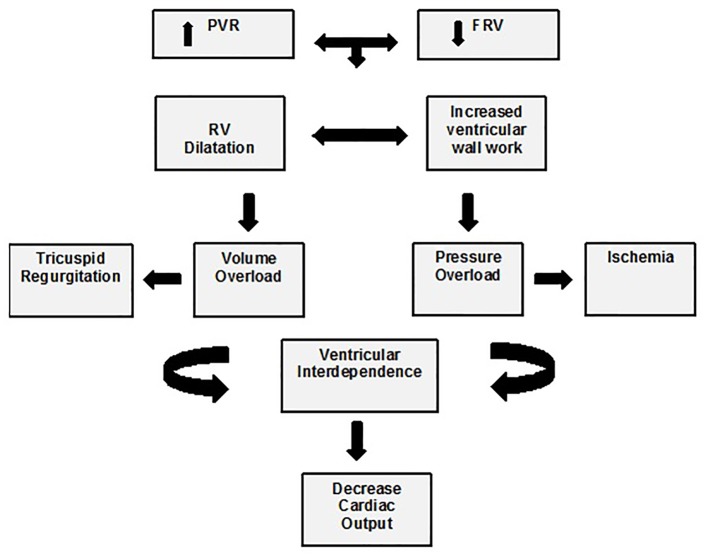
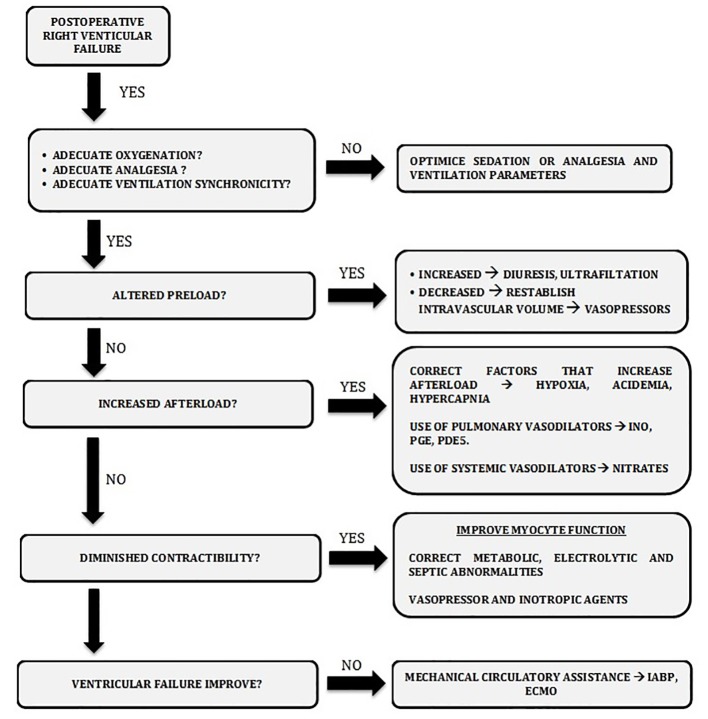
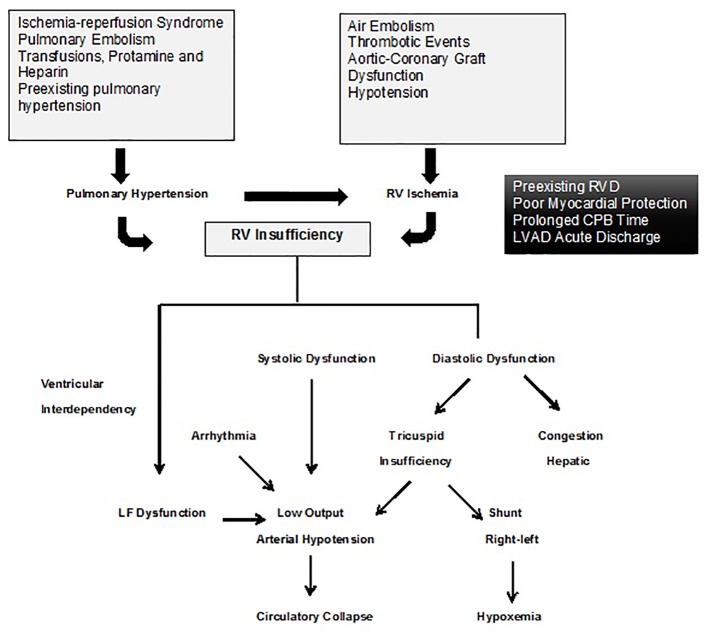
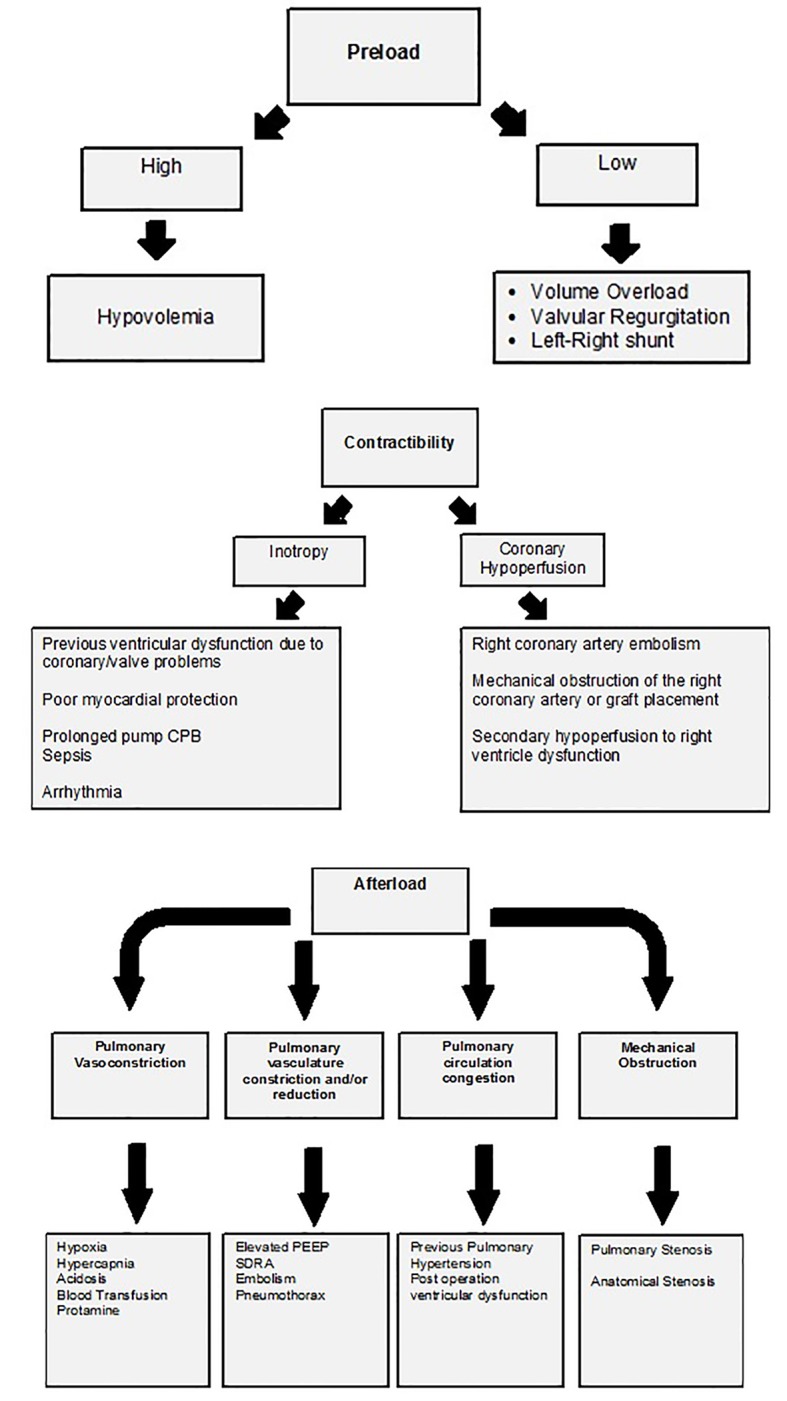
Two cases of patients that developed right ventricular failure (RVF) after cardiac valve surgery are presented with a narrative revision of the literature. RVF involves a great challenge due to the severity of this condition; it has a low incidence among non-congenital cardiac surgery patients, is more likely associated with cardiovascular and pulmonary complications related to cardiopulmonary bypass (CPB), and is a cause of acute graft failure and of a higher early mortality in cardiac transplant. The morphologic and hemodynamic characteristics of the right ventricle and some specific factors that breed pulmonary hypertension after cardiac surgery are in favor of the onset of RVF. Due to the possibility of complications after cardiac valve repair or replacement, measures as appropriate hemodynamic monitoring, to manage oxygenation, ventilation, sedation, acid base equilibrium and perfusion goals are a requirement, as well as a normal circulating volume, and the prevention of a disproportionate rise in the afterload, to preserve the free wall of the right ventricle (RV) and the septum's contribution to the right ventricular global function and geometry. If there is no response to these basic measures, the use of advanced therapy with inotropics, intravenous or inhaled pulmonary vasodilation agents is recommended; the use of mechanical ventricular assistance stands as a last resource.
本文报告了两例心脏瓣膜手术后发生右心室衰竭(RVF)的患者,并对相关文献进行了叙述性综述。由于病情严重,RVF是一个巨大的挑战;在非先天性心脏手术患者中发病率较低,更可能与体外循环(CPB)相关的心血管和肺部并发症有关,并且是心脏移植中急性移植物衰竭和早期死亡率较高的原因。右心室的形态和血流动力学特征以及心脏手术后引发肺动脉高压的一些特定因素有利于RVF的发生。由于心脏瓣膜修复或置换后可能出现并发症,因此需要采取适当的血流动力学监测措施,以管理氧合、通气、镇静、酸碱平衡和灌注目标,以及维持正常的循环容量,并防止后负荷过度升高,以保护右心室(RV)的游离壁以及室间隔对右心室整体功能和几何形状的贡献。如果对这些基本措施无反应,建议使用强心剂、静脉或吸入性肺血管扩张剂进行高级治疗;使用机械心室辅助作为最后的手段。