Beug Shawn T, Beauregard Caroline E, Healy Cristin, Sanda Tarun, St-Jean Martine, Chabot Janelle, Walker Danielle E, Mohan Aditya, Earl Nathalie, Lun Xueqing, Senger Donna L, Robbins Stephen M, Staeheli Peter, Forsyth Peter A, Alain Tommy, LaCasse Eric C, Korneluk Robert G
Apoptosis Research Centre, Children's Hospital of Eastern Ontario Research Institute, 401 Smyth Road, Ottawa, Ontario, Canada K1H 8L1.
Department of Biochemistry, Microbiology and Immunology, University of Ottawa, 451 Smyth Road, Ottawa, Ontario, Canada K1H 8M5.
Nat Commun. 2017 Feb 15;8:14278. doi: 10.1038/ncomms14278.
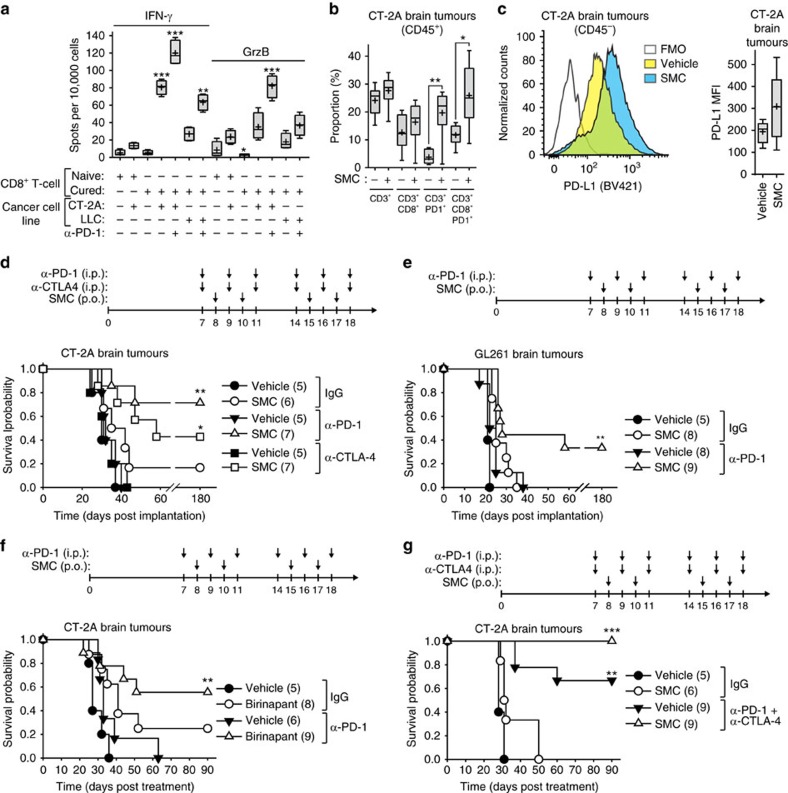
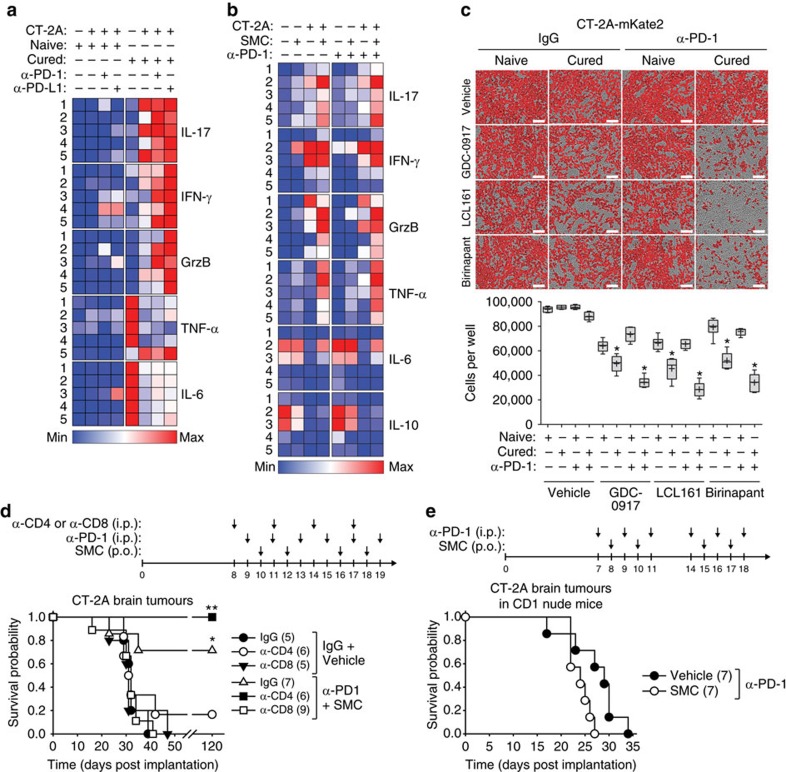
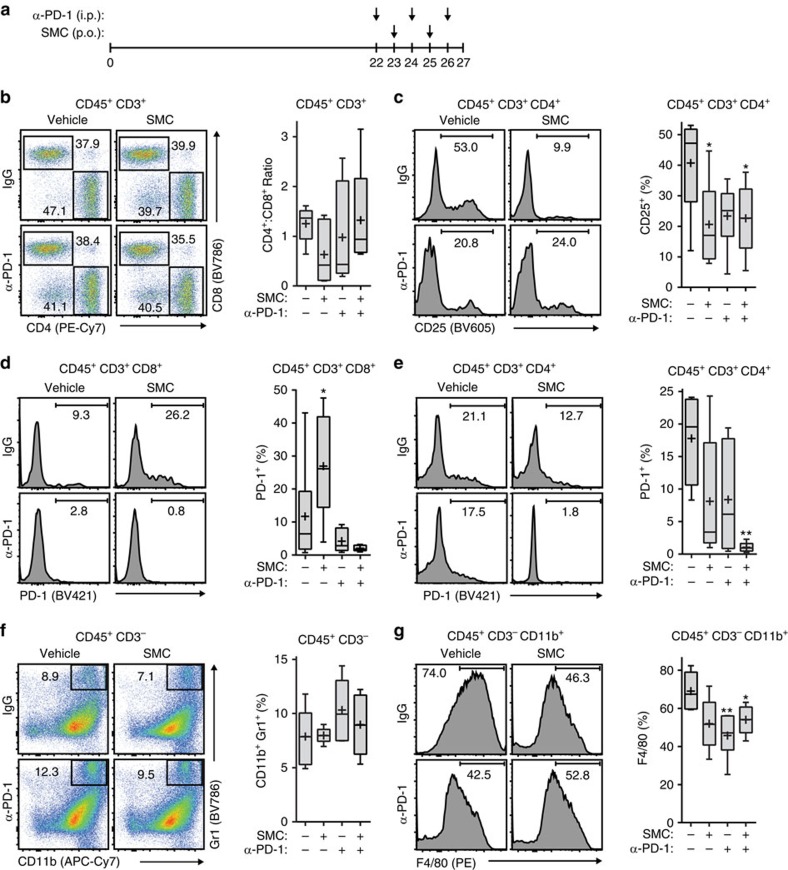
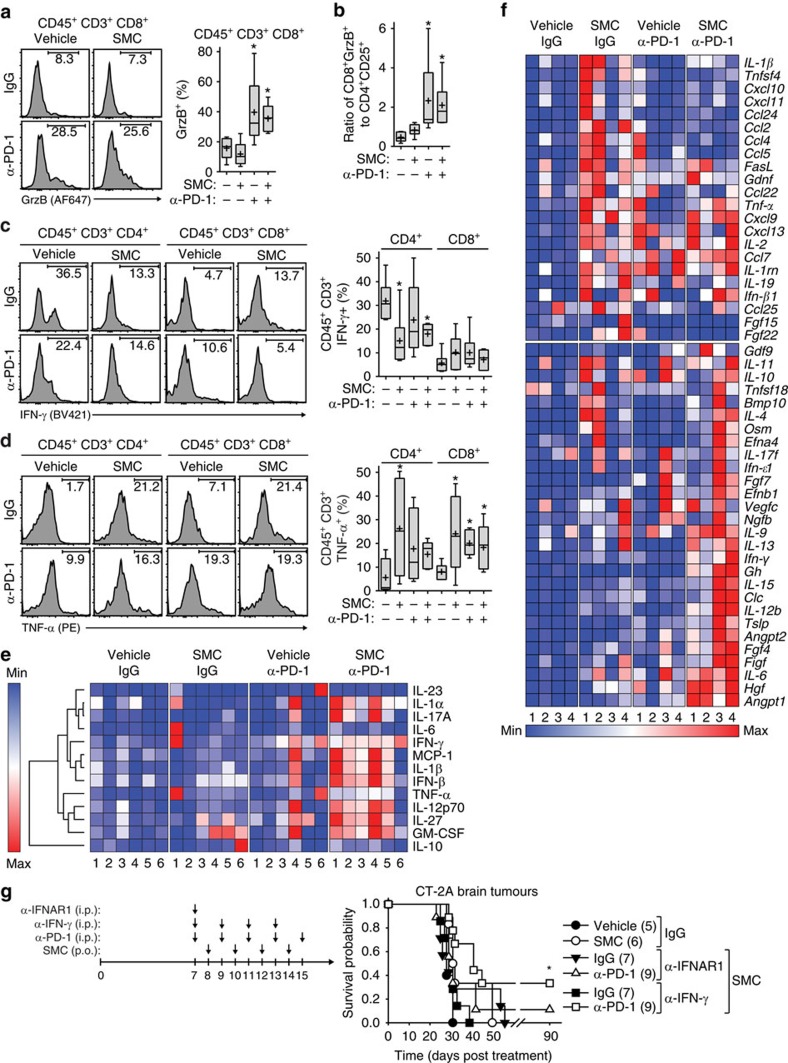
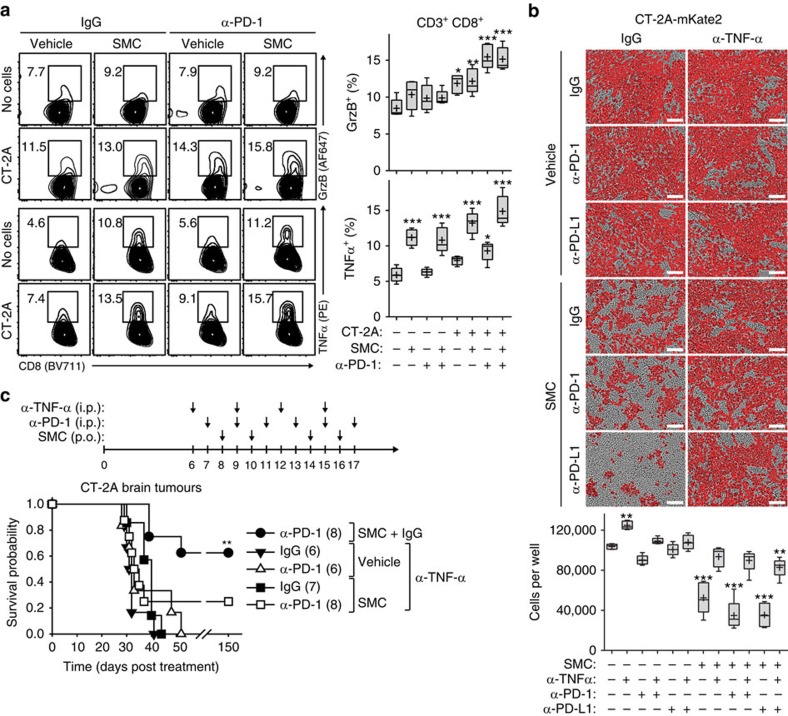
Small-molecule inhibitor of apoptosis (IAP) antagonists, called Smac mimetic compounds (SMCs), sensitize tumours to TNF-α-induced killing while simultaneously blocking TNF-α growth-promoting activities. SMCs also regulate several immunomodulatory properties within immune cells. We report that SMCs synergize with innate immune stimulants and immune checkpoint inhibitor biologics to produce durable cures in mouse models of glioblastoma in which single agent therapy is ineffective. The complementation of activities between these classes of therapeutics is dependent on cytotoxic T-cell activity and is associated with a reduction in immunosuppressive T-cells. Notably, the synergistic effect is dependent on type I IFN and TNF-α signalling. Furthermore, our results implicate an important role for TNF-α-producing cytotoxic T-cells in mediating the anti-cancer effects of immune checkpoint inhibitors when combined with SMCs. Overall, this combinatorial approach could be highly effective in clinical application as it allows for cooperative and complimentary mechanisms in the immune cell-mediated death of cancer cells.
凋亡抑制蛋白(IAP)拮抗剂这种小分子抑制剂,即Smac模拟化合物(SMC),可使肿瘤对肿瘤坏死因子-α(TNF-α)诱导的杀伤敏感,同时阻断TNF-α的促生长活性。SMC还调节免疫细胞内的多种免疫调节特性。我们报告称,在胶质母细胞瘤小鼠模型中,单药治疗无效时,SMC与先天免疫刺激剂和免疫检查点抑制剂生物制剂协同作用,可产生持久治愈效果。这些治疗类别之间活性的互补依赖于细胞毒性T细胞活性,并与免疫抑制性T细胞的减少有关。值得注意的是,协同效应依赖于I型干扰素和TNF-α信号传导。此外,我们的结果表明,产生TNF-α的细胞毒性T细胞在介导免疫检查点抑制剂与SMC联合使用时的抗癌作用中发挥重要作用。总体而言,这种联合方法在临床应用中可能非常有效,因为它允许在免疫细胞介导的癌细胞死亡中发挥协同和互补机制。