Balandraud Nathalie, Texier Gaetan, Massy Emmanuel, Muis-Pistor Olivier, Martin Marielle, Auger Isabelle, Guzian Marie-Caroline, Guis Sandrine, Pham Thao, Roudier Jean
Rheumatology 1 or 2, IML, AP-HM, 270 Boulevard de Sainte Marguerite, Marseilles, France.
INSERM UMRs 1097, Aix-Marseille University, 163 Avenue de Luminy, Marseilles, France.
PLoS One. 2017 Feb 15;12(2):e0171623. doi: 10.1371/journal.pone.0171623. eCollection 2017.
Epstein-Barr Virus (EBV) is a widely disseminated lymphotropic herpes virus implicated in benign and malignant disorders. In transplant patients, immunosuppressive drugs (cyclosporine) diminish control of EBV replication, potentially leading to lymphoproliferative disorders (LPD). Rheumatoid arthritis (RA) patients have impaired control of EBV infection and have EBV load ten times higher than controls. As post transplant patients, patients with RA have increased risk of developing lymphomas. Immunosuppressive drugs used to treat RA (conventional disease modifying drugs cDMARDs or biologics bDMARDs) could enhance the risk of developing LPD in RA patients. We have previously shown that long term treatment with Methotrexate and/or TNF alpha antagonists does not increase EBV load in RA. Our objective was to monitor the Epstein-Barr Virus load in RA patients treated with Abatacept (CTLA4 Ig), a T cell coactivation inhibitor, and Tocilizumab, an anti IL6 receptor antibody.
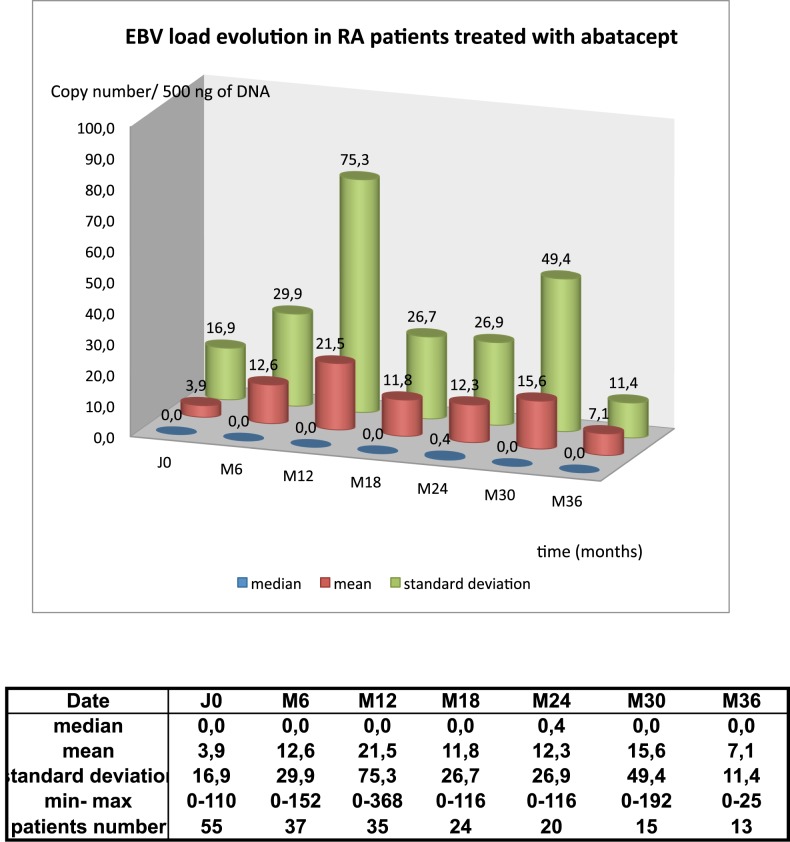
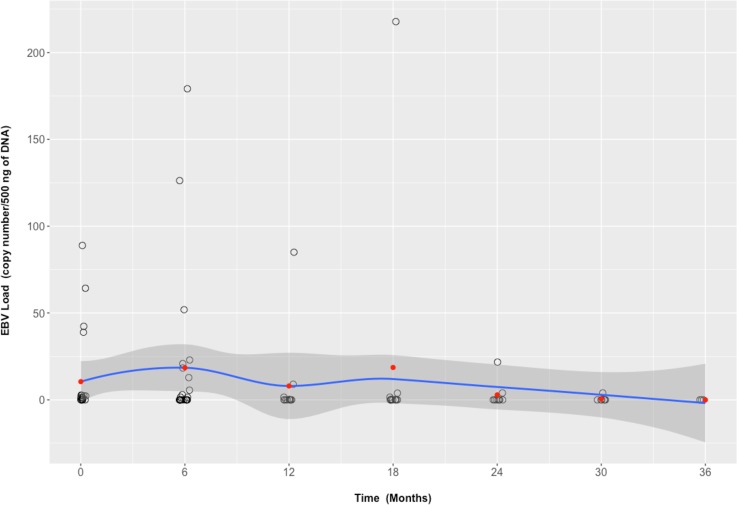
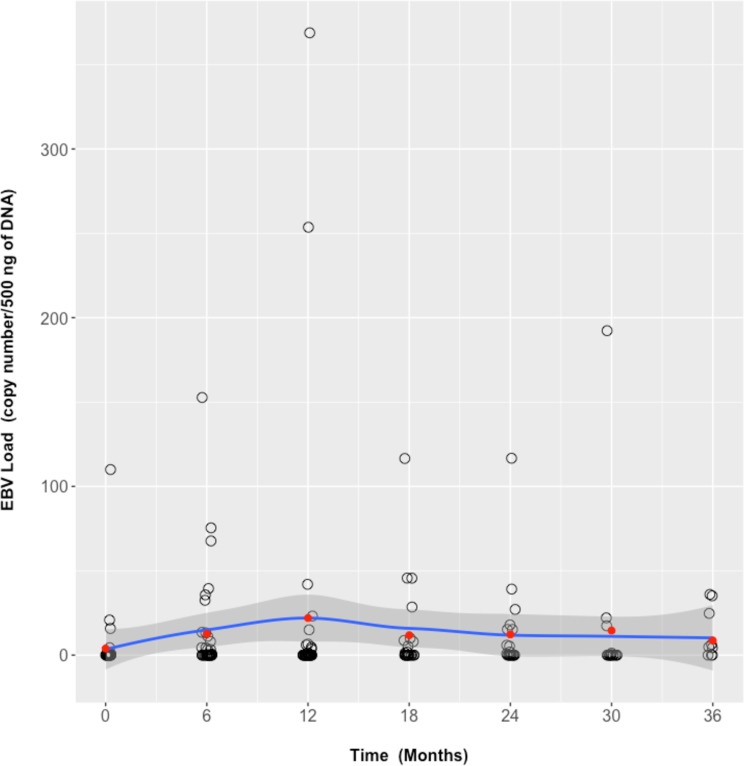
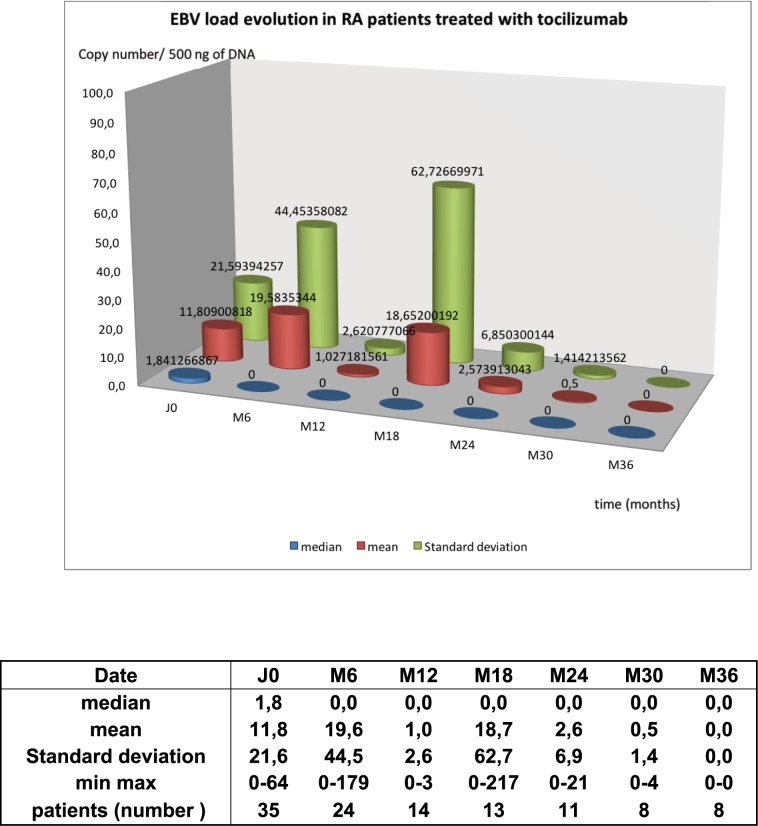
EBV load in the peripheral blood mononuclear cells (PBMCs) of 55 patients under Abatacept (in 34% associated with Methotrexate) and 35 patients under Tocilizumab (in 37% associated with Methotrexate) was monitored for durations ranging from 6 months to 3 years by real time PCR. The influences of treatment duration and disease activity score 28 (DAS28) index on EBV load were analyzed.
Abatacept did not significantly modify EBV load over time. Tocilizumab significantly diminished EBV load over time. No patient (of 90) developed EBV associated lymphoma.
Long term treatment with Abatacept or Tocilizumab does not increase EBV load in the PBMNCs of patients with RA.
爱泼斯坦-巴尔病毒(EBV)是一种广泛传播的嗜淋巴细胞疱疹病毒,与良性和恶性疾病有关。在移植患者中,免疫抑制药物(环孢素)会削弱对EBV复制的控制,可能导致淋巴增殖性疾病(LPD)。类风湿关节炎(RA)患者对EBV感染的控制受损,EBV载量比对照组高10倍。作为移植后患者,RA患者发生淋巴瘤的风险增加。用于治疗RA的免疫抑制药物(传统改善病情抗风湿药物cDMARDs或生物制剂bDMARDs)可能会增加RA患者发生LPD的风险。我们之前已经表明,甲氨蝶呤和/或肿瘤坏死因子α拮抗剂的长期治疗不会增加RA患者的EBV载量。我们的目的是监测接受阿巴西普(CTLA4 Ig)(一种T细胞共激活抑制剂)和托珠单抗(一种抗IL6受体抗体)治疗的RA患者的爱泼斯坦-巴尔病毒载量。
通过实时PCR对55例接受阿巴西普治疗(34%与甲氨蝶呤联合使用)和35例接受托珠单抗治疗(37%与甲氨蝶呤联合使用)的患者外周血单个核细胞(PBMC)中的EBV载量进行了6个月至3年的监测。分析了治疗持续时间和疾病活动评分28(DAS28)指数对EBV载量的影响。
随着时间的推移,阿巴西普对EBV载量没有显著影响。随着时间的推移,托珠单抗显著降低了EBV载量。90例患者中无一例发生EBV相关淋巴瘤。
阿巴西普或托珠单抗的长期治疗不会增加RA患者PBMNC中的EBV载量。