Riehl Brandon D, Lee Jeong Soon, Ha Ligyeom, Kwon Il Keun, Lim Jung Yul
Department of Mechanical and Materials Engineering, College of Engineering, University of Nebraska-Lincoln, Lincoln, NE, United States of America.
The Graduate School of Dentistry, Kyung Hee University, Seoul, Korea.
PLoS One. 2017 Feb 15;12(2):e0171857. doi: 10.1371/journal.pone.0171857. eCollection 2017.
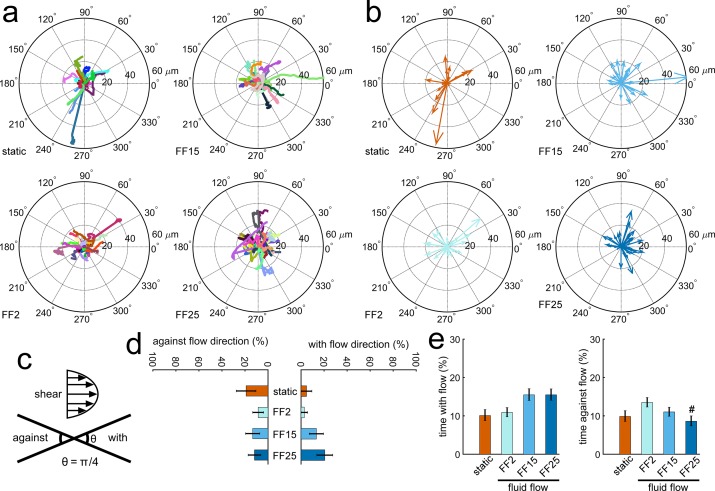
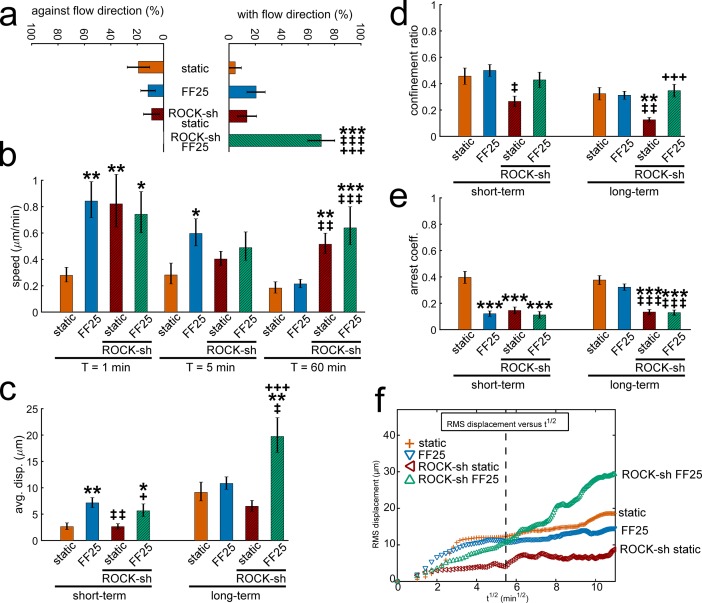
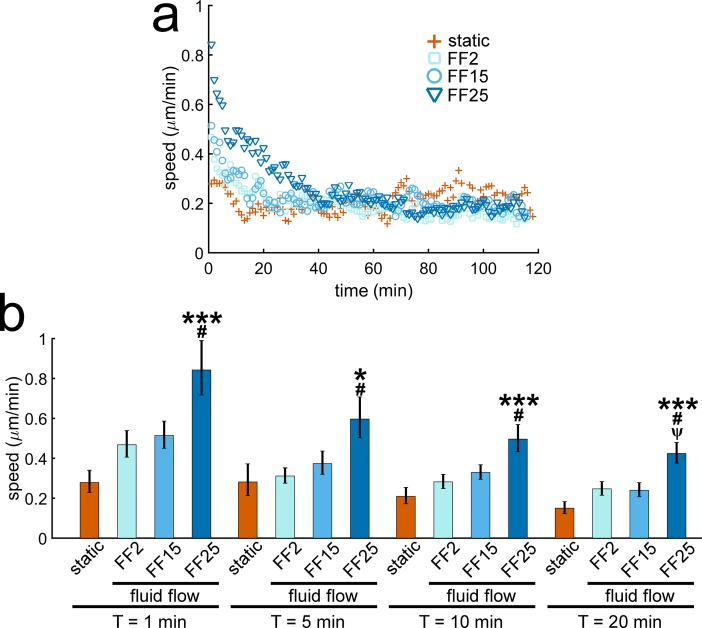
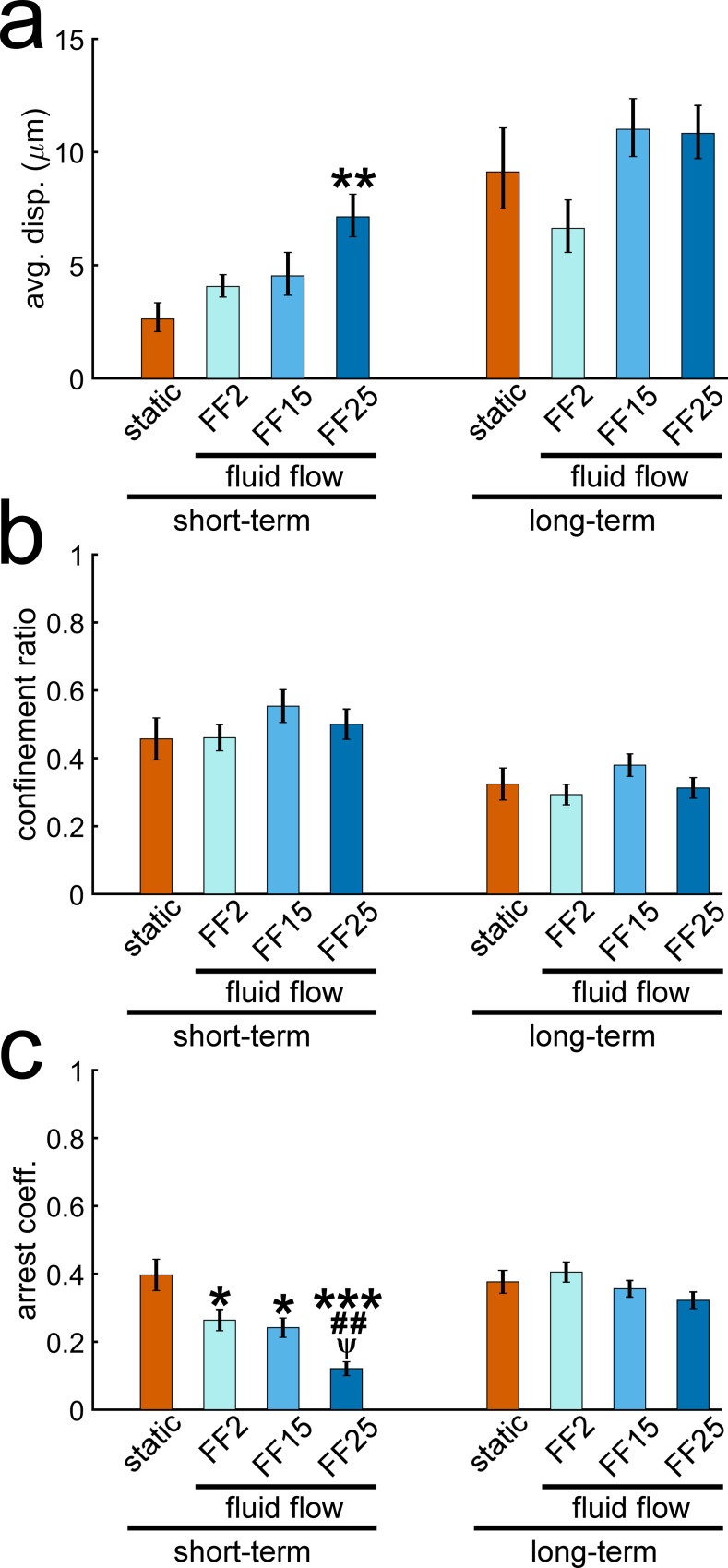
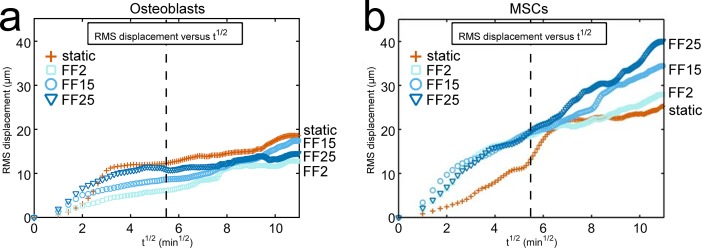
Despite the important role of mechanical signals in bone remodeling, relatively little is known about how fluid shear affects osteoblastic cell migration behavior. Here we demonstrated that MC3T3-E1 osteoblast migration could be activated by physiologically-relevant levels of fluid shear in a shear stress-dependent manner. Interestingly, shear-sensitive osteoblast migration behavior was prominent only during the initial period after the onset of the steady flow (for about 30 min), exhibiting shear stress-dependent migration speed, displacement, arrest coefficient, and motility coefficient. For example, cell speed at 1 min was 0.28, 0.47, 0.51, and 0.84 μm min-1 for static, 2, 15, and 25 dyne cm-2 shear stress, respectively. Arrest coefficient (measuring how often cells are paused during migration) assessed for the first 30 min was 0.40, 0.26, 0.24, and 0.12 respectively for static, 2, 15, and 25 dyne cm-2. After this initial period, osteoblasts under steady flow showed decreased migration capacity and diminished shear stress dependency. Molecular interference of RhoA kinase (ROCK), a regulator of cytoskeletal tension signaling, was found to increase the shear-sensitive window beyond the initial period. Cells with ROCK-shRNA had increased migration in the flow direction and continued shear sensitivity, resulting in greater root mean square displacement at the end of 120 min of measurement. It is notable that the transient osteoblast migration behavior was in sharp contrast to mesenchymal stem cells that exhibited sustained shear sensitivity (as we recently reported, J. R. Soc. Interface. 2015; 12:20141351). The study of fluid shear as a driving force for cell migration, i.e., "flowtaxis", and investigation of molecular mechanosensors governing such behavior (e.g., ROCK as tested in this study) may provide new and improved insights into the fundamental understanding of cell migration-based homeostasis.
尽管机械信号在骨重塑中起着重要作用,但关于流体剪切如何影响成骨细胞迁移行为的了解相对较少。在这里,我们证明了MC3T3-E1成骨细胞迁移可以被生理相关水平的流体剪切以剪切应力依赖的方式激活。有趣的是,剪切敏感的成骨细胞迁移行为仅在稳定流开始后的初始阶段(约30分钟)突出,表现出剪切应力依赖的迁移速度、位移、停滞系数和运动系数。例如,在静态、2、15和25达因/平方厘米剪切应力下,1分钟时的细胞速度分别为0.28、0.47、0.51和0.84微米/分钟。在前30分钟评估的停滞系数(测量细胞在迁移过程中暂停的频率),在静态、2、15和25达因/平方厘米时分别为0.40、0.26、0.24和0.12。在这个初始阶段之后,稳定流下的成骨细胞显示出迁移能力下降和剪切应力依赖性减弱。发现RhoA激酶(ROCK)(一种细胞骨架张力信号的调节剂)的分子干扰会增加初始阶段之后的剪切敏感窗口。具有ROCK-shRNA的细胞在流动方向上的迁移增加且持续具有剪切敏感性,在测量120分钟结束时导致更大的均方根位移。值得注意的是,成骨细胞的瞬时迁移行为与表现出持续剪切敏感性的间充质干细胞形成鲜明对比(正如我们最近报道的,《皇家学会界面杂志》。2015年;12:20141351)。将流体剪切作为细胞迁移的驱动力,即“流趋性”进行研究,以及对控制这种行为的分子机械传感器(例如本研究中测试的ROCK)进行研究,可能会为基于细胞迁移的内稳态的基本理解提供新的、更好的见解。