Cox Simon R, Valdés Hernández Maria Del Carmen, Kim Jaeil, Royle Natalie A, MacPherson Sarah E, Ferguson Karen J, Muñoz Maniega Susana, Anblagan Devasuda, Aribisala Benjamin S, Bastin Mark E, Park Jinah, Starr John M, Deary Ian J, MacLullich Alasdair M J, Wardlaw Joanna M
Centre for Cognitive Ageing and Cognitive Epidemiology, University of Edinburgh, UK; Department of Psychology, University of Edinburgh, UK; Scottish Imaging Network, A Platform for Scientific Excellence (SINAPSE) Collaboration, Edinburgh, UK.
Centre for Cognitive Ageing and Cognitive Epidemiology, University of Edinburgh, UK; Scottish Imaging Network, A Platform for Scientific Excellence (SINAPSE) Collaboration, Edinburgh, UK; Department of Neuroimaging Sciences, Centre for Clinical Brain Sciences, University of Edinburgh, UK.
Psychoneuroendocrinology. 2017 Apr;78:151-158. doi: 10.1016/j.psyneuen.2017.01.027. Epub 2017 Jan 27.
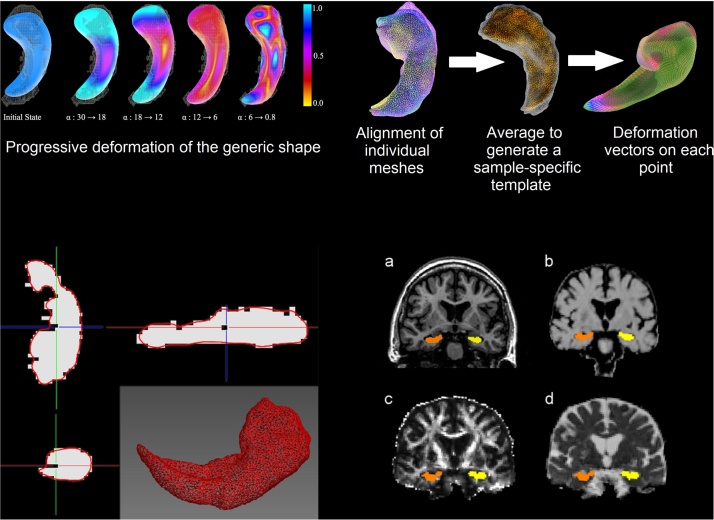
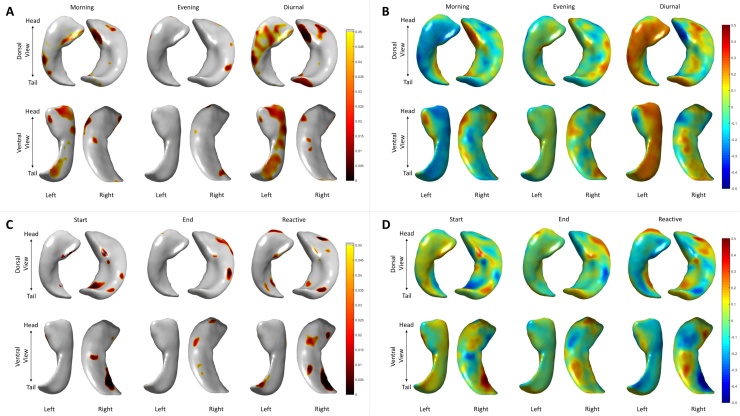
High, unabated glucocorticoid (GC) levels are thought to selectively damage certain tissue types. The hippocampus is thought to be particularly susceptible to such effects, and though findings from animal models and human patients provide some support for this hypothesis, evidence for associations between elevated GCs and lower hippocampal volumes in older age (when GC levels are at greater risk of dysregulation) is inconclusive. To address the possibility that the effects of GCs in non-pathological ageing may be too subtle for gross volumetry to reliably detect, we analyse associations between salivary cortisol (diurnal and reactive measures), hippocampal morphology and diffusion characteristics in 88 males, aged ∼73 years. However, our results provide only weak support for this hypothesis. Though nominally significant peaks in morphology were found in both hippocampi across all salivary cortisol measures (standardised β magnitudes<0.518, p>0.0000003), associations were both positive and negative, and none survived false discovery rate correction. We found one single significant association (out of 12 comparisons) between a general measure of hippocampal diffusion and reactive cortisol slope (β=0.290, p=0.008) which appeared to be driven predominantly by mean diffusivity but did not survive correction for multiple testing. The current data therefore do not clearly support the hypothesis that elevated cortisol levels are associated with subtle variations in hippocampal shape or microstructure in non-pathological older age.
高且持续不减的糖皮质激素(GC)水平被认为会选择性地损害某些组织类型。海马体被认为对此类影响尤为敏感,尽管动物模型和人类患者的研究结果为这一假说提供了一些支持,但关于老年期(此时GC水平更易失调)GC水平升高与海马体体积减小之间关联的证据尚无定论。为了探讨在非病理性衰老过程中GC的影响可能过于细微以至于总体积测量无法可靠检测到的可能性,我们分析了88名年龄约73岁男性的唾液皮质醇(昼夜和反应性测量)、海马体形态和扩散特征之间的关联。然而,我们的结果仅为这一假说提供了微弱支持。尽管在所有唾液皮质醇测量中双侧海马体均发现了名义上显著的形态峰值(标准化β值<0.518,p>0.0000003),但关联既有正向的也有负向的,且无一在错误发现率校正后仍显著。我们在海马体扩散的一项综合测量与反应性皮质醇斜率之间的12项比较中发现了一个单一的显著关联(β=0.290,p=0.008),该关联似乎主要由平均扩散率驱动,但在多重检验校正后不显著。因此,目前的数据并未明确支持皮质醇水平升高与非病理性老年海马体形状或微观结构细微变化相关的假说。