Nakajima Tetsuo, Wang Bing, Ono Tetsuya, Uehara Yoshihiko, Nakamura Shingo, Ichinohe Kazuaki, Braga-Tanaka Ignacia, Tanaka Satoshi, Tanaka Kimio, Nenoi Mitsuru
National Institute of Radiological Sciences, National Institutes of Quantum and Radiological Science and Technology, 9-1, Anagawa-4-chome, Inage-ku, Chiba-shi 263-8555, Japan.
Department of Radiobiology, Institute for Environmental Sciences, 1-7, Ienomae, Obuchi, Rokkasho-mura, Kamikita-gun, Aomori 039-3212, Japan.
J Radiat Res. 2017 Jul 1;58(4):421-429. doi: 10.1093/jrr/rrw133.
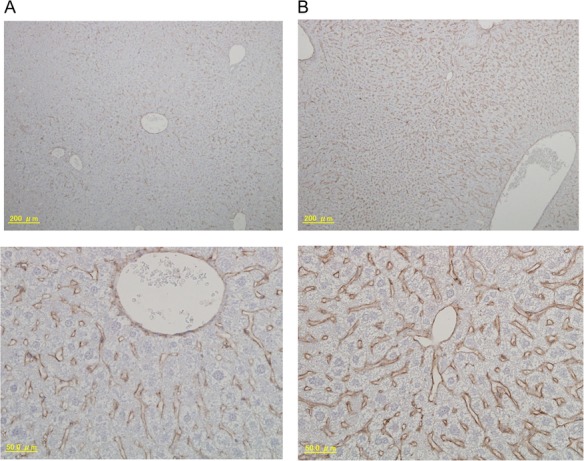
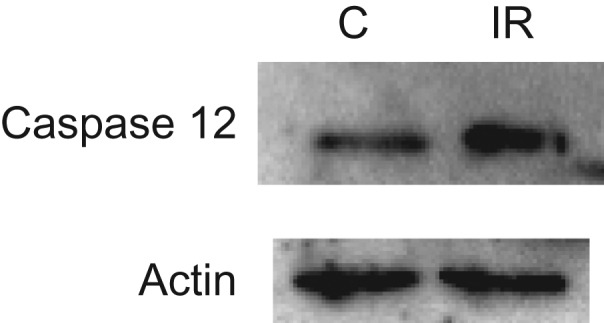
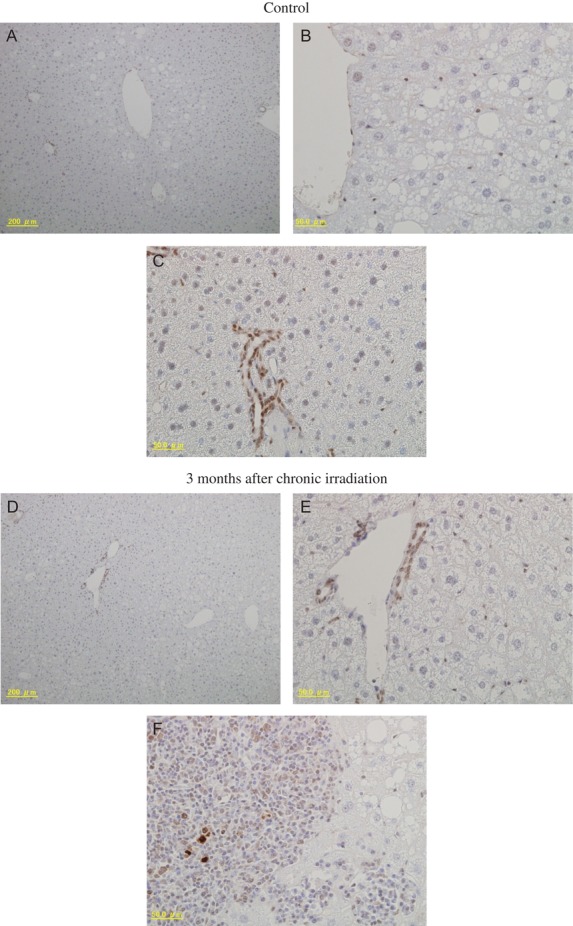
Molecular mechanisms of radiation dose-rate effects are not well understood. Among many possibilities, long-lasting sustained alterations in protein levels would provide critical information. To evaluate sustained effects after acute and chronic radiation exposure, we analyzed alterations in protein expression in the livers of mice. Acute exposure consisted of a lethal dose of 8 Gy and a sublethal dose of 4 Gy, with analysis conducted 6 days and 3 months after irradiation, respectively. Chronic irradiation consisted of a total dose of 8 Gy delivered over 400 days (20 mGy/day). Analyses following chronic irradiation were done immediately and at 3 months after the end of the exposure. Based on antibody arrays of protein expression following both acute lethal and sublethal dose exposures, common alterations in the expression of two proteins were detected. In the sublethal dose exposure, the expression of additional proteins was altered 3 months after irradiation. Immunohistochemical analysis showed that the increase in one of the two commonly altered proteins, MyD88, was observed around blood vessels in the liver. The alterations in protein expression after chronic radiation exposure were different from those caused by acute radiation exposures. Alterations in the expression of proteins related to inflammation and apoptosis, such as caspase 12, were observed even at 3 months after the end of the chronic radiation exposure. The alterations in protein expression depended on the dose, the dose rate, and the passage of time after irradiation. These changes could be involved in long-term effects of radiation in the liver.
辐射剂量率效应的分子机制尚未完全明确。在众多可能性中,蛋白质水平的长期持续改变可能提供关键信息。为评估急性和慢性辐射暴露后的持续效应,我们分析了小鼠肝脏中蛋白质表达的变化。急性暴露采用8 Gy的致死剂量和4 Gy的亚致死剂量,分别在照射后6天和3个月进行分析。慢性照射是在400天内给予总量8 Gy(20 mGy/天)。慢性照射后的分析在照射结束后立即进行,并在3个月后进行。基于急性致死和亚致死剂量暴露后蛋白质表达的抗体芯片,检测到两种蛋白质表达的共同变化。在亚致死剂量暴露中,照射后3个月额外蛋白质的表达发生了改变。免疫组织化学分析显示,两种常见改变的蛋白质之一MyD88在肝脏血管周围表达增加。慢性辐射暴露后蛋白质表达的变化与急性辐射暴露引起的变化不同。即使在慢性辐射暴露结束3个月后,仍观察到与炎症和凋亡相关的蛋白质(如半胱天冬酶12)表达的变化。蛋白质表达的变化取决于剂量、剂量率以及照射后的时间推移。这些变化可能与辐射对肝脏的长期影响有关。