Thangthaeng Nopporn, Rutledge Margaret, Wong Jessica M, Vann Philip H, Forster Michael J, Sumien Nathalie
Center for Neuroscience Discovery, Institute for Healthy Aging, University of North Texas Health Science Center at Fort Worth, Fort Worth, TX 76107 USA.
Aging Dis. 2017 Feb 1;8(1):17-30. doi: 10.14336/AD.2016.1010. eCollection 2017 Feb.
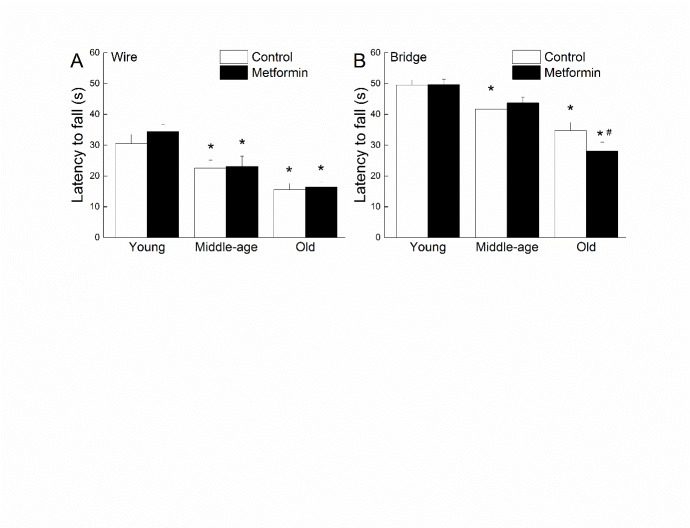
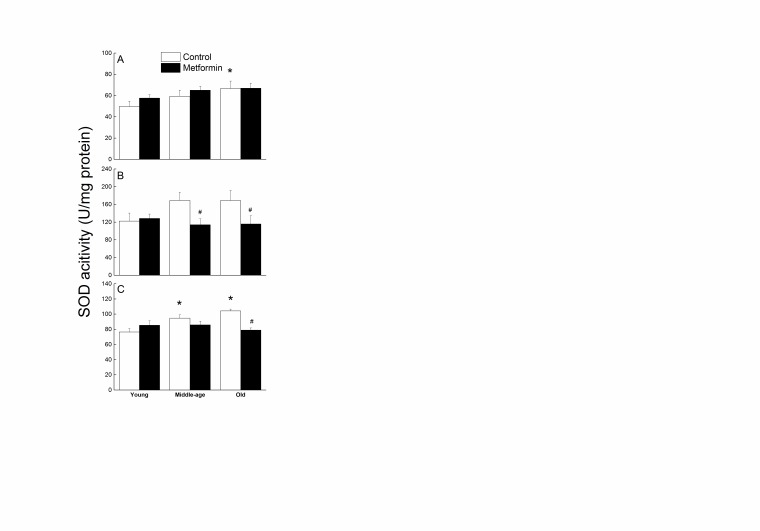
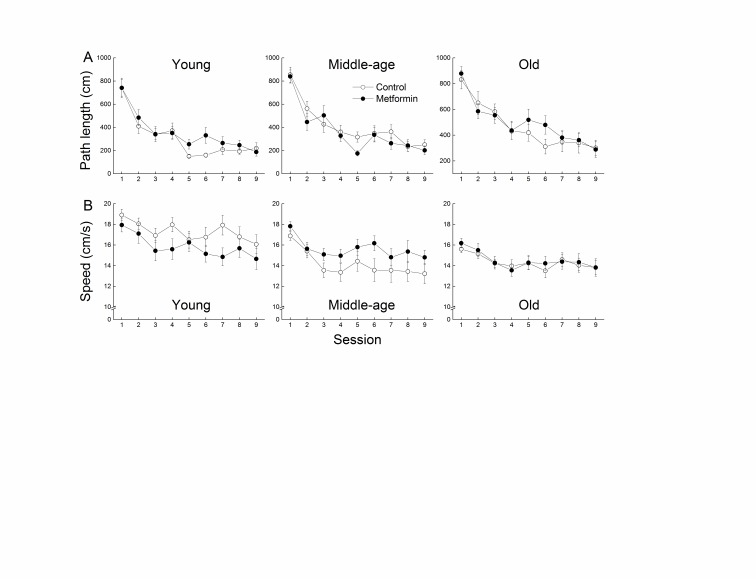
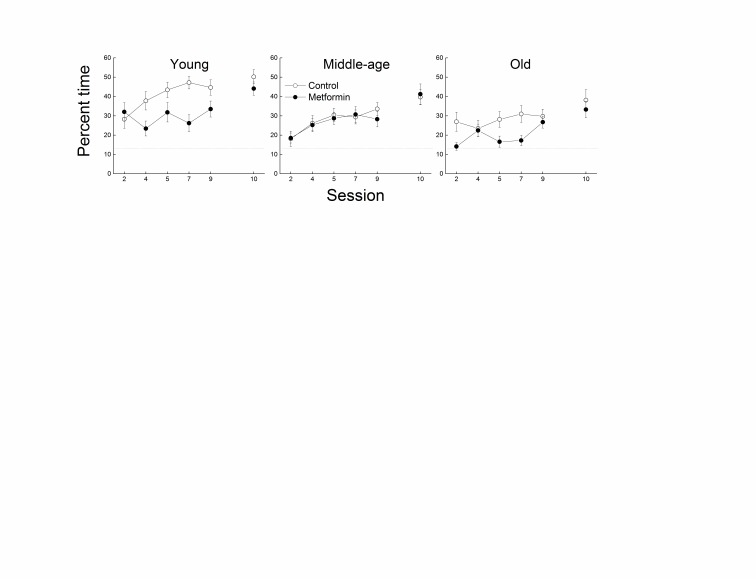
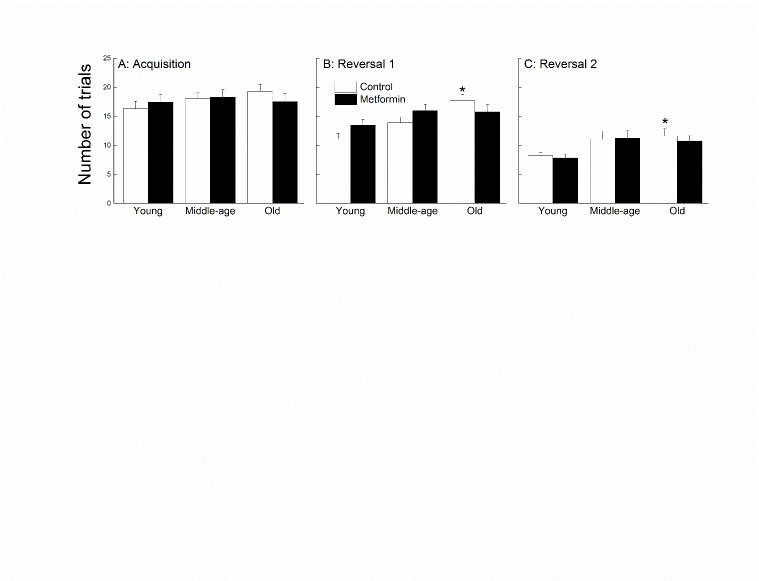
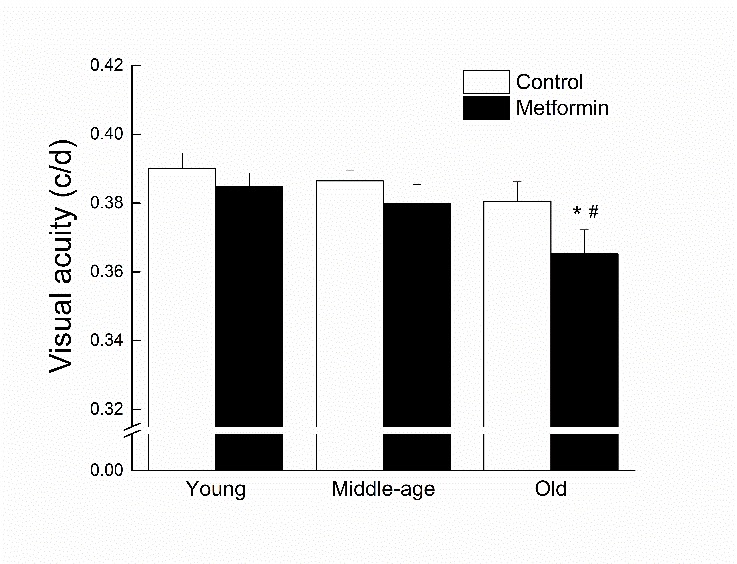
Metformin is an oral anti-diabetic used as first-line therapy for type 2 diabetes. Because benefits of metformin extend beyond diabetes to other age-related pathology, and because its effect on gene expression profiles resembles that of caloric restriction, metformin has a potential as an anti-aging intervention and may soon be assessed as an intervention to extend healthspan. However, beneficial actions of metformin in the central nervous system have not been clearly established. The current study examined the effect of chronic oral metformin treatment on motor and cognitive function when initiated in young, middle-aged, or old male mice. C57BL/6 mice aged 4, 11, or 22 months were randomly assigned to either a metformin group (2 mg/ml in drinking water) or a control group. The mice were monitored weekly for body weight, as well as food and water intake and a battery of behavioral tests for motor, cognitive and visual function was initiated after the first month of treatment. Liver, hippocampus and cortex were collected at the end of the study to assess redox homeostasis. Overall, metformin supplementation in male mice failed to affect blood glucose, body weights and redox homeostasis at any age. It also had no beneficial effect on age-related declines in psychomotor, cognitive or sensory functions. However, metformin treatment had a deleterious effect on spatial memory and visual acuity, and reduced SOD activity in brain regions. These data confirm that metformin treatment may be associated with deleterious effect resulting from the action of metformin on the central nervous system.
二甲双胍是一种口服抗糖尿病药物,用作2型糖尿病的一线治疗药物。由于二甲双胍的益处不仅限于糖尿病,还涉及其他与年龄相关的病理状况,并且由于其对基因表达谱的影响类似于热量限制,二甲双胍具有作为抗衰老干预措施的潜力,可能很快会被评估为一种延长健康寿命的干预措施。然而,二甲双胍在中枢神经系统中的有益作用尚未明确确立。本研究考察了在年轻、中年或老年雄性小鼠中开始长期口服二甲双胍治疗对运动和认知功能的影响。将4、11或22月龄的C57BL/6小鼠随机分为二甲双胍组(饮用水中含2mg/ml)或对照组。每周监测小鼠的体重、食物和水摄入量,并在治疗第一个月后开始进行一系列运动、认知和视觉功能的行为测试。在研究结束时收集肝脏、海马体和皮质以评估氧化还原稳态。总体而言,在任何年龄的雄性小鼠中补充二甲双胍均未影响血糖、体重和氧化还原稳态。它对与年龄相关的精神运动、认知或感觉功能下降也没有有益作用。然而,二甲双胍治疗对空间记忆和视敏度有有害影响,并降低了脑区的超氧化物歧化酶(SOD)活性。这些数据证实,二甲双胍治疗可能与二甲双胍对中枢神经系统作用产生的有害影响有关。