Nimmanon T, Ziliotto S, Morris S, Flanagan L, Taylor K M
Breast Cancer Molecular Pharmacology Group, School of Pharmacy and Pharmaceutical Sciences, Redwood Building, Cardiff University, King Edward VII Avenue, Cardiff, CF10 3NB, UK.
Metallomics. 2017 May 24;9(5):471-481. doi: 10.1039/c6mt00286b.
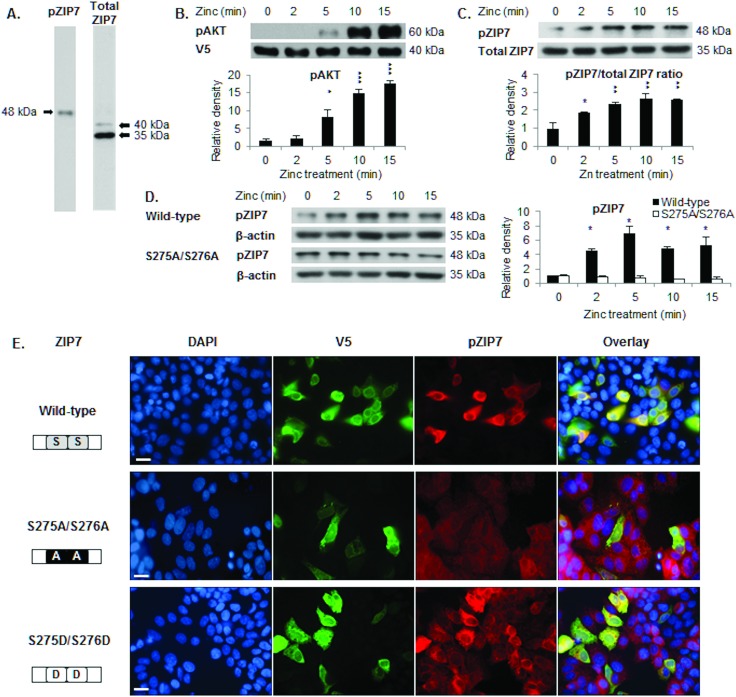
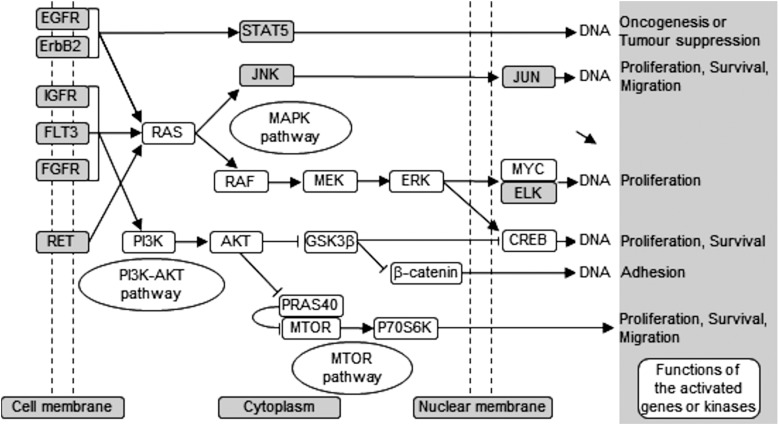
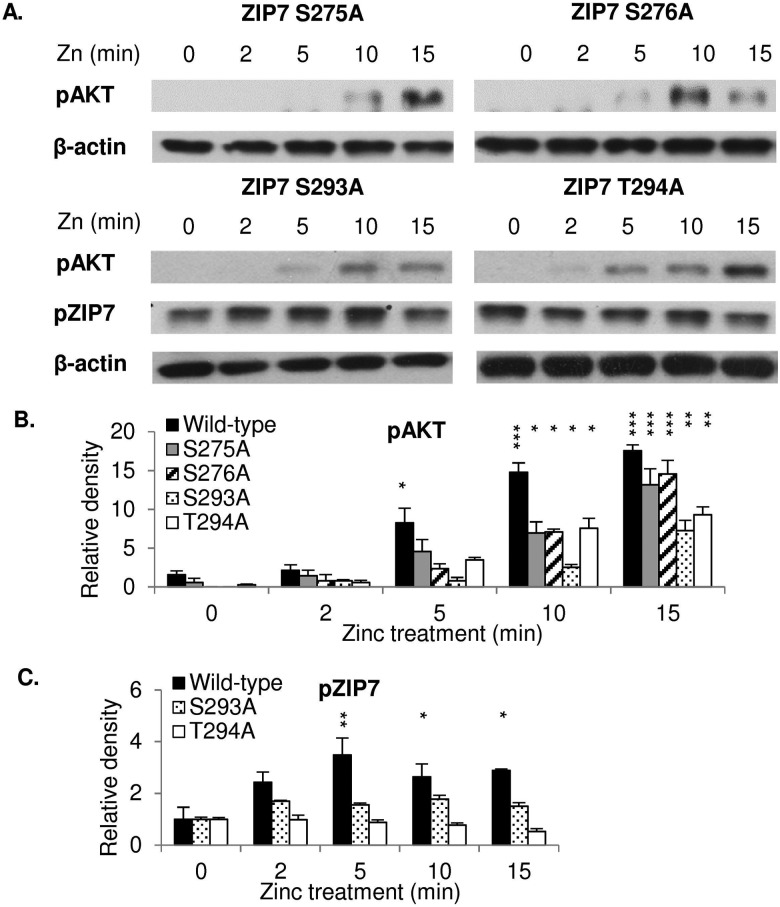
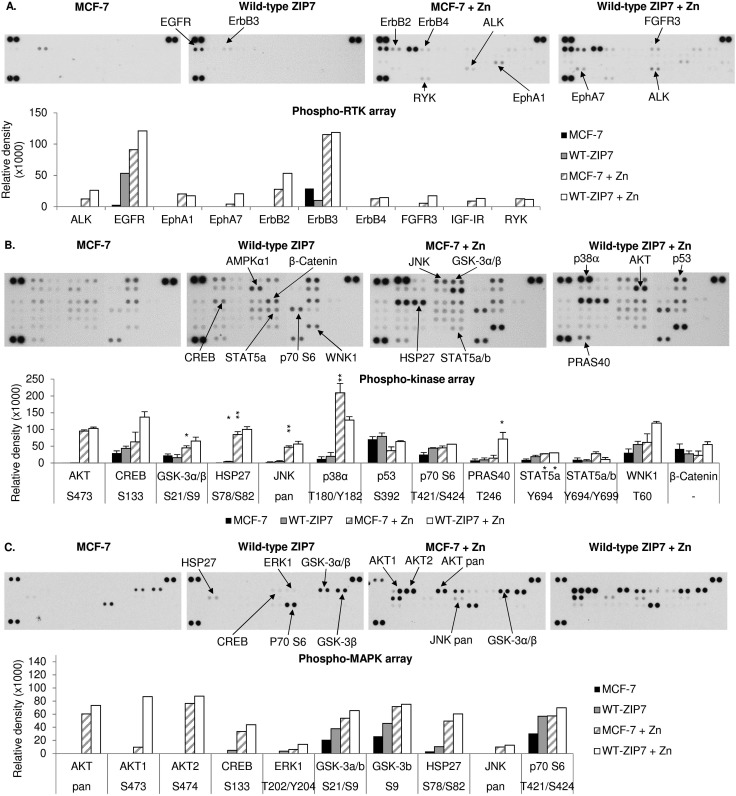
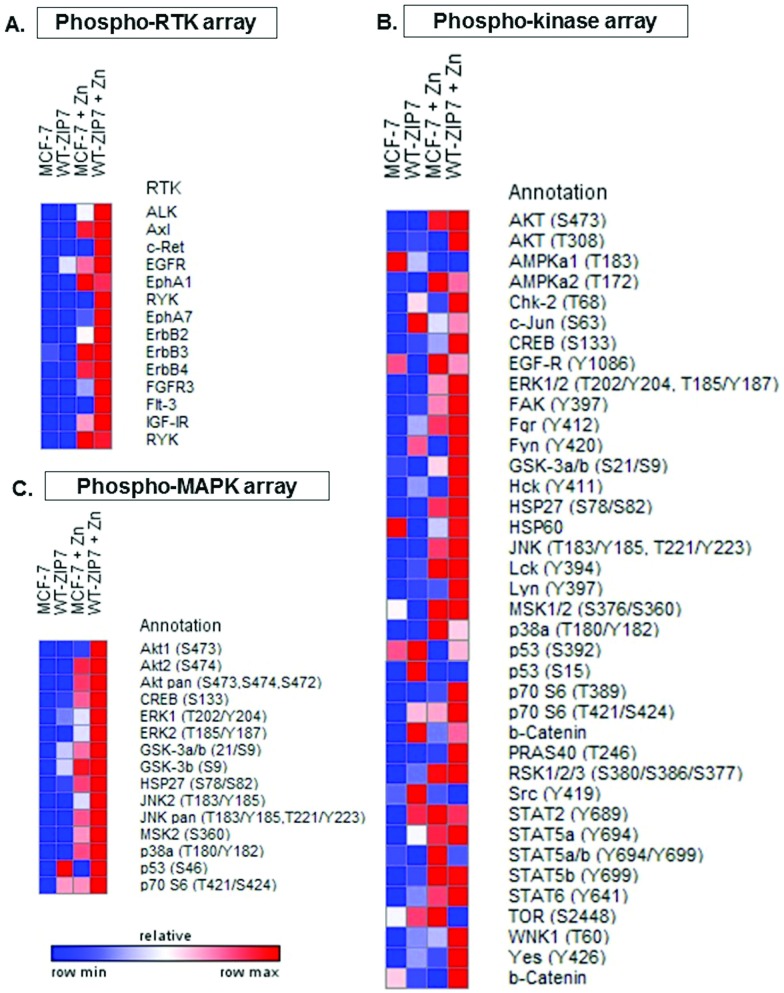
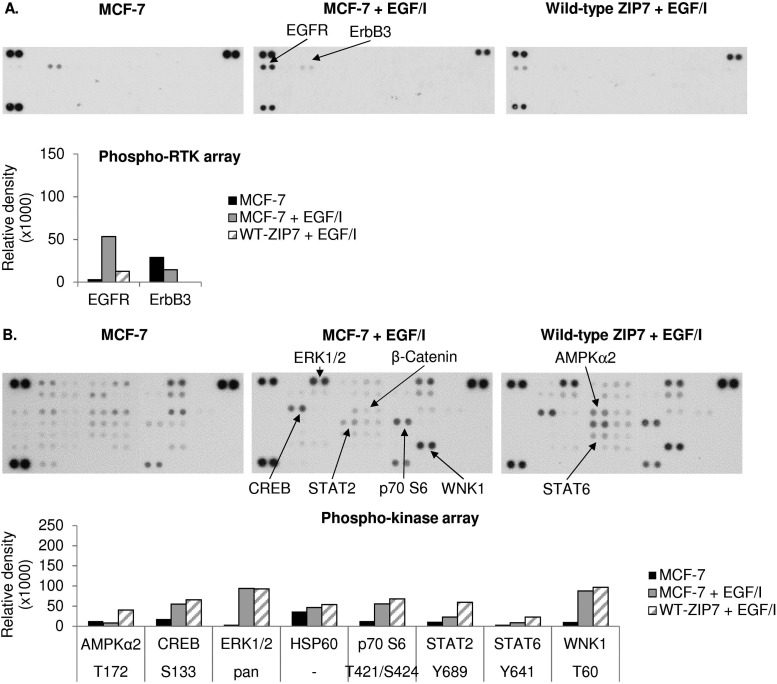
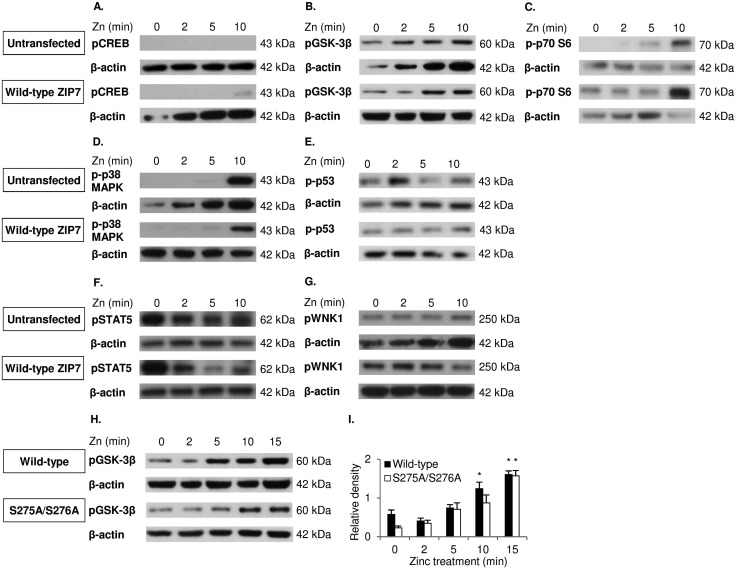
Zinc is an essential trace element participating in diverse biological processes. Cellular zinc levels are strictly controlled by two families of transport proteins: ZIP channels (SLC39A) and ZnT transporters (SLC30A). ZIP channels increase cytosolic zinc levels by importing zinc into cells or releasing zinc from intracellular stores such as the ER. Among all the 14 human members of the ZIP family, ZIP7 is a gatekeeper of zinc release from intracellular stores, requiring post-translational activation by phosphorylation on residues S275 and S276, resulting in activation of multiple downstream pathways. Employing site-directed mutagenesis, we investigated the importance of these individual serine residues as well as other predicted phosphorylation sites on ZIP7, showing that all four sites are required for maximal ZIP7 activation. Using phosphor-protein arrays, we also discovered the major signalling pathways that were activated as a direct result of ZIP7-mediated zinc release from intracellular stores. These data reveal the role of ZIP7-mediated zinc release from intracellular stores in driving major pathways, such as MAPK, mTOR and PI3K-AKT, involved in providing cell survival and proliferation and often over activated in cancer.
锌是一种参与多种生物过程的必需微量元素。细胞内锌水平由两类转运蛋白严格控制:ZIP通道(SLC39A)和锌转运体(ZnT,SLC30A)。ZIP通道通过将锌导入细胞或从内质网等细胞内储存库释放锌来提高胞质锌水平。在ZIP家族的所有14个人类成员中,ZIP7是细胞内储存库锌释放的守门人,需要通过S275和S276残基的磷酸化进行翻译后激活,从而激活多个下游通路。我们利用定点诱变研究了这些单个丝氨酸残基以及ZIP7上其他预测的磷酸化位点的重要性,结果表明所有这四个位点对于ZIP7的最大激活都是必需的。我们还通过磷酸化蛋白阵列发现了作为ZIP7介导的细胞内储存库锌释放的直接结果而被激活的主要信号通路。这些数据揭示了ZIP7介导的细胞内储存库锌释放在驱动主要通路(如MAPK、mTOR和PI3K-AKT)中的作用,这些通路参与提供细胞存活和增殖,且在癌症中常常过度激活。