Jones Samuel, Farr Georgia, Nimmanon Thirayost, Ziliotto Silvia, Gee Julia M W, Taylor Kathryn M
School of Pharmacy and Pharmaceutical Sciences, Cardiff University, CF10 3NB Cardiff, UK.
Department of Pathology, Phramongkutklao College of Medicine, Bangkok 10400, Thailand.
Explor Target Antitumor Ther. 2022 Apr 26;3(2):224-239. doi: 10.37349/etat.2022.00080.
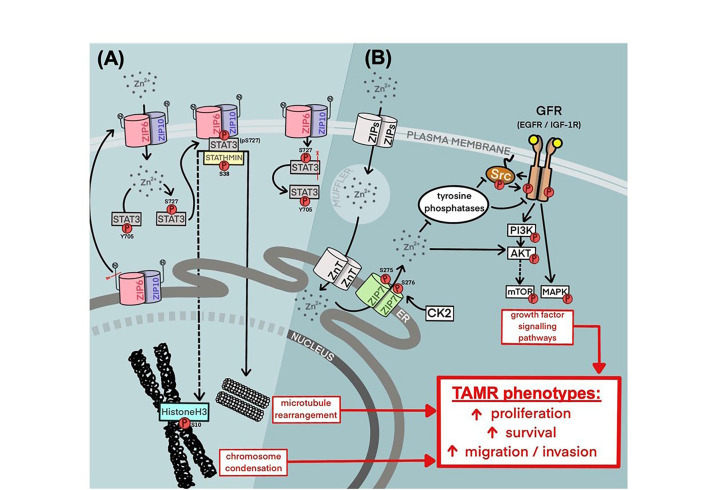
Zinc is a key secondary messenger that can regulate multiple signalling pathways within cancer cells, thus its levels need to be strictly controlled. The Zrt, Irt-like protein (ZIP, SLC39A) family of zinc transporters increase cytosolic zinc from either extracellular or intracellular stores. This study examines the relevance of zinc transporters ZIP7 and ZIP6 as therapeutic targets in tamoxifen resistant (TAMR) breast cancer.
A series of assays, including immunohistochemistry, immunofluorescence, flow cytometry, and western blotting were used to evaluate levels and activity of ZIP7 and ZIP6 in models of TAMR and sensitive (MCF-7) breast cancer. Analyses of these transporters in the clinical setting were performed using publicly available online resources: Gene Expression Profiling Interactive Analysis (GEPIA)2 and Kaplan-Meier Plotter (KmPlot).
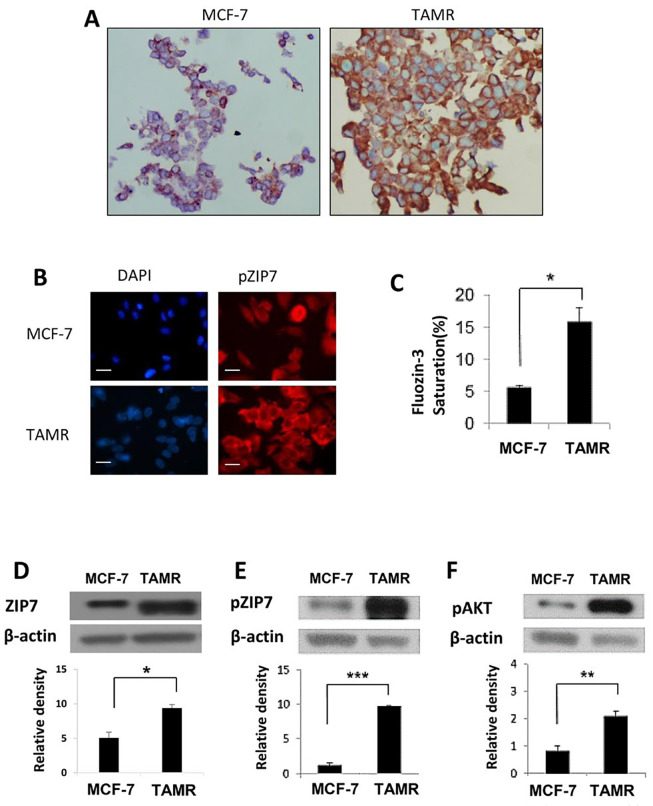
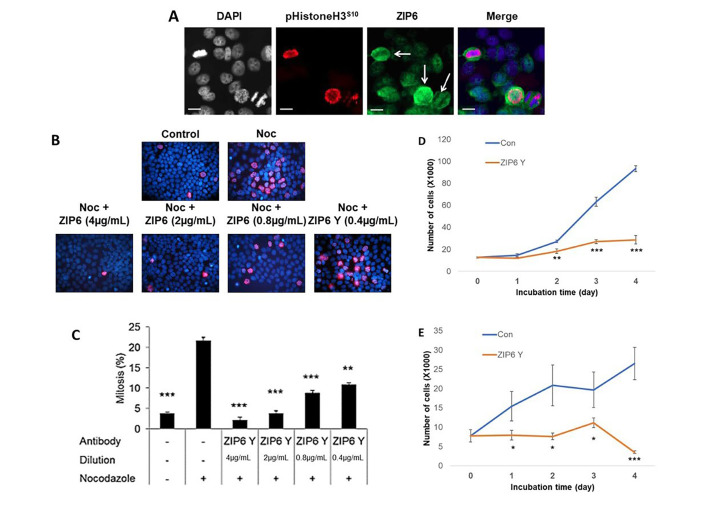
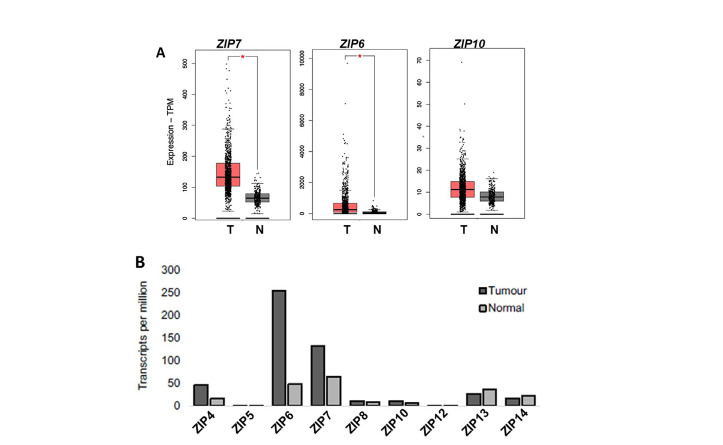
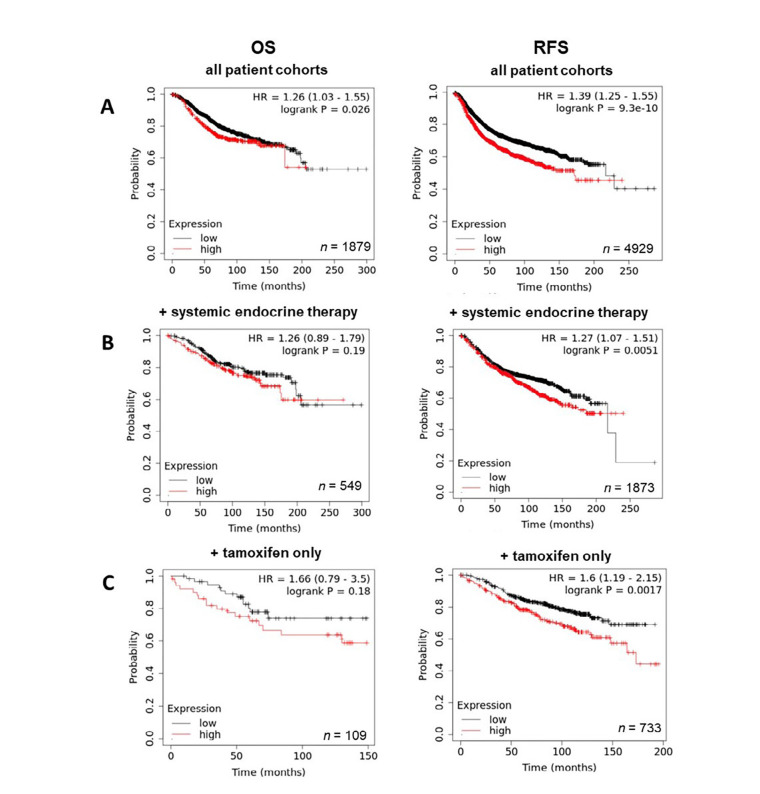
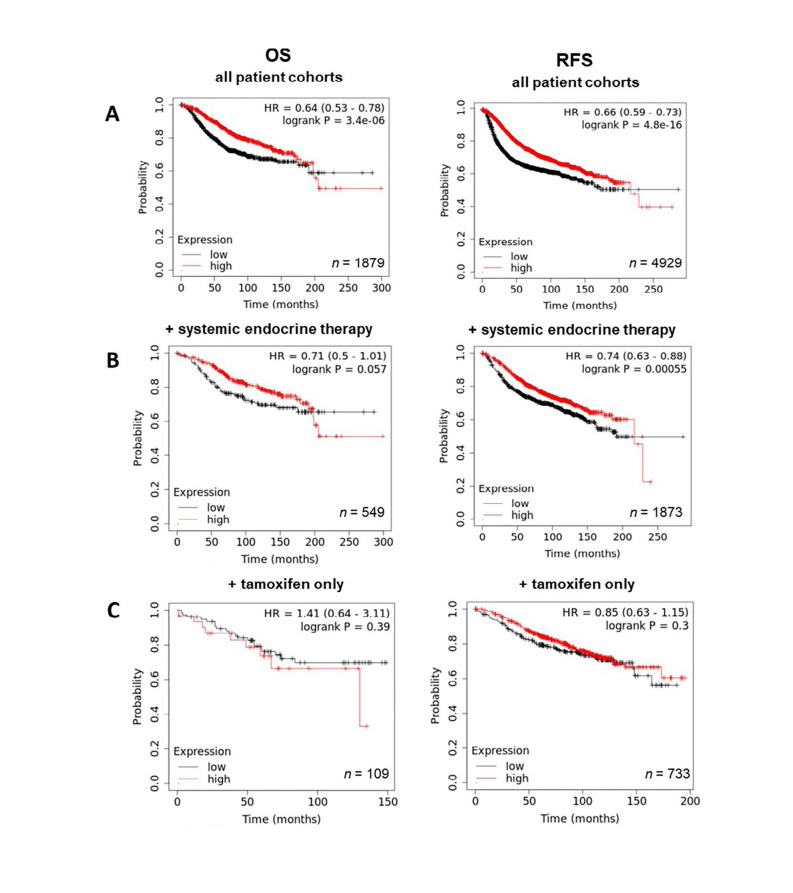
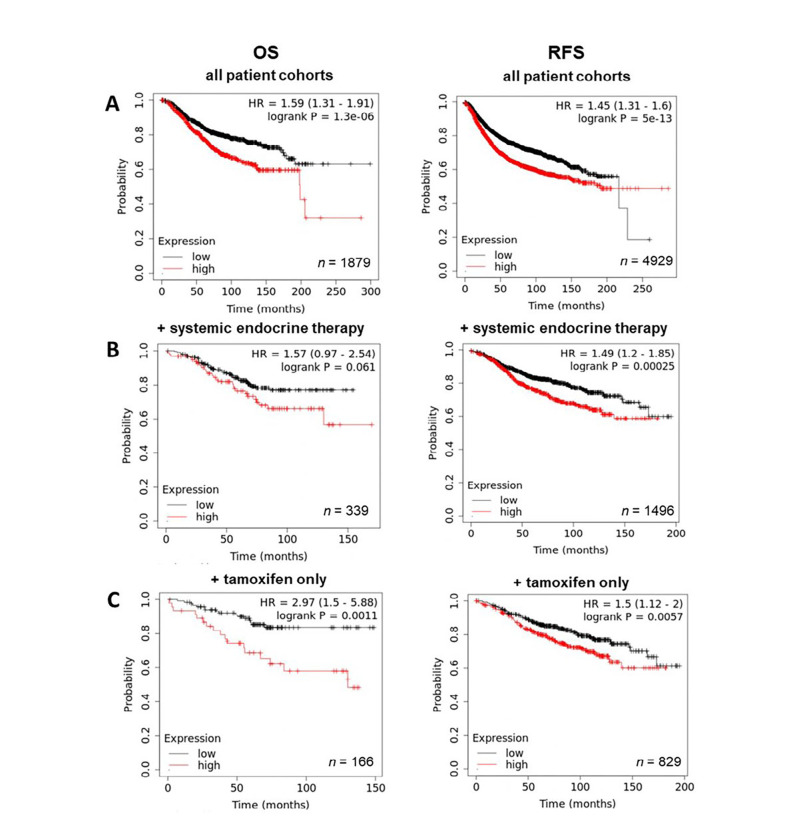
Both total and activated levels of ZIP7 were significantly elevated in TAMR cells responsive MCF-7 cells. This was accompanied by an associated increase in free cytoplasmic zinc leading to amplification of downstream signals. Consistent with our proposed model, activated ZIP6 levels correlated with mitotic cells, which could be efficiently inhibited through use of our anti-ZIP6 monoclonal antibody. Mitotic inhibition translated to impaired proliferation in both models, with TAMR cells displaying increased sensitivity. Analysis of matched tumour and normal breast samples from patients revealed significant increases in both ZIP7 and ZIP6 in tumours, as well as family member ZIP4. Kaplan-Meier analysis revealed that high ZIP7 levels correlated with decreased overall and relapse-free survival (RFS) of patients, including patient groups who had received systemic endocrine therapy or tamoxifen only. In contrast, high ZIP6 levels were significantly linked to improved overall and RFS in all patients, as well as RFS in patients that received systemic endocrine therapy.
TAMR cells displayed increased activity of both ZIP7 and ZIP6 transporters compared to anti-hormone responsive cells, suggesting their potential as novel therapeutic targets following development of resistant disease.
锌是一种关键的第二信使,可调节癌细胞内的多种信号通路,因此其水平需要严格控制。锌转运蛋白的Zrt、Irt样蛋白(ZIP,SLC39A)家族可从细胞外或细胞内储存库中增加胞质锌。本研究探讨锌转运蛋白ZIP7和ZIP6作为他莫昔芬耐药(TAMR)乳腺癌治疗靶点的相关性。
采用一系列检测方法,包括免疫组织化学、免疫荧光、流式细胞术和蛋白质印迹法,评估ZIP7和ZIP6在TAMR和敏感(MCF-7)乳腺癌模型中的水平和活性。利用公开可用的在线资源:基因表达谱交互式分析(GEPIA)2和Kaplan-Meier绘图仪(KmPlot),对这些转运蛋白进行临床分析。
与激素反应性MCF-7细胞相比,TAMR细胞中ZIP7的总水平和活化水平均显著升高。这伴随着游离细胞质锌的相应增加,导致下游信号放大。与我们提出的模型一致,活化的ZIP6水平与有丝分裂细胞相关,通过使用我们的抗ZIP6单克隆抗体可有效抑制。有丝分裂抑制导致两种模型中的增殖受损,TAMR细胞表现出更高的敏感性。对患者匹配的肿瘤和正常乳腺样本分析显示,肿瘤中ZIP7和ZIP6以及家族成员ZIP4均显著增加。Kaplan-Meier分析显示,ZIP7高水平与患者的总生存期和无复发生存期(RFS)降低相关,包括接受全身内分泌治疗或仅接受他莫昔芬治疗的患者组。相比之下,ZIP6高水平与所有患者的总生存期和RFS改善以及接受全身内分泌治疗患者的RFS显著相关。
与抗激素反应性细胞相比,TAMR细胞中ZIP7和ZIP6转运蛋白的活性增加,表明它们在耐药性疾病发生后作为新型治疗靶点的潜力。