• 文献检索
  • 文档翻译
  • 深度研究
  • 学术资讯
  • Suppr Zotero 插件Zotero 插件
  • 邀请有礼
  • 套餐&价格
  • 历史记录
应用&插件
Suppr Zotero 插件Zotero 插件浏览器插件Mac 客户端Windows 客户端微信小程序
定价
高级版会员购买积分包购买API积分包
服务
文献检索文档翻译深度研究API 文档MCP 服务
关于我们
关于 Suppr公司介绍联系我们用户协议隐私条款
关注我们

Suppr 超能文献

核心技术专利:CN118964589B侵权必究
粤ICP备2023148730 号-1Suppr @ 2026

文献检索

告别复杂PubMed语法,用中文像聊天一样搜索,搜遍4000万医学文献。AI智能推荐,让科研检索更轻松。

立即免费搜索

文件翻译

保留排版,准确专业,支持PDF/Word/PPT等文件格式,支持 12+语言互译。

免费翻译文档

深度研究

AI帮你快速写综述,25分钟生成高质量综述,智能提取关键信息,辅助科研写作。

立即免费体验

富营养化和气候变暖促进蓝藻生物量及微囊藻毒素的生成。

Eutrophication and Warming Boost Cyanobacterial Biomass and Microcystins.

作者信息

Lürling Miquel, van Oosterhout Frank, Faassen Elisabeth

机构信息

Aquatic Ecology & Water Quality Management Group, Department of Environmental Sciences, Wageningen University, P.O. Box 47, 6700 AA Wageningen, The Netherlands.

Department of Aquatic Ecology, Netherlands Institute of Ecology (NIOO-KNAW), P.O. Box 50, 6700 AB, Wageningen, The Netherlands.

出版信息

Toxins (Basel). 2017 Feb 11;9(2):64. doi: 10.3390/toxins9020064.

DOI:10.3390/toxins9020064
PMID:28208670
原文链接:https://pmc.ncbi.nlm.nih.gov/articles/PMC5331443/
Abstract

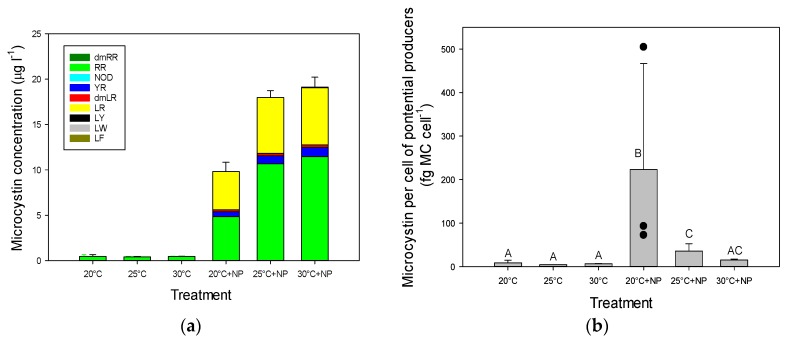
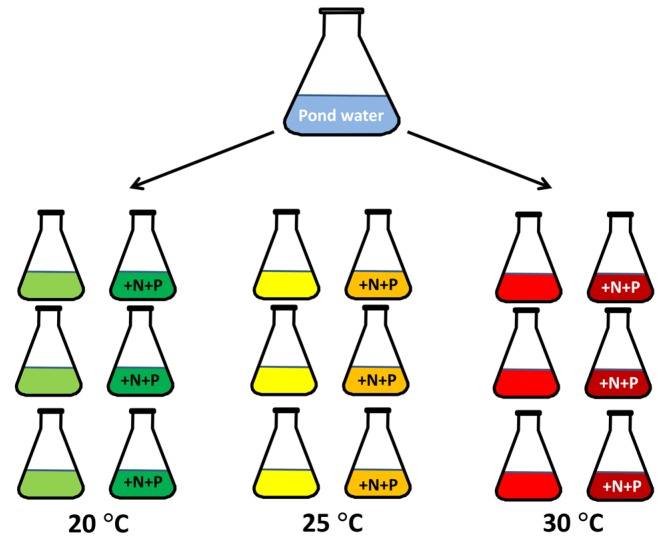
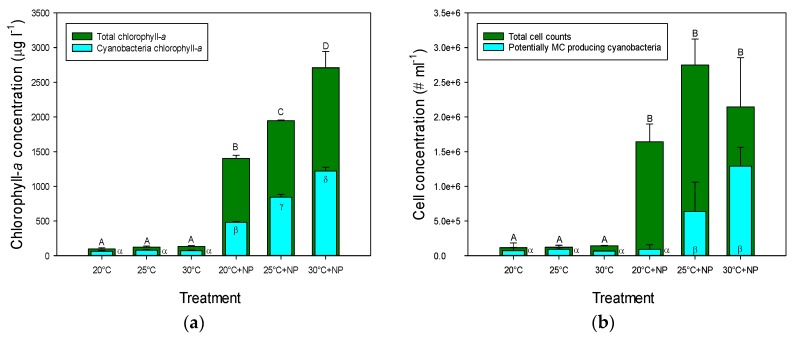
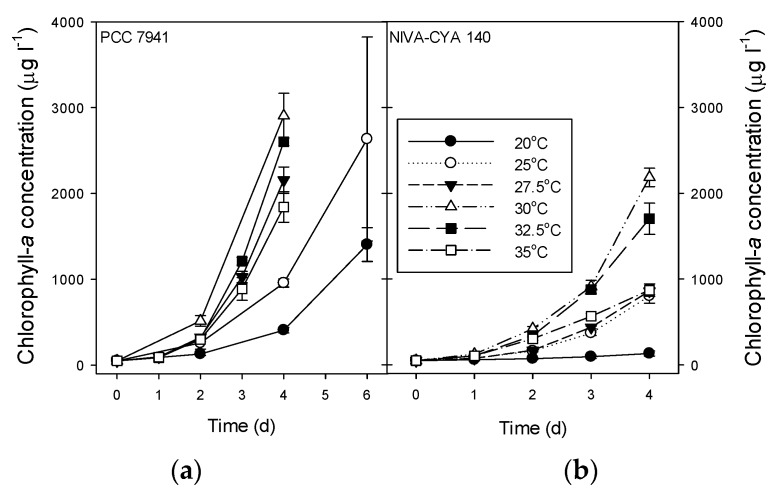
Eutrophication and warming are key drivers of cyanobacterial blooms, but their combined effects on microcystin (MC) concentrations are less studied. We tested the hypothesis that warming promotes cyanobacterial abundance in a natural plankton community and that eutrophication enhances cyanobacterial biomass and MC concentrations. We incubated natural seston from a eutrophic pond under normal, high, and extreme temperatures (i.e., 20, 25, and 30 °C) with and without additional nutrients added (eutrophication) mimicking a pulse as could be expected from projected summer storms under climate change. Eutrophication increased algal- and cyanobacterial biomass by 26 and 8 times, respectively, and led to 24 times higher MC concentrations. This effect was augmented with higher temperatures leading to 45 times higher MC concentrations at 25 °C, with 11 times more cyanobacterial chlorophyll- and 25 times more eukaryote algal chlorophyll-. At 30 °C, MC concentrations were 42 times higher, with cyanobacterial chlorophyll- being 17 times and eukaryote algal chlorophyll- being 24 times higher. In contrast, warming alone did not yield more cyanobacteria or MCs, because the in situ community had already depleted the available nutrient pool. MC per potential MC producing cell declined at higher temperatures under nutrient enrichments, which was confirmed by a controlled experiment with two laboratory strains of Nevertheless, MC concentrations were much higher at the increased temperature and nutrient treatment than under warming alone due to strongly promoted biomass, lifting N-imitation and promotion of potential MC producers like . This study exemplifies the vulnerability of eutrophic urban waters to predicted future summer climate change effects that might aggravate cyanobacterial nuisance.

摘要

富营养化和气候变暖是蓝藻水华的关键驱动因素,但它们对微囊藻毒素(MC)浓度的综合影响却鲜少被研究。我们验证了以下假设:气候变暖会促进自然浮游生物群落中蓝藻的丰度,而富营养化会增加蓝藻生物量和MC浓度。我们将富营养化池塘中的天然悬浮物在正常、高温和极端温度(即20、25和30°C)下进行培养,添加或不添加额外营养物质(富营养化),模拟气候变化下预计夏季风暴可能带来的脉冲效应。富营养化使藻类和蓝藻生物量分别增加了26倍和8倍,并导致MC浓度升高24倍。这种效应在较高温度下会增强,在25°C时导致MC浓度升高45倍,蓝藻叶绿素增加11倍,真核藻类叶绿素增加25倍。在30°C时,MC浓度升高42倍,蓝藻叶绿素升高17倍,真核藻类叶绿素升高24倍。相比之下,仅气候变暖并不会产生更多的蓝藻或MC,因为原位群落已经耗尽了可用的营养池。在营养富集条件下,较高温度下每个潜在MC产生细胞的MC含量下降,这在对两种实验室菌株的对照实验中得到了证实。然而,由于生物量的强烈增加以及对N的模拟和对潜在MC生产者(如 )的促进,在温度和营养处理增加的情况下,MC浓度比仅气候变暖时要高得多。这项研究例证了富营养化的城市水域对预测的未来夏季气候变化影响的脆弱性,这种影响可能会加剧蓝藻滋扰。
https://cdn.ncbi.nlm.nih.gov/pmc/blobs/8daf/5331443/2c6576153d4e/toxins-09-00064-g002.jpg
https://cdn.ncbi.nlm.nih.gov/pmc/blobs/8daf/5331443/d139d2017d84/toxins-09-00064-g003.jpg
https://cdn.ncbi.nlm.nih.gov/pmc/blobs/8daf/5331443/f69a0b369477/toxins-09-00064-g004.jpg
https://cdn.ncbi.nlm.nih.gov/pmc/blobs/8daf/5331443/908b0e200cce/toxins-09-00064-g005.jpg
https://cdn.ncbi.nlm.nih.gov/pmc/blobs/8daf/5331443/2590bcda8709/toxins-09-00064-g001.jpg
https://cdn.ncbi.nlm.nih.gov/pmc/blobs/8daf/5331443/2c6576153d4e/toxins-09-00064-g002.jpg
https://cdn.ncbi.nlm.nih.gov/pmc/blobs/8daf/5331443/d139d2017d84/toxins-09-00064-g003.jpg
https://cdn.ncbi.nlm.nih.gov/pmc/blobs/8daf/5331443/f69a0b369477/toxins-09-00064-g004.jpg
https://cdn.ncbi.nlm.nih.gov/pmc/blobs/8daf/5331443/908b0e200cce/toxins-09-00064-g005.jpg
https://cdn.ncbi.nlm.nih.gov/pmc/blobs/8daf/5331443/2590bcda8709/toxins-09-00064-g001.jpg
https://cdn.ncbi.nlm.nih.gov/pmc/blobs/8daf/5331443/2c6576153d4e/toxins-09-00064-g002.jpg

相似文献

1
Eutrophication and Warming Boost Cyanobacterial Biomass and Microcystins.富营养化和气候变暖促进蓝藻生物量及微囊藻毒素的生成。
Toxins (Basel). 2017 Feb 11;9(2):64. doi: 10.3390/toxins9020064.
2
Monitoring and research of microcystins and environmental factors in a typical artificial freshwater aquaculture pond.典型人工淡水养殖池塘中微囊藻毒素及环境因子的监测与研究。
Environ Sci Pollut Res Int. 2018 Feb;25(6):5921-5933. doi: 10.1007/s11356-017-0956-4. Epub 2017 Dec 12.
3
Controlling toxic cyanobacteria: effects of dredging and phosphorus-binding clay on cyanobacteria and microcystins.控制有毒蓝藻:疏浚和磷结合黏土对蓝藻和微囊藻毒素的影响。
Water Res. 2012 Apr 1;46(5):1447-59. doi: 10.1016/j.watres.2011.11.008. Epub 2011 Nov 13.
4
Response of Natural Cyanobacteria and Algae Assemblages to a Nutrient Pulse and Elevated Temperature.天然蓝藻和藻类群落对营养脉冲及温度升高的响应
Front Microbiol. 2018 Aug 13;9:1851. doi: 10.3389/fmicb.2018.01851. eCollection 2018.
5
The Impact of Warming and Nutrients on Algae Production and Microcystins in Seston from the Iconic Lake Lesser Prespa, Greece.希腊标志性湖泊小普雷斯帕湖的水温和营养物质对水华藻类产生和微囊藻毒素的影响。
Toxins (Basel). 2018 Apr 2;10(4):144. doi: 10.3390/toxins10040144.
6
Warming Affects Growth Rates and Microcystin Production in Tropical Bloom-Forming Microcystis Strains.升温影响热带水华形成微囊藻株的生长速率和微囊藻毒素的产生。
Toxins (Basel). 2018 Mar 14;10(3):123. doi: 10.3390/toxins10030123.
7
Summer changes in cyanobacterial bloom composition and microcystin concentration in eutrophic Czech reservoirs.捷克富营养化水库中蓝藻水华组成和微囊藻毒素浓度的夏季变化。
Environ Toxicol. 2006 Jun;21(3):236-43. doi: 10.1002/tox.20176.
8
Eutrophic urban ponds suffer from cyanobacterial blooms: Dutch examples.富营养化的城市池塘遭受蓝藻水华问题:荷兰的实例
Environ Sci Pollut Res Int. 2014;21(16):9983-94. doi: 10.1007/s11356-014-2948-y. Epub 2014 May 6.
9
Effects of guanotrophication and warming on the abundance of green algae, cyanobacteria and microcystins in Lake Lesser Prespa, Greece.胍基营养化和变暖对希腊小普雷斯帕湖绿藻、蓝藻和微囊藻丰度的影响。
PLoS One. 2020 Mar 11;15(3):e0229148. doi: 10.1371/journal.pone.0229148. eCollection 2020.
10
Do high concentrations of microcystin prevent Daphnia control of phytoplankton?高浓度微囊藻毒素是否能阻止水蚤对浮游植物的控制?
Water Res. 2013 Apr 15;47(6):1961-70. doi: 10.1016/j.watres.2012.12.038. Epub 2013 Jan 18.

引用本文的文献

1
Nitrate and Nitrite in the Diet: Protective and Harmful Effects in Health and Disease.饮食中的硝酸盐和亚硝酸盐:对健康与疾病的保护及有害作用
Curr Nutr Rep. 2025 Jun 30;14(1):89. doi: 10.1007/s13668-025-00678-5.
2
Predation by a ciliate community mediates temperature and nutrient effects on a peatland prey prokaryotic community.纤毛虫群落的捕食作用介导了温度和养分对泥炭地猎物原核生物群落的影响。
mSphere. 2025 Jul 29;10(7):e0030925. doi: 10.1128/msphere.00309-25. Epub 2025 Jun 27.
3
Environmental factors determining the distribution patterns of invasive and in central east Europe.

本文引用的文献

1
Corrigendum to "Rising temperatures may increase growth rates and microcystin production in tropical Microcystis species" [Harmful Algae 50 88-98].《“气温上升可能会提高热带微囊藻物种的生长速率和微囊藻毒素产量”的勘误》[《有害藻类》第50卷,第88 - 98页]
Harmful Algae. 2017 Mar;63:205-206. doi: 10.1016/j.hal.2016.07.007. Epub 2017 Jan 26.
2
A review of the global ecology, genomics, and biogeography of the toxic cyanobacterium, Microcystis spp.综述有毒蓝藻微囊藻属的全球生态学、基因组学和生物地理学
Harmful Algae. 2016 Apr;54:4-20. doi: 10.1016/j.hal.2015.12.007.
3
The interaction between cyanobacteria and zooplankton in a more eutrophic world.
决定中东欧地区入侵物种分布模式的环境因素
Front Microbiol. 2025 May 7;16:1533716. doi: 10.3389/fmicb.2025.1533716. eCollection 2025.
4
Crustacean Zooplankton Ingestion of Potentially Toxic : In Situ Estimation Using Gene Gut Content Detection in a Large Temperate Eutrophic Lake.甲壳类浮游动物对潜在有毒物质的摄食:利用基因肠道内容物检测对大型温带富营养湖泊进行原位估计
Toxins (Basel). 2025 Jan 16;17(1):42. doi: 10.3390/toxins17010042.
5
Community Structure and Toxicity Potential of Cyanobacteria during Summer and Winter in a Temperate-Zone Lake Susceptible to Phytoplankton Blooms.富营养化湖泊中蓝藻的群落结构和夏季冬季的毒性潜力。
Toxins (Basel). 2024 Aug 14;16(8):357. doi: 10.3390/toxins16080357.
6
Nanostructured Magnetic Particles for Removing Cyanotoxins: Assessing Effectiveness and Toxicity In Vitro.用于去除蓝藻毒素的纳米结构磁性颗粒:体外评估有效性和毒性。
Toxins (Basel). 2024 Jun 13;16(6):269. doi: 10.3390/toxins16060269.
7
Rapid flotation of mediated by high light exposure: implications for surface scum formation and cyanobacterial species succession.高光照射介导的快速上浮:对表面浮沫形成和蓝藻物种演替的影响
Front Plant Sci. 2024 Apr 3;15:1367680. doi: 10.3389/fpls.2024.1367680. eCollection 2024.
8
Identification of Serine-Containing Microcystins by UHPLC-MS/MS Using Thiol and Sulfoxide Derivatizations and Detection of Novel Neutral Losses.采用巯基和亚砜衍生化及检测新型中性丢失的 UHPLC-MS/MS 法鉴定含丝氨酸的微囊藻毒素。
Anal Chem. 2024 Jan 16;96(2):775-786. doi: 10.1021/acs.analchem.3c04047. Epub 2024 Jan 3.
9
Managing a cyanobacteria harmful algae bloom "hotspot" in the Sacramento - San Joaquin Delta, California.管理加利福尼亚州萨克拉门托-圣华金三角洲的蓝藻有害藻类水华“热点”。
J Environ Manage. 2024 Feb;351:119606. doi: 10.1016/j.jenvman.2023.119606. Epub 2023 Dec 10.
10
Relationships between Legionella and Aeromonas spp. and associated lake bacterial communities across seasonal changes in an anthropogenic eutrophication gradient.在人为富营养化梯度的季节性变化中,军团菌和气单胞菌属与相关湖泊细菌群落之间的关系。
Sci Rep. 2023 Oct 10;13(1):17076. doi: 10.1038/s41598-023-43234-3.
富营养化世界中蓝藻与浮游动物的相互作用。
Harmful Algae. 2016 Apr;54:128-144. doi: 10.1016/j.hal.2015.12.005.
4
Growth, toxin production, active oxygen species and catalase activity of Microcystis aeruginosa (Cyanophyceae) exposed to temperature stress.暴露于温度胁迫下的铜绿微囊藻(蓝藻门)的生长、毒素产生、活性氧物种及过氧化氢酶活性
Comp Biochem Physiol C Toxicol Pharmacol. 2016 Nov;189:22-30. doi: 10.1016/j.cbpc.2016.07.001. Epub 2016 Jul 20.
5
Is qPCR a Reliable Indicator of Cyanotoxin Risk in Freshwater?定量聚合酶链反应(qPCR)是淡水蓝藻毒素风险的可靠指标吗?
Toxins (Basel). 2016 Jun 7;8(6):172. doi: 10.3390/toxins8060172.
6
Multi-Year Assessment of Toxic Genotypes and Microcystin Concentration in Northern Lake Taihu, China.中国太湖北部有毒基因型和微囊藻毒素浓度的多年评估
Toxins (Basel). 2016 Jan 15;8(1):23. doi: 10.3390/toxins8010023.
7
Elevated pCO2 causes a shift towards more toxic microcystin variants in nitrogen-limited Microcystis aeruginosa.在氮限制条件下,较高的二氧化碳分压会导致铜绿微囊藻产生更多毒性更强的微囊藻毒素变体。
FEMS Microbiol Ecol. 2016 Feb;92(2). doi: 10.1093/femsec/fiv159. Epub 2015 Dec 15.
8
Duelling 'CyanoHABs': unravelling the environmental drivers controlling dominance and succession among diazotrophic and non-N2 -fixing harmful cyanobacteria.“蓝藻有害藻华”之争:解析控制固氮和非固氮有害蓝藻优势地位及演替的环境驱动因素
Environ Microbiol. 2016 Feb;18(2):316-24. doi: 10.1111/1462-2920.13035. Epub 2015 Oct 14.
9
Metabolomic analysis indicates a pivotal role of the hepatotoxin microcystin in high light adaptation of Microcystis.代谢组学分析表明,肝毒素微囊藻毒素在微囊藻的高光适应中起关键作用。
Environ Microbiol. 2015 May;17(5):1497-509. doi: 10.1111/1462-2920.12565. Epub 2014 Aug 20.
10
Nitrogen availability increases the toxin quota of a harmful cyanobacterium, Microcystis aeruginosa.氮素供应增加了有害蓝藻铜绿微囊藻的毒素含量。
Water Res. 2014 May 1;54:188-98. doi: 10.1016/j.watres.2014.01.063. Epub 2014 Feb 7.