South Kieron, Freitas Marta O, Lane David A
From the Centre for Haematology, Imperial College London, London W12 ONN, United Kingdom
From the Centre for Haematology, Imperial College London, London W12 ONN, United Kingdom.
J Biol Chem. 2017 Apr 7;292(14):5760-5769. doi: 10.1074/jbc.M117.776732. Epub 2017 Feb 16.
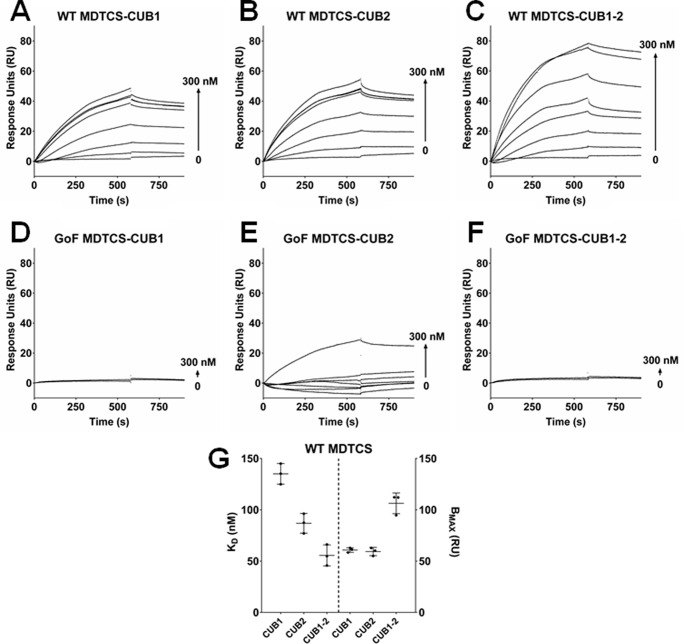
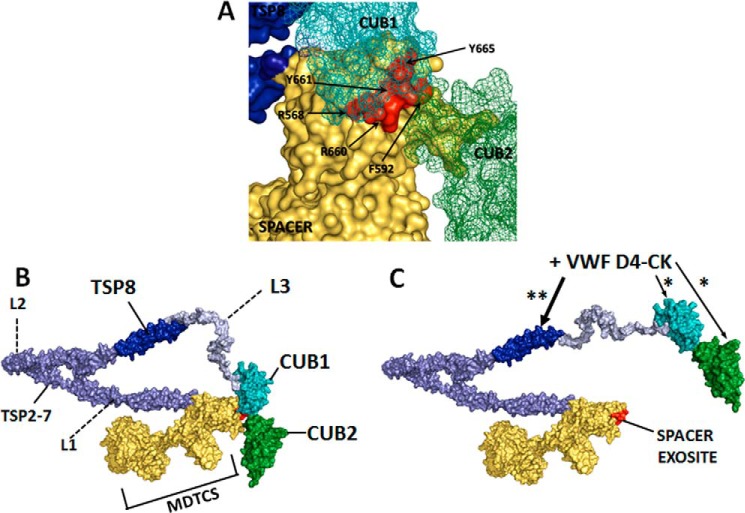
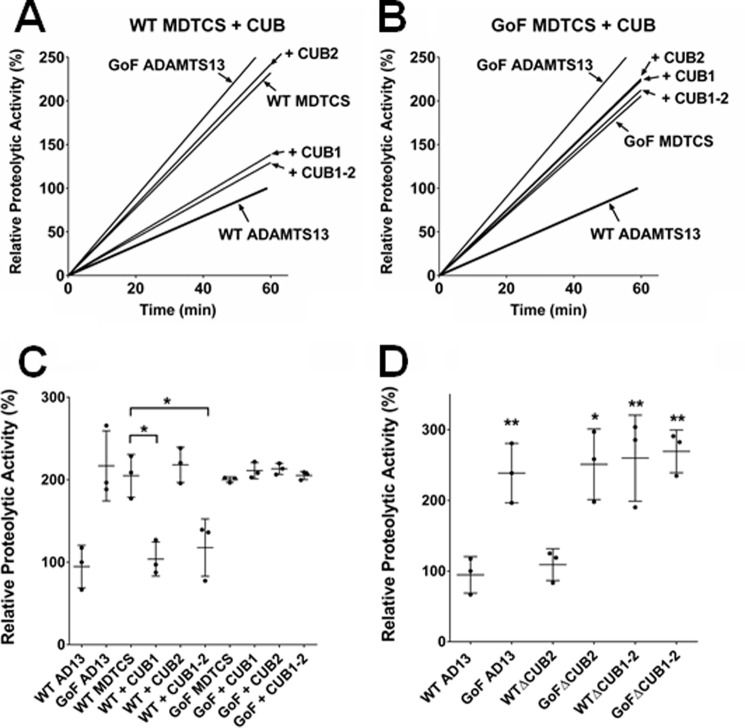
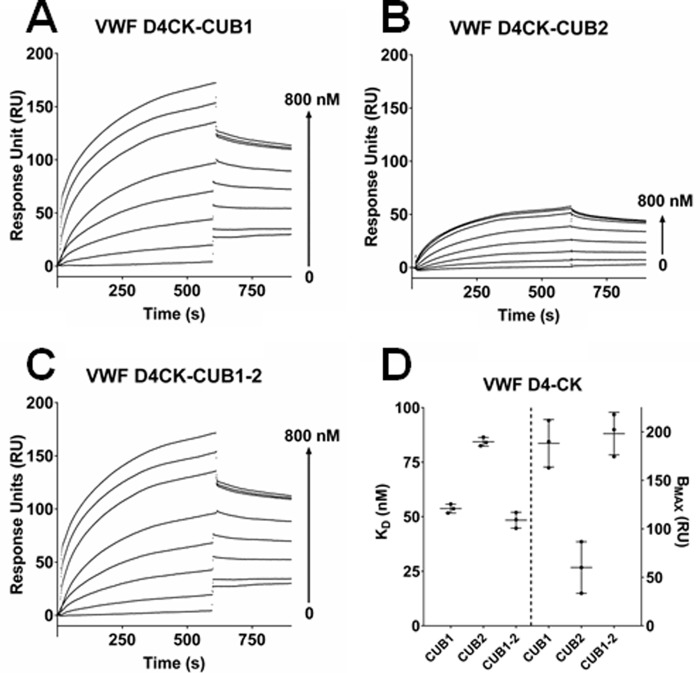
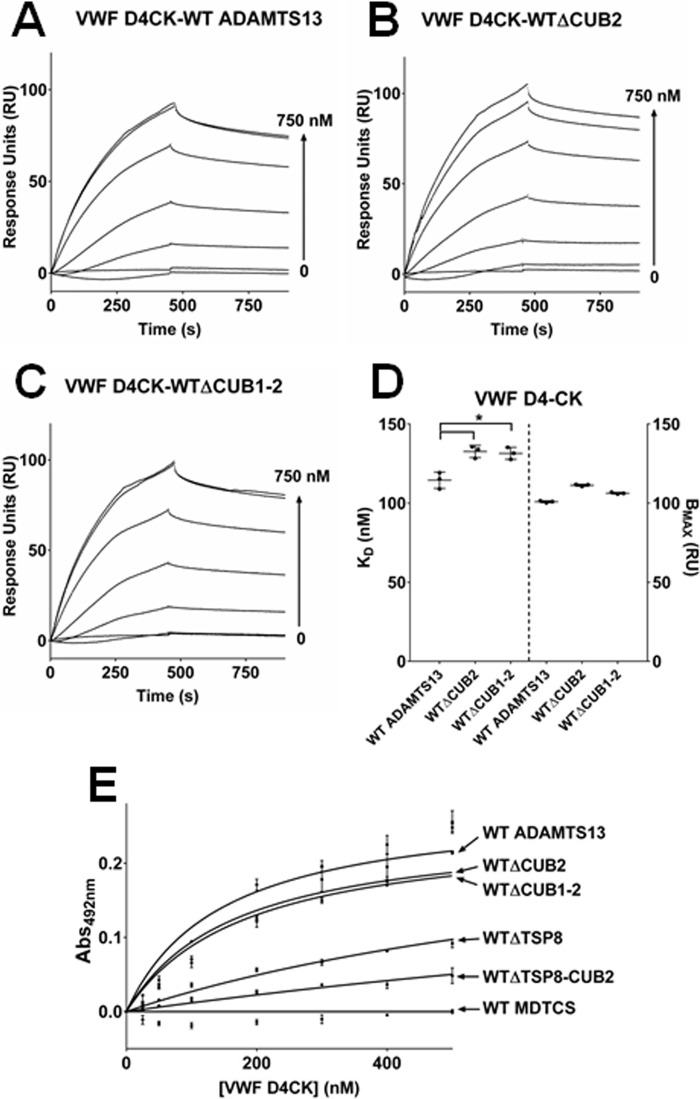
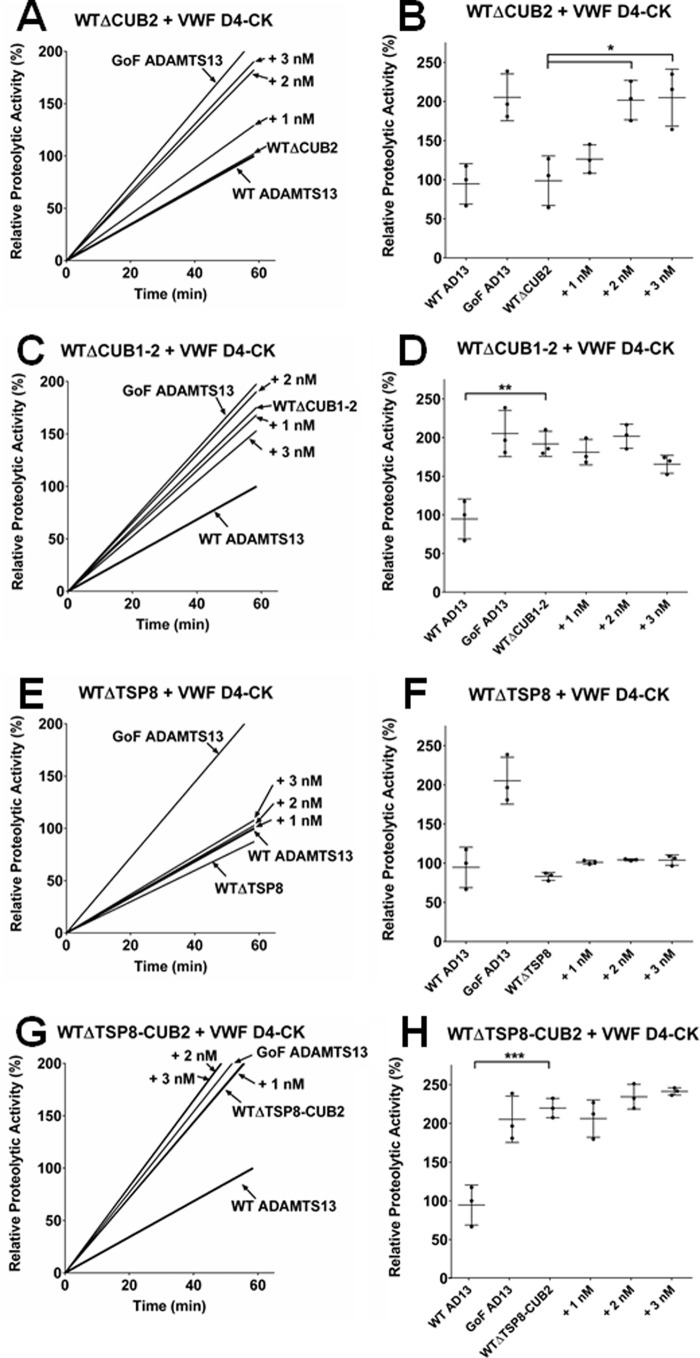
Blood loss is prevented by the multidomain glycoprotein von Willebrand factor (VWF), which binds exposed collagen at damaged vessels and captures platelets. VWF is regulated by the metalloprotease ADAMTS13, which in turn is conformationally activated by VWF. To delineate the structural requirements for VWF-mediated conformational activation of ADAMTS13, we performed binding and functional studies with a panel of truncated ADAMTS13 variants. We demonstrate that both the isolated CUB1 and CUB2 domains in ADAMTS13 bind to the spacer domain exosite of a truncated ADAMTS13 variant, MDTCS ( of 135 ± 1 0.1 nm and 86.9 ± 9.0 nm, respectively). However, only the CUB1 domain inhibited proteolytic activity of MDTCS. Moreover, ADAMTS13ΔCUB2, unlike ADAMTS13ΔCUB1-2, exhibited activity similar to wild-type ADAMTS13 and could be activated by VWF D4-CK. The CUB2 domain is, therefore, not essential for maintaining the inactive conformation of ADAMTS13. Both CUB domains could bind to the VWF D4-CK domain fragment ( of 53.7 ± 2.1 nm and 84.3 ± 2.0 nm, respectively). However, deletion of both CUB domains did not prevent VWF D4-CK binding, suggesting that competition for CUB-domain binding to the spacer domain is not the dominant mechanism behind the conformational activation. ADAMTS13ΔTSP8-CUB2 could no longer bind to VWF D4-CK, and deletion of TSP8 abrogated ADAMTS13 conformational activation. These findings support an ADAMTS13 activation model in which VWF D4-CK engages the TSP8-CUB2 domains, inducing the conformational change that disrupts the CUB1-spacer domain interaction and thereby activates ADAMTS13.
多结构域糖蛋白血管性血友病因子(VWF)可防止失血,它能结合受损血管处暴露的胶原蛋白并捕获血小板。VWF受金属蛋白酶ADAMTS13调控,而ADAMTS13又会被VWF构象激活。为了阐明VWF介导的ADAMTS13构象激活的结构要求,我们用一组截短的ADAMTS13变体进行了结合和功能研究。我们证明,ADAMTS13中分离的CUB1和CUB2结构域都与截短的ADAMTS13变体MDTCS的间隔结构域外部位点结合(分别为135±10.1纳米和86.9±9.0纳米)。然而,只有CUB1结构域抑制了MDTCS的蛋白水解活性。此外,与ADAMTS13ΔCUB1-2不同,ADAMTS13ΔCUB2表现出与野生型ADAMTS13相似的活性,并且可以被VWF D4-CK激活。因此,CUB2结构域对于维持ADAMTS13的无活性构象并非必不可少。两个CUB结构域都可以与VWF D4-CK结构域片段结合(分别为53.7±2.1纳米和84.3±2.0纳米)。然而,删除两个CUB结构域并不能阻止VWF D4-CK的结合,这表明CUB结构域与间隔结构域结合的竞争不是构象激活背后的主要机制。ADAMTS13ΔTSP8-CUB2不再能与VWF D4-CK结合,并且TSP8的缺失消除了ADAMTS13的构象激活。这些发现支持了一种ADAMTS13激活模型,即VWF D4-CK与TSP8-CUB2结构域结合,诱导构象变化,破坏CUB1-间隔结构域相互作用,从而激活ADAMTS13。