Wingen Luzie U, West Claire, Leverington-Waite Michelle, Collier Sarah, Orford Simon, Goram Richard, Yang Cai-Yun, King Julie, Allen Alexandra M, Burridge Amanda, Edwards Keith J, Griffiths Simon
Crop Genetics, John Innes Centre, Norwich NR4 7UH, UK
Crop Genetics, John Innes Centre, Norwich NR4 7UH, UK.
Genetics. 2017 Apr;205(4):1657-1676. doi: 10.1534/genetics.116.194688. Epub 2017 Feb 17.
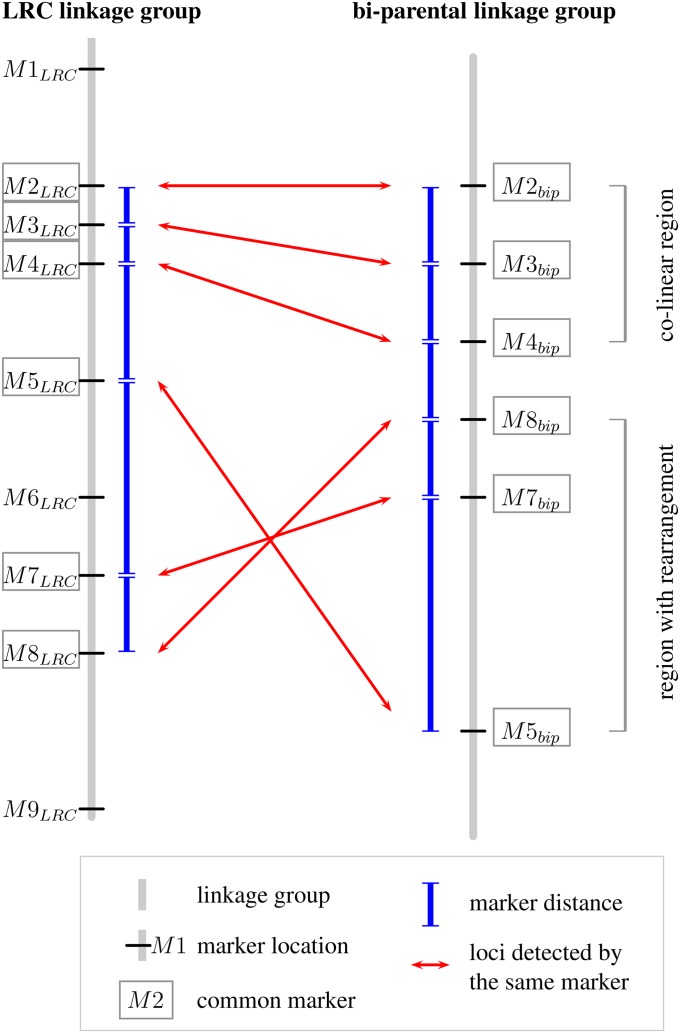
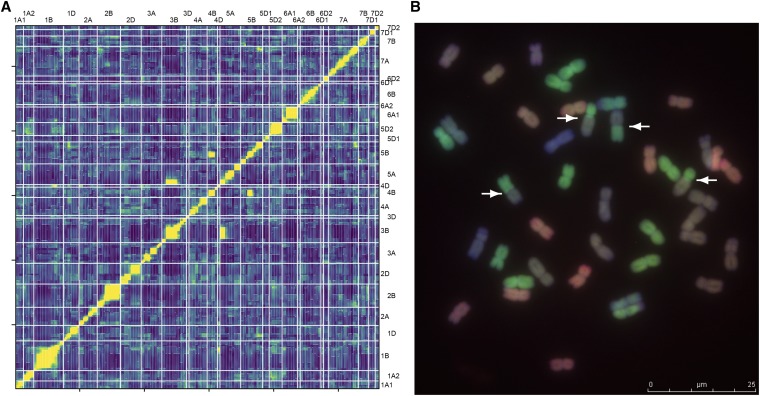
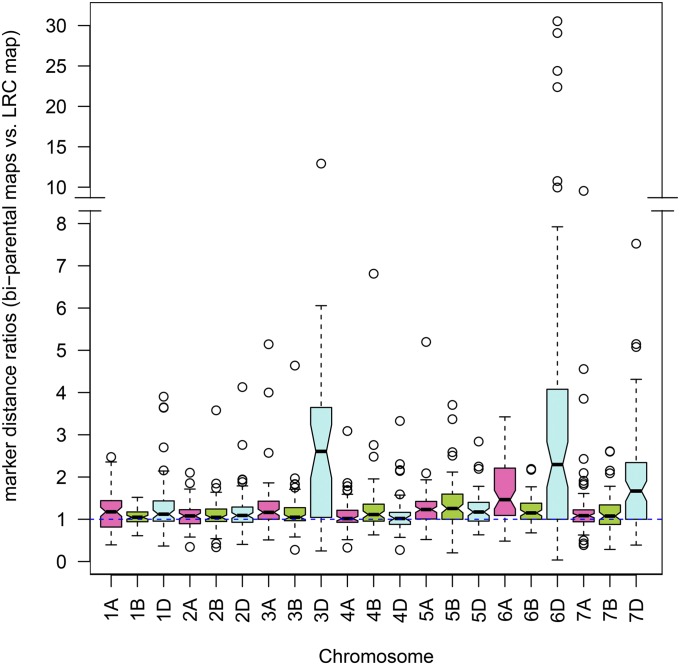
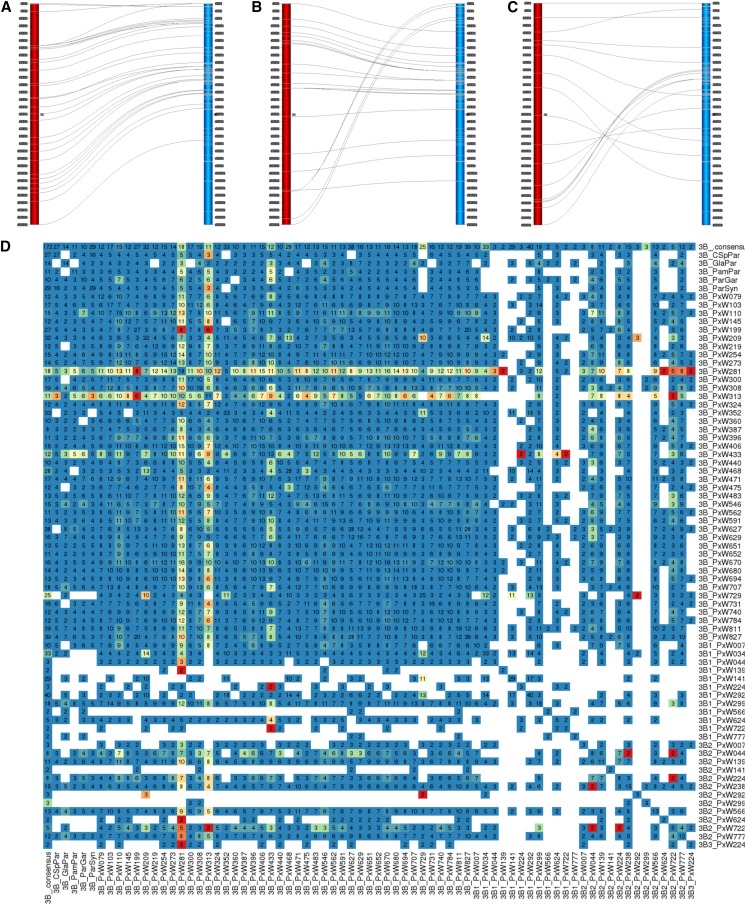
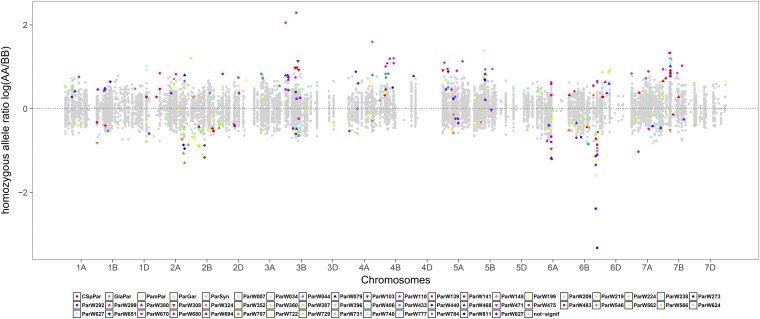
Understanding the genomic complexity of bread wheat ( L.) is a cornerstone in the quest to unravel the processes of domestication and the following adaptation of domesticated wheat to a wide variety of environments across the globe. Additionally, it is of importance for future improvement of the crop, particularly in the light of climate change. Focusing on the adaptation after domestication, a nested association mapping (NAM) panel of 60 segregating biparental populations was developed, mainly involving landrace accessions from the core set of the Watkins hexaploid wheat collection optimized for genetic diversity. A modern spring elite variety, "Paragon," was used as common reference parent. Genetic maps were constructed following identical rules to make them comparable. In total, 1611 linkage groups were identified, based on recombination from an estimated 126,300 crossover events over the whole NAM panel. A consensus map, named landrace consensus map (LRC), was constructed and contained 2498 genetic loci. These newly developed genetics tools were used to investigate the rules underlying genome fluidity or rigidity, , by comparing marker distances and marker orders. In general, marker order was highly correlated, which provides support for strong synteny between bread wheat accessions. However, many exceptional cases of incongruent linkage groups and increased marker distances were also found. Segregation distortion was detected for many markers, sometimes as hot spots present in different populations. Furthermore, evidence for translocations in at least 36 of the maps was found. These translocations fell, in general, into many different translocation classes, but a few translocation classes were found in several accessions, the most frequent one being the well-known T5B:7B translocation. Loci involved in recombination rate, which is an interesting trait for plant breeding, were identified by QTL analyses using the crossover counts as a trait. In total, 114 significant QTL were detected, nearly half of them with increasing effect from the nonreference parents.
了解面包小麦(Triticum aestivum L.)的基因组复杂性是解开驯化过程以及随后驯化小麦适应全球各种环境之谜的基石。此外,这对于该作物未来的改良也很重要,尤其是在气候变化的背景下。着眼于驯化后的适应性,构建了一个由60个分离双亲群体组成的巢式关联作图(NAM)群体,主要涉及从沃特金斯六倍体小麦核心种质库中筛选出的、经遗传多样性优化的地方品种。一个现代春性优良品种“Paragon”被用作共同参考亲本。按照相同规则构建遗传图谱,使其具有可比性。基于整个NAM群体中估计的126300次交叉事件的重组,共鉴定出1611个连锁群。构建了一个名为地方品种共识图谱(LRC)的共识图谱,其中包含2498个遗传位点。通过比较标记距离和标记顺序,利用这些新开发的遗传学工具来研究基因组流动性或刚性的潜在规律。总体而言,标记顺序高度相关,这为面包小麦种质间的强共线性提供了支持。然而,也发现了许多连锁群不一致和标记距离增加的异常情况。检测到许多标记存在分离畸变,有时表现为不同群体中的热点区域。此外,在至少36个图谱中发现了易位的证据。这些易位通常分为许多不同的易位类别,但在几个种质中发现了少数几个易位类别,最常见的是著名的T5B:7B易位。通过将交叉计数作为一个性状进行QTL分析,鉴定出了与重组率相关的位点,重组率是植物育种中一个有趣的性状。总共检测到114个显著QTL,其中近一半来自非参考亲本且具有增加效应。