McGrath Erica L, Rossi Shannan L, Gao Junling, Widen Steven G, Grant Auston C, Dunn Tiffany J, Azar Sasha R, Roundy Christopher M, Xiong Ying, Prusak Deborah J, Loucas Bradford D, Wood Thomas G, Yu Yongjia, Fernández-Salas Ildefonso, Weaver Scott C, Vasilakis Nikos, Wu Ping
Department of Neuroscience and Cell Biology, University of Texas Medical Branch, Galveston, TX 77555, USA.
Department of Pathology, Center for Biodefense and Emerging Infectious Diseases, University of Texas Medical Branch, Galveston, TX 77555, USA; Institute for Human Infections and Immunity, University of Texas Medical Branch, Galveston, TX 77555, USA.
Stem Cell Reports. 2017 Mar 14;8(3):715-727. doi: 10.1016/j.stemcr.2017.01.008. Epub 2017 Feb 16.
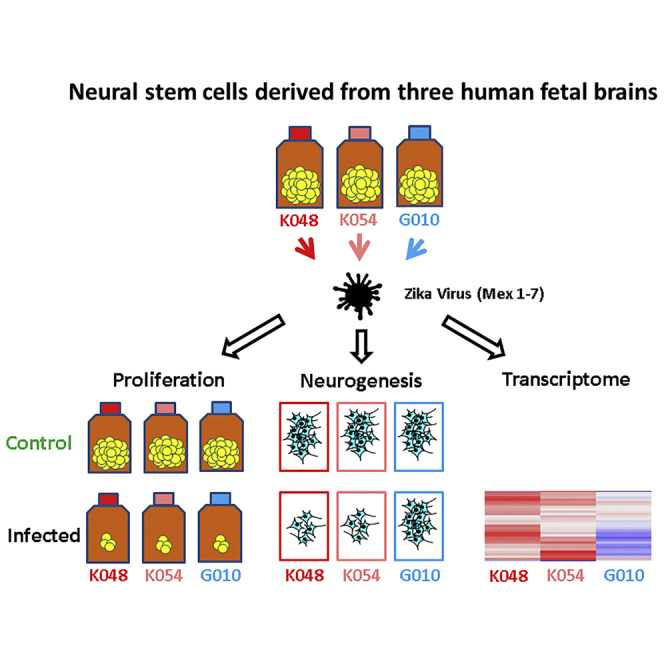
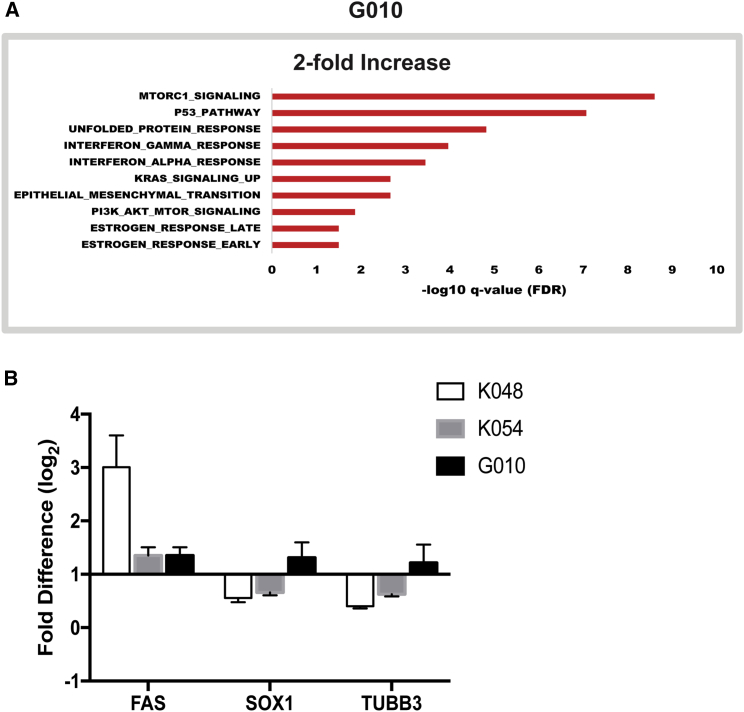
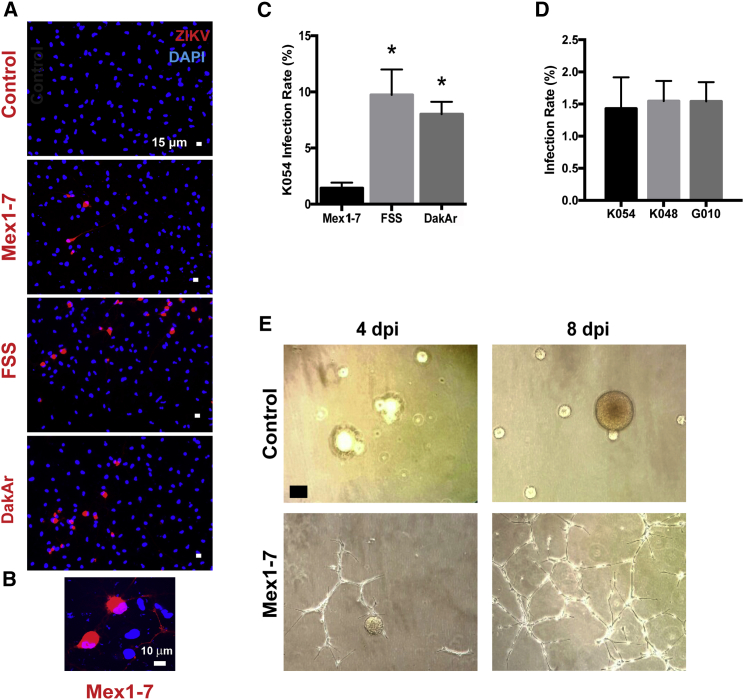
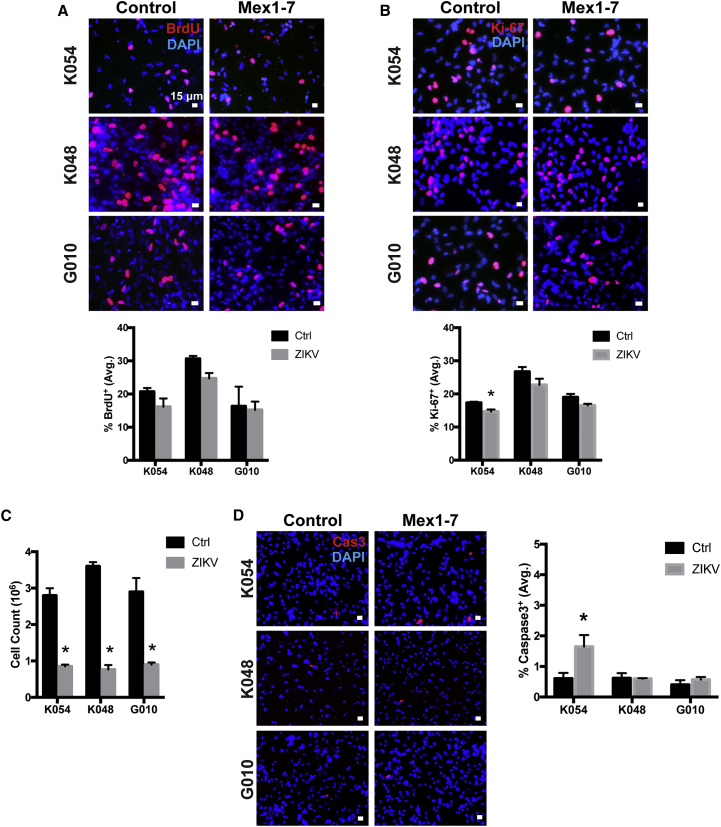
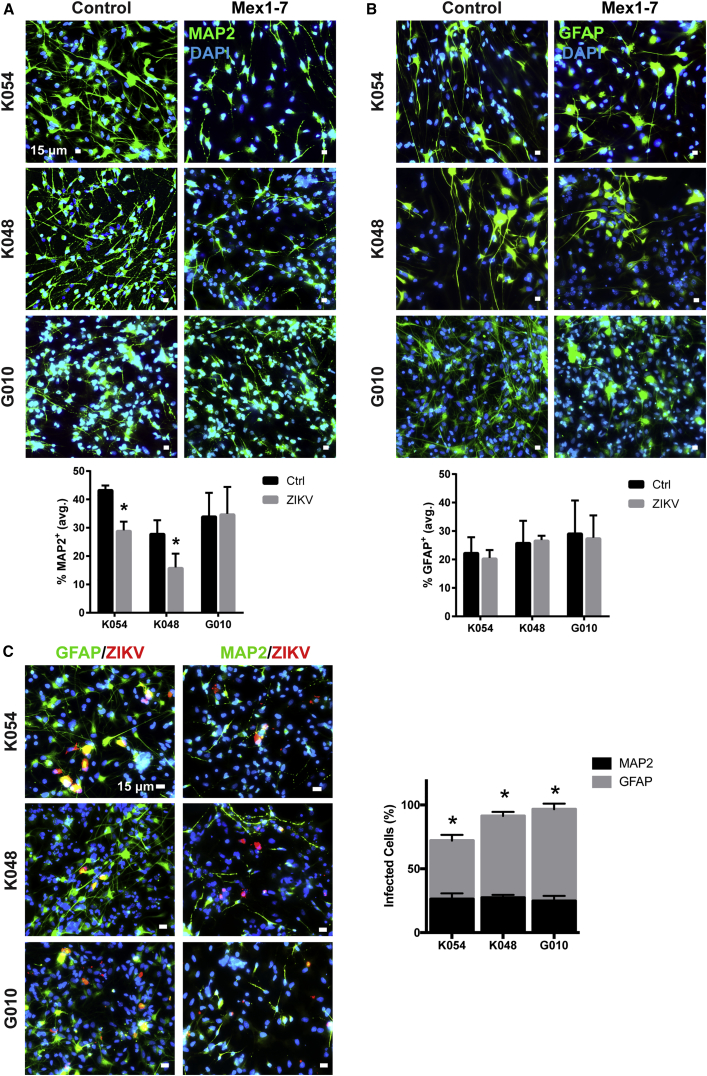
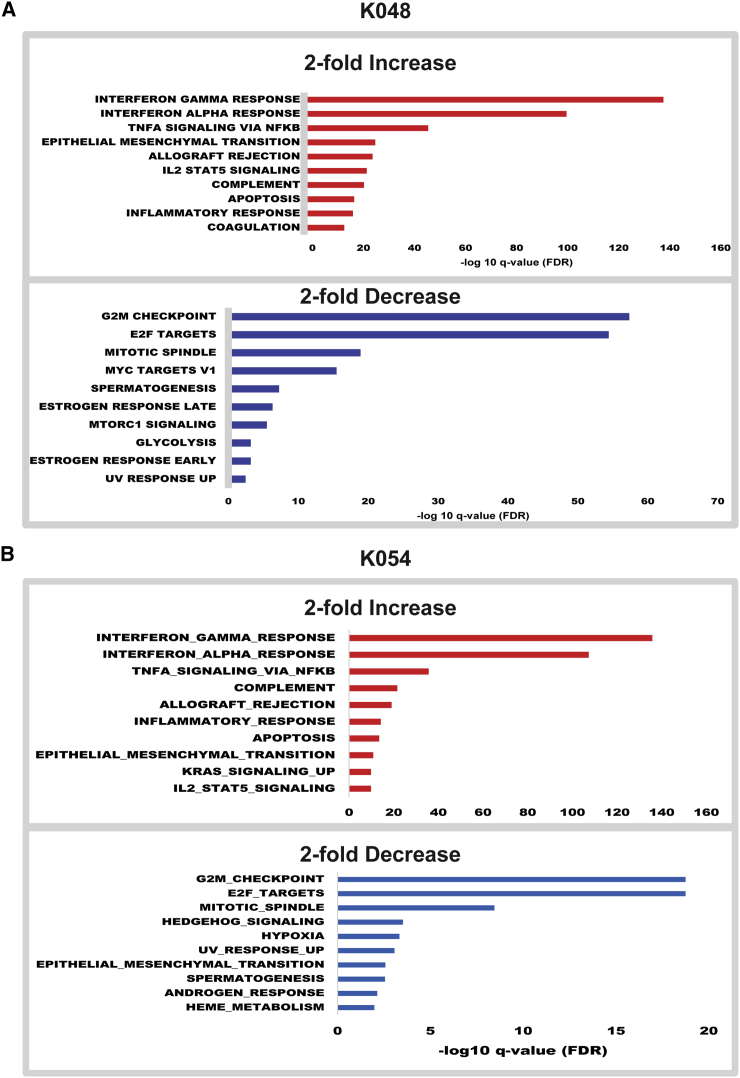
Zika virus (ZIKV) infection causes microcephaly in a subset of infants born to infected pregnant mothers. It is unknown whether human individual differences contribute to differential susceptibility of ZIKV-related neuropathology. Here, we use an Asian-lineage ZIKV strain, isolated from the 2015 Mexican outbreak (Mex1-7), to infect primary human neural stem cells (hNSCs) originally derived from three individual fetal brains. All three strains of hNSCs exhibited similar rates of Mex1-7 infection and reduced proliferation. However, Mex1-7 decreased neuronal differentiation in only two of the three stem cell strains. Correspondingly, ZIKA-mediated transcriptome alterations were similar in these two strains but significantly different from that of the third strain with no ZIKV-induced neuronal reduction. This study thus confirms that an Asian-lineage ZIKV strain infects primary hNSCs and demonstrates a cell-strain-dependent response of hNSCs to ZIKV infection.
寨卡病毒(ZIKV)感染会导致受感染孕妇所生的部分婴儿出现小头畸形。人类个体差异是否会导致对ZIKV相关神经病理学的易感性差异尚不清楚。在此,我们使用从2015年墨西哥疫情中分离出的一株亚洲系寨卡病毒(Mex1-7),感染最初来自三个不同胎儿大脑的原代人神经干细胞(hNSCs)。所有三株hNSCs对Mex1-7的感染率相似且增殖减少。然而,Mex1-7仅在三株干细胞中的两株中降低了神经元分化。相应地,这两株细胞中寨卡病毒介导的转录组改变相似,但与第三株未出现寨卡病毒诱导神经元减少的细胞株有显著差异。因此,本研究证实一株亚洲系寨卡病毒可感染原代hNSCs,并证明了hNSCs对寨卡病毒感染的细胞株依赖性反应。