Department of Pathology, Saint Louis University, St. Louis, MO, USA.
Department of Internal Medicine, Saint Louis University, St. Louis, MO, USA.
Cell Death Dis. 2017 Oct 12;8(10):e3106. doi: 10.1038/cddis.2017.517.
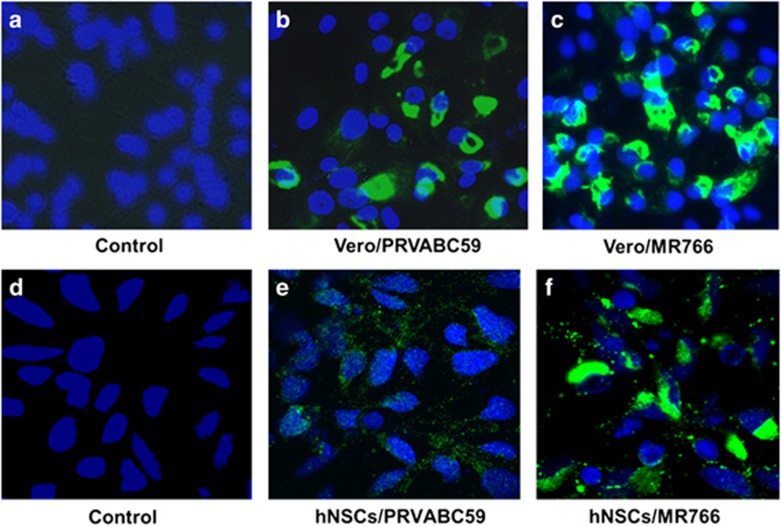
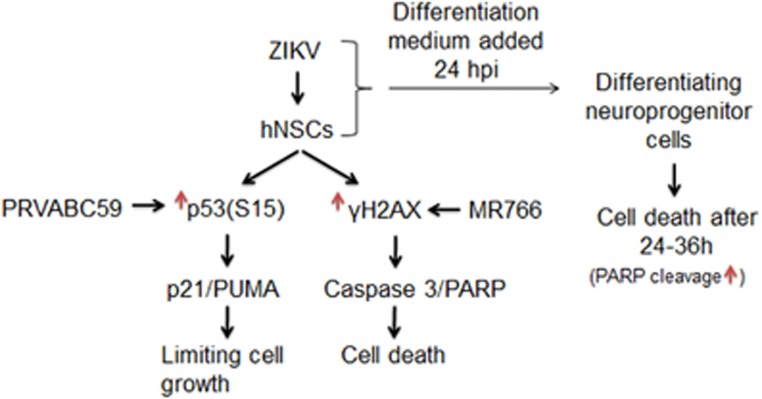
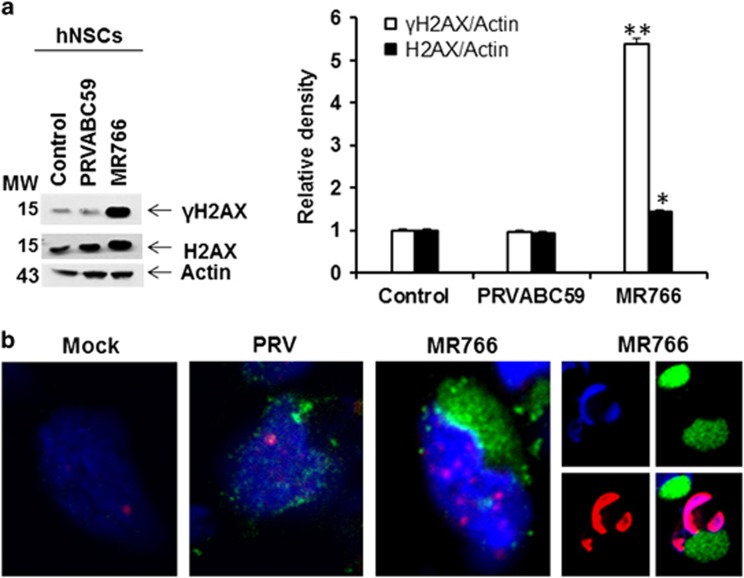
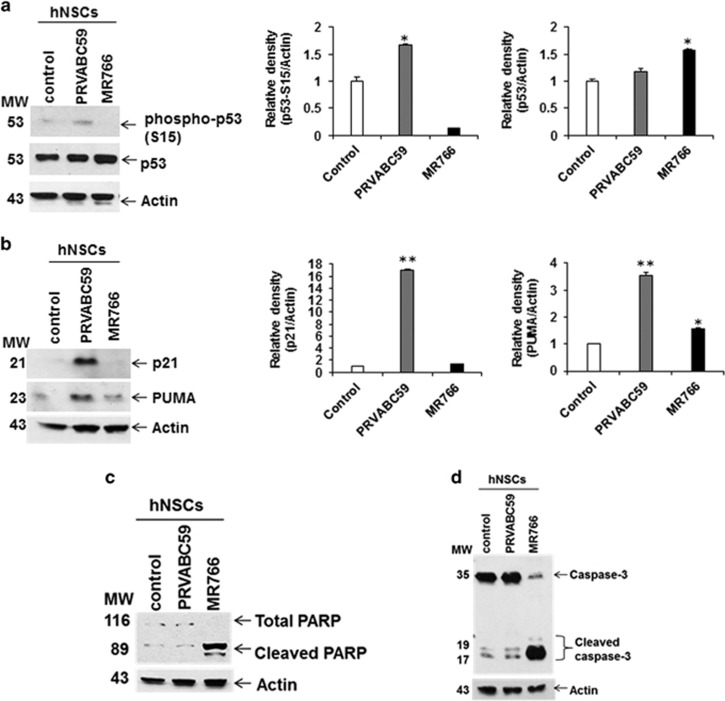
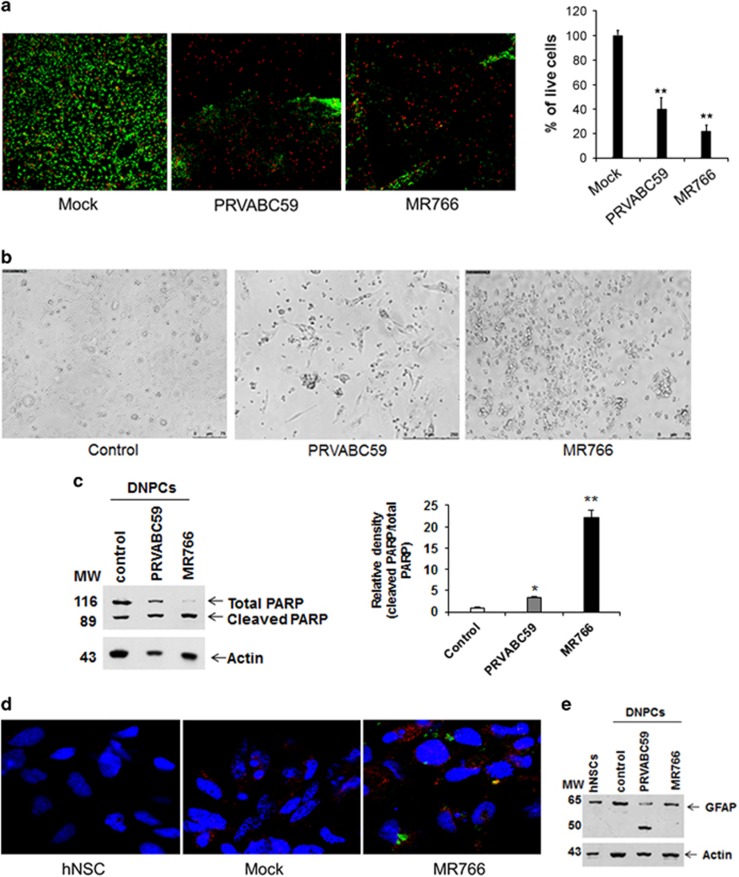
The current outbreak of Zika virus-associated diseases in South America and its threat to spread to other parts of the world has emerged as a global health emergency. A strong link between Zika virus and microcephaly exists, and the potential mechanisms associated with microcephaly are under intense investigation. In this study, we evaluated the effect of Zika virus infection of Asian and African lineages (PRVABC59 and MR766) in human neural stem cells (hNSCs). These two Zika virus strains displayed distinct infection pattern and growth rates in hNSCs. Zika virus MR766 strain increased serine 139 phosphorylation of histone H2AX (γH2AX), a known early cellular response proteins to DNA damage. On the other hand, PRVABC59 strain upregulated serine 15 phosphorylation of p53, p21 and PUMA expression. MR766-infected cells displayed poly (ADP-ribose) polymerase (PARP) and caspase-3 cleavage. Interestingly, infection of hNSCs by both strains of Zika virus for 24 h, followed by incubation in astrocyte differentiation medium, induced rounding and cell death. However, astrocytes generated from hNSCs by incubation in differentiation medium when infected with Zika virus displayed minimal cytopathic effect at an early time point. Infected hNSCs incubated in astrocyte differentiating medium displayed PARP cleavage within 24-36 h. Together, these results showed that two distinct strains of Zika virus potentiate hNSC growth inhibition by different mechanisms, but both viruses strongly induce death in early differentiating neuroprogenitor cells even at a very low multiplicity of infection. Our observations demonstrate further mechanistic insights for impaired neuronal homeostasis during active Zika virus infection.
目前,南美洲的寨卡病毒相关疾病爆发及其向世界其他地区传播的威胁已经成为全球卫生紧急事件。寨卡病毒与小头症之间存在很强的关联,而与小头症相关的潜在机制正在深入研究中。在这项研究中,我们评估了亚洲和非洲谱系(PRVABC59 和 MR766)寨卡病毒感染对人神经干细胞(hNSC)的影响。这两种寨卡病毒株在 hNSC 中表现出不同的感染模式和生长速度。寨卡病毒 MR766 株增加了组蛋白 H2AX(γH2AX)的丝氨酸 139 磷酸化,这是一种已知的早期细胞对 DNA 损伤的反应蛋白。另一方面,PRVABC59 株上调了 p53、p21 和 PUMA 表达的丝氨酸 15 磷酸化。MR766 感染的细胞显示多聚(ADP-核糖)聚合酶(PARP)和半胱天冬酶-3 的切割。有趣的是,两种寨卡病毒株感染 hNSC 24 小时后,再在星形胶质细胞分化培养基中孵育,会诱导细胞变圆和死亡。然而,当用寨卡病毒感染在分化培养基中孵育的 hNSC 生成的星形胶质细胞在早期时间点显示出最小的细胞病变效应。在星形胶质细胞分化培养基中孵育的感染 hNSC 在 24-36 小时内显示出 PARP 切割。总之,这些结果表明,两种不同的寨卡病毒株通过不同的机制增强 hNSC 的生长抑制,但两种病毒即使在非常低的感染复数下,也能强烈诱导早期分化的神经祖细胞死亡。我们的观察结果进一步证明了在寨卡病毒活跃感染期间神经元内稳态受损的机制见解。