State Key Laboratory of Microbial Metabolism, Joint International Research Laboratory of Metabolic &Developmental Sciences, MOE-LSB and MOE-LSC, School of Life Sciences and Biotechnology, Shanghai Jiao Tong University, Shanghai, 200240, China.
Sci Rep. 2017 Feb 20;7:42823. doi: 10.1038/srep42823.
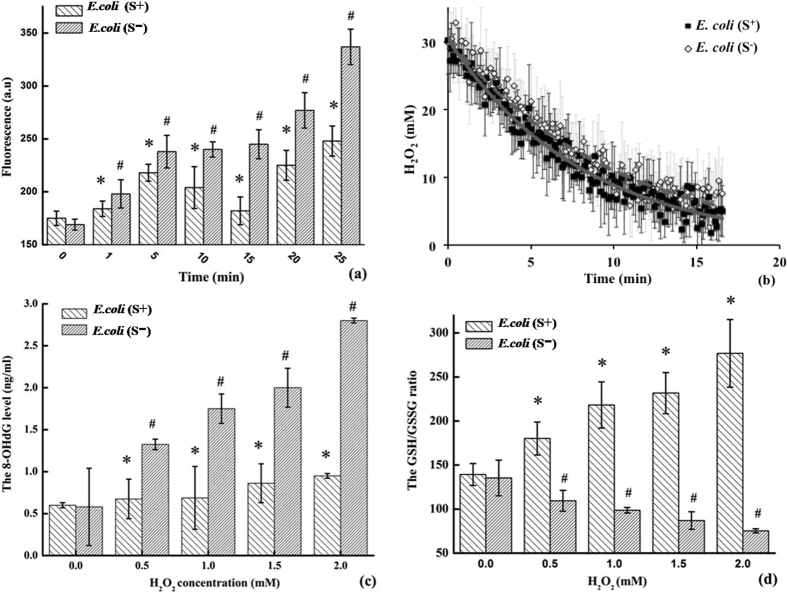
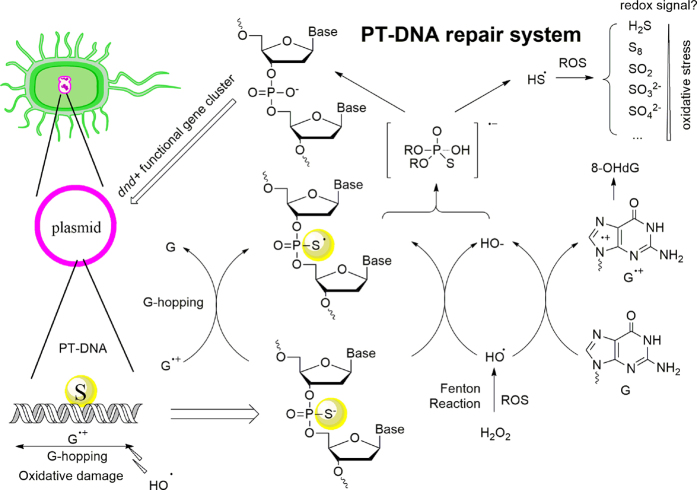
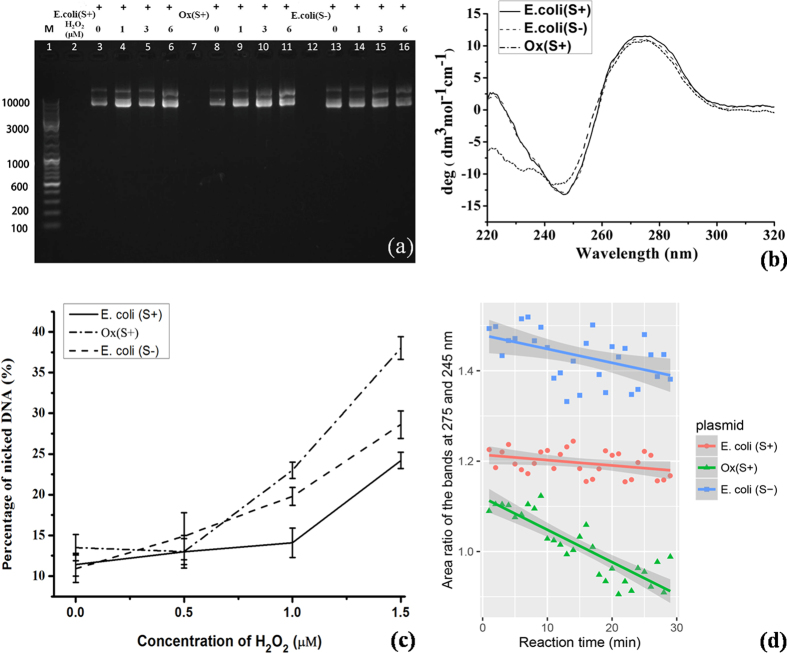
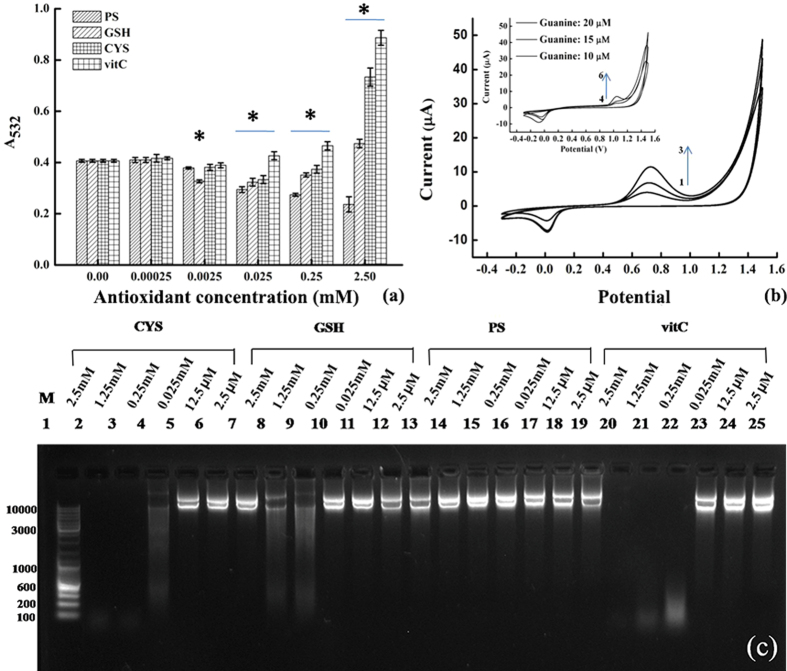
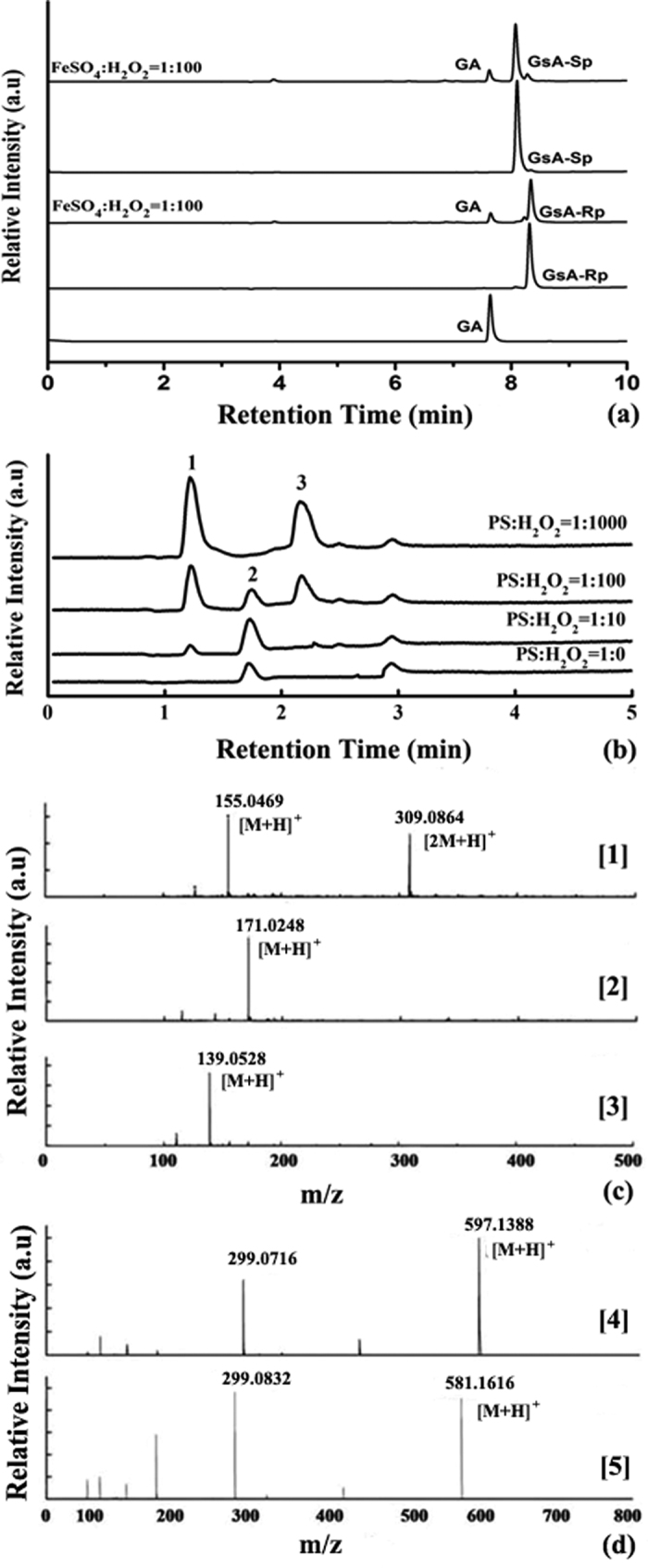
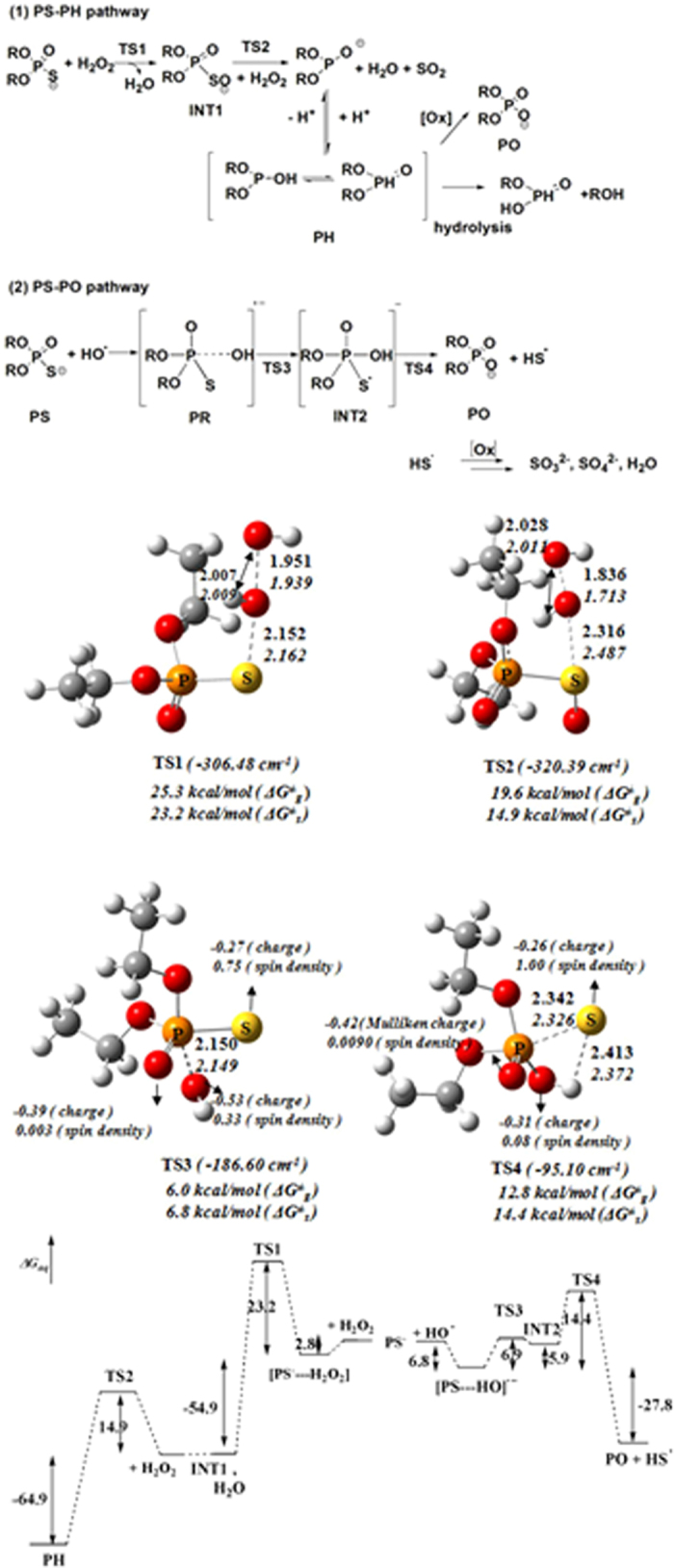
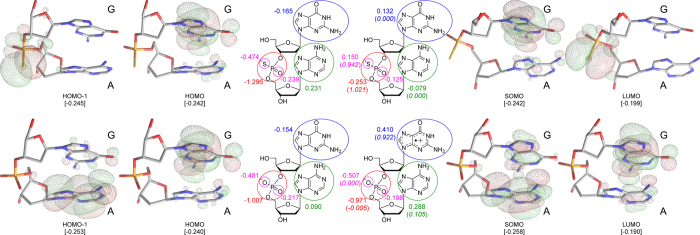
Phosphorothioated DNA (PT-DNA) exhibits a mild anti-oxidant property both in vivo and in vitro. It was found that 8-OHdG and ROS levels were significantly lower in dnd+ (i.e. S) E. coli., compared to a dnd- (i.e. S) strain. Furthermore, different from traditional antioxidants, phosphorothioate compound presents an unexpectedly high capacity to quench hydroxyl radical. Oxidative product analysis by liquid chromatography-mass spectrometry and quantum mechanistic computation supported its unique anti-oxidant characteristic of the hydroxyl selectivity: phosphorothioate donates an electron to either hydroxyl radical or guanine radical derived from hydroxyl radical, leading to a PS radical; a complex of PS radical and OH (i.e. the reductive product of hydroxyl radical) releases a highly reductive HS radical, which scavenges more equivalents of oxidants in the way to high-covalent sulphur compounds such as sulphur, sulphite and sulphate. The PS-PO conversion (PS and PO denote phosphorus-sulphur and phosphorus-oxygen compounds, respectively) made a switch of extremely oxidative OH to highly reductive HS species, endowing PT-DNA with the observed high capacity in hydroxyl-radical neutralization. This plausible mechanism provides partial rationale as to why bacteria develop the resource-demanding PT modification on guanine-neighboring phosphates in genome.
硫代磷酸酯 DNA(PT-DNA)在体内和体外均表现出轻微的抗氧化特性。与 dnd-(即 S)菌株相比,发现 dnd+(即 S)大肠杆菌中的 8-OHdG 和 ROS 水平显著降低。此外,与传统抗氧化剂不同,硫代磷酸酯化合物出乎意料地具有淬灭羟基自由基的高能力。通过液相色谱-质谱和量子力学计算对氧化产物进行分析,支持其独特的羟基选择性抗氧化特性:硫代磷酸酯向羟基自由基或源自羟基自由基的鸟嘌呤自由基提供一个电子,导致 PS 自由基;PS 自由基和 OH(即羟基自由基的还原产物)的复合物释放出高度还原的 HS 自由基,以高共价硫化合物(如硫、亚硫酸盐和硫酸盐)的方式清除更多氧化剂当量。PS-PO 转换(PS 和 PO 分别表示磷-硫和磷-氧化合物)使极氧化的 OH 转换为高度还原的 HS 物种,这赋予了 PT-DNA 观察到的羟基自由基中和的高能力。这种合理的机制部分解释了为什么细菌在基因组中鸟嘌呤邻近磷酸上发展出这种资源需求高的 PT 修饰。