Areeshi Mohammed Y, Mandal Raju K, Dar Sajad, Wahid Mohd, Khan Md Ekhlaque A, Panda Aditya K, Jawed Arshad, Haque Shafiul
Research and Scientific Studies Unit, College of Nursing & Allied Health Sciences, Jazan University, Jazan-45142, Saudi Arabia.
Research and Scientific Studies Unit, College of Nursing & Allied Health Sciences, Jazan University, Jazan-45142, Saudi Arabia; The University College of Medical Sciences & GTB Hospital (University of Delhi), Delhi - 110095, India.
Curr Genomics. 2015 Oct;17(5):450-458. doi: 10.2174/1389202917666160513104737.
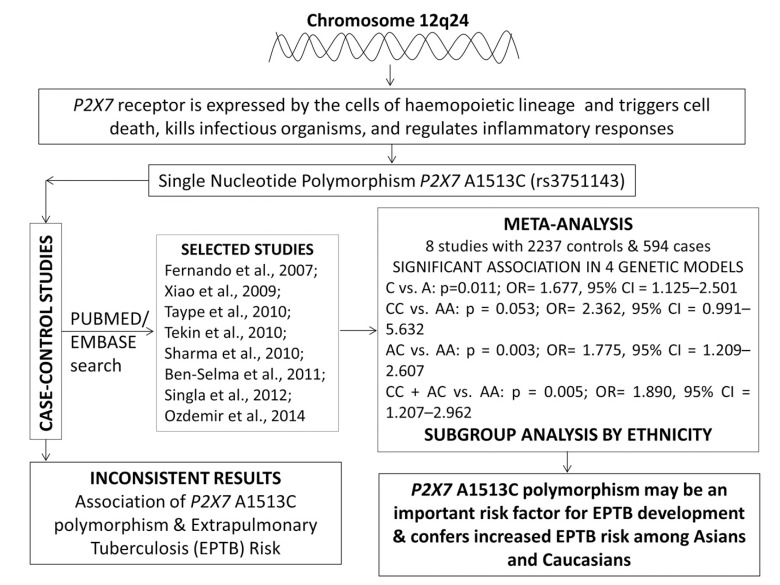
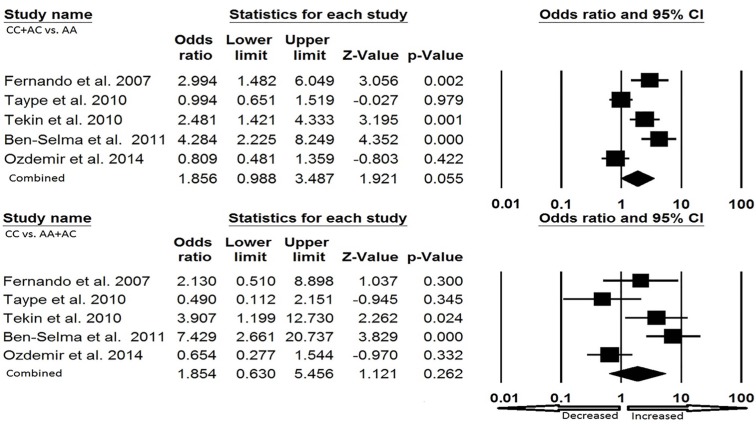
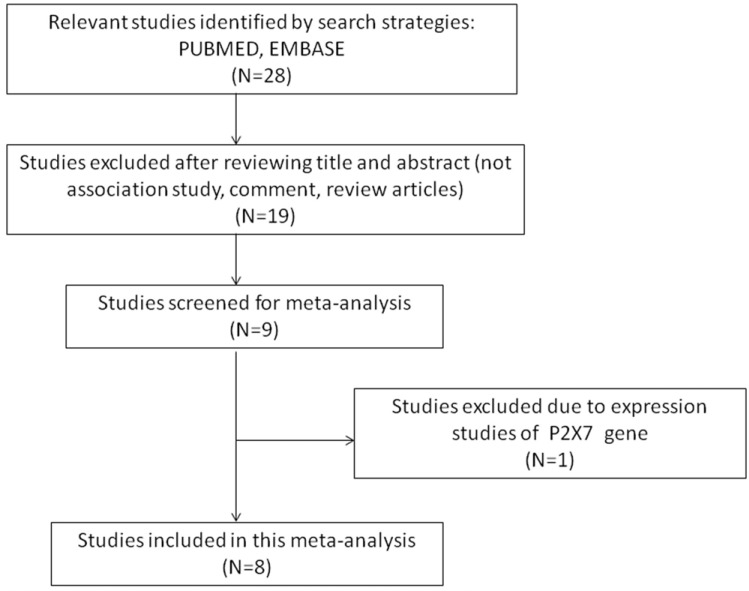
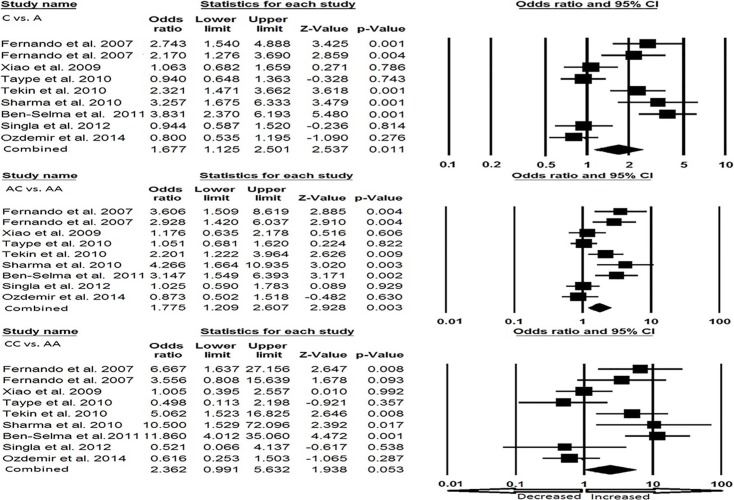
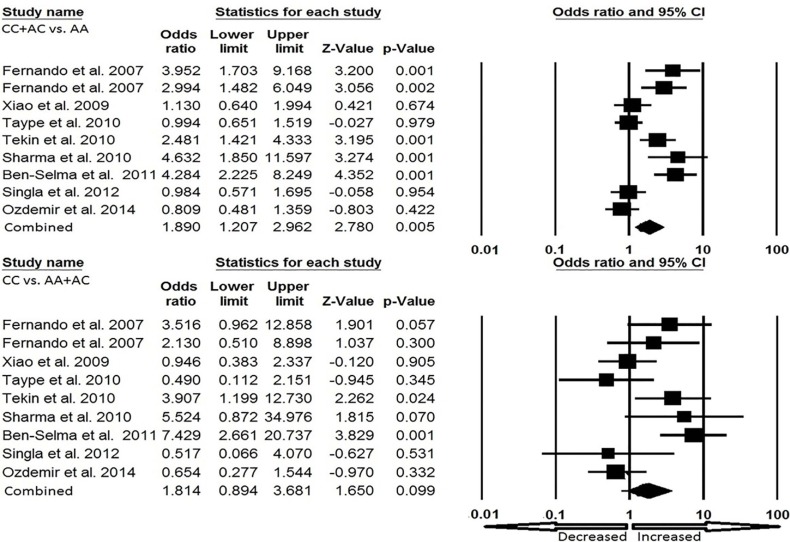
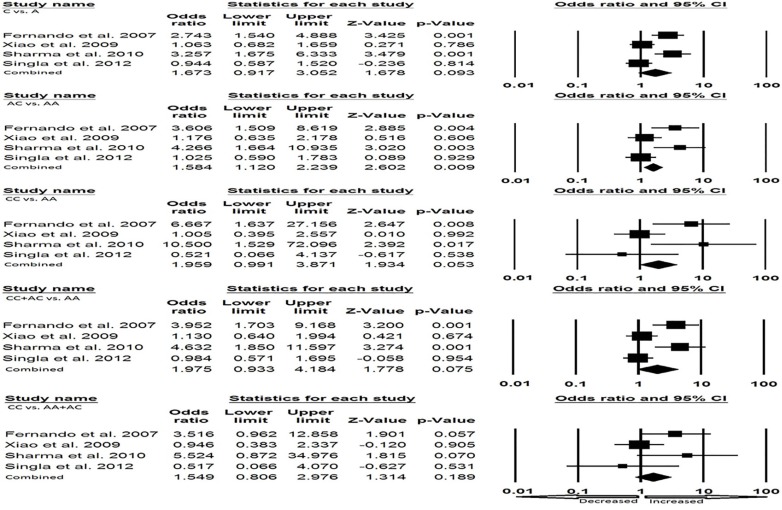
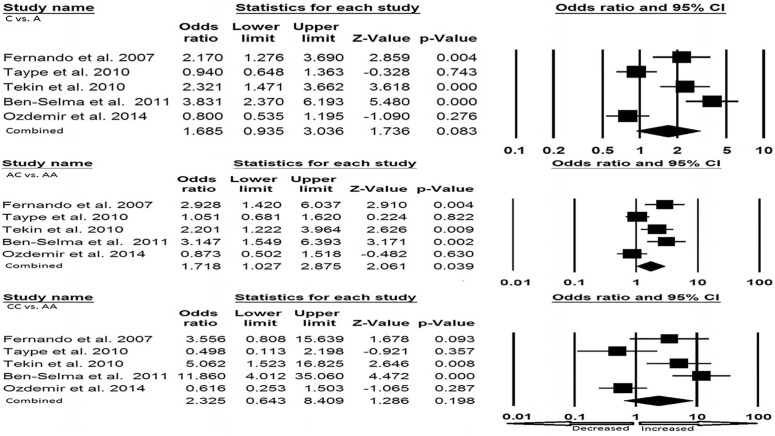
The association of A1513C (rs3751143) polymorphism of gene with the risk of extrapulmonary tuberculosis (EPTB) has been extensively analyzed, but no consensus has been achieved. In this study, a meta-analysis was done to assess this precise association. Online web databases, like PubMed (MEDLINE) and EMBASE were searched for pertinent reports showing association of A1513C polymorphism with EPTB risk. To assess the strength of this association, we calculated pooled odds ratios (ORs) and 95% confidence intervals (95% CIs). A total of eight reports involving 2237controls and 594 EPTB cases were included in this study. Four genetic models, allele (C vs. A: p=0.011; OR= 1.677, 95% CI = 1.125-2.501), homozygous (CC vs. AA: p = 0.053; OR= 2.362, 95% CI = 0.991-5.632), heterozygous (AC vs. AA: p = 0.003; OR= 1.775, 95% CI = 1.209-2.607) and dominant (CC + AC vs. AA: p = 0.005; OR= 1.890, 95% CI = 1.207-2.962) showed significant associations compared with wild type genotypes. Subgroup analysis stratified by ethnicity was also performed and the results suggested that homozygous and heterozygous genotypes were associated significantly with increased susceptibility of EPTB in Asian population. Similarly, heterozygous and dominant models showed increased EPTB risk in Caucasian population. The present meta-analysis suggests that A1513C polymorphism may be an important risk factor for EPTB. Also, our sub-group analysis indicates that A1513C polymorphism confers increased EPTB risk among Asians and Caucasians. However, future larger studies are needed to provide more precise conclusion and endorse the present results.
基因的A1513C(rs3751143)多态性与肺外结核(EPTB)风险的关联已得到广泛分析,但尚未达成共识。在本研究中,进行了一项荟萃分析以评估这种确切的关联。通过搜索在线网络数据库,如PubMed(MEDLINE)和EMBASE,查找显示A1513C多态性与EPTB风险关联的相关报告。为了评估这种关联的强度,我们计算了合并比值比(OR)和95%置信区间(95%CI)。本研究共纳入了8篇报告,涉及2237名对照和594例EPTB病例。与野生型基因型相比,四种遗传模型,即等位基因(C对A:p = 0.011;OR = 1.677,95%CI = 1.125 - 2.501)、纯合子(CC对AA:p = 0.053;OR = 2.362,95%CI = 0.991 - 5.632)、杂合子(AC对AA:p = 0.003;OR = 1.775,95%CI = 1.209 - 2.607)和显性(CC + AC对AA:p = 0.005;OR = 1.890,95%CI = 1.207 - 2.962)均显示出显著关联。还按种族进行了亚组分析,结果表明纯合子和杂合子基因型与亚洲人群中EPTB易感性增加显著相关。同样,杂合子和显性模型在白种人群中显示EPTB风险增加。本荟萃分析表明,A1513C多态性可能是EPTB的一个重要风险因素。此外,我们的亚组分析表明,A1513C多态性在亚洲人和白种人中会增加EPTB风险。然而,未来需要更大规模的研究来提供更精确的结论并证实目前的结果。