Portelius Erik, Mattsson Niklas, Pannee Josef, Zetterberg Henrik, Gisslén Magnus, Vanderstichele Hugo, Gkanatsiou Eleni, Crespi Gabriela A N, Parker Michael W, Miles Luke A, Gobom Johan, Blennow Kaj
Institute of Neuroscience and Physiology, Department of Psychiatry and Neurochemistry, The Sahlgrenska Academy at University of Gothenburg, Mölndal, Sweden.
Clinical Neurochemistry Laboratory, Sahlgrenska University Hospital, University Hospital, SE-431 80, Mölndal, Sweden.
Mol Neurodegener. 2017 Feb 20;12(1):18. doi: 10.1186/s13024-017-0152-5.
Proteolytic degradation of amyloid β (Aβ) peptides has been intensely studied due to the central role of Aβ in Alzheimer's disease (AD) pathogenesis. While several enzymes have been shown to degrade Aβ peptides, the main pathway of Aβ degradation in vivo is unknown. Cerebrospinal fluid (CSF) Aβ42 is reduced in AD, reflecting aggregation and deposition in the brain, but low CSF Aβ42 is, for unknown reasons, also found in some inflammatory brain disorders such as bacterial meningitis.
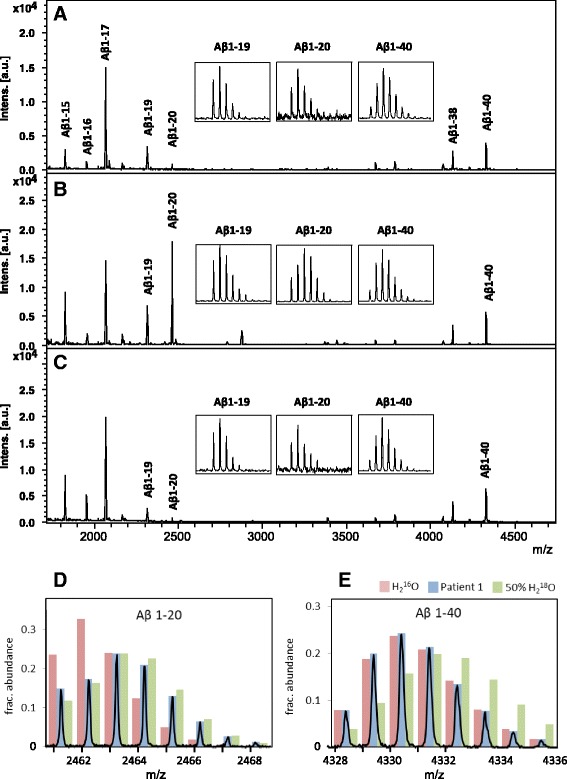
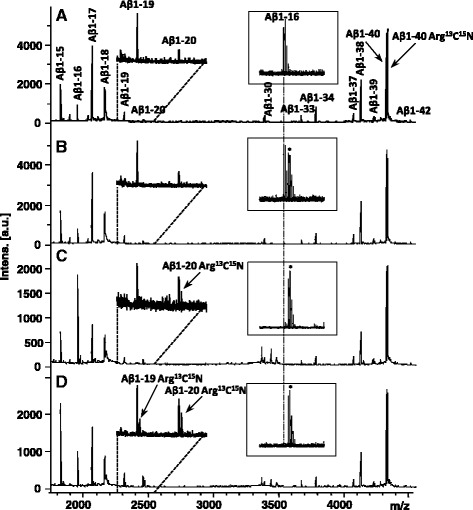
Using O-labeling mass spectrometry and immune-affinity purification, we examined endogenous proteolytic processing of Aβ in human CSF.
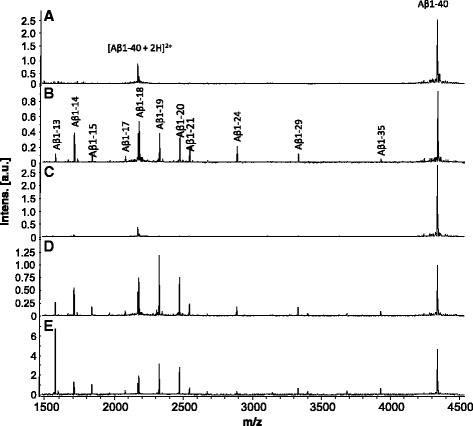
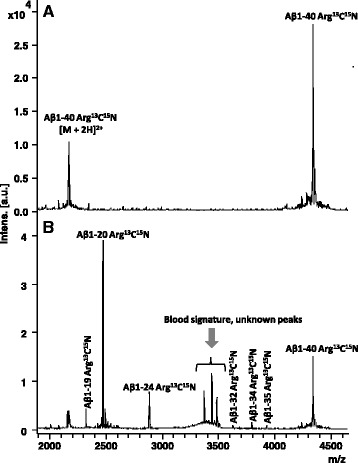
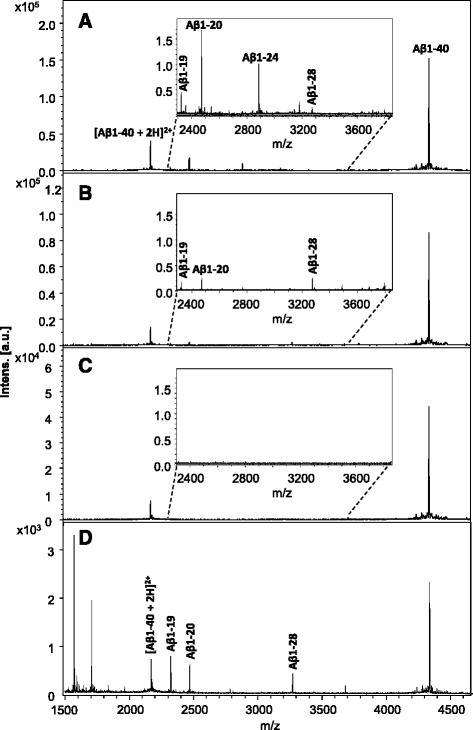
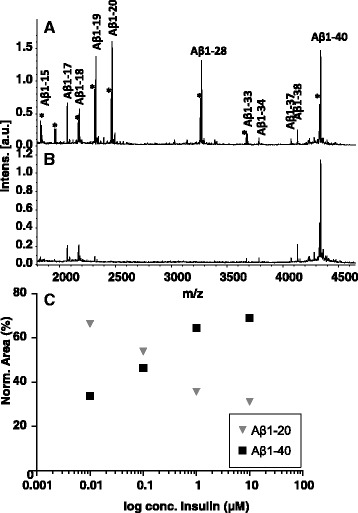
The Aβ peptide profile was stable in CSF samples from healthy controls but in CSF samples from patients with bacterial meningitis, showing increased leukocyte cell count, O-labeling mass spectrometry identified proteolytic activities degrading Aβ into several short fragments, including abundant Aβ1-19 and 1-20. After antibiotic treatment, no degradation of Aβ was detected. In vitro experiments located the source of the proteolytic activity to blood components, including leukocytes and erythrocytes, with insulin-degrading enzyme as the likely protease. A recombinant version of the mid-domain anti-Aβ antibody solanezumab was found to inhibit insulin-degrading enzyme-mediated Aβ degradation.
O labeling-mass spectrometry can be used to detect endogenous proteolytic activity in human CSF. Using this technique, we found an enzymatic activity that was identified as insulin-degrading enzyme that cleaves Aβ in the mid-domain of the peptide, and could be inhibited by a recombinant version of the mid-domain anti-Aβ antibody solanezumab.
由于淀粉样β(Aβ)肽在阿尔茨海默病(AD)发病机制中起核心作用,因此对其蛋白水解降解进行了深入研究。虽然已证明几种酶可降解Aβ肽,但Aβ在体内的主要降解途径尚不清楚。AD患者脑脊液(CSF)中的Aβ42减少,反映了其在大脑中的聚集和沉积,但出于未知原因,在一些炎症性脑部疾病如细菌性脑膜炎中也发现脑脊液Aβ42水平较低。
我们使用O标记质谱法和免疫亲和纯化技术,检测了人脑脊液中Aβ的内源性蛋白水解过程。
健康对照者脑脊液样本中的Aβ肽谱稳定,但在细菌性脑膜炎患者的脑脊液样本中,白细胞计数增加,O标记质谱法鉴定出有蛋白水解活性将Aβ降解为几个短片段,包括大量的Aβ1-19和1-20。抗生素治疗后,未检测到Aβ的降解。体外实验将蛋白水解活性的来源定位到血液成分,包括白细胞和红细胞,胰岛素降解酶可能是相关蛋白酶。发现重组的中结构域抗Aβ抗体索拉珠单抗可抑制胰岛素降解酶介导的Aβ降解。
O标记质谱法可用于检测人脑脊液中的内源性蛋白水解活性。使用该技术,我们发现了一种酶活性,鉴定为胰岛素降解酶,它可在Aβ肽的中结构域切割Aβ,并且可被重组的中结构域抗Aβ抗体索拉珠单抗抑制。