Busquets-Garcia A, Soria-Gómez E, Redon B, Mackenbach Y, Vallée M, Chaouloff F, Varilh M, Ferreira G, Piazza P-V, Marsicano G
INSERM, U1215 NeuroCentre Magendie, Bordeaux, France.
University of Bordeaux, Bordeaux, France.
Mol Psychiatry. 2017 Nov;22(11):1594-1603. doi: 10.1038/mp.2017.4. Epub 2017 Feb 21.
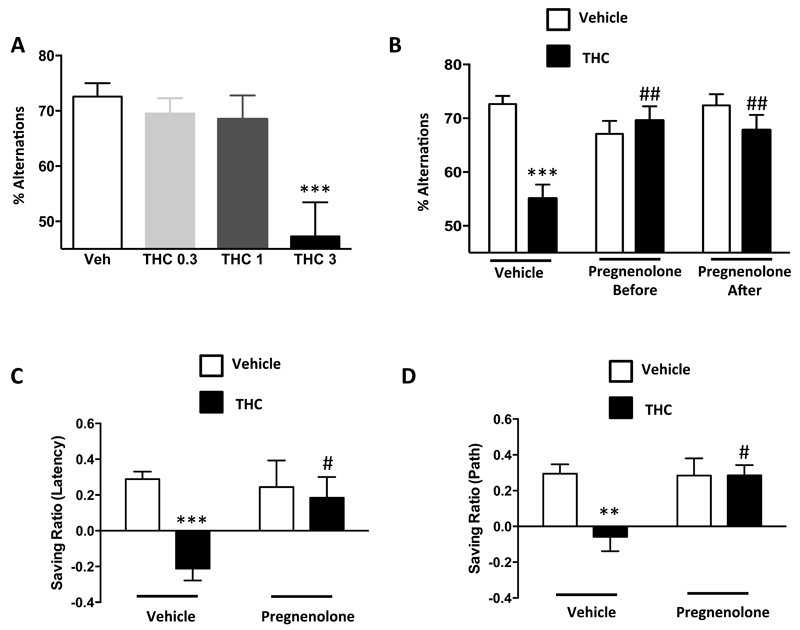
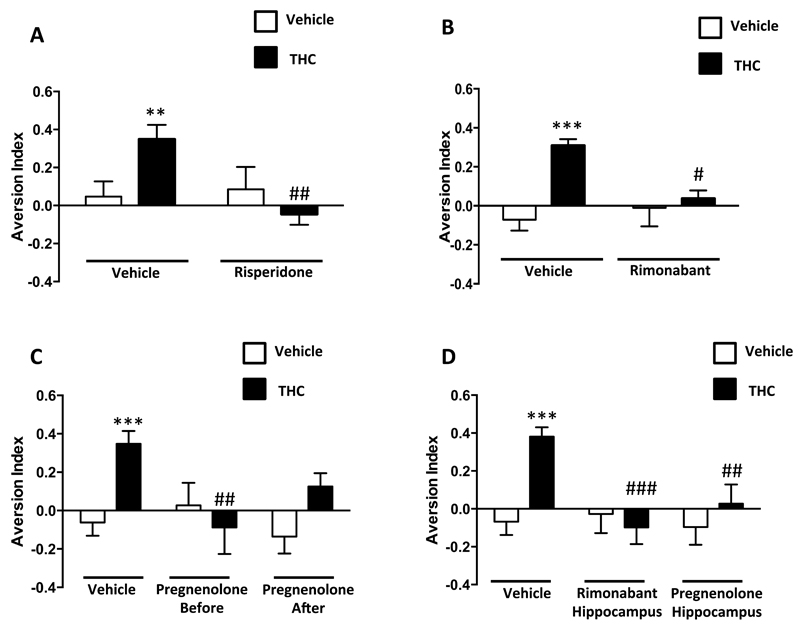
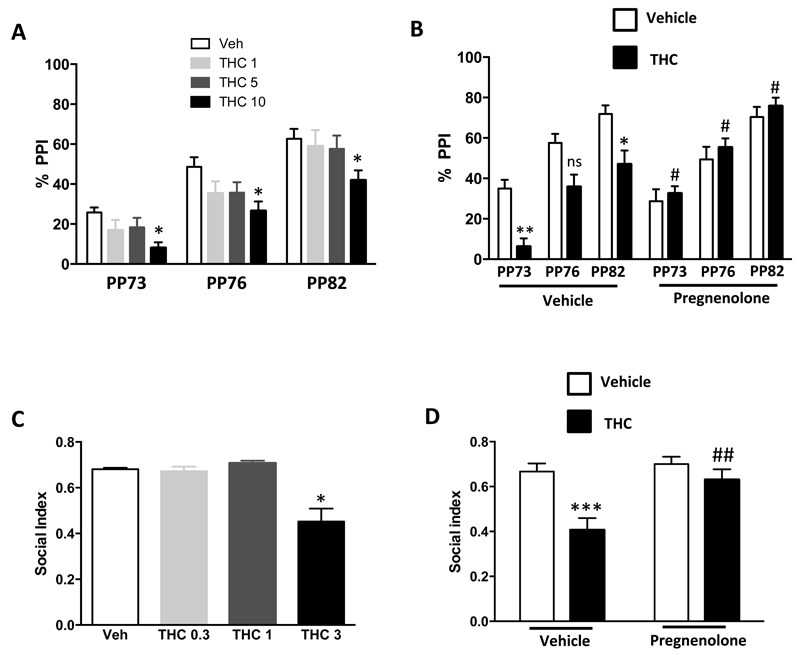
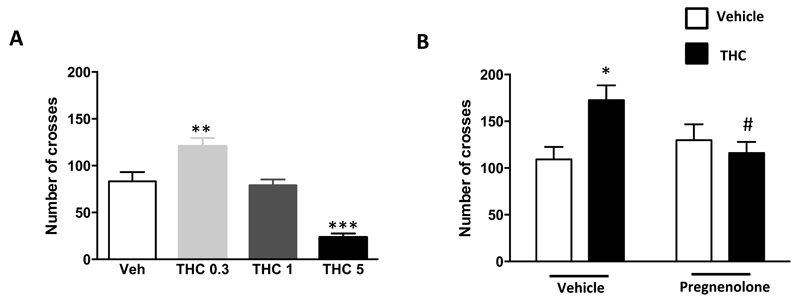
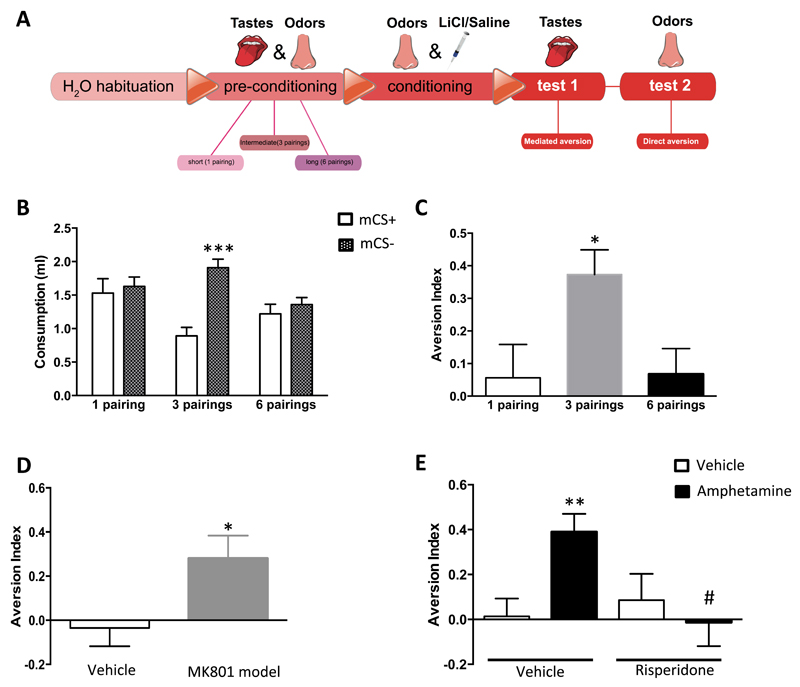
Cannabis-induced acute psychotic-like states (CIAPS) represent a growing health issue, but their underlying neurobiological mechanisms are poorly understood. The use of antipsychotics and benzodiazepines against CIAPS is limited by side effects and/or by their ability to tackle only certain aspects of psychosis. Thus, safer wide-spectrum treatments are currently needed. Although the blockade of cannabinoid type-1 receptor (CB1) had been suggested as a therapeutical means against CIAPS, the use of orthosteric CB1 receptor full antagonists is strongly limited by undesired side effects and low efficacy. The neurosteroid pregnenolone has been recently shown to act as a potent endogenous allosteric signal-specific inhibitor of CB1 receptors. Thus, we tested in mice the potential therapeutic use of pregnenolone against acute psychotic-like effects of Δ-tetrahydrocannabinol (THC), the main psychoactive component of cannabis. We found that pregnenolone blocks a wide spectrum of THC-induced endophenotypes typically associated with psychotic-like states, including impairments in cognitive functions, somatosensory gating and social interaction. In order to capture THC-induced positive psychotic-like symptoms (e.g. perceptual delusions), we adapted a behavioral paradigm based on associations between different sensory modalities and selective devaluation, allowing the measurement of mental sensory representations in mice. Acting at hippocampal CB1 receptors, THC impaired the correct processing of mental sensory representations (reality testing) in an antipsychotic- and pregnenolone-sensitive manner. Overall, this work reveals that signal-specific inhibitors mimicking pregnenolone effects can be considered as promising new therapeutic tools to treat CIAPS.
大麻所致急性类精神病状态(CIAPS)是一个日益严重的健康问题,但其潜在的神经生物学机制仍知之甚少。抗精神病药物和苯二氮䓬类药物用于治疗CIAPS时,受到副作用和/或仅能解决精神病某些方面问题的能力的限制。因此,目前需要更安全的广谱治疗方法。尽管有人提出阻断1型大麻素受体(CB1)作为治疗CIAPS的一种手段,但使用正构CB1受体完全拮抗剂受到不良副作用和低疗效的严重限制。神经甾体孕烯醇酮最近被证明可作为CB1受体的一种有效的内源性变构信号特异性抑制剂。因此,我们在小鼠中测试了孕烯醇酮对大麻主要精神活性成分Δ-四氢大麻酚(THC)急性类精神病作用的潜在治疗用途。我们发现,孕烯醇酮可阻断一系列通常与类精神病状态相关的THC诱导的内表型,包括认知功能、体感门控和社交互动方面的损害。为了捕捉THC诱导的阳性类精神病症状(如感知妄想),我们采用了一种基于不同感觉模态之间关联和选择性贬值的行为范式,从而能够测量小鼠的心理感觉表征。THC作用于海马CB1受体,以一种抗精神病药物和孕烯醇酮敏感的方式损害心理感觉表征的正确处理(现实检验)。总体而言,这项研究表明,模拟孕烯醇酮作用的信号特异性抑制剂可被视为治疗CIAPS的有前景的新治疗工具。