Maheshwari Shamoni, Ishii Takayoshi, Brown C Titus, Houben Andreas, Comai Luca
Plant Biology Department and Genome Center, University of California, Davis, California 95616, USA.
Leibniz Institute of Plant Genetics and Crop Plant Research (IPK) Gatersleben, 06466 Stadt Seeland, Germany.
Genome Res. 2017 Mar;27(3):471-478. doi: 10.1101/gr.214619.116. Epub 2017 Feb 21.
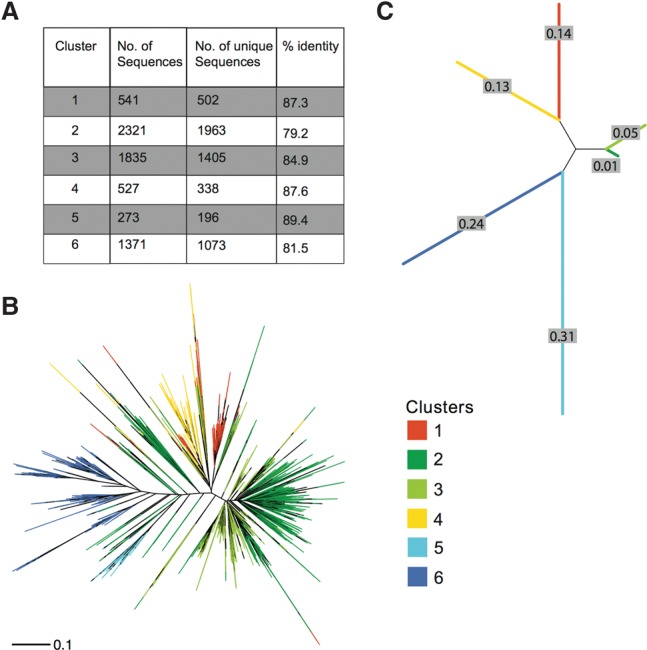
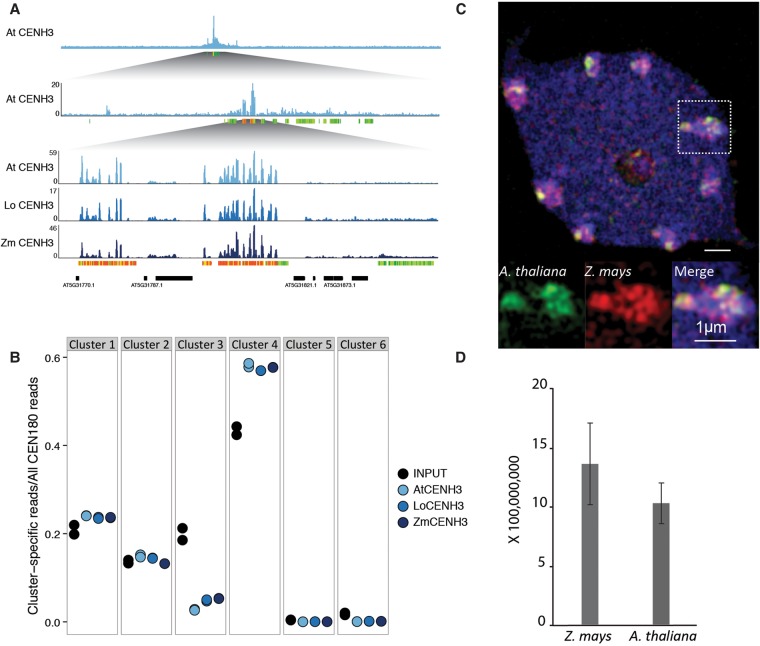
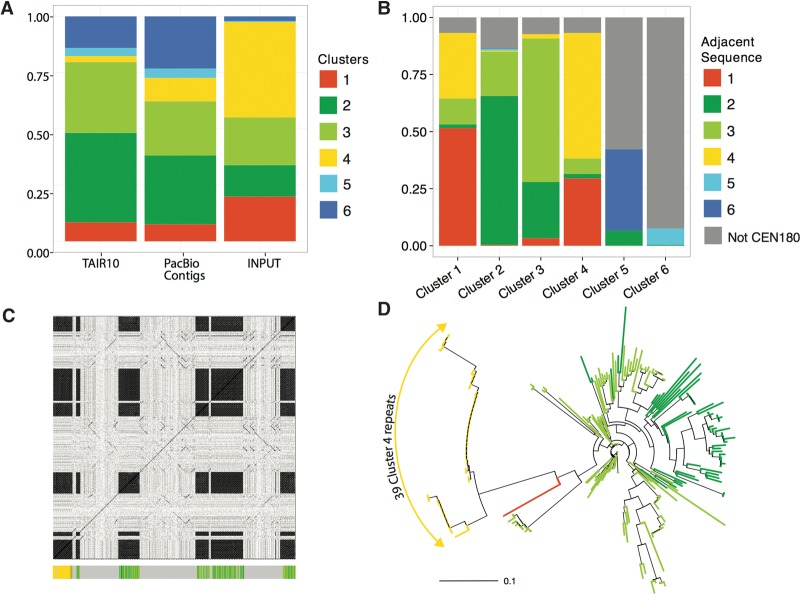
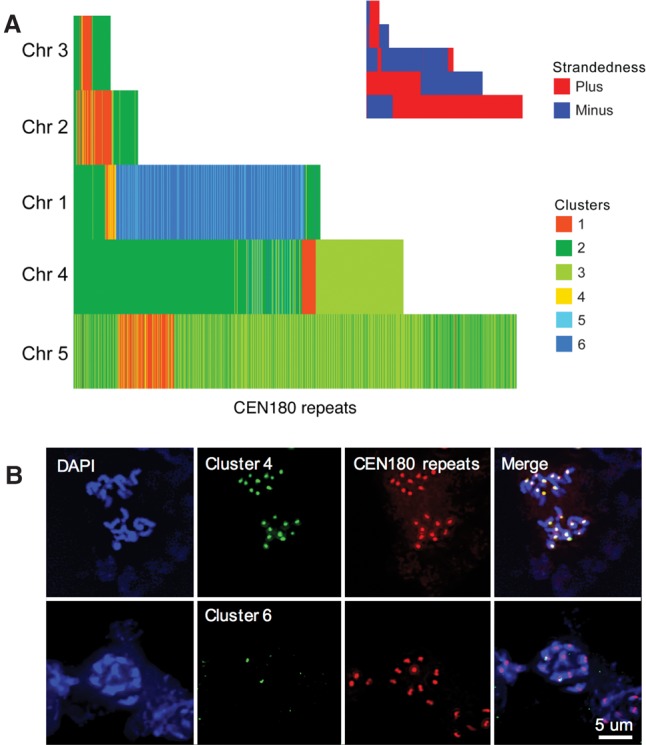
During cell division, spindle fibers attach to chromosomes at centromeres. The DNA sequence at regional centromeres is fast evolving with no conserved genetic signature for centromere identity. Instead CENH3, a centromere-specific histone H3 variant, is the epigenetic signature that specifies centromere location across both plant and animal kingdoms. Paradoxically, CENH3 is also adaptively evolving. An ongoing question is whether CENH3 evolution is driven by a functional relationship with the underlying DNA sequence. Here, we demonstrate that despite extensive protein sequence divergence, CENH3 histones from distant species assemble centromeres on the same underlying DNA sequence. We first characterized the organization and diversity of centromere repeats in wild-type We show that CENH3-containing nucleosomes exhibit a strong preference for a unique subset of centromeric repeats. These sequences are largely missing from the genome assemblies and represent the youngest and most homogeneous class of repeats. Next, we tested the evolutionary specificity of this interaction in a background in which the native CENH3 is replaced with CENH3s from distant species. Strikingly, we find that CENH3 from and , although specifying epigenetically weaker centromeres that result in genome elimination upon outcrossing, show a binding pattern on centromere repeats that is indistinguishable from the native CENH3. Our results demonstrate positional stability of a highly diverged CENH3 on independently evolved repeats, suggesting that the sequence specificity of centromeres is determined by a mechanism independent of CENH3.
在细胞分裂过程中,纺锤体纤维在着丝粒处附着于染色体。区域着丝粒处的DNA序列快速进化,没有用于着丝粒识别的保守遗传特征。相反,CENH3是一种着丝粒特异性组蛋白H3变体,是在植物和动物界中指定着丝粒位置的表观遗传特征。矛盾的是,CENH3也在适应性进化。一个悬而未决的问题是CENH3的进化是否由与潜在DNA序列的功能关系驱动。在这里,我们证明,尽管蛋白质序列存在广泛差异,但来自远缘物种的CENH3组蛋白在相同的潜在DNA序列上组装着丝粒。我们首先对野生型着丝粒重复序列的组织和多样性进行了表征。我们表明,含有CENH3的核小体对着丝粒重复序列的一个独特子集表现出强烈偏好。这些序列在基因组组装中基本缺失,代表了最年轻且最均匀的重复序列类别。接下来,我们在将天然CENH3替换为来自远缘物种的CENH3的背景下测试了这种相互作用的进化特异性。令人惊讶地是,我们发现来自[物种名称1]和[物种名称2]的CENH3,尽管在表观遗传上指定较弱的着丝粒,导致杂交时基因组消除,但在[物种名称3]着丝粒重复序列上的结合模式与天然CENH3无法区分。我们的结果证明了高度分化的CENH3在独立进化的重复序列上的位置稳定性,表明着丝粒的序列特异性由独立于CENH3的机制决定。