Bonuccelli Gloria, De Francesco Ernestina Marianna, de Boer Rianne, Tanowitz Herbert B, Lisanti Michael P
The Paterson Building, University of Manchester, Withington, M20 4BX, United Kingdom.
Department of Pharmacy, Health and Nutritional Sciences, University of Calabria, Rende, 87036, Italy.
Oncotarget. 2017 Mar 28;8(13):20667-20678. doi: 10.18632/oncotarget.15400.
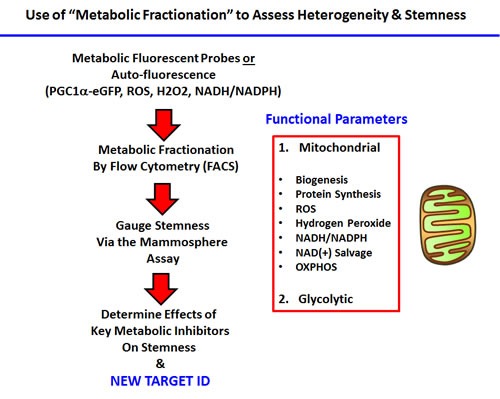
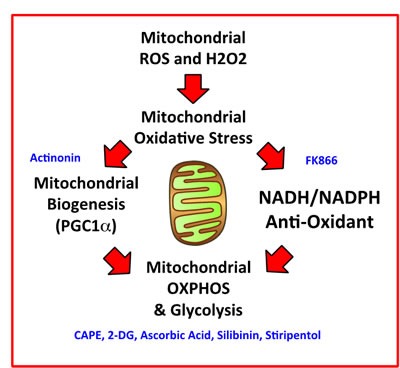
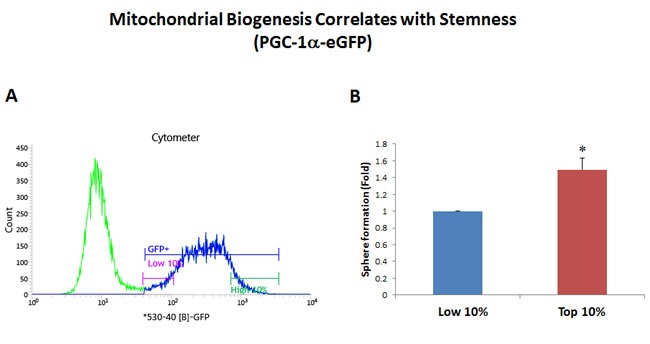
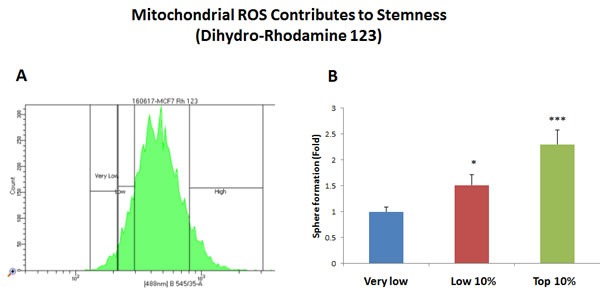
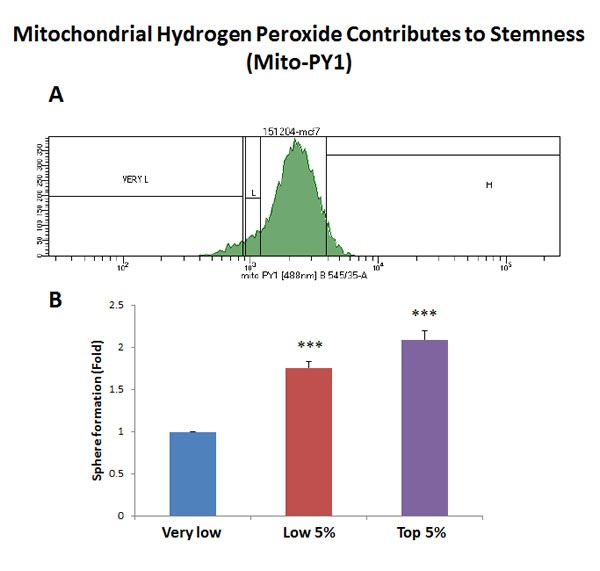
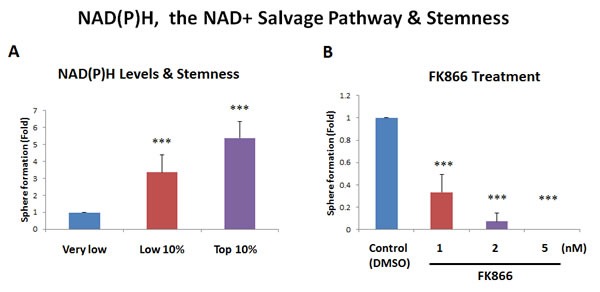
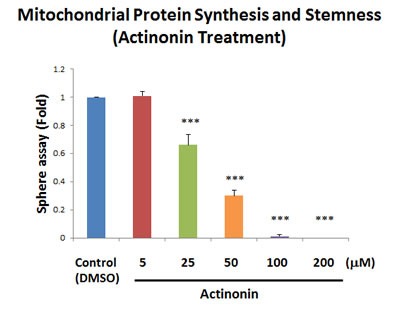
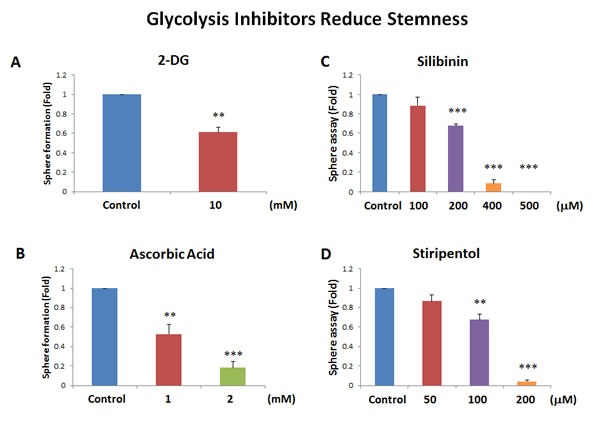
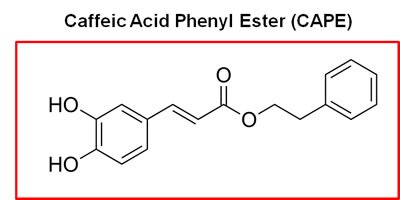
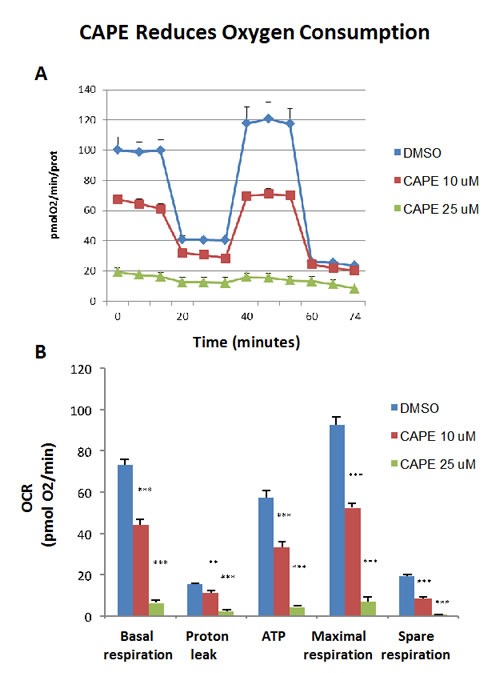
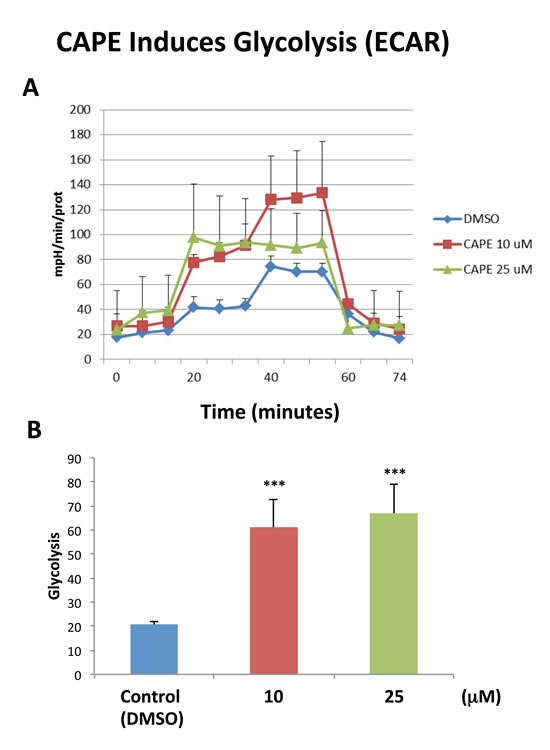
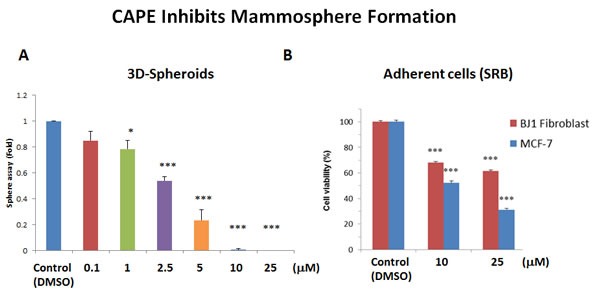
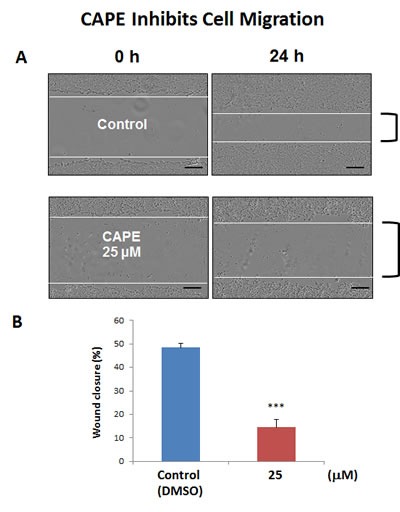
Here, we assembled a broad molecular "tool-kit" to interrogate the role of metabolic heterogeneity in the propagation of cancer stem-like cells (CSCs). First, we subjected MCF7 cells to "metabolic fractionation" by flow cytometry, using fluorescent mitochondrial probes to detect PCG1α activity, as well ROS and hydrogen-peroxide (H2O2) production; NADH levels were also monitored by auto-fluorescence. Then, the various cell populations were functionally assessed for "stem cell activity", using the mammosphere assay (3D-spheroids). Our results indicate that a sub-population of MCF7 cells, with increased PGC1α activity, high mitochondrial ROS/H2O2 production and high NADH levels, all form mammospheres with a higher efficiency. Thus, it appears that mitochondrial oxidative stress and the anti-oxidant response both contribute to the promotion of mitochondrial biogenesis and oxidative metabolism in CSCs. Further validation was provided by using specific inhibitors to target metabolic processes (the NAD+ salvage pathway, glycolysis, mitochondrial protein synthesis and OXPHOS), significantly reducing CSC propagation. As a consequence, we have now identified a variety of clinically-approved drugs (stiripentol), natural products (caffeic acid phenyl ester (CAPE), ascorbic acid, silibinin) and experimental pharmaceuticals (actinonin, FK866, 2-DG), that can be used to effectively inhibit CSC activity. We discuss the use of CAPE (derived from honey-bee propolis) and Vitamin C, as potential natural therapeutic modalities. In this context, Vitamin C was ~10 times more potent than 2-DG for the targeting of CSCs. Similarly, stiripentol was between 50 to 100 times more potent than 2-DG.
在此,我们组装了一套广泛的分子“工具包”,以探究代谢异质性在癌症干细胞(CSCs)增殖中的作用。首先,我们通过流式细胞术对MCF7细胞进行“代谢分选”,使用荧光线粒体探针检测PCG1α活性以及活性氧(ROS)和过氧化氢(H2O2)的产生;还通过自发荧光监测NADH水平。然后,使用乳腺球形成实验(3D球体)对各种细胞群体的“干细胞活性”进行功能评估。我们的结果表明,MCF7细胞的一个亚群,具有增强的PGC1α活性、高线粒体ROS/H2O2产生和高NADH水平,都能更高效地形成乳腺球。因此,似乎线粒体氧化应激和抗氧化反应都有助于促进CSCs中的线粒体生物发生和氧化代谢。通过使用特异性抑制剂靶向代谢过程(NAD+补救途径、糖酵解、线粒体蛋白质合成和氧化磷酸化)进一步验证,显著降低了CSCs的增殖。结果,我们现已鉴定出多种临床批准的药物(司替戊醇)、天然产物(咖啡酸苯乙酯(CAPE)、抗坏血酸、水飞蓟宾)和实验性药物(放线菌素、FK866、2-脱氧葡萄糖),它们可用于有效抑制CSC活性。我们讨论了将CAPE(源自蜜蜂蜂胶)和维生素C用作潜在的天然治疗方式。在这种情况下,维生素C靶向CSCs的效力比2-脱氧葡萄糖高约10倍。同样,司替戊醇的效力比2-脱氧葡萄糖高50至100倍。