UW Diabetes Institute and Department of Medicine, University of Washington, Seattle, Washington 98109, USA.
Nat Commun. 2017 Feb 22;8:14556. doi: 10.1038/ncomms14556.
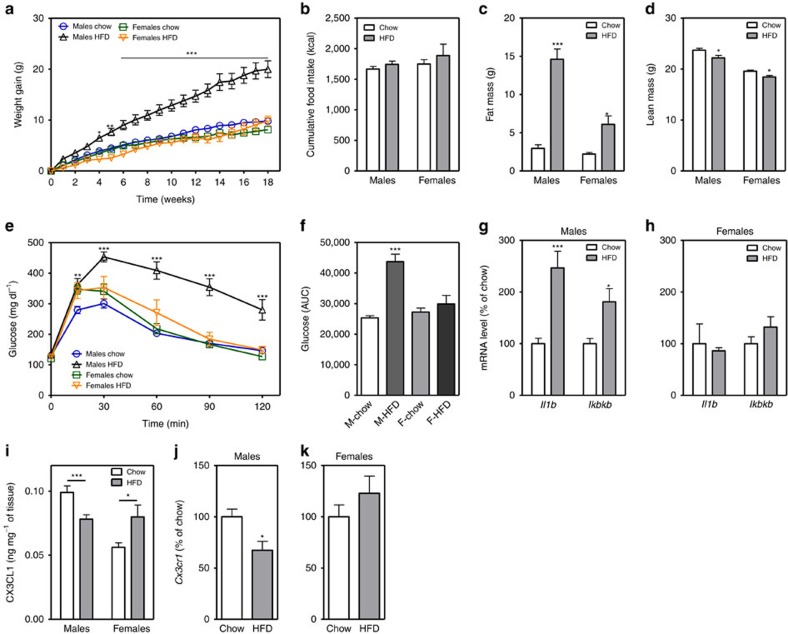
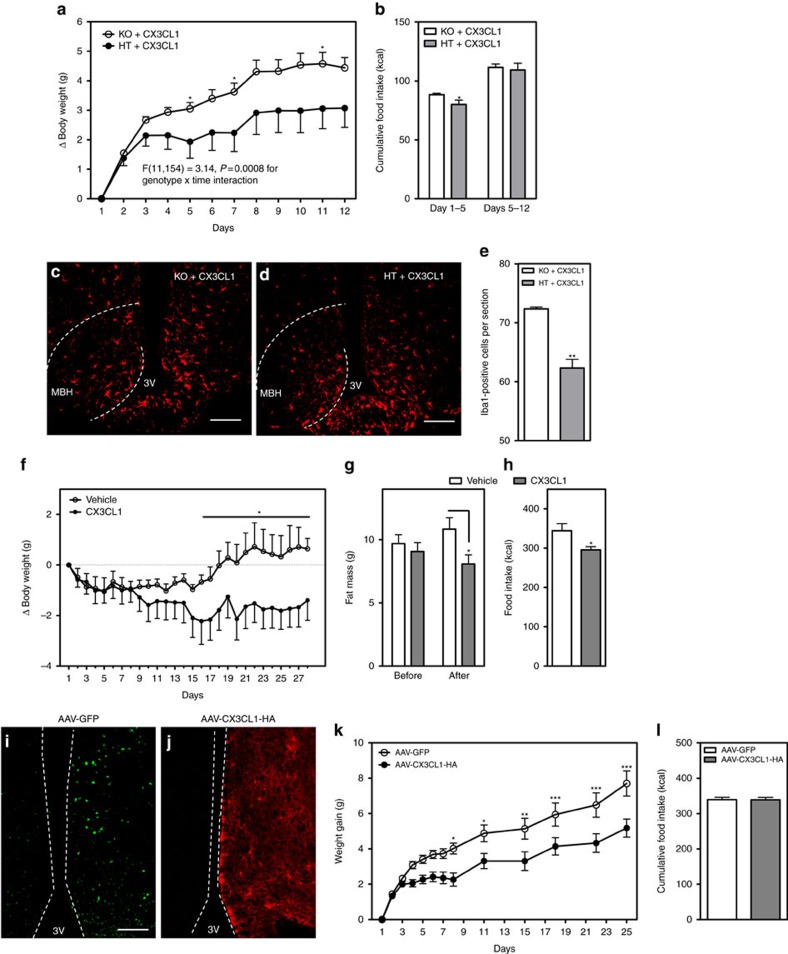
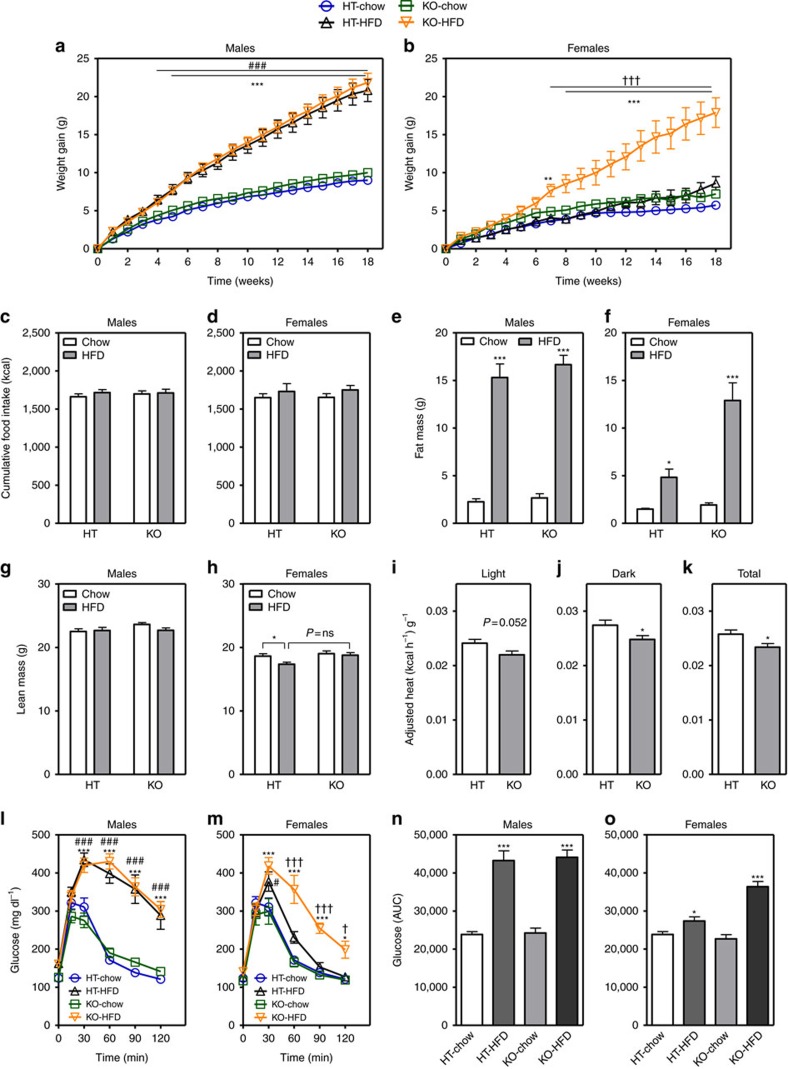
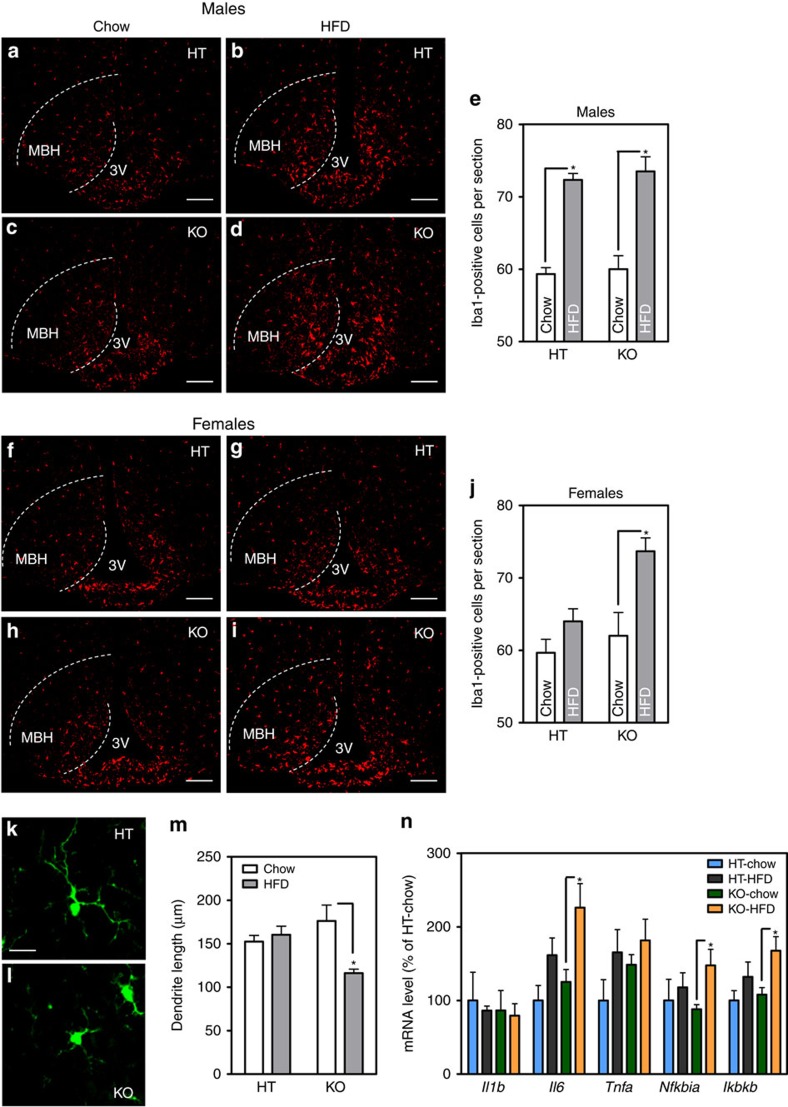
Female mice are less susceptible to the negative metabolic consequences of high-fat diet feeding than male mice, for reasons that are incompletely understood. Here we identify sex-specific differences in hypothalamic microglial activation via the CX3CL1-CX3CR1 pathway that mediate the resistance of female mice to diet-induced obesity. Female mice fed a high-fat diet maintain CX3CL1-CX3CR1 levels while male mice show reductions in both ligand and receptor expression. Female Cx3cr1 knockout mice develop 'male-like' hypothalamic microglial accumulation and activation, accompanied by a marked increase in their susceptibility to diet-induced obesity. Conversely, increasing brain CX3CL1 levels in male mice through central pharmacological administration or virally mediated hypothalamic overexpression converts them to a 'female-like' metabolic phenotype with reduced microglial activation and body-weight gain. These data implicate sex differences in microglial activation in the modulation of energy homeostasis and identify CX3CR1 signalling as a potential therapeutic target for the treatment of obesity.
雌性小鼠对高脂肪饮食喂养产生的负面代谢后果的易感性低于雄性小鼠,但其中的原因尚未完全阐明。在这里,我们通过 CX3CL1-CX3CR1 通路发现了下丘脑小胶质细胞激活的性别特异性差异,该通路介导了雌性小鼠对饮食诱导肥胖的抵抗。喂食高脂肪饮食的雌性小鼠保持 CX3CL1-CX3CR1 水平,而雄性小鼠则表现出配体和受体表达的减少。雌性 Cx3cr1 基因敲除小鼠会出现“雄性样”下丘脑小胶质细胞积累和激活,同时其对饮食诱导肥胖的易感性显著增加。相反,通过中枢药理学给药或病毒介导的下丘脑过表达增加雄性小鼠脑中的 CX3CL1 水平,可使它们转变为“雌性样”代谢表型,小胶质细胞激活和体重增加减少。这些数据表明,小胶质细胞激活的性别差异在调节能量平衡中起作用,并确定 CX3CR1 信号作为治疗肥胖的潜在治疗靶点。