Saranya Jayaram, Shilpa Ganesan, Raghu Kozhiparambil G, Priya Sulochana
Agro-Processing and Technology Division, CSIR-National Institute for Interdisciplinary Science and Technology Thiruvananthapuram, India.
Agro-Processing and Technology Division, CSIR-National Institute for Interdisciplinary Science and TechnologyThiruvananthapuram, India; Academy of Scientific and Innovative ResearchNew Delhi, India.
Front Pharmacol. 2017 Feb 7;8:34. doi: 10.3389/fphar.2017.00034. eCollection 2017.
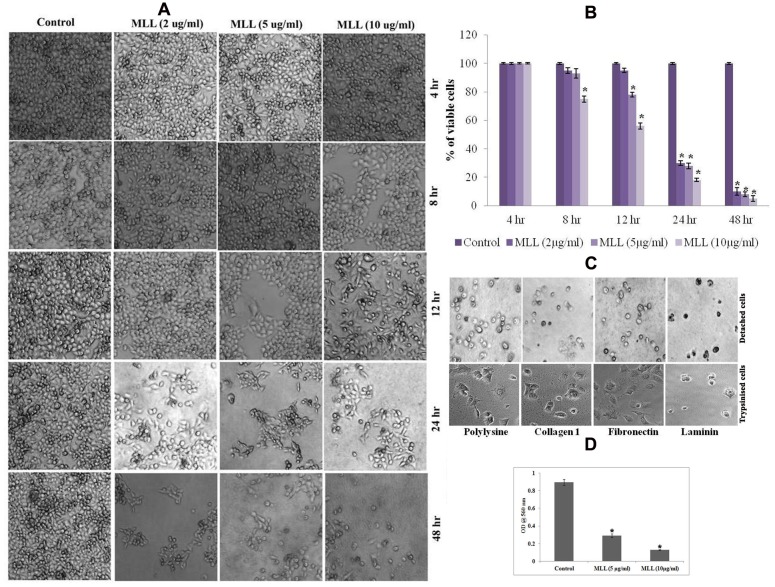
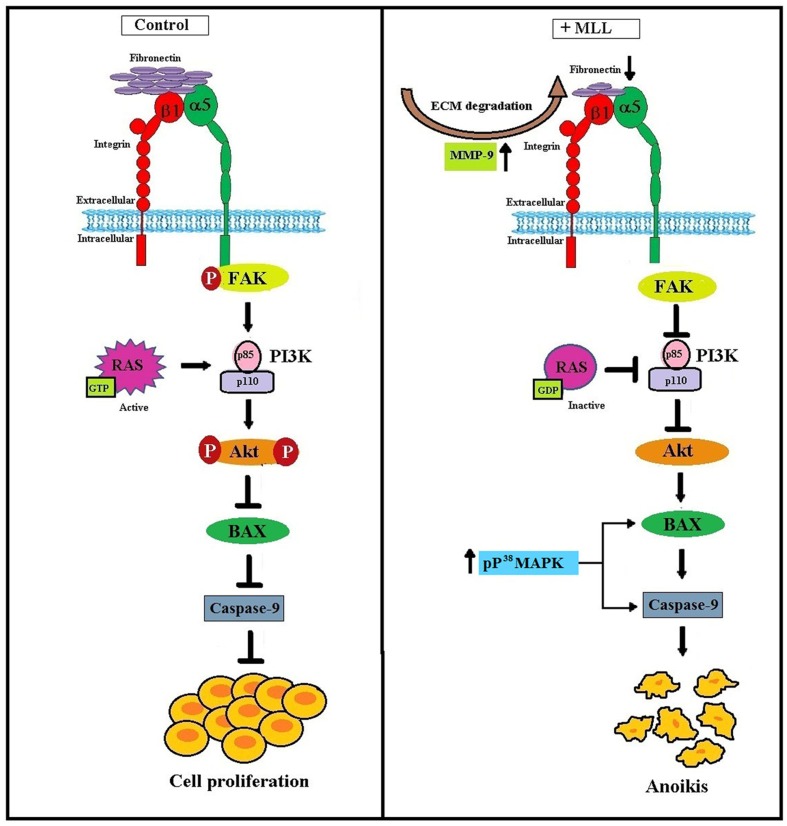
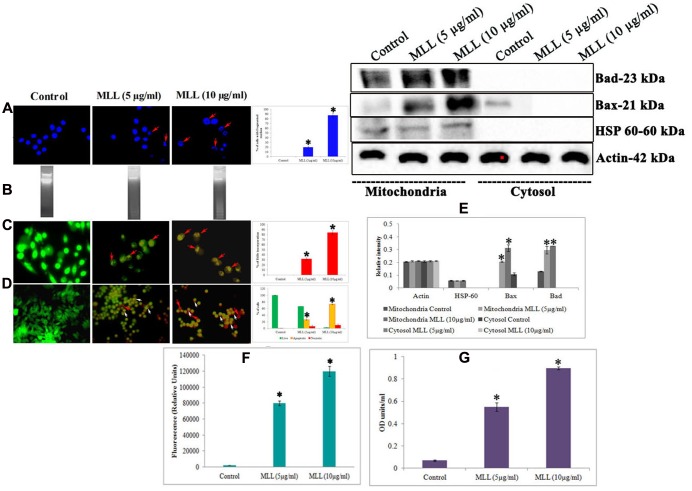
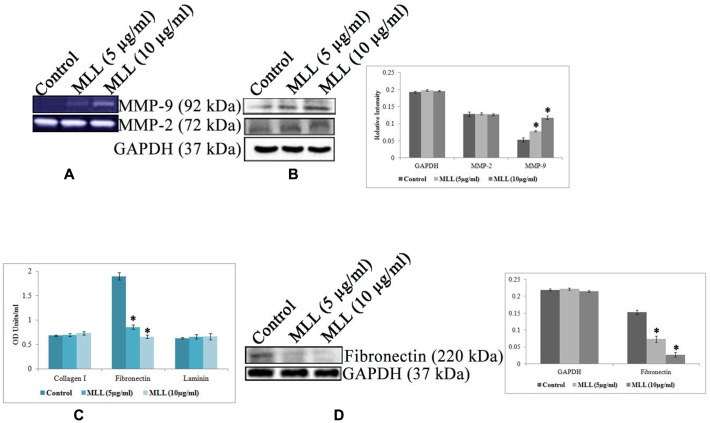
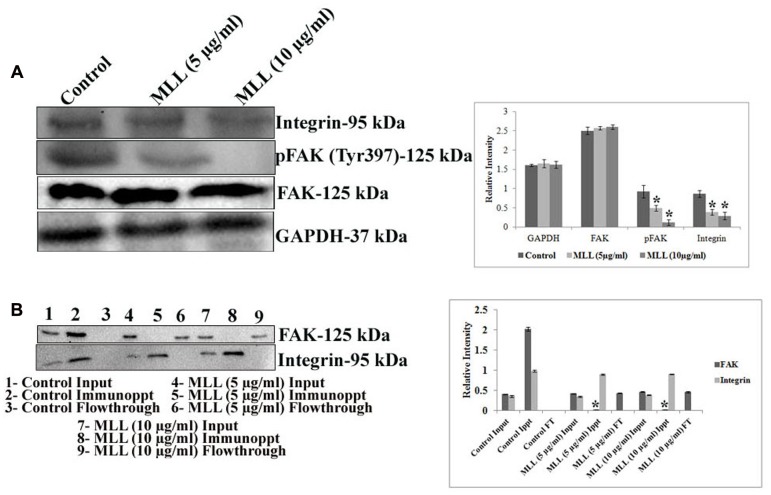
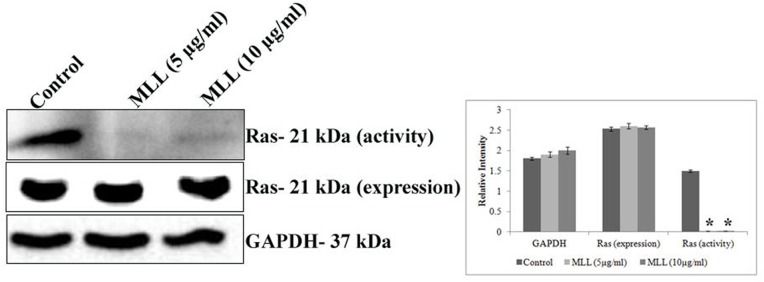
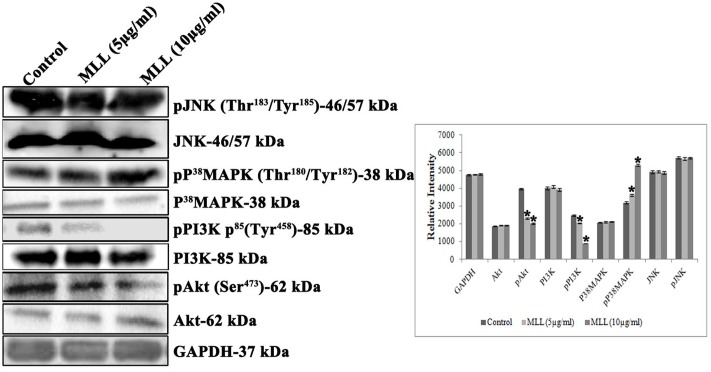
Lectins are a unique class of carbohydrate binding proteins/glycoproteins, and many of them possess anticancer properties. They can induce cell cycle arrest and apoptosis, inhibit protein synthesis, telomerase activity and angiogenesis in cancer cells. In the present study, we have demonstrated the effect of leaf lectin (MLL) on anoikis induction in MCF-7 cells. Anoikis induction in cancer cells has a significant role in preventing early stage metastasis. MLL treatment in monolayers of MCF-7 cells caused significant detachment of cells in a time and concentration dependent manner. The detached cells failed to re-adhere and grew even to culture plates coated with different matrix proteins. DNA fragmentation, membrane integrity studies, annexin V staining, caspase 9 activation and upregulation of Bax/Bad confirmed that the detached cells underwent apoptosis. Upregulation of matrix metalloproteinase 9 (MMP-9) caused a decrease in fibronectin (FN) production which facilitated the cells to detach by blocking the FN mediated downstream signaling. On treatment with MLL, we have observed downregulation of integrin expression, decreased phosphorylation of focal adhesion kinase (FAK), loss in FAK-integrin interaction and active Ras. MLL treatment downregulated the levels of phosphorylated Akt and PI3K. Also, we have studied the effect of MLL on two stress activated protein kinases p38 MAPK and JNK. p38 MAPK activation was found to be elevated, but there was no change in the level of JNK. Thus our study substantiated the possible antimetastatic effect of MLL by inducing anoikis in MCF-7 cells by activation of caspase 9 and proapoptotic Bax/Bad by blockage of FN mediated integrin/FAK signaling and partly by activation of p38 MAPK.
凝集素是一类独特的碳水化合物结合蛋白/糖蛋白,其中许多具有抗癌特性。它们可诱导细胞周期停滞和凋亡,抑制癌细胞中的蛋白质合成、端粒酶活性和血管生成。在本研究中,我们证明了叶凝集素(MLL)对MCF-7细胞失巢凋亡诱导的作用。癌细胞中的失巢凋亡诱导在预防早期转移中具有重要作用。用MLL处理MCF-7细胞单层会导致细胞以时间和浓度依赖性方式显著脱离。脱离的细胞无法重新黏附,甚至在涂有不同基质蛋白的培养板上也无法生长。DNA片段化、膜完整性研究、膜联蛋白V染色、半胱天冬酶9激活以及Bax/Bad的上调证实了脱离的细胞发生了凋亡。基质金属蛋白酶9(MMP-9)的上调导致纤连蛋白(FN)产生减少,这通过阻断FN介导的下游信号传导促进细胞脱离。在用MLL处理时,我们观察到整合素表达下调、粘着斑激酶(FAK)磷酸化减少、FAK-整合素相互作用丧失以及活性Ras减少。MLL处理下调了磷酸化Akt和PI3K的水平。此外,我们研究了MLL对两种应激激活蛋白激酶p38 MAPK和JNK的影响。发现p38 MAPK激活升高,但JNK水平没有变化。因此,我们的研究证实了MLL通过激活半胱天冬酶9和促凋亡的Bax/Bad,阻断FN介导的整合素/FAK信号传导并部分通过激活p38 MAPK在MCF-7细胞中诱导失巢凋亡,从而可能具有抗转移作用。