Zali Mohammad Reza, Safdari Reza, Maserat Elham, Asadzadeh Aghdaei Hamid
Gastroenterology and Liver Diseases Research Center, Research Institute for Gastroenterology and Liver Diseases, Shahid Beheshti University of Medical Sciences, Tehran, Iran.
Allied Medical Sciences School, Tehran University of Medical Sciences, Tehran, Iran.
Gastroenterol Hepatol Bed Bench. 2016 Dec;9(Suppl1):S53-S61.
We aimed to present clinical and genetic guidelines of colorectal cancer screening for risk assessment of populations at risk.
National guidelines can be used as a guide for choosing the method of screening for each individual. These guidelines facilitate decision making and support the delivery of cancer screening service.
In the first step, a comparative study was performed by using secondary data extracted from the literature review. Three countries (Canada, Australia and United States) were selected from 25 countries that are member in the International Cancer Screening Network (ICSN). The second step of study was qualitative survey. The study was based on the grounded theory approach. Study tool was semi-structured interview. Interviewing involves asking questions and getting answers from participants. 22 expert's perspectives about guidelines of colorectal cancer screening were surveyed.
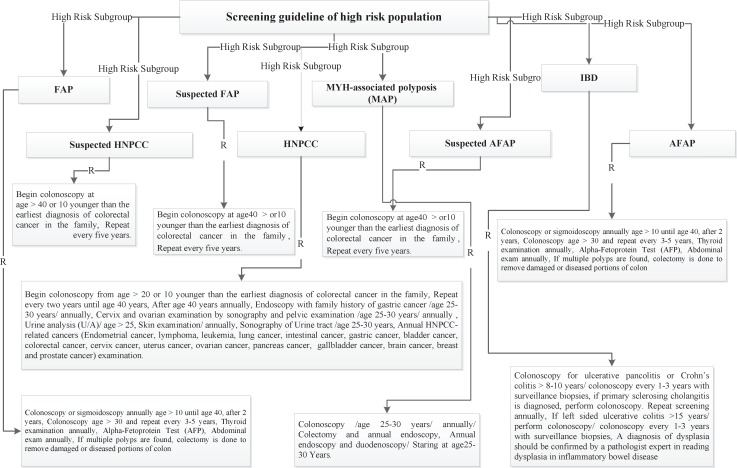
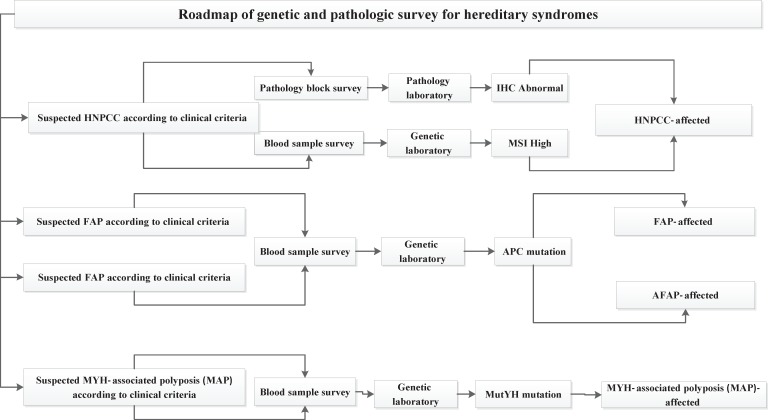
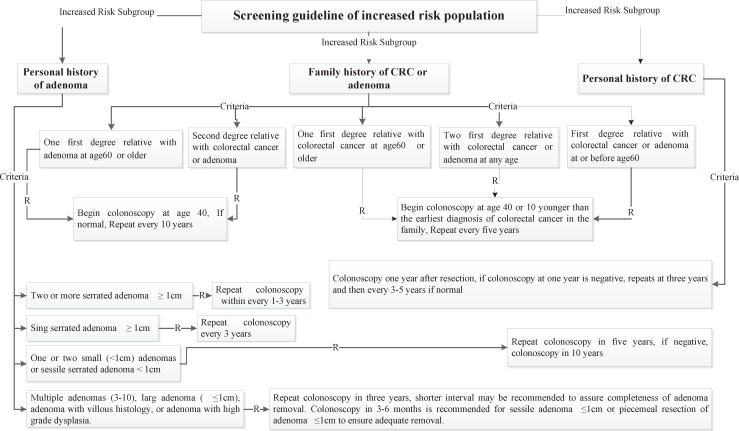
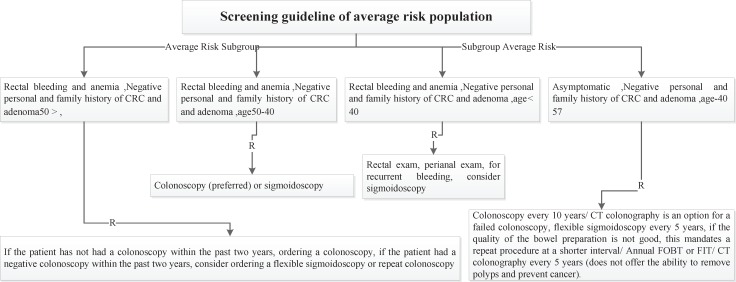
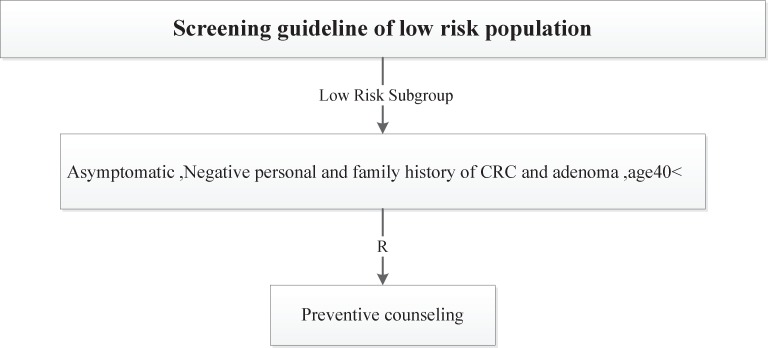
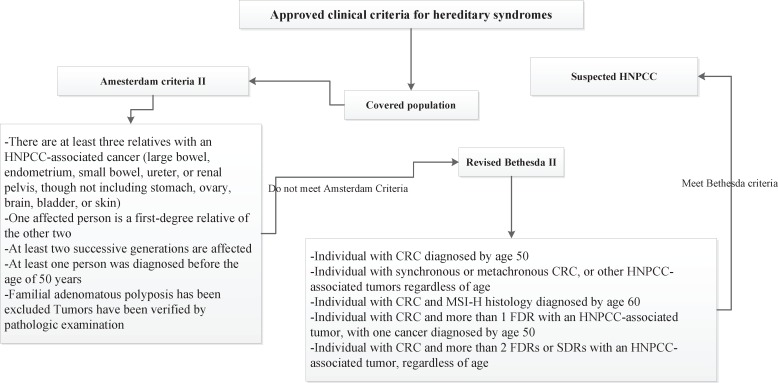
Screening program of selected countries was compared. Countries were surveyed by number of risk groups and subgroups, criteria for risk assessment, beginning age, recommendations, screening approaches and intervals. Australia and United States have three risk groups and Canada has two risk groups. Four risk groups were defined in the national guideline, including high risk, increased risk, average and low risk group. The high risk group comprises of 8 subgroups, increased risk group comprises of 3 subgroups and average risk group contain 4 subgroups. Approved clinical criteria for hereditary syndromes and the roadmap of genetic and pathologic survey were designed.
Guidelines and pathways have a vital role in the quality improvement of CRC screening program. National guidelines were refined according to the environmental and genetic criteria of colorectal cancer in Iran. These guidelines provide evidence-based recommendations by risk groups. National pathways as a risk assessment tool can evaluate and improve the processes and outcomes of cancer screening in practice. One of the suggestions for future research is the designing expert system for real-time decision making during a clinical interaction.
我们旨在提出结直肠癌筛查的临床和遗传指南,用于对高危人群进行风险评估。
国家指南可作为为每个人选择筛查方法的指导。这些指南有助于决策并支持癌症筛查服务的提供。
第一步,通过使用从文献综述中提取的二手数据进行比较研究。从国际癌症筛查网络(ICSN)的25个成员国中选取了三个国家(加拿大、澳大利亚和美国)。研究的第二步是定性调查。该研究基于扎根理论方法。研究工具是半结构化访谈。访谈包括提问并从参与者那里获取答案。调查了22位专家对结直肠癌筛查指南的看法。
对所选国家的筛查计划进行了比较。根据风险组和亚组数量、风险评估标准、起始年龄、建议、筛查方法和间隔对各国进行了调查。澳大利亚和美国有三个风险组,加拿大有两个风险组。国家指南中定义了四个风险组,包括高风险、风险增加、平均风险和低风险组。高风险组由8个亚组组成,风险增加组由3个亚组组成,平均风险组包含4个亚组。设计了遗传性综合征的批准临床标准以及遗传和病理调查路线图。
指南和路径在结直肠癌筛查计划的质量改进中起着至关重要的作用。根据伊朗结直肠癌的环境和遗传标准对国家指南进行了完善。这些指南按风险组提供了循证建议。国家路径作为一种风险评估工具,可以在实践中评估和改善癌症筛查的过程和结果。未来研究的建议之一是设计用于临床互动期间实时决策的专家系统。