Research Headquarters, Taisho Pharmaceutical Co., Ltd., 1-403 Yoshino-cho, Kita-ku, Saitama 331-9530. Japan.
Curr Neuropharmacol. 2017;15(7):963-976. doi: 10.2174/1570159X15666170221101054.
Ketamine has been reported to exert rapid and sustained antidepressant effects in patients with depression, including patients with treatment-resistant depression. However, ketamine has several drawbacks such as psychotomimetic/dissociative symptoms, abuse potential and neurotoxicity, all of which prevent its routine use in daily clinical practice.
Therefore, development of novel agents with fewer safety and usage concerns for the treatment of depression has been actively investigated. From this standpoint, searching for active substances (stereoisomers and metabolites) and agents acting on the N-methyl-D-aspartate (NMDA) receptor have recently gained much attention.
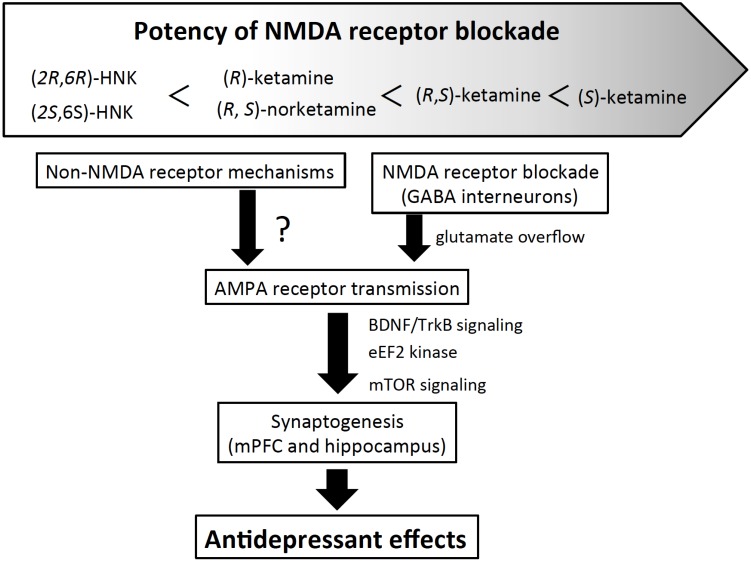
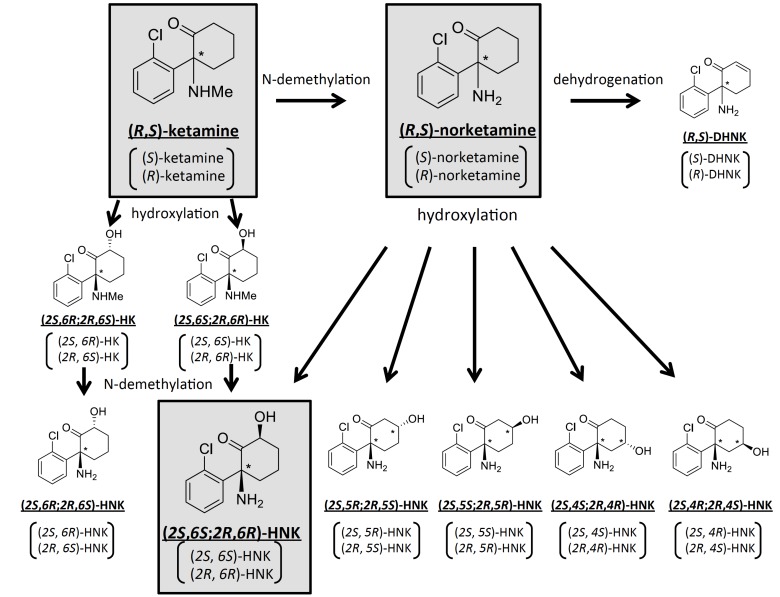
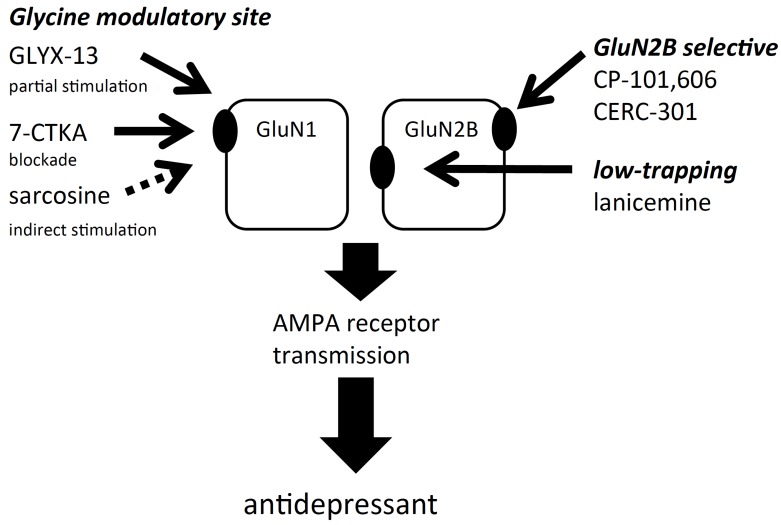
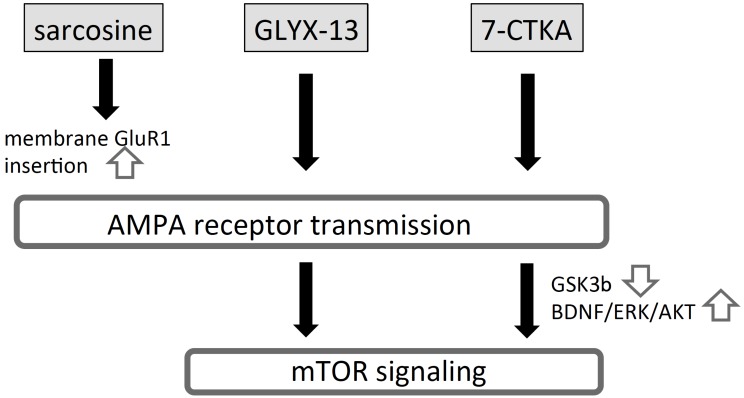
The first approach includes stereoisomers of ketamine, (R)-ketamine and (S)-ketamine. Although (S)-ketamine has been considered as the active stereoisomer of racemic ketamine, recently, (R)-ketamine has been demonstrated to exert even more prolonged antidepressant effects in animal models than (S)-ketamine. Moreover, ketamine is rapidly metabolized into several metabolites, and some metabolites are speculated as being active substances exerting antidepressant effects. Of such metabolites, one in particular, namely, (2R,6R)-hydroxynorketamine, has been reported to be responsible for the antidepressant effects of ketamine. The second approach includes agents acting on the NMDA receptor, such as glycine site modulators and GluN2B subunit-selective antagonists. These agents have been tested in patients with treatment-resistant depression, and have been found to exhibit rapid antidepressant effects like ketamine.
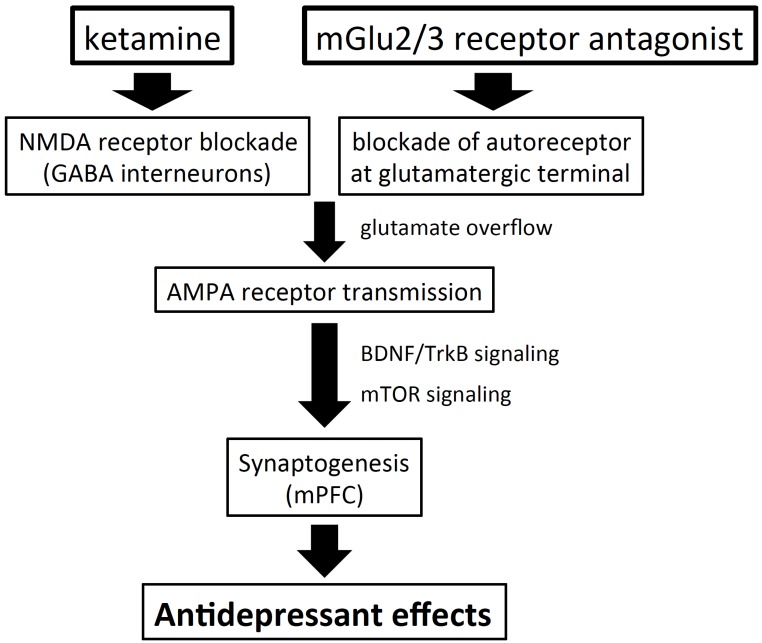
The above approaches may be useful to overcome the drawbacks of ketamine. Elucidation of the mechanisms of action of ketamine may pave the way for the development of antidepressant that are safer, but as potent and rapidly acting as ketamine.
氯胺酮已被报道在抑郁症患者中具有快速和持续的抗抑郁作用,包括治疗抵抗性抑郁症患者。然而,氯胺酮有一些缺点,如精神拟态/分离症状、滥用潜力和神经毒性,所有这些都阻止了其在日常临床实践中的常规使用。
因此,积极研究了具有较少安全性和使用问题的新型药物来治疗抑郁症。从这个角度来看,最近人们对寻找活性物质(立体异构体和代谢物)和作用于 N-甲基-D-天冬氨酸(NMDA)受体的药物产生了浓厚的兴趣。
第一种方法包括氯胺酮的立体异构体,(R)-氯胺酮和(S)-氯胺酮。虽然(S)-氯胺酮被认为是外消旋氯胺酮的活性立体异构体,但最近,(R)-氯胺酮在动物模型中被证明比(S)-氯胺酮具有更持久的抗抑郁作用。此外,氯胺酮迅速代谢为几种代谢物,一些代谢物被推测为具有抗抑郁作用的活性物质。在这些代谢物中,有一种特别的代谢物,即(2R,6R)-羟基去甲氯胺酮,被报道对氯胺酮的抗抑郁作用负责。第二种方法包括作用于 NMDA 受体的药物,如甘氨酸位点调节剂和 GluN2B 亚单位选择性拮抗剂。这些药物已在治疗抵抗性抑郁症患者中进行了测试,并发现它们具有类似于氯胺酮的快速抗抑郁作用。
上述方法可能有助于克服氯胺酮的缺点。阐明氯胺酮的作用机制可能为开发更安全但与氯胺酮一样有效且快速作用的抗抑郁药铺平道路。