Shen Junlin, Qin Wen, Xu Qiang, Xu Lixue, Xu Jiayuan, Zhang Peng, Liu Huaigui, Liu Bing, Jiang Tianzi, Yu Chunshui
Department of Radiology and Tianjin Key Laboratory of Functional Imaging, Tianjin Medical University General Hospital, No. 154, Anshan Road, Heping District, Tianjin, 300052, China.
Brainnetome Center, Institute of Automation, Chinese Academy of Sciences, Beijing, China.
Brain Struct Funct. 2017 Aug;222(6):2877-2889. doi: 10.1007/s00429-017-1377-3. Epub 2017 Feb 22.
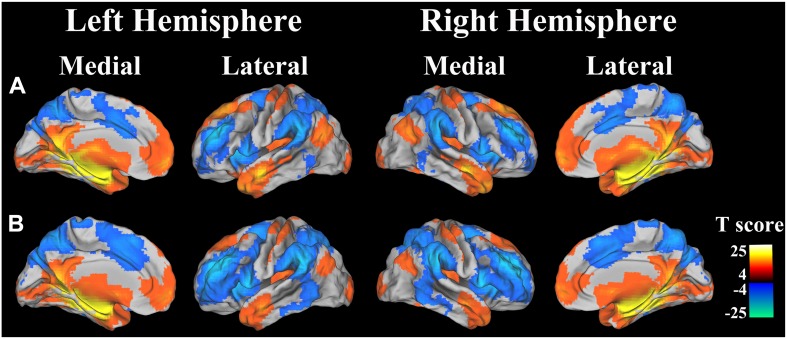
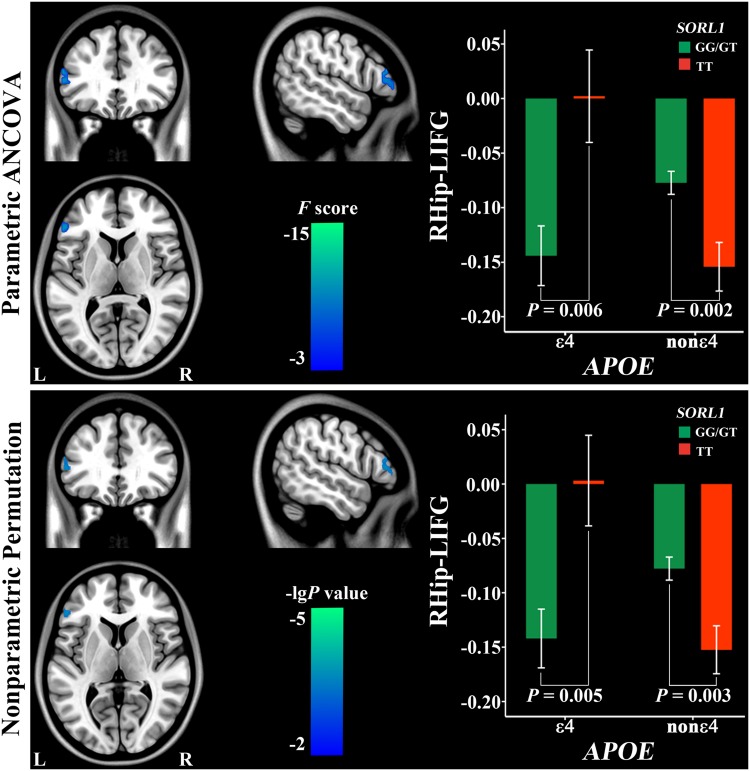
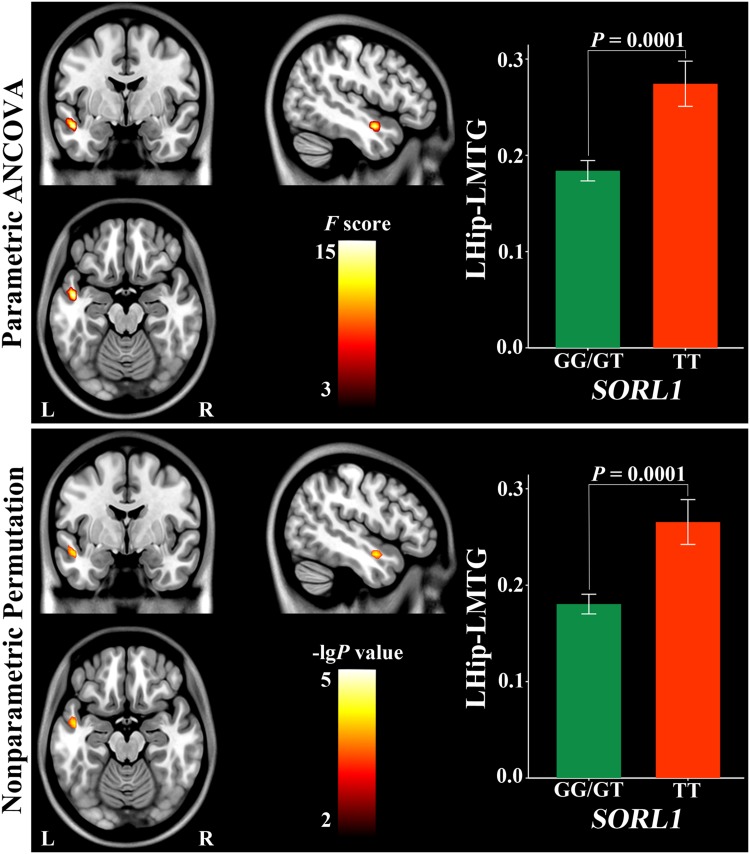
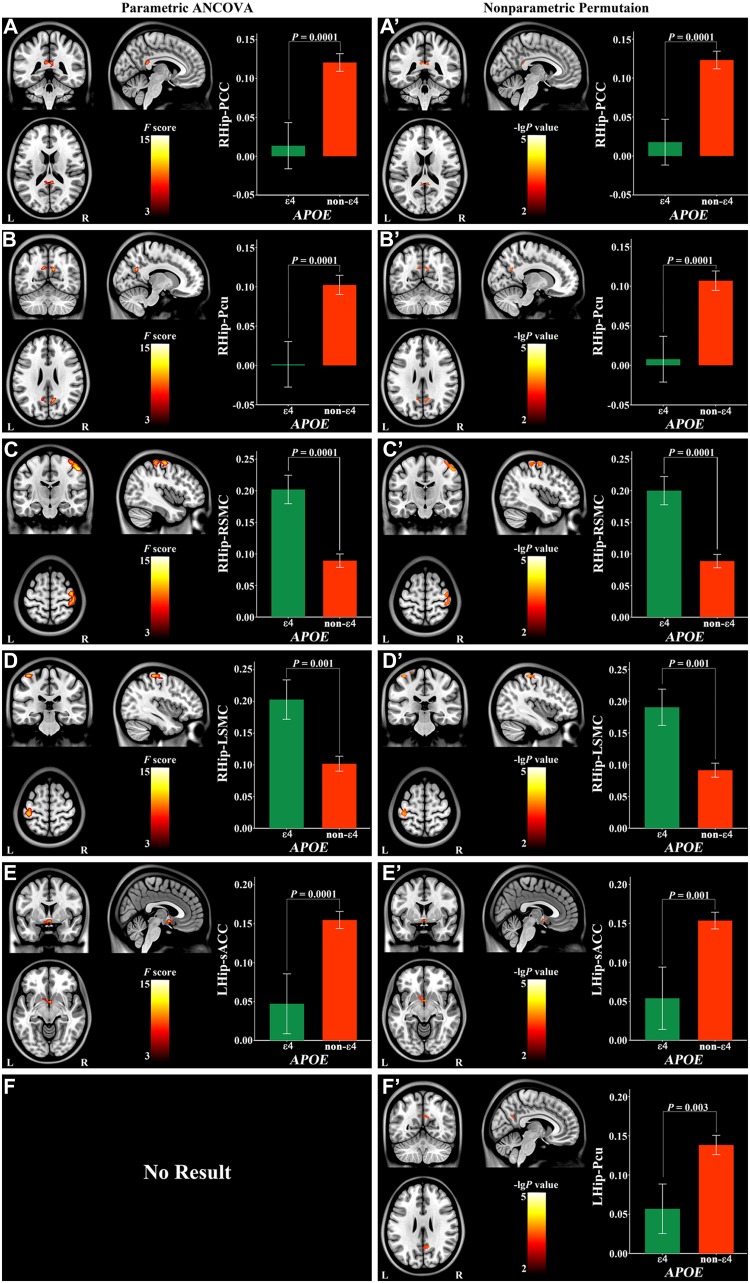
Apolipoprotein E (APOE) and sortilin-related receptor (SORL1) genes act on the same metabolic pathway and have been associated with Alzheimer's disease (AD) characterized by hippocampal impairment. Although the effects of APOE on hippocampal resting-state functional connectivity (rsFC) have been reported, the main effects of SORL1 and SORL1 × APOE interactions on hippocampal rsFC in healthy subjects remain largely unknown. Here, we systematically investigated the main effects of SORL1 rs2070045, and APOE, and their interaction effects on hippocampal rsFC in healthy young adults. The main effect of APOE showed that risk ε4 carriers had decreased positive hippocampal rsFC with the precuneus/posterior cingulate cortex and subgenual anterior cingulate cortex, and increased positive hippocampal rsFC with the sensorimotor cortex compared with non-ε4 carriers. The main effect of SORL1 showed that risk G-allele carriers had decreased positive rsFC between the hippocampus and middle temporal gyrus compared with TT carriers. No significant additive interaction was observed. Instead, significant SORL1 × APOE non-additive interaction was found in negative rsFC between the hippocampus and inferior frontal gyrus. Compared with subjects with TT genotype, SORL1 G-allele carriers had a stronger negative rsFC in APOE ε4 carriers, but a weaker negative rsFC in APOE non-ε4 carriers. These findings suggest that SORL1 and APOE genes modulate different hippocampal rsFCs and have a complex interaction. The SORL1- and APOE-dependent hippocampal connectivity changes may at least partly account for their association with AD.
载脂蛋白E(APOE)和sortilin相关受体(SORL1)基因作用于相同的代谢途径,且与以海马体损伤为特征的阿尔茨海默病(AD)相关。尽管已有关于APOE对海马体静息态功能连接性(rsFC)影响的报道,但SORL1以及SORL1×APOE相互作用对健康受试者海马体rsFC的主要影响仍 largely未知。在此,我们系统地研究了SORL1 rs2070045和APOE的主要影响,以及它们对健康年轻成年人海马体rsFC的相互作用影响。APOE的主要影响表明,与非ε4携带者相比,ε4风险携带者与楔前叶/后扣带回皮质及膝下前扣带回皮质之间的海马体正性rsFC降低,而与感觉运动皮质之间的海马体正性rsFC增加。SORL1的主要影响表明,与TT携带者相比,G等位基因风险携带者海马体与颞中回之间的正性rsFC降低。未观察到显著的相加相互作用。相反,在海马体与额下回之间的负性rsFC中发现了显著的SORL1×APOE非相加相互作用。与TT基因型受试者相比,SORL1 G等位基因携带者在APOE ε4携带者中负性rsFC更强,但在APOE非ε4携带者中负性rsFC较弱。这些发现表明,SORL1和APOE基因调节不同的海马体rsFC,且存在复杂的相互作用。SORL1和APOE依赖的海马体连接性变化可能至少部分解释了它们与AD的关联。