Kuser-Abali Gamze, Alptekin Ahmet, Lewis Michael, Garraway Isla P, Cinar Bekir
Department of Medicine-Hematology and Oncology and Biomedical Sciences, Cancer Biology and Uro-Oncology Programs, Samuel Oschin Comprehensive Cancer Institute, Cedars-Sinai Medical Center, Los Angeles, California 90048, USA.
West Los Angeles Veteran Affairs Healthcare System, Los Angeles, California 90073, USA.
Nat Commun. 2015 Sep 1;6:8126. doi: 10.1038/ncomms9126.
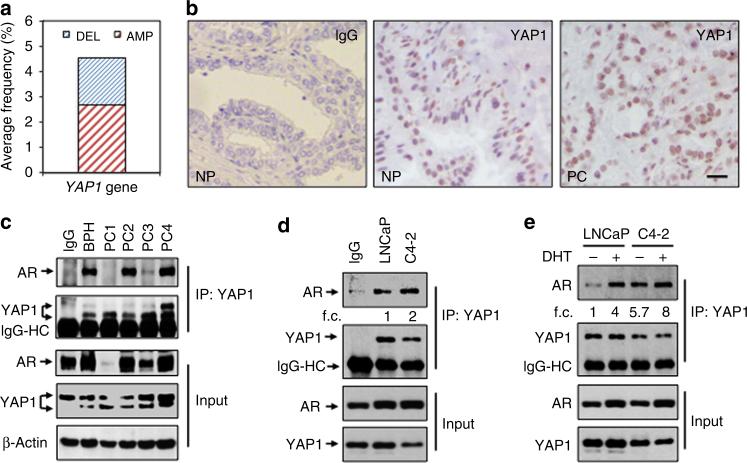
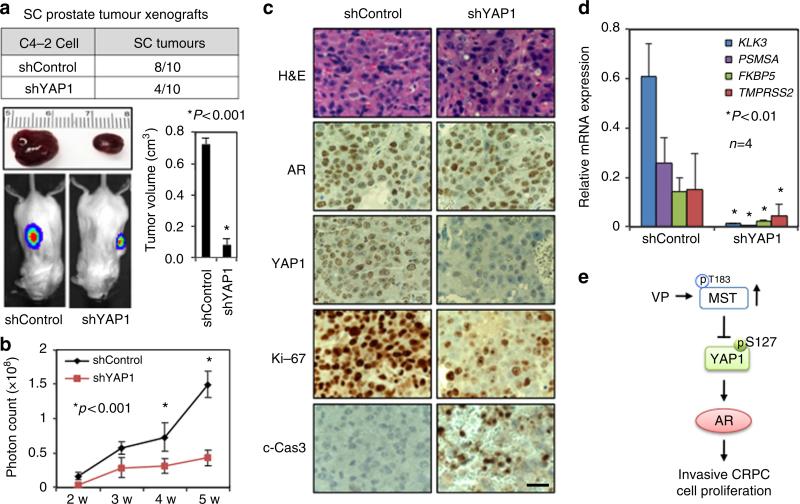
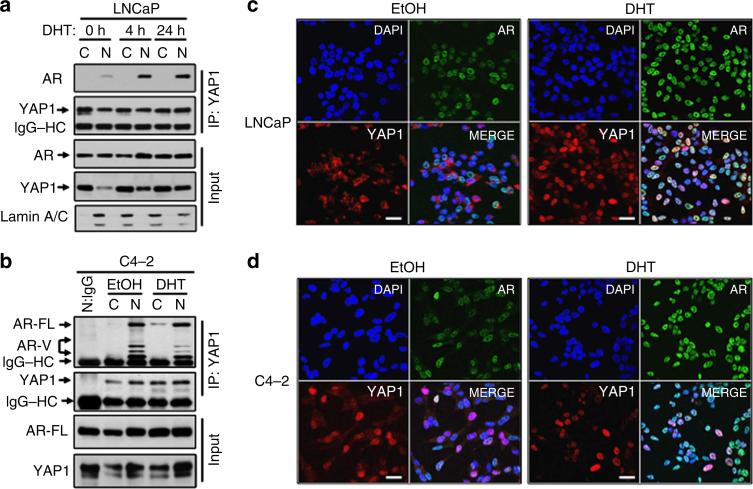
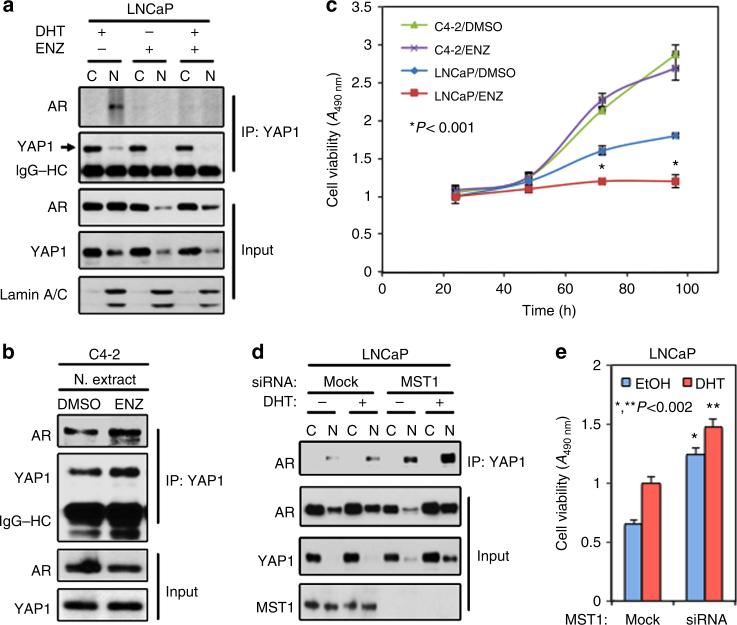
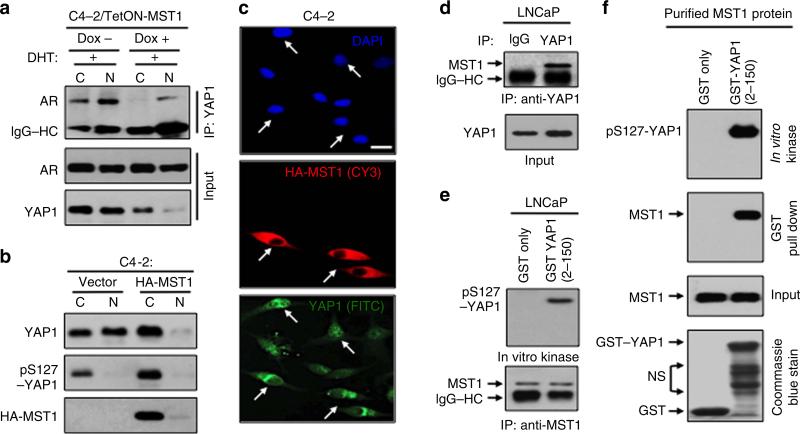
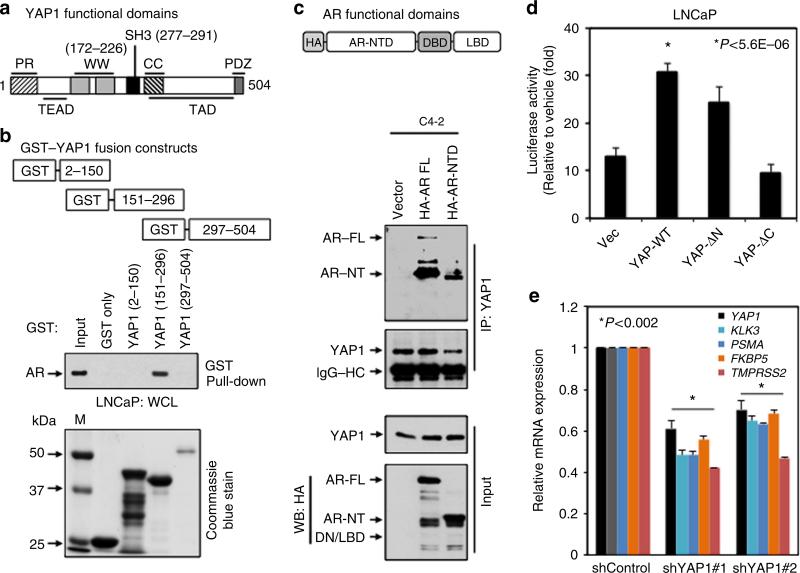
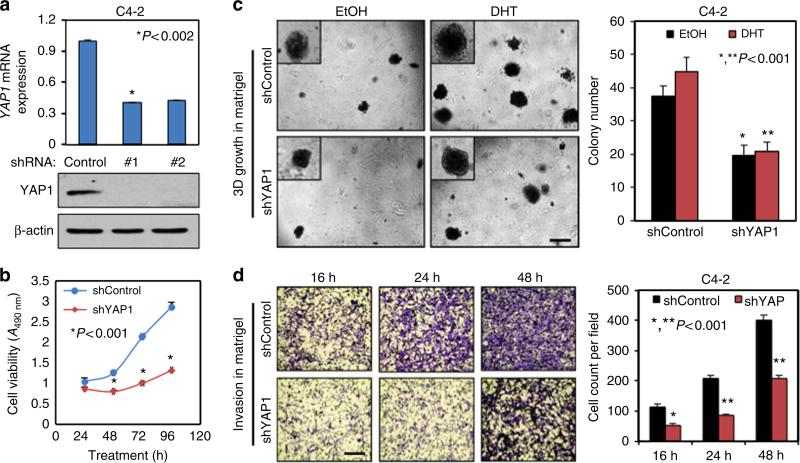
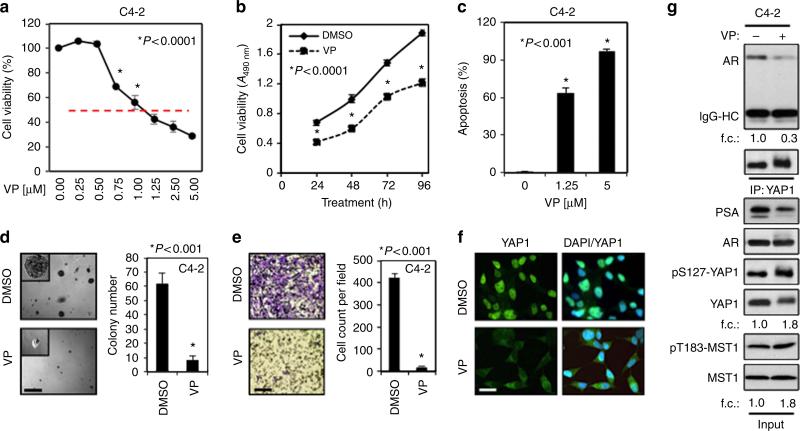
The transcriptional co-activator Yes-associated protein 1 (YAP1), a key nuclear effector of the Hippo pathway, is a potent oncogene, and yet, the interaction between YAP1 and androgen receptor (AR) remains unexplored. Here we identify YAP1 as a physiological binding partner and positive regulator of AR in prostate cancer. YAP1 and AR co-localize and interact with each other predominantly within cell nuclei by an androgen-dependent mechanism in a hormone naive and an androgen-independent mechanism in castration-resistant prostate cancer cells. The growth suppressor MST1 kinase modulates androgen-dependent and -independent nuclear YAP1-AR interactions through directly regulating YAP1 nuclear accumulation. Disruption of YAP1 signalling by genetic (RNAi) and pharmacological (Verteporfin) approaches suppresses AR-dependent gene expression and prostate cancer cell growth. These findings indicate that the YAP1-AR axis may have a critical role in prostate cancer progression and serves as a viable drug target.
转录共激活因子Yes相关蛋白1(YAP1)是Hippo信号通路的关键核效应因子,是一种有效的致癌基因,然而,YAP1与雄激素受体(AR)之间的相互作用仍未得到探索。在此,我们确定YAP1是前列腺癌中AR的生理结合伴侣和正向调节因子。在激素初治的前列腺癌细胞中,YAP1和AR通过雄激素依赖机制在细胞核内共定位并相互作用;在去势抵抗性前列腺癌细胞中,二者则通过雄激素非依赖机制相互作用。生长抑制因子MST1激酶通过直接调节YAP1的核内积累,调控雄激素依赖和非依赖的核内YAP1-AR相互作用。通过基因(RNA干扰)和药理学(维替泊芬)方法破坏YAP1信号通路,可抑制AR依赖的基因表达和前列腺癌细胞生长。这些发现表明,YAP1-AR轴可能在前列腺癌进展中起关键作用,并且是一个可行的药物靶点。