State Key Laboratory of Natural Medicines, China Pharmaceutical University, Nanjing, China.
Jiangsu Key Laboratory of TCM Evaluation and Translational Research, Department of Pharmacology of Chinese Materia Medica, China Pharmaceutical University, Nanjing, China.
Cell Death Dis. 2017 Feb 23;8(2):e2625. doi: 10.1038/cddis.2017.43.
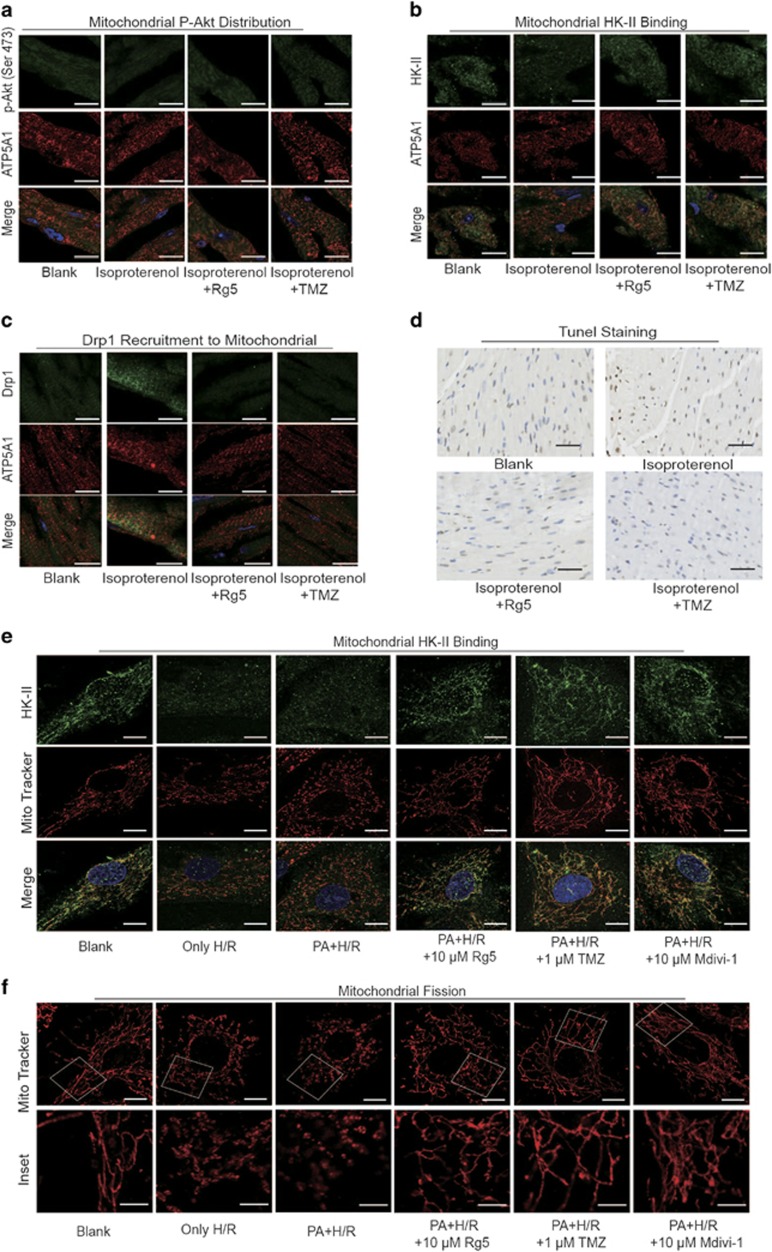
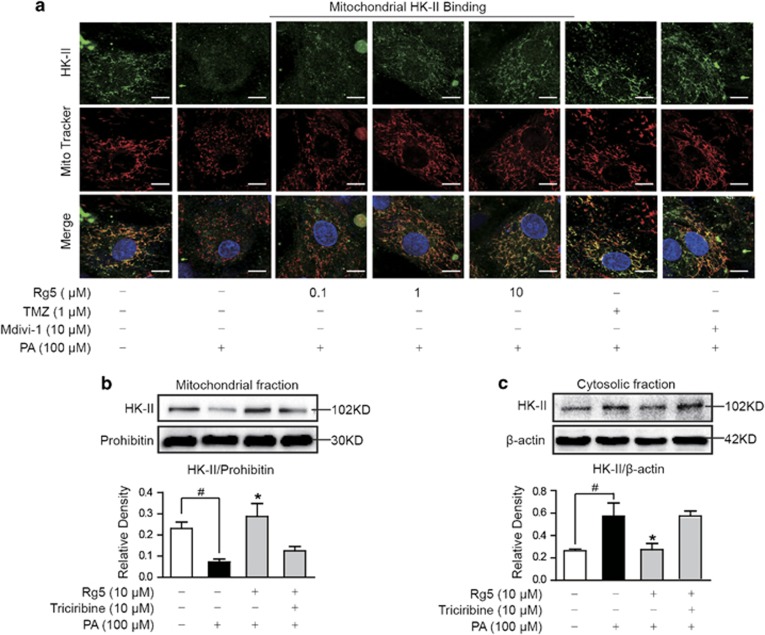
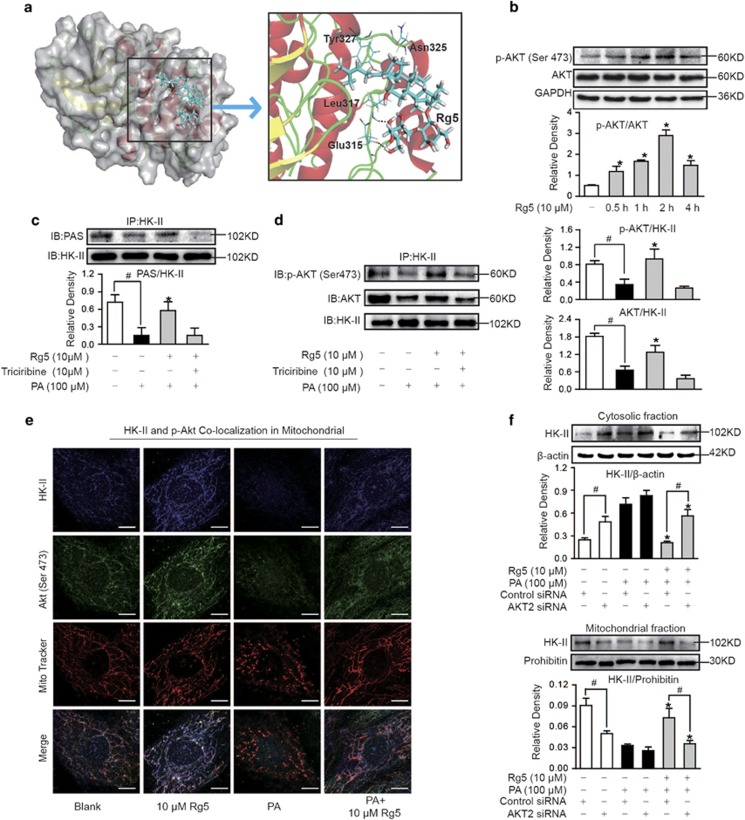
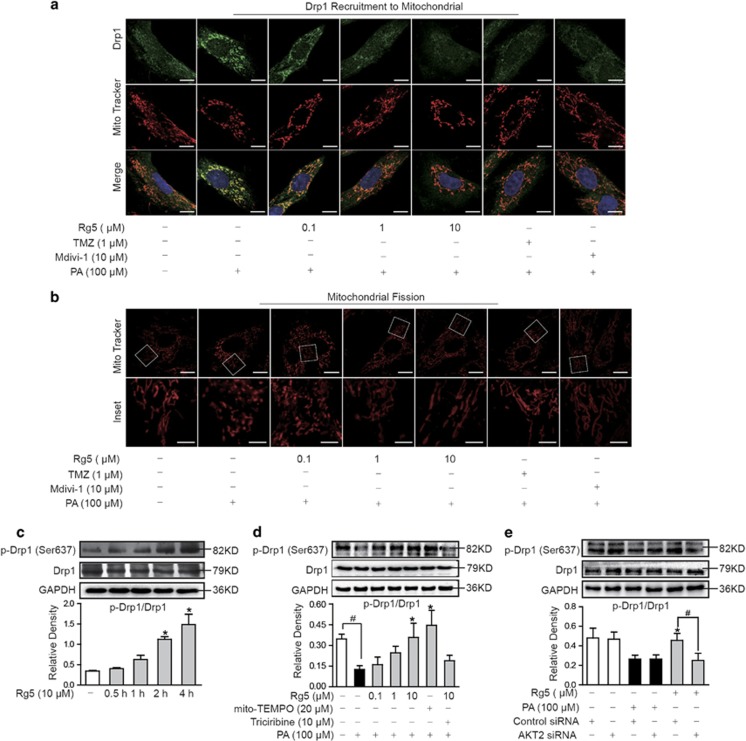
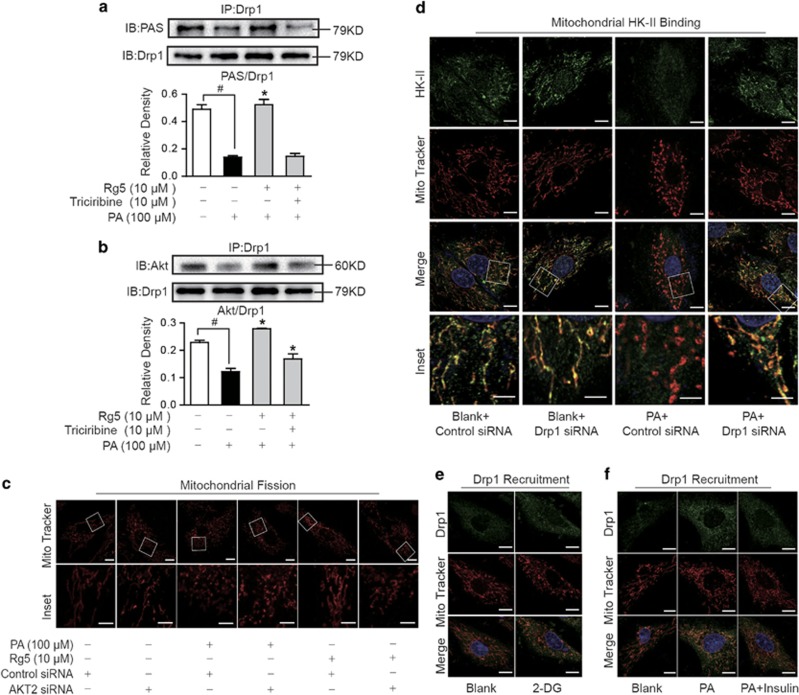
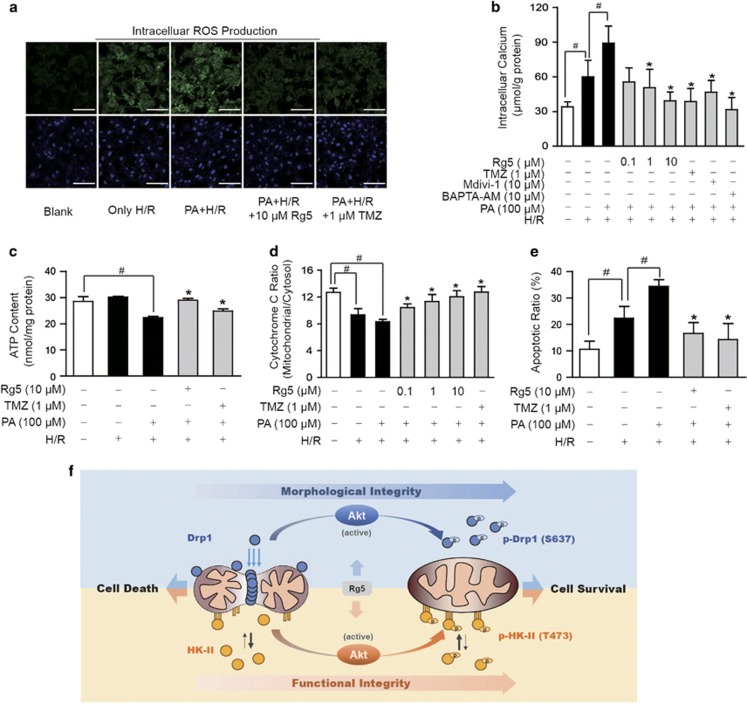
Hexokinase-II (HK-II) and dynamin-related protein 1 (Drp1) regulate mitochondrial function differently. This study was designed to investigate the cardioprotective effect of ginsenoside Rg5 (Rg5) with emphasis on the regulation of mitochondrial HK-II and Drp1. Saturated acid palmitate (PA) stimulation increased lactate accumulation and induced cellular acidification by impairing the activity of pyruvate dehydrogenase (PDH) in cardiomyocytes, leading to HK-II dissociation from mitochondria. Rg5 improved PDH activity and prevented cellular acidification by combating fatty-acid oxidation, contributing to protecting mitochondrial HK-II. HK-II binding to mitochondria prevented mitochondrial Drp1 recruitment, whereas Drp1 activation decreased the content of mitochondrial HK-II, demonstrating the reciprocal control for binding to mitochondria. Rg5 promoted Akt translocation to mitochondria and increased HK-II binding to mitochondria while coordinately suppressing Drp1 recruitment and mitochondrial fission. Akt inhibitor triciribine or knockdown of Akt with small interfering RNA diminished the effects of Rg5, indicating that Rg5 inhibited Drp1 activation and promoted HK-II mitochondrial binding through Akt activation. Rg5 prevented the opening of mitochondrial permeability transition pore and increased ATP production, resultantly increasing cardiomyocyte resistance to hypoxia/reoxygenation injury. Meanwhile, Rg5 prevented cell apoptosis with increased HK-II binding and reduced Drp1 recruitment to mitochondria in isoproterenol-induced ischemic heart of mice. Taken together, these findings not only established a previously unrecognized role of ginsenosides in cardioprotection but also suggest that mitochondrial HK-II binding and Drp1 recruitment could be targeted therapeutically to prevent ischemic injury in the heart.
己糖激酶-II(HK-II)和与动力蛋白相关蛋白 1(Drp1)通过不同的机制调节线粒体功能。本研究旨在探讨人参皂苷 Rg5(Rg5)的心脏保护作用,重点研究线粒体 HK-II 和 Drp1 的调节。饱和脂肪酸棕榈酸(PA)刺激通过损害丙酮酸脱氢酶(PDH)的活性增加乳酸积累并诱导细胞酸化,导致 HK-II 从线粒体解离。Rg5 通过对抗脂肪酸氧化来改善 PDH 活性并防止细胞酸化,有助于保护线粒体 HK-II。HK-II 与线粒体结合可防止线粒体 Drp1 募集,而 Drp1 激活会降低线粒体 HK-II 的含量,表明两者对线粒体的结合存在相互控制。Rg5 促进 Akt 易位至线粒体并增加 HK-II 与线粒体的结合,同时协调抑制 Drp1 募集和线粒体裂变。Akt 抑制剂曲昔派特或 Akt 的小干扰 RNA 敲低削弱了 Rg5 的作用,表明 Rg5 通过 Akt 激活抑制 Drp1 激活并促进 HK-II 与线粒体的结合。Rg5 防止线粒体通透性转换孔的开放并增加 ATP 产生,从而增加心肌细胞对缺氧/再复氧损伤的抵抗力。同时,Rg5 通过增加 HK-II 结合和减少 Drp1 向异丙肾上腺素诱导的缺血小鼠心脏中线粒体的募集来防止细胞凋亡。总之,这些发现不仅确立了人参皂苷在心脏保护中的先前未被认识的作用,还表明线粒体 HK-II 结合和 Drp1 募集可作为治疗靶点,以防止心脏的缺血性损伤。