Vodstrcil Lenka A, Twin Jimmy, Garland Suzanne M, Fairley Christopher K, Hocking Jane S, Law Matthew G, Plummer Erica L, Fethers Katherine A, Chow Eric P F, Tabrizi Sepehr N, Bradshaw Catriona S
Melbourne Sexual Health Centre, Alfred Health, Carlton, Melbourne, Australia.
Central Clinical School, Faculty of Medicine, Nursing and Health Sciences, Monash University, Melbourne, Australia.
PLoS One. 2017 Feb 24;12(2):e0171856. doi: 10.1371/journal.pone.0171856. eCollection 2017.
To examine the influence of sexual activity on the composition and consistency of the vaginal microbiota over time, and distribution of Gardnerella vaginalis clades in young women.
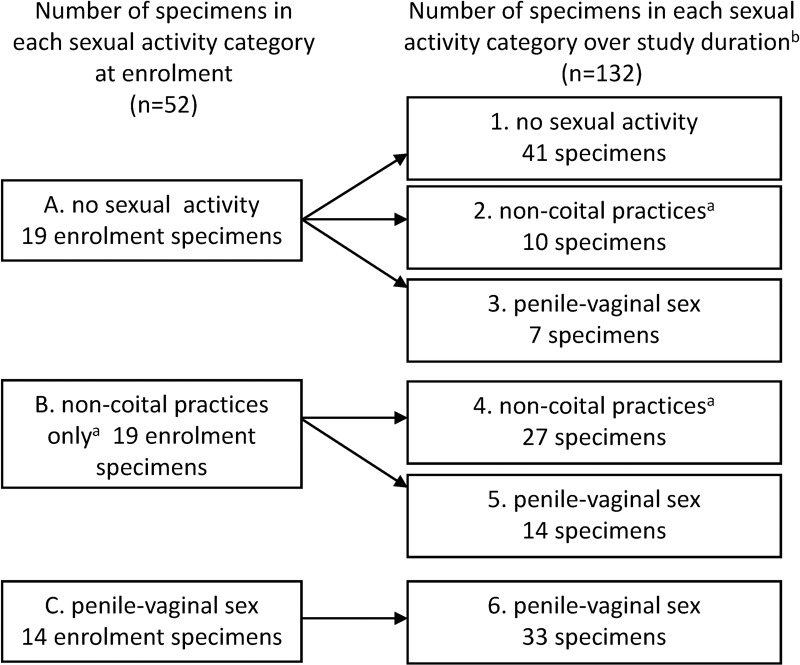
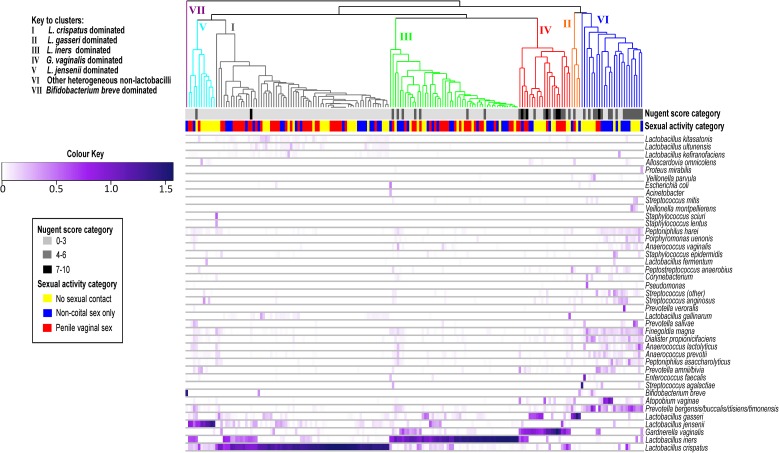
Fifty-two participants from a university cohort were selected. Vaginal swabs were self-collected every 3-months for up to 12 months with 184 specimens analysed. The vaginal microbiota was characterised using Roche 454 V3/4 region 16S rRNA sequencing, and G.vaginalis clade typing by qPCR.
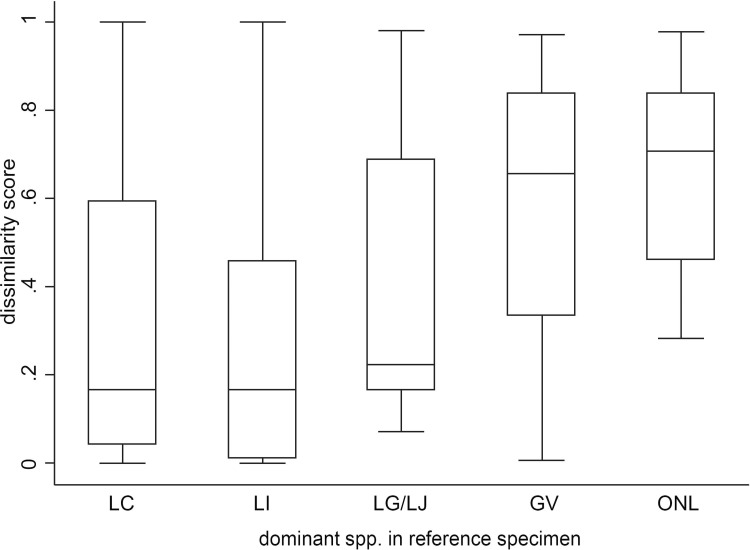
A Lactobacillus crispatus dominated vaginal microbiota was associated with Caucasian ethnicity (adjusted relative risk ratio[ARRR] = 7.28, 95%CI:1.37,38.57,p = 0.020). An L.iners (ARRR = 17.51, 95%CI:2.18,140.33,p = 0.007) or G.vaginalis (ARRR = 14.03, 95%CI:1.22,160.69, p = 0.034) dominated microbiota was associated with engaging in penile-vaginal sex. Microbiota dominated by L.crispatus, L.iners or other lactobacilli exhibited greater longitudinal consistency of the bacterial communities present compared to ones dominated by heterogeneous non-lactobacilli (p<0.030); sexual activity did not influence consistency. Women who developed BV were more likely to have clade GV4 compared to those reporting no sex/practiced non-coital activities (OR = 11.82, 95%CI:1.87,74.82,p = 0.009). Specimens were more likely to contain multiple G.vaginalis clades rather than a single clade if women engaged in penile-vaginal sex (RRR = 9.55, 95%CI:1.33,68.38,p = 0.025) or were diagnosed with BV (RRR = 31.5, 95%CI:1.69,586.87,p = 0.021).
Sexual activity and ethnicity influenced the composition of the vaginal microbiota of these young, relatively sexually inexperienced women. Women had consistent vaginal microbiota over time if lactobacilli were the dominant spp. present. Penile-vaginal sex did not alter the consistency of microbial communities but increased G.vaginalis clade diversity in young women with and without BV, suggesting sexual transmission of commensal and potentially pathogenic clades.
研究性活动对年轻女性阴道微生物群的组成、一致性以及阴道加德纳菌进化枝分布随时间的影响。
从一个大学队列中选取52名参与者。每隔3个月自行采集阴道拭子,共采集12个月,分析184份标本。采用罗氏454 V3/4区域16S rRNA测序对阴道微生物群进行特征分析,通过qPCR对阴道加德纳菌进化枝进行分型。
以卷曲乳杆菌为主的阴道微生物群与白种人相关(调整相对风险比[ARRR]=7.28,95%可信区间:1.37,38.57,p = 0.020)。以内氏乳杆菌(ARRR = 17.51,95%可信区间:2.18,140.33,p = 0.007)或阴道加德纳菌(ARRR = 14.03,95%可信区间:1.22,160.69,p = 0.034)为主的微生物群与进行阴茎-阴道性交有关。与以异质非乳杆菌为主的微生物群相比,以卷曲乳杆菌、内氏乳杆菌或其他乳杆菌为主的微生物群中存在的细菌群落纵向一致性更高(p<0.030);性活动不影响一致性。与未发生性行为/进行非性交活动的女性相比,发生细菌性阴道病的女性更可能具有GV4进化枝(比值比[OR]=11.82,95%可信区间:1.87,74.82,p = 0.009)。如果女性进行阴茎-阴道性交(相对风险比[RRR]=9.55,95%可信区间:1.33,68.38,p = 0.025)或被诊断为细菌性阴道病(RRR = 31.5,95%可信区间:1.69,586.87,p = 0.021),标本更可能含有多种阴道加德纳菌进化枝而非单一进化枝。
性活动和种族影响了这些年轻、性经验相对较少的女性的阴道微生物群组成。如果乳杆菌是主要存在的菌种,女性阴道微生物群随时间具有一致性。阴茎-阴道性交并未改变微生物群落的一致性,但增加了有或无细菌性阴道病的年轻女性阴道加德纳菌进化枝的多样性,提示共生和潜在致病进化枝的性传播。