Honke Nadine, Shaabani Namir, Teijaro John R, Christen Urs, Hardt Cornelia, Bezgovsek Judith, Lang Philipp A, Lang Karl S
Medical Faculty, Institute of Immunology, University of Duisburg-Essen, Essen, Germany; Clinic of Gastroenterology, Hepatology and Infectious Diseases, Heinrich-Heine-University, Düsseldorf, Germany.
Medical Faculty, Institute of Immunology, University of Duisburg-Essen, Essen, Germany; Clinic of Gastroenterology, Hepatology and Infectious Diseases, Heinrich-Heine-University, Düsseldorf, Germany; Department of Immunology and Microbial Science, The Scripps Research Institute, La Jolla, CA, USA.
Front Immunol. 2017 Feb 10;8:113. doi: 10.3389/fimmu.2017.00113. eCollection 2017.
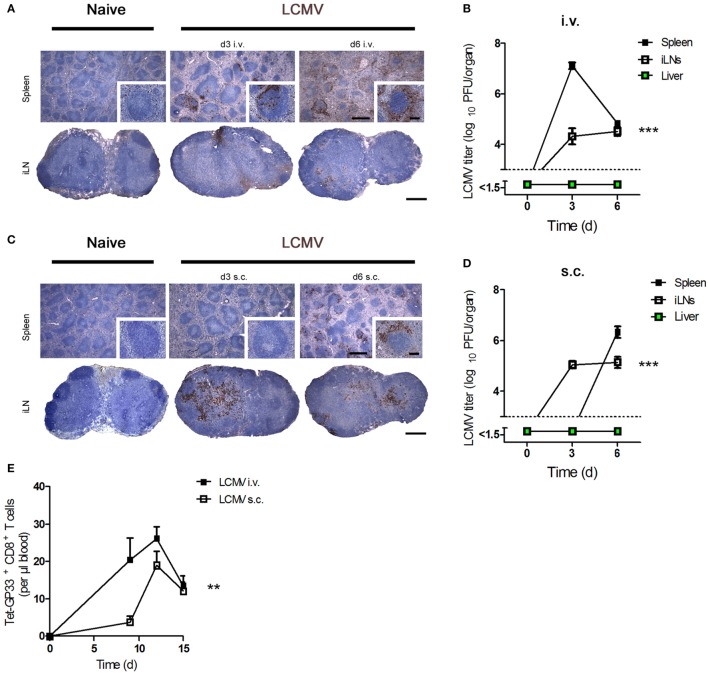
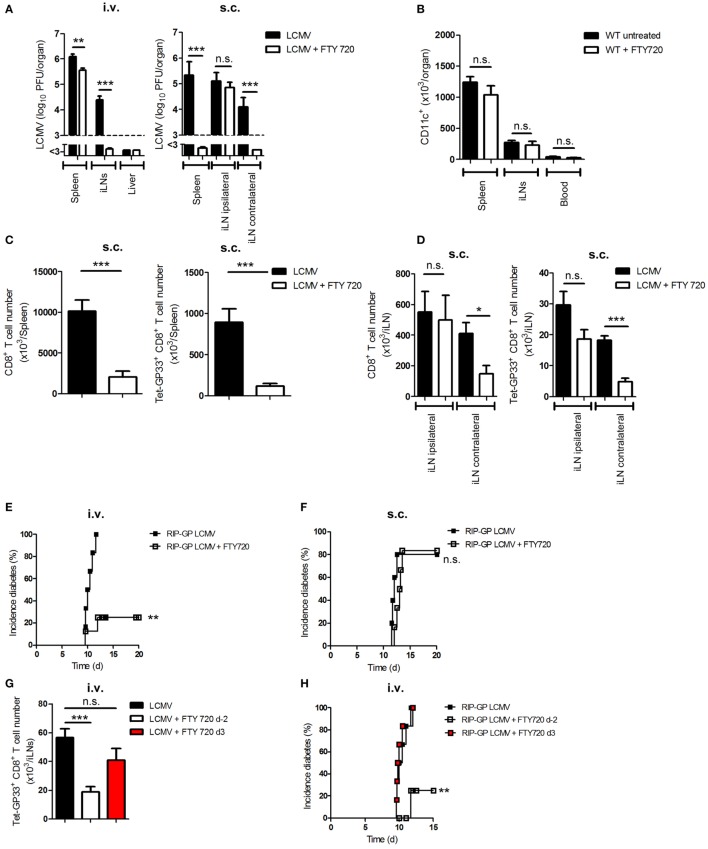
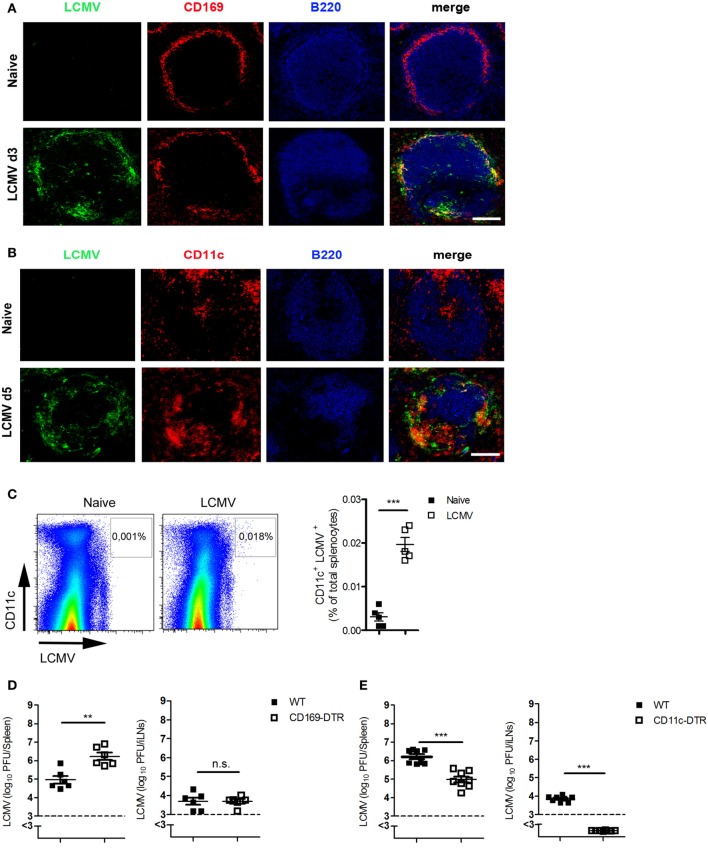
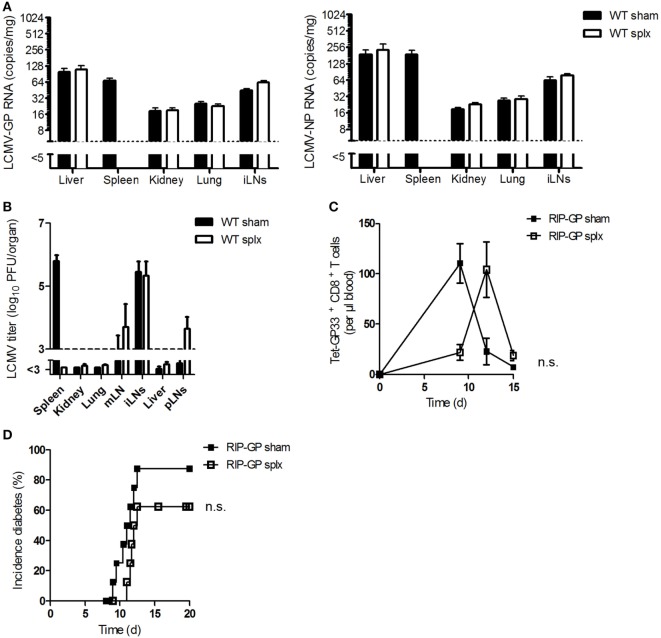
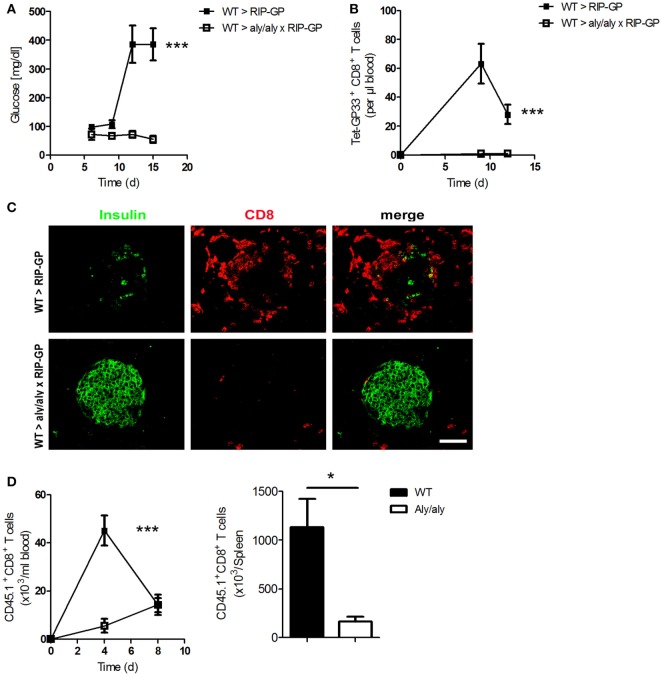
Peripheral tolerance is an important mechanism by which the immune system can guarantee a second line of defense against autoreactive T and B cells. One autoimmune disease that is related to a break of peripheral tolerance is diabetes mellitus type 1. Using the RIP-GP mouse model, we analyzed the role of the spleen and lymph nodes (LNs) in priming CD8 T cells and breaking peripheral tolerance. We found that diabetes developed in splenectomized mice infected with the lymphocytic choriomeningitis virus (LCMV), a finding showing that the spleen was not necessary in generating autoimmunity. By contrast, the absence of LNs prevented the priming of LCMV-specific CD8 T cells, and diabetes did not develop in these mice. Additionally, we found that dendritic cells are responsible for the distribution of virus in secondary lymphoid organs, when LCMV was administered intravenously. Preventing this distribution with the sphingosine-1-phosphate receptor antagonist FTY720 inhibits the transport of antigen to peripheral LNs and consequently prevented the onset of diabetes. However, in case of subcutaneous infection, administration of FTY720 could not inhibit the onset of diabetes because the viral antigen is already presented in the peripheral LNs. These findings demonstrate the importance of preventing the presence of antigen in LNs for maintaining tolerance.
外周耐受是免疫系统保证针对自身反应性T细胞和B细胞的第二道防线的重要机制。与外周耐受破坏相关的一种自身免疫性疾病是1型糖尿病。利用RIP-GP小鼠模型,我们分析了脾脏和淋巴结(LNs)在启动CD8 T细胞和破坏外周耐受中的作用。我们发现,感染淋巴细胞性脉络丛脑膜炎病毒(LCMV)的脾切除小鼠会发生糖尿病,这一发现表明脾脏对于自身免疫的产生并非必需。相比之下,缺乏淋巴结会阻止LCMV特异性CD8 T细胞的启动,这些小鼠不会发生糖尿病。此外,我们发现,当静脉注射LCMV时,树突状细胞负责病毒在二级淋巴器官中的分布。用鞘氨醇-1-磷酸受体拮抗剂FTY720阻止这种分布会抑制抗原向外周淋巴结的转运,从而预防糖尿病的发生。然而,在皮下感染的情况下,给予FTY720不能抑制糖尿病的发生,因为病毒抗原已经在外周淋巴结中呈现。这些发现证明了防止抗原存在于淋巴结中对于维持耐受的重要性。