Tomita Masaki, Ayabe Takanori, Chosa Eiichi, Nose Naohiro, Nakamura Kunihide
Department of Thoracic and Breast Surgery, Faculty of Medicine, University of Miyazaki, Japan. Email:
Asian Pac J Cancer Prev. 2017 Jan 1;18(1):287-291. doi: 10.22034/APJCP.2017.18.1.287.
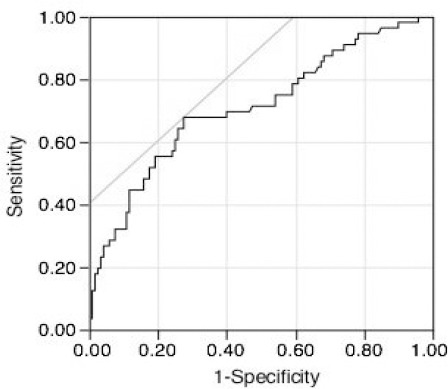
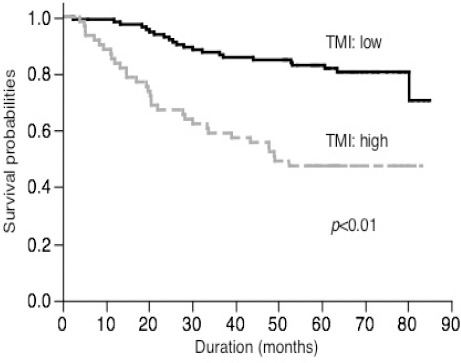
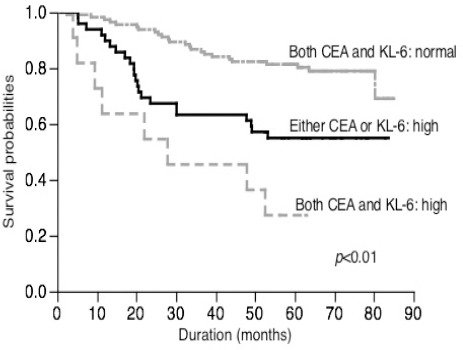
Background: We retrospectively analysed the prognostic significance of a tumor marker index (TMI) based on preoperative serum carcinoembryonic antigen (CEA) and Krebs von den Lungen-6 (KL-6) levels in nonsmall cell lung cancer (NSCLC) patients. Materials and Methods: We enrolled 176 NSCLC patients who had preoperative serum CEA and KL-6 level measurements and had undergone curative surgery between 2009 and 2011. Results: The 5-year disease-specific survival of patients with high serum CEA levels was significantly poorer compared with that of patients with normal levels. The value for patients with high serum KL-6 levels was also poor. Patients with both normal serum CEA and KL-6 levels had a favourable prognosis, whereas those with both high serum CEA and KL-6 levels had a poor outcome. The5-year disease-specific survival rate was 82.9% for patients in the low TMI group compared to 47.5% in the high TMI group (p<0.01). Both univariate and multivariate analyses revealed prognostic significance for TMI. Conclusions: TMI based on preoperative serum CEA and KL-6 levels might be useful for the prediction of the prognosis of NSCLC patients.
我们回顾性分析了基于术前血清癌胚抗原(CEA)和肺肿瘤标志物-6(KL-6)水平的肿瘤标志物指数(TMI)在非小细胞肺癌(NSCLC)患者中的预后意义。
我们纳入了176例在2009年至2011年间进行了术前血清CEA和KL-6水平检测并接受了根治性手术的NSCLC患者。
血清CEA水平高的患者5年疾病特异性生存率显著低于水平正常的患者。血清KL-6水平高的患者的生存率也较差。血清CEA和KL-6水平均正常的患者预后良好,而血清CEA和KL-6水平均高的患者预后较差。低TMI组患者的5年疾病特异性生存率为82.9%,而高TMI组为47.5%(p<0.01)。单因素和多因素分析均显示TMI具有预后意义。
基于术前血清CEA和KL-6水平的TMI可能有助于预测NSCLC患者的预后。