Steiner Raphael E, Manasanch Elisabet E
Department of Lymphoma and Myeloma, The University of Texas MD Anderson Cancer Center, Houston, TX, USA.
Onco Targets Ther. 2017 Feb 15;10:895-907. doi: 10.2147/OTT.S102756. eCollection 2017.
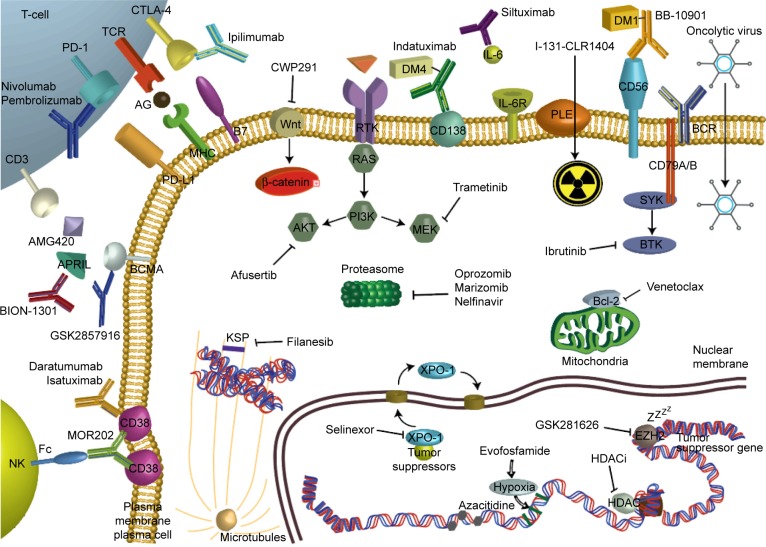
Carfilzomib is a proteasome inhibitor that binds selectively and irreversibly to the 20S proteasome, the proteolytic core particle within the 26S proteasome, resulting in the accumulation of proteasome substrates and ultimately growth arrest and apoptosis of tumor cells. The development and ultimate approval of this medication by regulatory agencies has been an important step toward improving clinical outcomes in multiple myeloma. Although initially approved as a single agent for the treatment of multiply relapsed and/or refractory myeloma, in the USA, it is now widely used in the early relapse setting in combination with lenalidomide and dexamethasone. Carfilzomib has also been studied in combination with second-generation immunomodulatory drugs, histone deacetylase inhibitors, alkylating agents and other novel medications. In this review article, we will discuss the efficacy, safety, tolerability and quality of life of carfilzomib-based combination therapies, as well as novel agents, for relapsed multiple myeloma.
卡非佐米是一种蛋白酶体抑制剂,它能选择性且不可逆地结合20S蛋白酶体,即26S蛋白酶体中的蛋白水解核心颗粒,导致蛋白酶体底物积累,最终使肿瘤细胞生长停滞并凋亡。监管机构对这种药物的研发及最终批准是改善多发性骨髓瘤临床结局的重要一步。尽管最初在美国被批准作为单药用于治疗多次复发和/或难治性骨髓瘤,但现在它广泛用于早期复发情况,与来那度胺和地塞米松联合使用。卡非佐米也已与第二代免疫调节药物、组蛋白去乙酰化酶抑制剂、烷化剂及其他新型药物联合进行了研究。在这篇综述文章中,我们将讨论基于卡非佐米的联合疗法以及新型药物对复发多发性骨髓瘤的疗效、安全性、耐受性和生活质量。