Zhu Lingqun, Li Linlin, Zhang Qianbing, Yang Xiao, Zou Zhiwei, Hao Bingtao, Marincola Francesco M, Liu Zhengjun, Zhong Zhuo, Wang Meng, Li Xiaoxuan, Wang Qianli, Li Keyi, Gao Wenwen, Yao Kaitai, Liu Qiuzhen
Cancer Research Institute, Southern Medical University , Guangzhou, China.
Sidra Medical and Research Center, Out-Patient Clinic , PO Box 26999, Al Luqta Street, Education City North Campus, Qatar Foundation, Doha, Qatar.
Cell Death Discov. 2017 Feb 20;3:17011. doi: 10.1038/cddiscovery.2017.11. eCollection 2017.
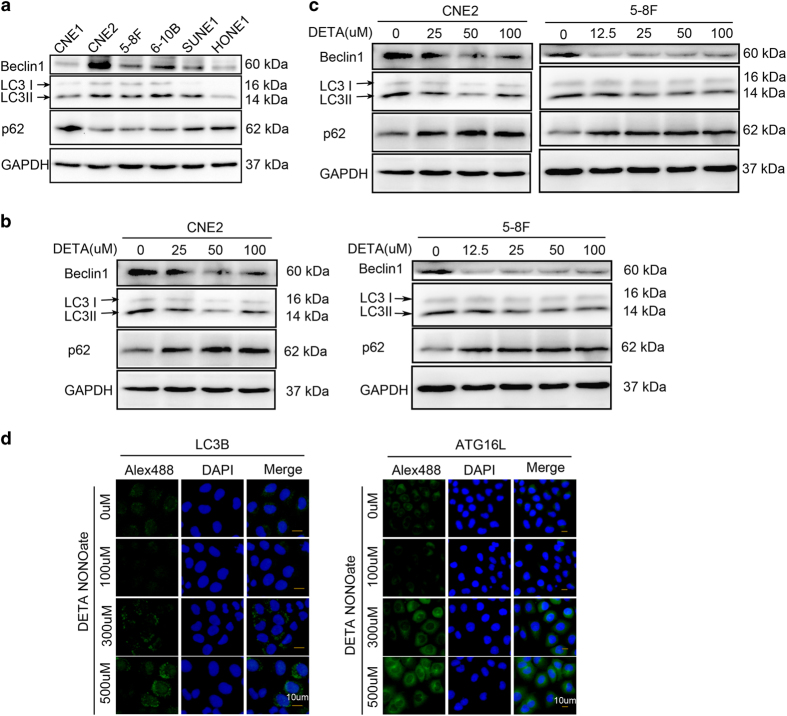
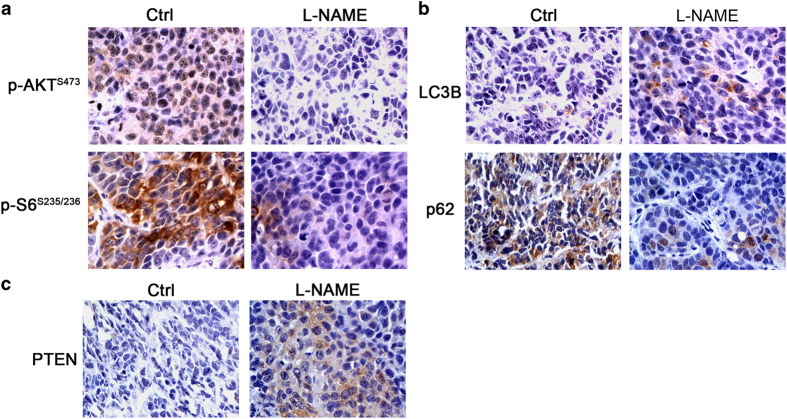
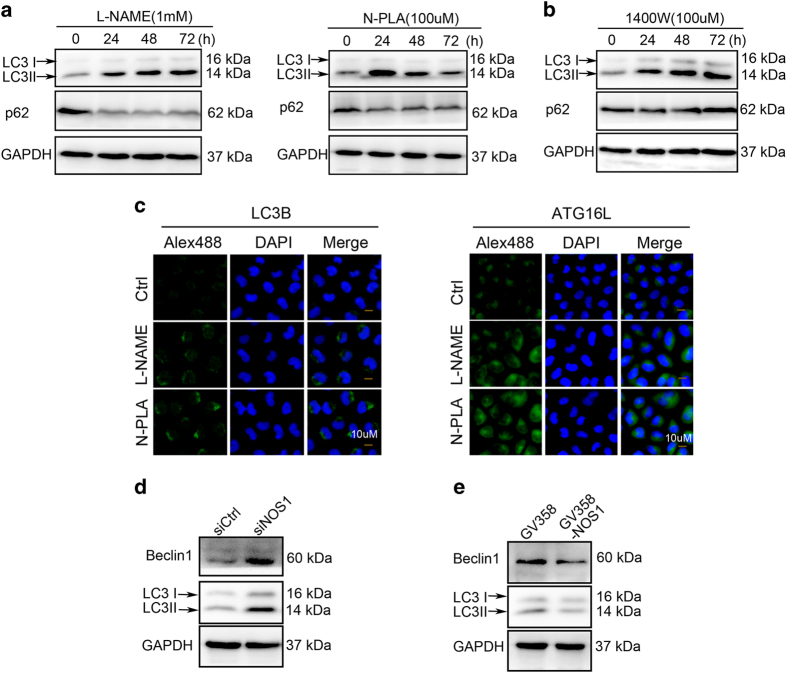
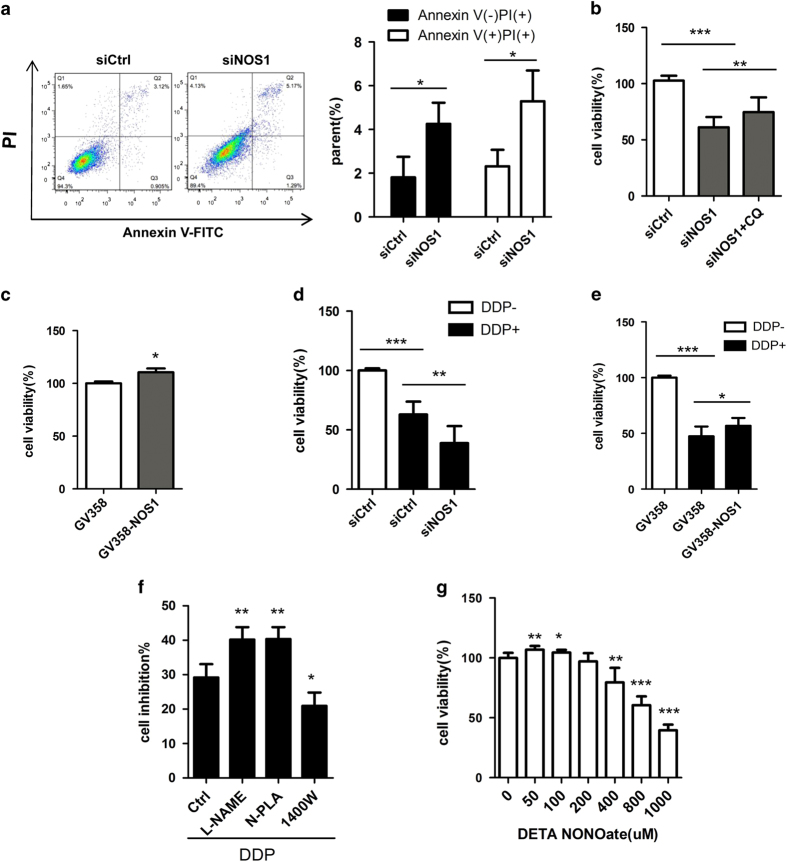
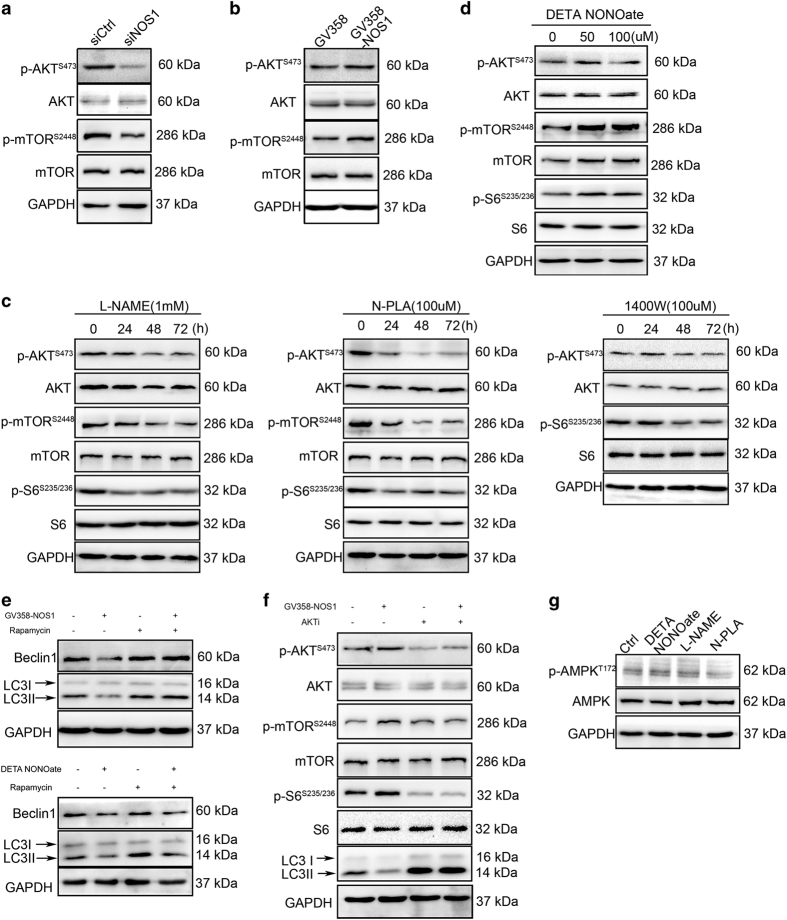
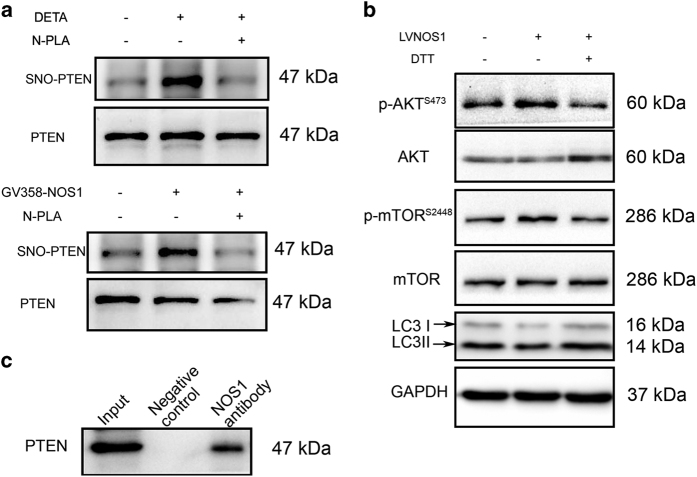
Autophagy is a cellular survival mechanism that involves the catabolic degradation of damaged proteins and organelles during periods of metabolic stress, and when overly stimulated, commonly contributes to cell death. Nitric oxide (NO), a potent cellular messenger, participates in a complex mechanism which assists in controlling autophagy. However, the mechanism by which endogenous NO formed by distinct isoforms of nitric oxide synthase (NOS) helps to regulate autophagy in cancer cells remains unclear. Here we report that NOS1 reduces excessive levels of autophagy and promotes the survival of nasopharyngeal carcinoma cells. We found that inhibition of NOS1 increased cell death resulting from siRNA or the use of pharmacologic agents; and this effect was reversed by the autophagy inhibitor, chloroquine. The role of NOS1 in the autophagy process depended on the activation of AKT/mTOR signaling by -nitrosylation of phosphatase and tensin homolog (PTEN) proteins. The mechanism by which NOS1 modifies PTEN protein might involve a direct interaction between these two molecules. Moreover, in an study, the NOS1 inhibitor N(G)-nitro-L-arginine methyl ester activated AKT/mTOR signaling and promoted autophagy in xenograph tumors. Our studies demonstrated that NOS1 prevents excessive autophagy via -nitrosylation of PTEN, and activation of the AKT/mTOR signaling pathway. PTEN and the AKT/mTOR signaling pathway are promising targets for improving the chemotherapeutic treatment of cancer.
自噬是一种细胞生存机制,在代谢应激期间涉及受损蛋白质和细胞器的分解代谢降解,并且在过度刺激时通常会导致细胞死亡。一氧化氮(NO)是一种强大的细胞信使,参与一种有助于控制自噬的复杂机制。然而,由不同亚型的一氧化氮合酶(NOS)形成的内源性NO有助于调节癌细胞自噬的机制仍不清楚。在此我们报告,NOS1可降低自噬的过量水平并促进鼻咽癌细胞的存活。我们发现抑制NOS1会增加由小干扰RNA(siRNA)或使用药物制剂导致的细胞死亡;并且这种效应可被自噬抑制剂氯喹逆转。NOS1在自噬过程中的作用取决于通过磷酸酶和张力蛋白同源物(PTEN)蛋白的亚硝基化激活AKT/mTOR信号传导。NOS1修饰PTEN蛋白的机制可能涉及这两个分子之间的直接相互作用。此外,在一项研究中,NOS1抑制剂N(G)-硝基-L-精氨酸甲酯激活了异种移植瘤中的AKT/mTOR信号传导并促进了自噬。我们的研究表明,NOS1通过PTEN的亚硝基化以及AKT/mTOR信号通路的激活来防止过度自噬。PTEN和AKT/mTOR信号通路是改善癌症化疗治疗的有前景的靶点。