Department of Otolaryngology, Kaohsiung Chang Gung Memorial Hospital and Chang Gung University College of Medicine, 123 Ta-Pei Road, Niao-Song District, Kaohsiung, 833, Taiwan.
Kaohsiung Chang Gung Head and Neck Oncology Group, Cancer Center, Kaohsiung Chang Gung Memorial Hospital, Kaohsiung, Taiwan.
J Mol Med (Berl). 2018 Dec;96(12):1407-1418. doi: 10.1007/s00109-018-1704-z. Epub 2018 Oct 29.
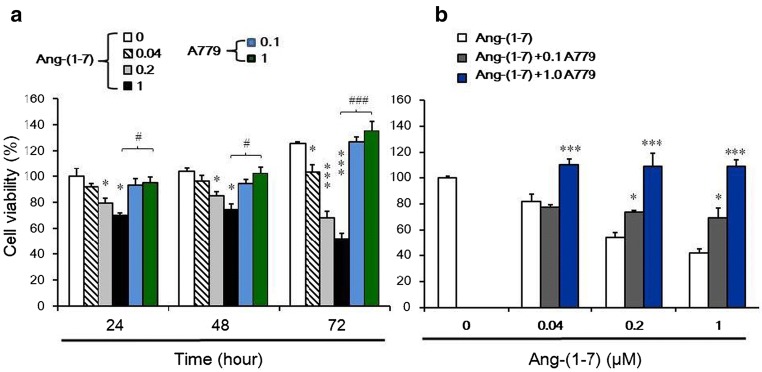
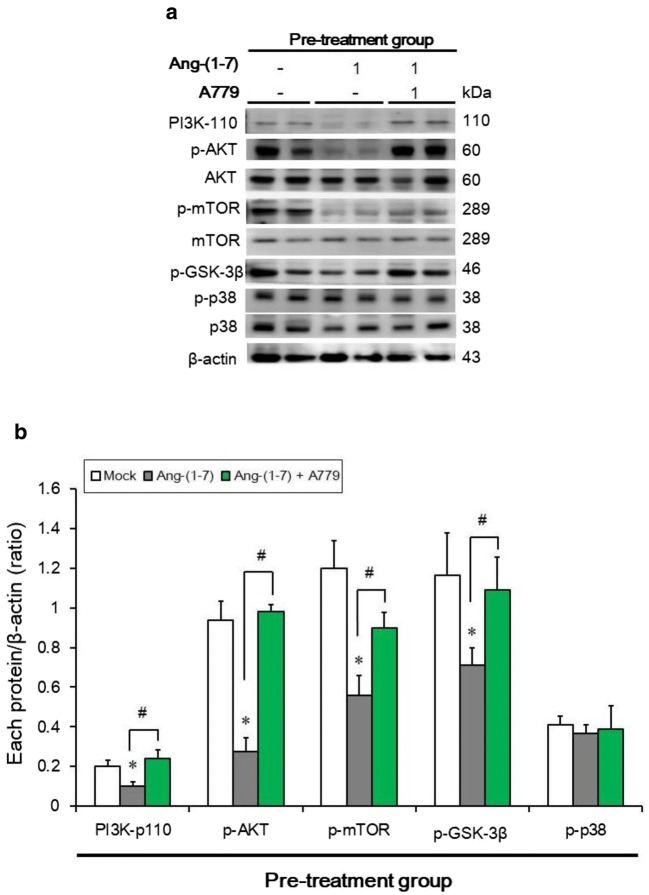
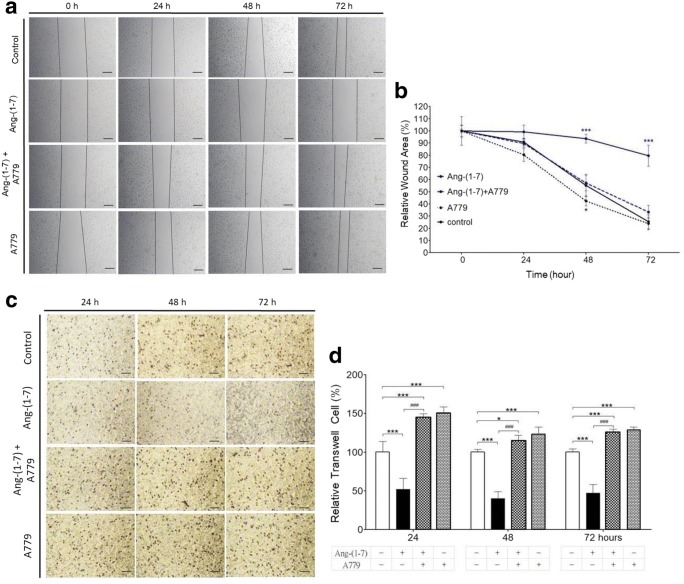
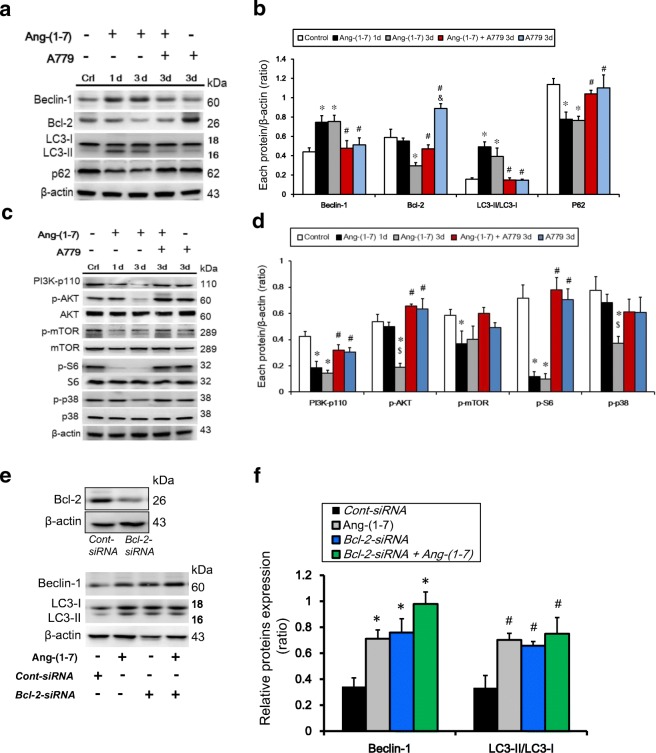
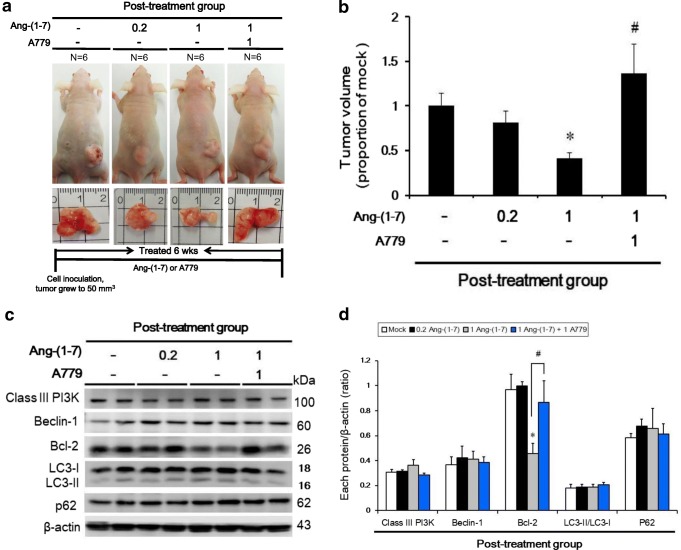
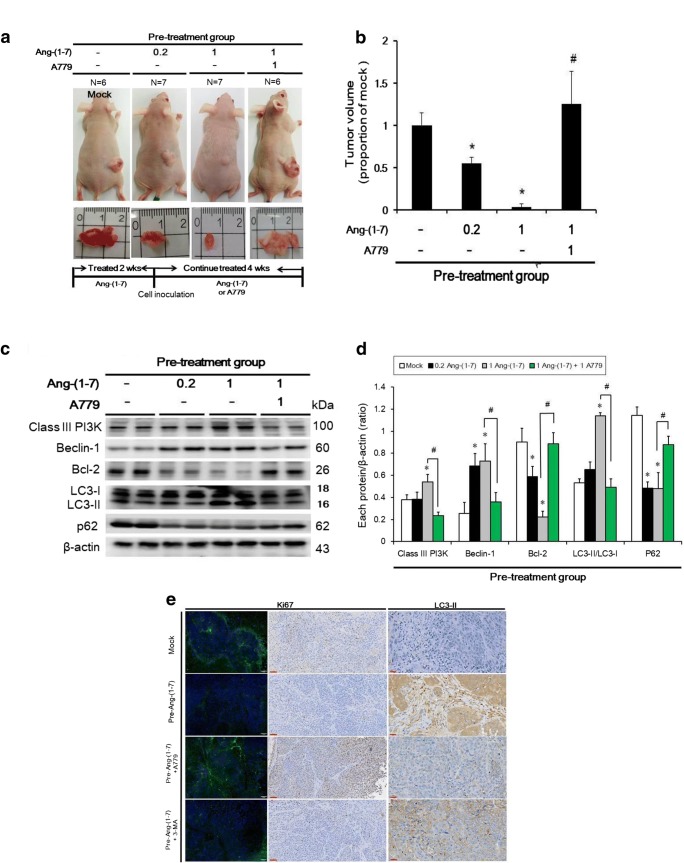
The highest incidence of nasopharyngeal carcinoma (NPC) is in southeast China, including Taiwan. Many side effects have been observed following radiation therapy with chemotherapy; hence, exploring new treatment modalities for NPC is an important future direction. Angiotensin-(1-7) [Ang-(1-7)] is an endogenous heptapeptide hormone and important component of the renin-angiotensin system that acts through both the Mas receptor and AT2 receptor, exhibiting anti-proliferative and anti-angiogenic properties in cancer cells. However, the anti-cancer activity of Ang-(1-7) related to autophagy in NPC remains largely debated. The effects and signaling pathway(s) involved in the Ang-(1-7)/Mas receptor axis in NPC were investigated both in vitro and in vivo. Ang-(1-7) inhibited cell proliferation, migration, and invasion in NPC-TW01 cells. Ang-(1-7) induced autophagy by increasing the levels of the autophagy marker LC3-II and by enhancing p62 degradation via activation of the Beclin-1/Bcl-2 signaling pathway with involvement of the PI3K/Akt/mTOR and p38 pathways in vitro study. In addition, pre-treatment with Ang-(1-7) inhibited tumor growth in NPC xenografts by inducing autophagy, suggesting a correlation between PI3K/Akt/mTOR pathway inhibition and the abovementioned anti-cancer activities. However, no autophagy was observed following Ang-(1-7) post-treatment. Taken together, these data indicate that Ang-(1-7) plays a novel role in autophagy downstream signaling pathways in NPC, supporting its potential as a therapeutic agent for alleviation the incidence of NPC and preventive treatment of recurrent NPC. KEY MESSAGES: Ang-(1-7) inhibits cell proliferation, migration, and invasion by activating autophagy Ang-(1-7)pre-treatment inhibits tumor growth via autophagy by suppressing PI3K/Akt/mTOR pathway. Ang-(1-7) may provide a novel preventative treatment for NPC and recurrent NPC.
血管紧张素-(1-7)[Ang-(1-7)]是一种内源性七肽激素,也是肾素-血管紧张素系统的重要组成部分,通过 Mas 受体和 AT2 受体发挥作用,在癌细胞中表现出抗增殖和抗血管生成特性。然而,Ang-(1-7)在鼻咽癌(NPC)中的自噬相关抗癌活性仍存在很大争议。本研究旨在探讨 Ang-(1-7)/Mas 受体轴在 NPC 中的作用及其信号通路。通过体外和体内实验研究了 Ang-(1-7)/Mas 受体轴在 NPC-TW01 细胞中的作用及其信号通路。Ang-(1-7)抑制 NPC-TW01 细胞的增殖、迁移和侵袭。Ang-(1-7)通过增加自噬标志物 LC3-II 的水平并通过激活 Beclin-1/Bcl-2 信号通路增强 p62 的降解来诱导自噬,该信号通路涉及 PI3K/Akt/mTOR 和 p38 通路。此外,在体内研究中,Ang-(1-7)预处理通过诱导自噬抑制 NPC 异种移植物的肿瘤生长,表明 PI3K/Akt/mTOR 通路抑制与上述抗癌活性之间存在相关性。然而,Ang-(1-7) 后处理未观察到自噬。总之,这些数据表明 Ang-(1-7) 在 NPC 的自噬下游信号通路中发挥新的作用,支持其作为减轻 NPC 发病率和预防 NPC 复发的治疗剂的潜力。关键信息:Ang-(1-7)通过激活自噬抑制细胞增殖、迁移和侵袭 Ang-(1-7)预处理通过抑制 PI3K/Akt/mTOR 通路诱导自噬来抑制肿瘤生长 Ang-(1-7)可能为 NPC 和复发性 NPC 提供新的预防治疗方法。