Li Ao, Fan Song, Xu Yuchen, Meng Jialin, Shen Xufeng, Mao Jun, Zhang Li, Zhang Xiansheng, Moeckel Gilbert, Wu Dianqing, Wu Guanqing, Liang Chaozhao
Department of Urology, PKD Center, The First Affiliated Hospital of Anhui Medical University, Hefei, Anhui Province, China.
State Key Laboratory of Molecular Oncology, Cancer Hospital and Institute, Chinese Academy of Medical Sciences and Peking Union Medical College, Beijing, China.
J Cell Mol Med. 2017 Aug;21(8):1619-1635. doi: 10.1111/jcmm.13091. Epub 2017 Feb 28.
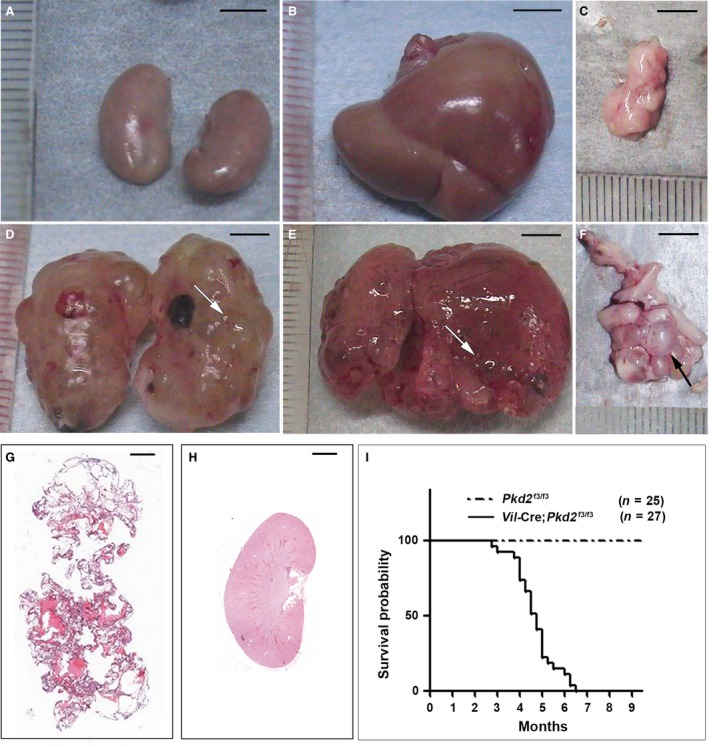
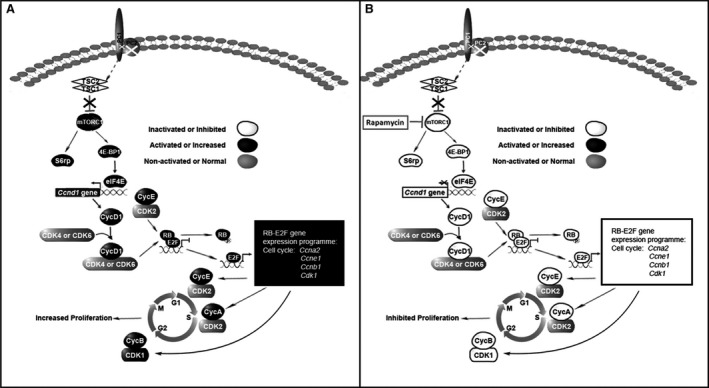
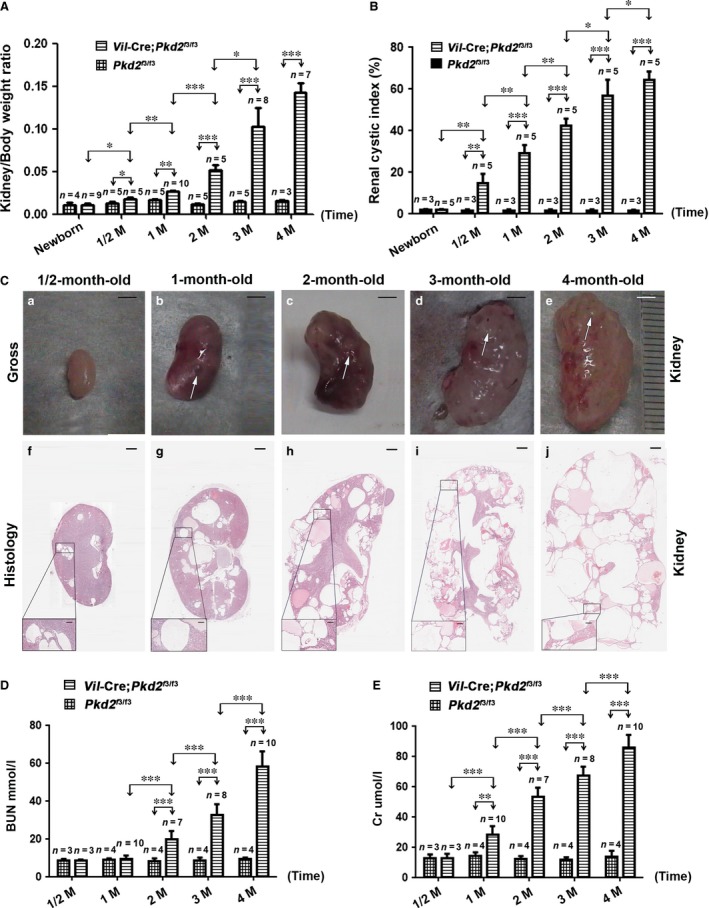
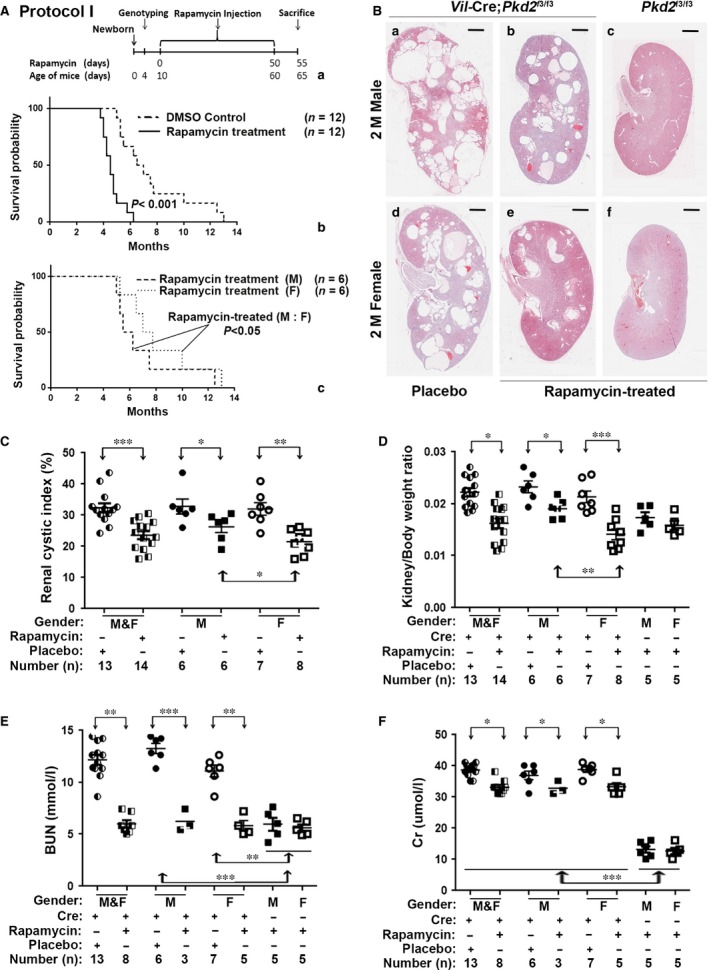
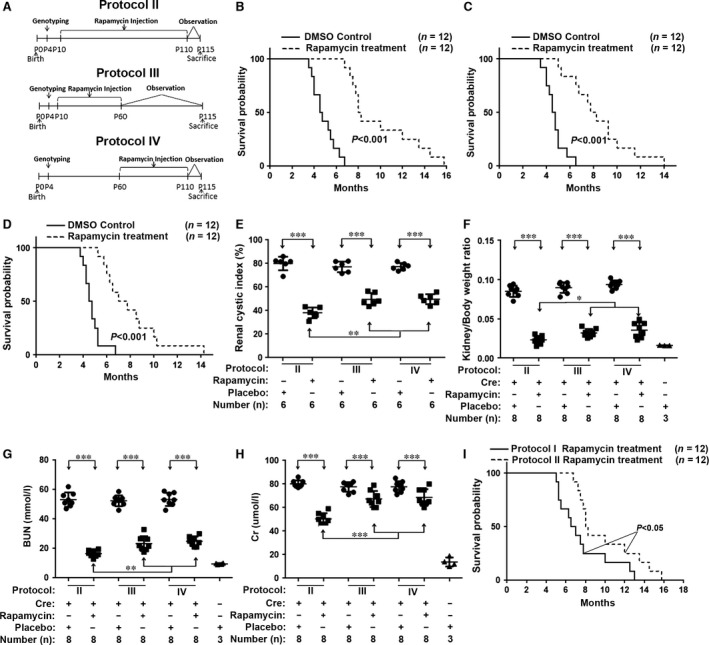
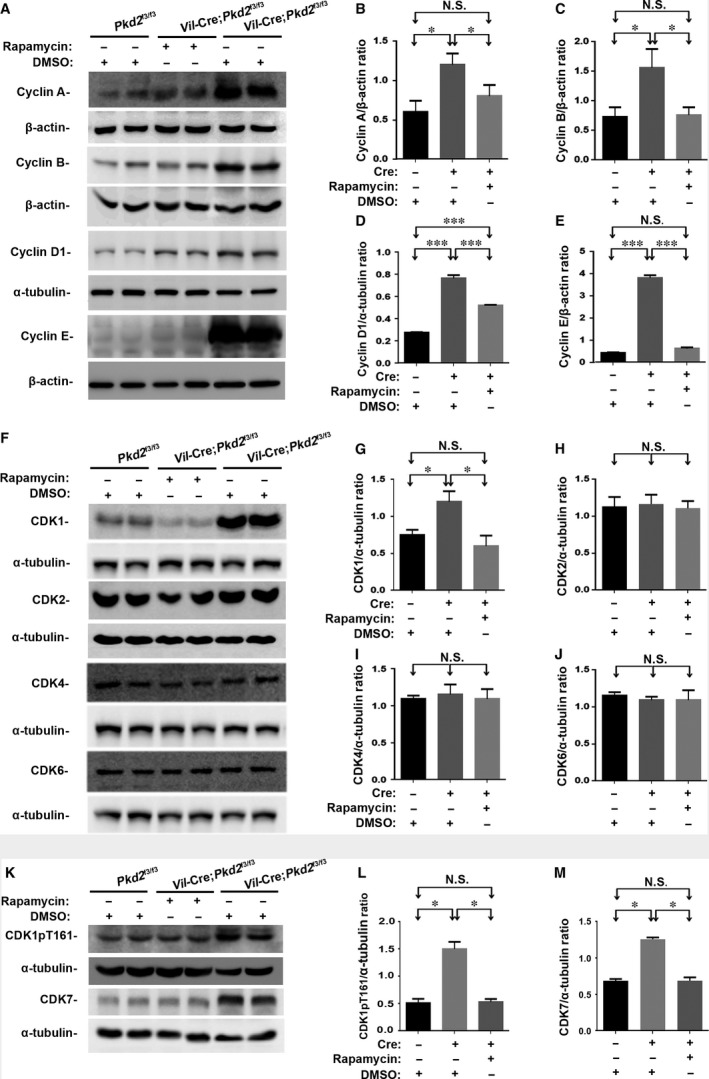
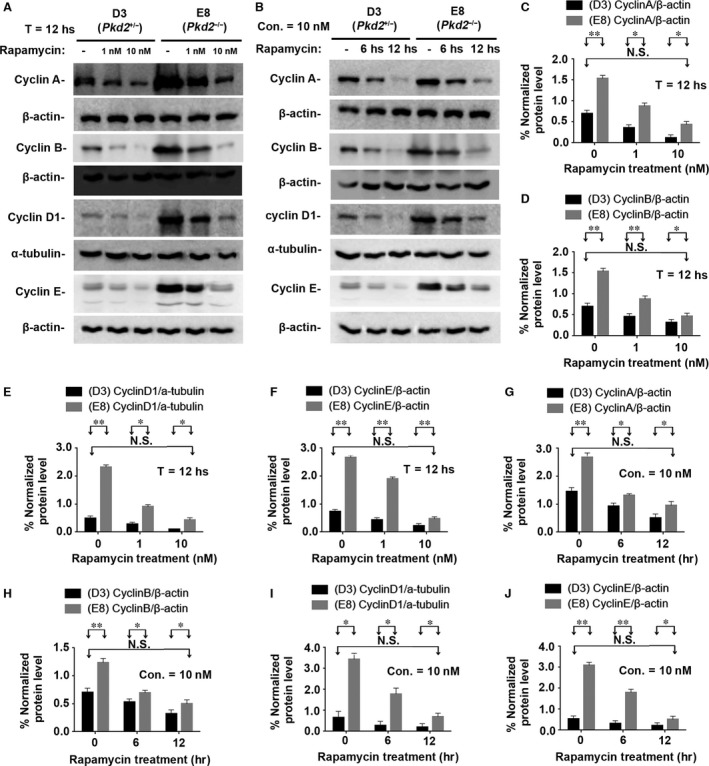
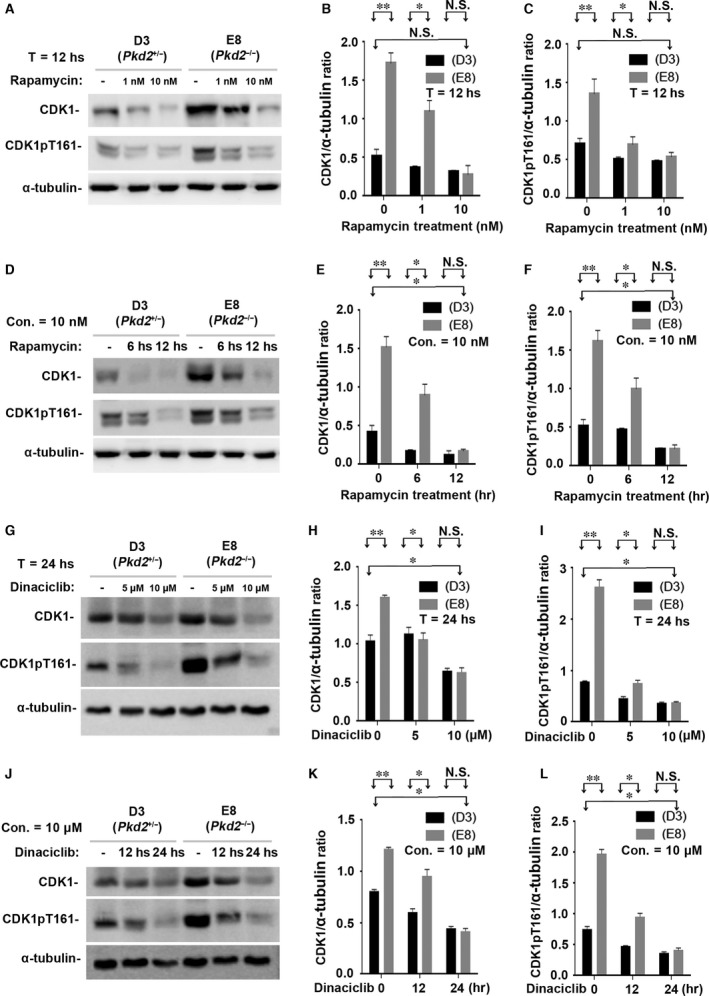
Although translational research into autosomal dominant polycystic kidney disease (ADPKD) and its pathogenesis has made considerable progress, there is presently lack of standardized animal model for preclinical trials. In this study, we developed an orthologous mouse model of human ADPKD by cross-mating Pkd2 conditional-knockout mice (Pkd2 ) to Cre transgenic mice in which Cre is driven by a spectrum of kidney-related promoters. By systematically characterizing the mouse model, we found that Pkd2 mice with a Cre transgene driven by the mouse villin-1 promoter (Vil-Cre;Pkd2 ) develop overt cysts in the kidney, liver and pancreas and die of end-stage renal disease (ESRD) at 4-6 months of age. To determine whether these Vil-Cre;Pkd2 mice were suitable for preclinical trials, we treated the mice with the high-dose mammalian target of rapamycin (mTOR) inhibitor rapamycin. High-dose rapamycin significantly increased the lifespan, lowered the cystic index and kidney/body weight ratio and improved renal function in Vil-Cre;Pkd2 mice in a time- and dose-dependent manner. In addition, we further found that rapamycin arrested aberrant epithelial-cell proliferation in the ADPKD kidney by down-regulating the cell-cycle-associated cyclin-dependent kinase 1 (CDK1) and cyclins, namely cyclin A, cyclin B, cyclin D1 and cyclin E, demonstrating a direct link between mTOR signalling changes and the polycystin-2 dysfunction in cystogenesis. Our newly developed ADPKD model provides a practical platform for translating in vivo preclinical results into ADPKD therapies. The newly defined molecular mechanism by which rapamycin suppresses proliferation via inhibiting abnormally elevated CDK1 and cyclins offers clues to new molecular targets for ADPKD treatment.
尽管对常染色体显性多囊肾病(ADPKD)及其发病机制的转化研究已取得显著进展,但目前缺乏用于临床前试验的标准化动物模型。在本研究中,我们通过将Pkd2条件性敲除小鼠(Pkd2)与Cre转基因小鼠杂交,开发了一种人类ADPKD的直系同源小鼠模型,其中Cre由一系列与肾脏相关的启动子驱动。通过系统地表征该小鼠模型,我们发现由小鼠绒毛蛋白-1启动子(Vil-Cre;Pkd2)驱动的带有Cre转基因的Pkd2小鼠在肾脏、肝脏和胰腺中出现明显囊肿,并在4至6月龄时死于终末期肾病(ESRD)。为了确定这些Vil-Cre;Pkd2小鼠是否适合临床前试验,我们用高剂量的雷帕霉素哺乳动物靶点(mTOR)抑制剂雷帕霉素治疗这些小鼠。高剂量雷帕霉素以时间和剂量依赖性方式显著延长了Vil-Cre;Pkd2小鼠的寿命,降低了囊肿指数和肾脏/体重比,并改善了肾功能。此外,我们进一步发现雷帕霉素通过下调细胞周期相关的细胞周期蛋白依赖性激酶1(CDK1)和细胞周期蛋白,即细胞周期蛋白A、细胞周期蛋白B、细胞周期蛋白D1和细胞周期蛋白E,阻止了ADPKD肾脏中异常的上皮细胞增殖,证明了mTOR信号变化与囊肿形成中多囊蛋白-2功能障碍之间的直接联系。我们新开发的ADPKD模型为将体内临床前结果转化为ADPKD治疗提供了一个实用平台。雷帕霉素通过抑制异常升高的CDK1和细胞周期蛋白来抑制增殖的新定义分子机制为ADPKD治疗的新分子靶点提供了线索。