Arts Derk L, Abu-Hanna Ameen, Medlock Stephanie K, van Weert Henk C P M
Academic Medical Centre, Department of General Practice Amsterdam, The Netherlands.
Academic Medical Centre, Department of Medical Informatics, Amsterdam, The Netherlands.
PLoS One. 2017 Feb 28;12(2):e0170974. doi: 10.1371/journal.pone.0170974. eCollection 2017.
Adherence to guidelines pertaining to stroke prevention in patients with atrial fibrillation is poor. Decision support systems have shown promise in increasing guideline adherence.
To improve guideline adherence with a non-obtrusive clinical decision support system integrated in the workflow. Secondly, we seek to capture reasons for guideline non-adherence.
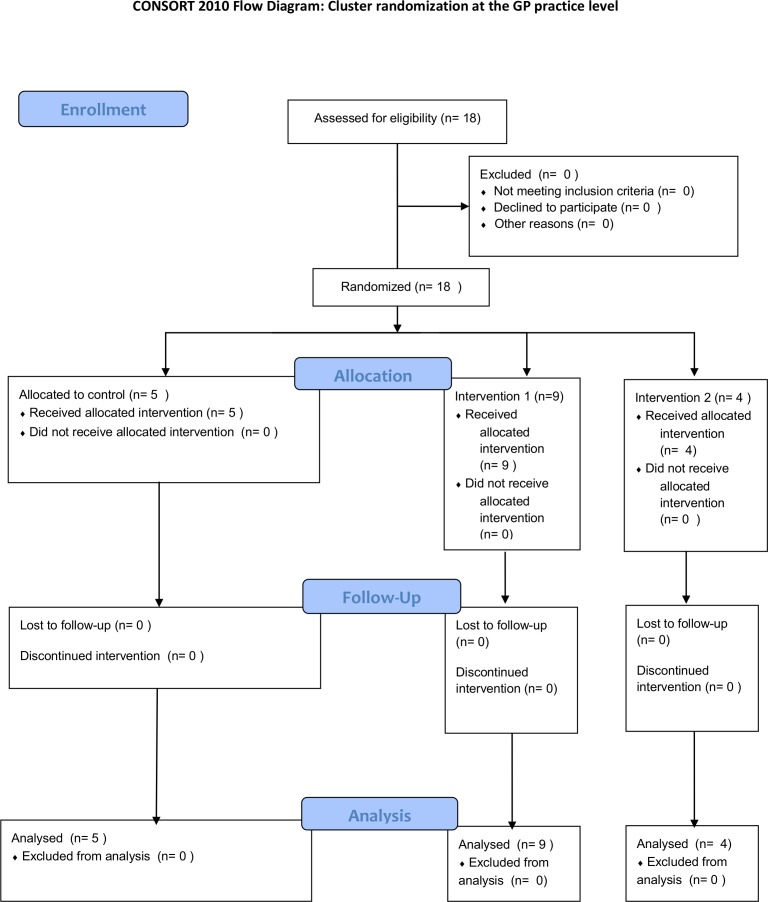
A cluster randomized controlled trial in Dutch general practices.
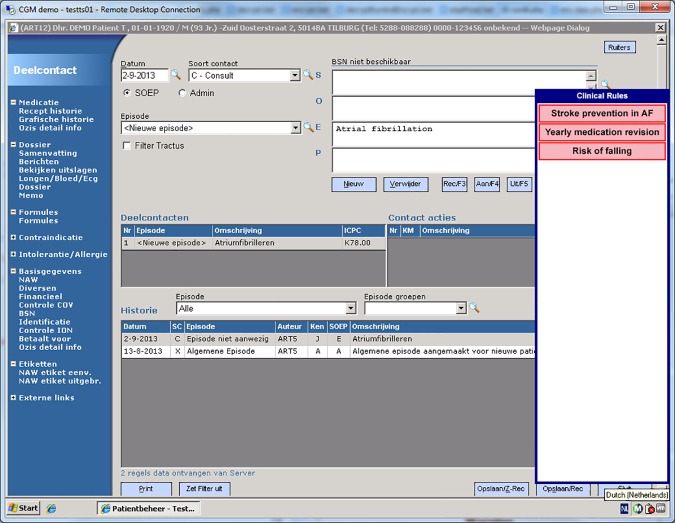
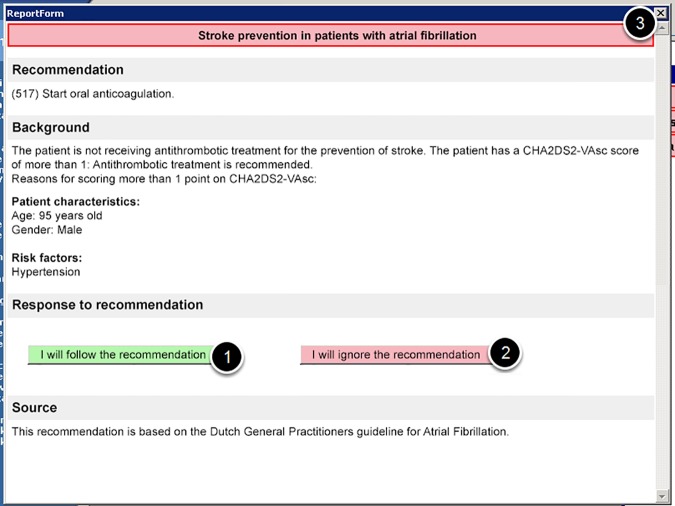
A decision support system was developed that implemented properties positively associated with effectiveness: real-time, non-interruptive and based on data from electronic health records. Recommendations were based on the Dutch general practitioners guideline for atrial fibrillation that uses the CHA2DS2-VAsc for stroke risk stratification. Usage data and responses to the recommendations were logged. Effectiveness was measured as adherence to the guideline. We used a chi square to test for group differences and a mixed effects model to correct for clustering and baseline adherence.
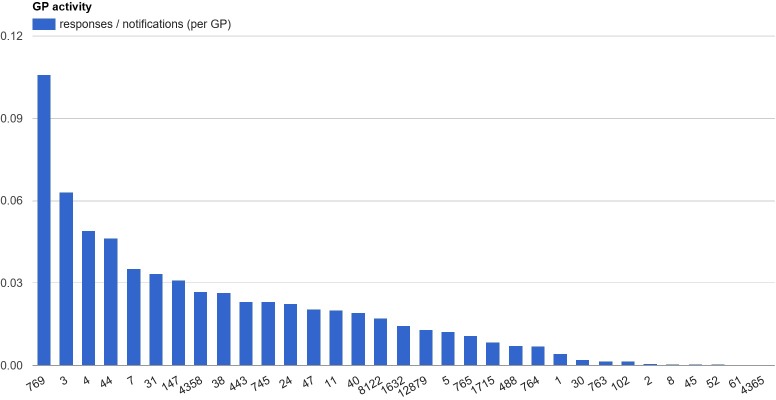
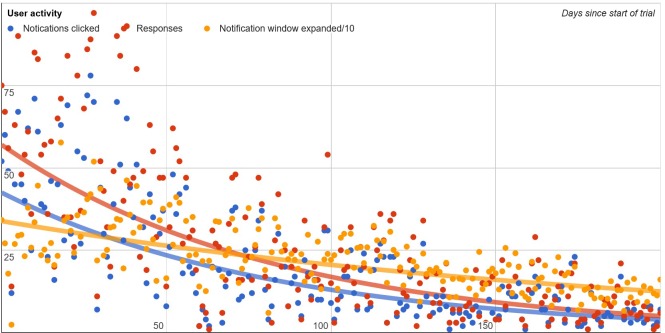
Our analyses included 781 patients. Usage of the system was low (5%) and declined over time. In total, 76 notifications received a response: 58% dismissal and 42% acceptance. At the end of the study, both groups had improved, by 8% and 5% respectively. There was no statistically significant difference between groups (Control: 50%, Intervention: 55% P = 0.23). Clustered analysis revealed similar results. Only one usable reasons for non-adherence was captured.
Our study could not demonstrate the effectiveness of a decision support system in general practice, which was likely due to lack of use. Our findings should be used to develop next generation decision support systems that are effective in the challenging setting of general practice.
心房颤动患者对中风预防指南的依从性较差。决策支持系统在提高指南依从性方面已显示出前景。
通过整合在工作流程中的非侵入性临床决策支持系统来提高指南依从性。其次,我们试图找出不依从指南的原因。
在荷兰全科医疗中进行的一项整群随机对照试验。
开发了一个决策支持系统,该系统具备与有效性呈正相关的特性:实时、不干扰且基于电子健康记录中的数据。推荐意见基于荷兰全科医生房颤指南,该指南使用CHA2DS2-VAsc进行中风风险分层。记录使用数据和对推荐意见的回应。有效性以对指南的依从性来衡量。我们使用卡方检验来检验组间差异,并使用混合效应模型来校正聚类和基线依从性。
我们的分析纳入了781名患者。系统使用率较低(5%)且随时间下降。总共76条通知收到了回应:58%被驳回,42%被接受。在研究结束时,两组均有改善,分别提高了8%和5%。两组之间无统计学显著差异(对照组:50%,干预组:55%,P = 0.23)。聚类分析得出了类似结果。仅获取到一个不依从的可用原因。
我们的研究未能证明决策支持系统在全科医疗中的有效性,这可能是由于使用不足所致。我们的研究结果应用于开发在具有挑战性的全科医疗环境中有效的下一代决策支持系统。