Kondili Loreta A, Gaeta Giovanni Battista, Ieluzzi Donatella, Zignego Anna Linda, Monti Monica, Gori Andrea, Soria Alessandro, Raimondo Giovanni, Filomia Roberto, Di Leo Alfredo, Iannone Andrea, Massari Marco, Corsini Romina, Gulminetti Roberto, Gatti Comini Alberto, Toniutto Pierluigi, Dissegna Denis, Russo Francesco Paolo, Zanetto Alberto, Rumi Maria Grazia, Brancaccio Giuseppina, Danieli Elena, Brunetto Maurizia Rossana, Weimer Liliana Elena, Quaranta Maria Giovanna, Vella Stefano, Puoti Massimo
Department of Therapeutic Research and Medicine Evaluation, Istituto Superiore di Sanità, Rome, Italy.
Infectious Diseases, Second University of Naples, Naples, Italy.
PLoS One. 2017 Feb 28;12(2):e0172159. doi: 10.1371/journal.pone.0172159. eCollection 2017.
There are few real-life data on the potential drug-drug interactions (DDIs) between anti-HCV direct-acting antivirals (DAAs) and the comedications used.
To assess the potential DDIs of DAAs in HCV-infected outpatients, according to the severity of liver disease and comedication used in a prospective multicentric study.
Data from patients in 15 clinical centers who had started a DAA regimen and were receiving comedications during March 2015 to March 2016 were prospectively evaluated. The DDIs for each regimen and comedication were assigned according to HepC Drug Interactions (www.hep-druginteractions.org).
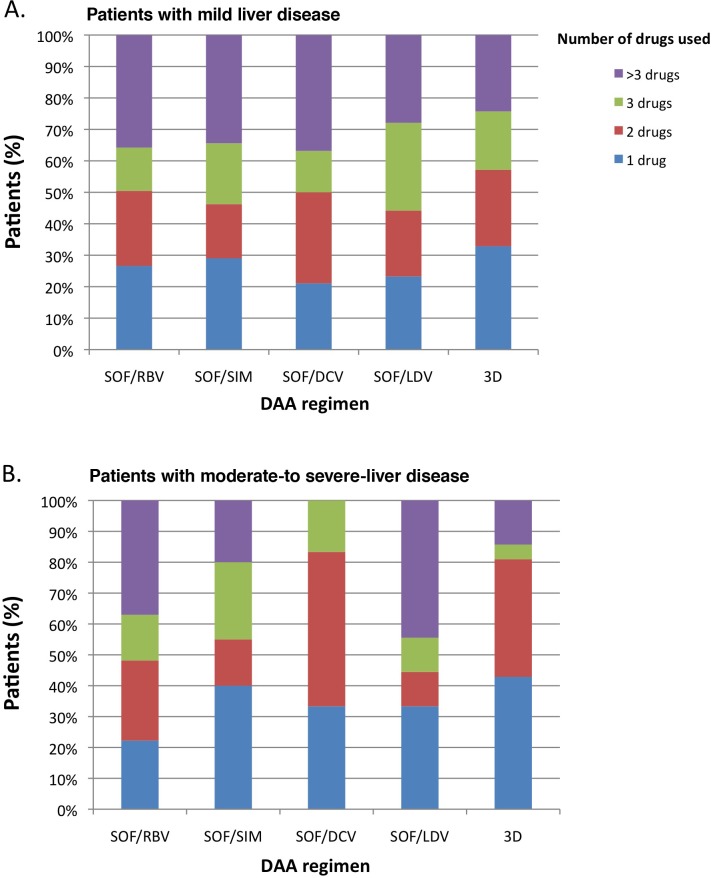
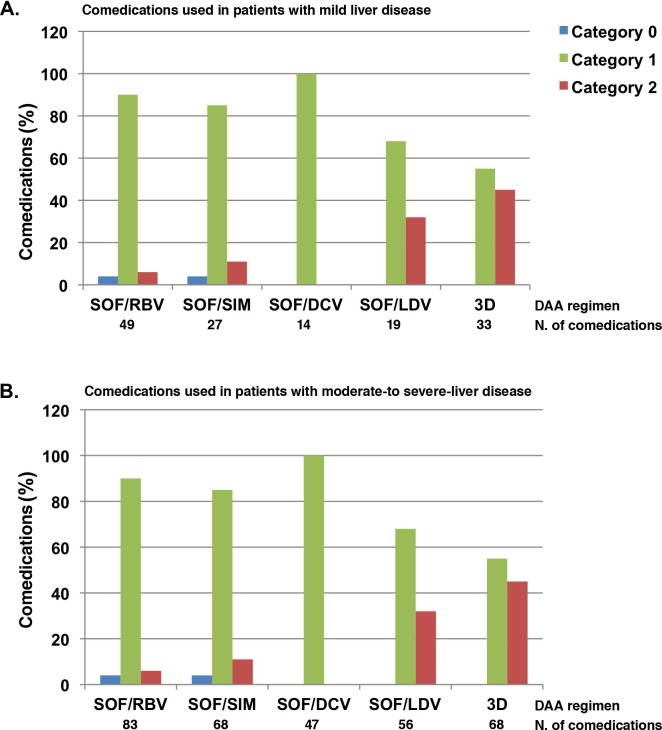
Of the 449 patients evaluated, 86 had mild liver disease and 363 had moderate-to-severe disease. The use of a single comedication was more frequent among patients with mild liver disease (p = 0.03), whereas utilization of more than three drugs among those with moderate-to-severe disease (p = 0.05). Of the 142 comedications used in 86 patients with mild disease, 27 (20%) may require dose adjustment/closer monitoring, none was contraindicated. Of the 322 comedications used in 363 patients with moderate-to-severe liver disease, 82 (25%) were classified with potential DDIs that required only monitoring and dose adjustments; 10 (3%) were contraindicated in severe liver disease. In patients with mild liver disease 30% (26/86) used at least one drug with a potential DDI whereas of the 363 patients with moderate-to-severe liver disease, 161 (44%) were at risk for one or more DDI.
Based on these results, we can estimate that 30-44% of patients undergoing DAA and taking comedications are at risk of a clinically significant DDI. This data indicates the need for increased awareness of potential DDI during DAA therapy, especially in patients with moderate-to-severe liver disease. For several drugs, the recommendation related to the DDI changes from "dose adjustment/closer monitoring", in mild to moderate liver disease, to "the use is contraindicated" in severe liver disease.
关于抗丙型肝炎病毒直接抗病毒药物(DAA)与合并用药之间潜在药物相互作用(DDI)的实际生活数据很少。
在一项前瞻性多中心研究中,根据肝病严重程度和使用的合并用药评估DAA在丙型肝炎病毒感染门诊患者中的潜在DDI。
对2015年3月至2016年3月期间开始DAA治疗方案并正在接受合并用药的15个临床中心患者的数据进行前瞻性评估。根据丙型肝炎药物相互作用(www.hep-druginteractions.org)为每种治疗方案和合并用药分配DDI。
在评估的449例患者中,86例患有轻度肝病,363例患有中度至重度肝病。轻度肝病患者中使用单一合并用药更为常见(p = 0.03),而中度至重度肝病患者中使用三种以上药物更为常见(p = 0.05)。在86例轻度疾病患者使用的142种合并用药中,27种(20%)可能需要调整剂量/加强监测,无药物禁忌。在363例中度至重度肝病患者使用的322种合并用药中,82种(25%)被归类为需要监测和调整剂量的潜在DDI;10种(3%)在严重肝病中禁忌使用。轻度肝病患者中30%(26/86)使用了至少一种具有潜在DDI的药物,而在363例中度至重度肝病患者中,161例(44%)存在一种或多种DDI风险。
基于这些结果,我们可以估计,接受DAA治疗并服用合并用药的患者中有30%-44%存在具有临床意义的DDI风险。该数据表明在DAA治疗期间需要提高对潜在DDI的认识,尤其是在中度至重度肝病患者中。对于几种药物,与DDI相关的建议从轻度至中度肝病时的“调整剂量/加强监测”变为严重肝病时的“禁忌使用”。