Gnanaprakasam J N Rashida, Wang Ruoning
Center for Childhood Cancer & Blood Diseases, Hematology/Oncology & BMT, The Research Institute at Nationwide Children's Hospital, Ohio State University, Columbus, OH 43205, USA.
Genes (Basel). 2017 Feb 25;8(3):88. doi: 10.3390/genes8030088.
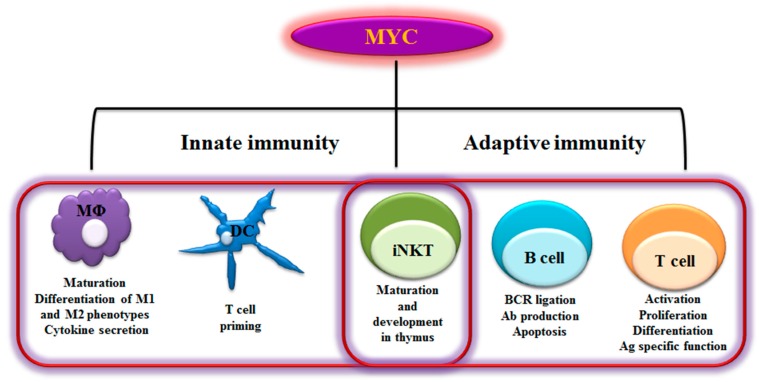
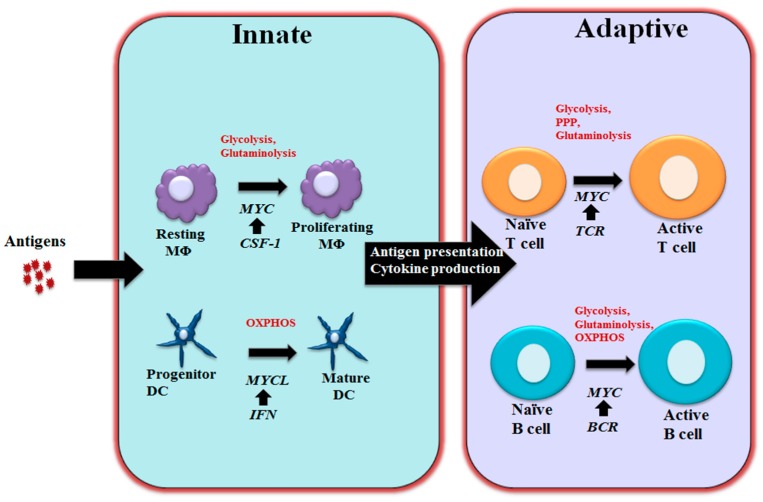
Myelocytomatosis oncogene (MYC) family members, including cellular MYC (c-Myc), neuroblastoma derived MYC (MYCN), and lung carcinoma derived MYC (MYCL), have all been implicated as key oncogenic drivers in a broad range of human cancers. Beyond cancer, MYC plays an important role in other physiological and pathological processes, namely immunity and immunological diseases. MYC largely functions as a transcription factor that promotes the expression of numerous target genes to coordinate death, proliferation, and metabolism at the cellular, tissue, and organismal levels. It has been shown that the expression of MYC family members is tightly regulated in immune cells during development or upon immune stimulations. Emerging evidence suggests that MYC family members play essential roles in regulating the development, differentiation and activation of immune cells. Through driving the expression of a broad range of metabolic genes in immune cells, MYC family members coordinate metabolic programs to support immune functions. Here, we discuss our understanding of MYC biology in immune system and how modulation of MYC impacts immune metabolism and responses.
髓细胞瘤致癌基因(MYC)家族成员,包括细胞性MYC(c-Myc)、神经母细胞瘤衍生的MYC(MYCN)和肺癌衍生的MYC(MYCL),均被认为是多种人类癌症中的关键致癌驱动因素。除癌症外,MYC在其他生理和病理过程中也发挥着重要作用,即免疫和免疫性疾病。MYC主要作为一种转录因子发挥作用,促进众多靶基因的表达,以在细胞、组织和机体水平上协调细胞死亡、增殖和代谢。研究表明,在发育过程中或免疫刺激后,免疫细胞中MYC家族成员的表达受到严格调控。新出现的证据表明,MYC家族成员在调节免疫细胞的发育、分化和激活中发挥着重要作用。通过驱动免疫细胞中多种代谢基因的表达,MYC家族成员协调代谢程序以支持免疫功能。在此,我们讨论对免疫系统中MYC生物学的理解,以及MYC的调节如何影响免疫代谢和反应。