Department of Nutrition Science, Purdue University, West Lafayette, IN 47907, USA.
Department of Nutrition Science, Purdue University, West Lafayette, IN 47907, USA.
Biochim Biophys Acta Mol Cell Biol Lipids. 2017 Jun;1862(6):600-614. doi: 10.1016/j.bbalip.2017.02.014. Epub 2017 Feb 27.
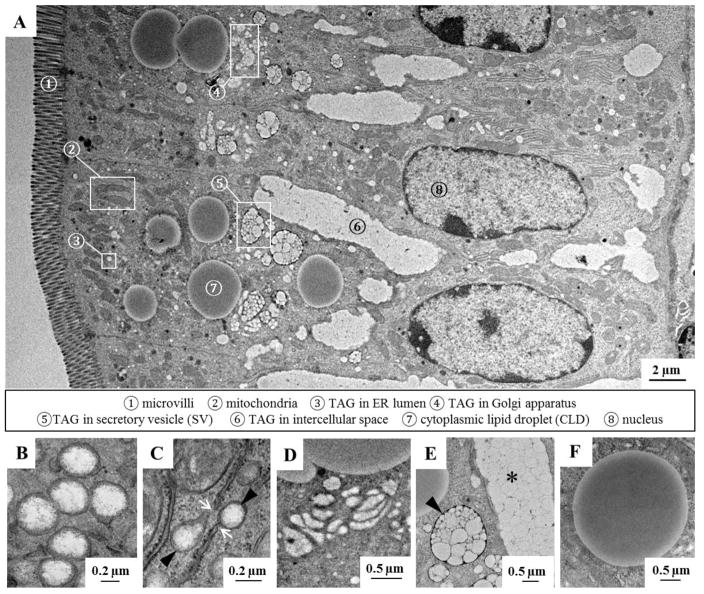
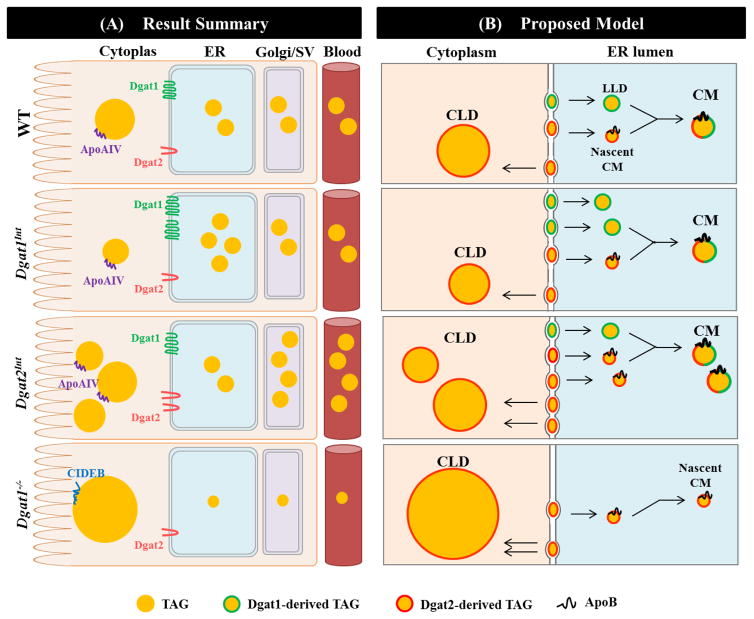
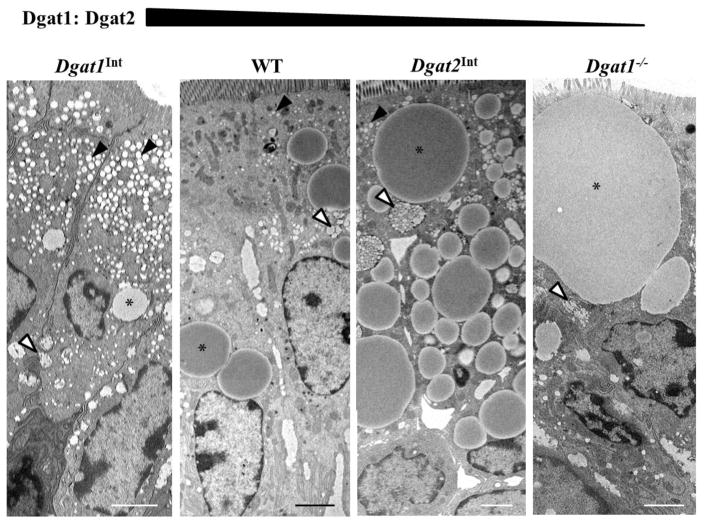
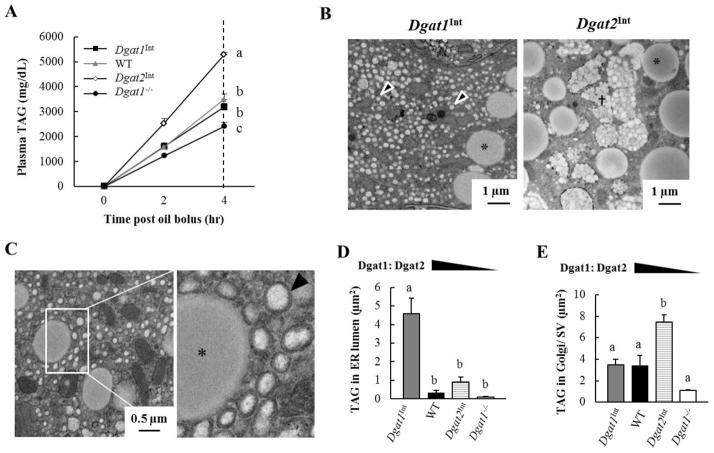
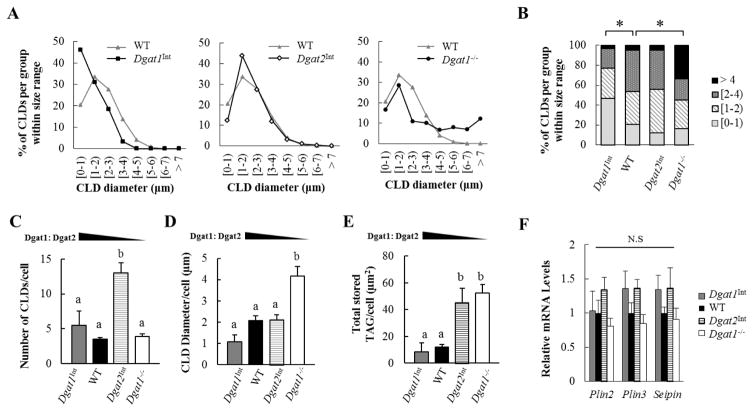
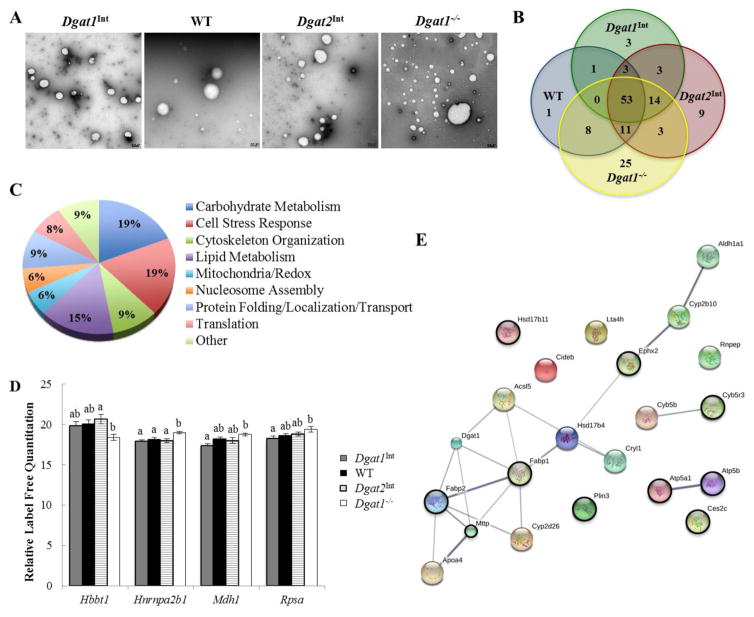
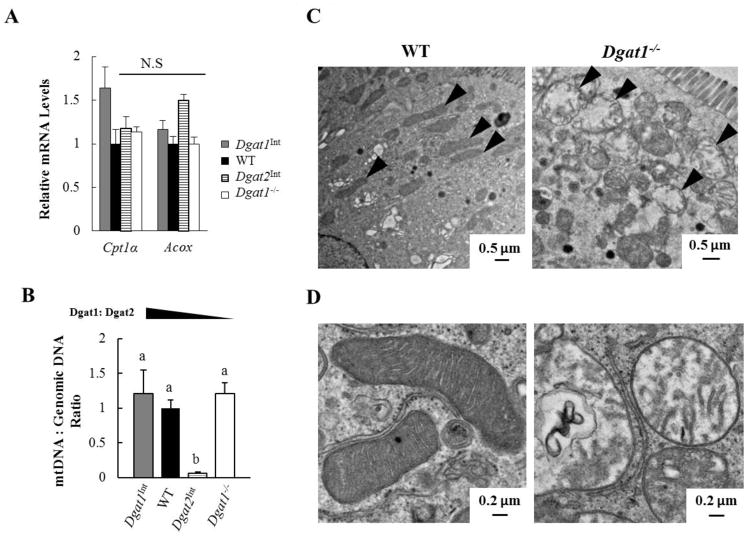
Enterocytes, the absorptive cells of the small intestine, mediate efficient absorption of dietary fat (triacylglycerol, TAG). The digestive products of dietary fat are taken up by enterocytes, re-esterified into TAG, and packaged on chylomicrons (CMs) for secretion into blood or temporarily stored within cytoplasmic lipid droplets (CLDs). Altered enterocyte TAG distribution impacts susceptibility to high fat diet associated diseases, but molecular mechanisms directing TAG toward these fates are unclear. Two enzymes, acyl CoA: diacylglycerol acyltransferase 1 (Dgat1) and Dgat2, catalyze the final, committed step of TAG synthesis within enterocytes. Mice with intestine-specific overexpression of Dgat1 (Dgat1) or Dgat2 (Dgat2), or lack of Dgat1 (Dgat1), were previously found to have altered intestinal TAG secretion and storage. We hypothesized that varying intestinal Dgat1 and Dgat2 levels alters TAG distribution in subcellular pools for CM synthesis as well as the morphology and proteome of CLDs. To test this we used ultrastructural and proteomic methods to investigate intracellular TAG distribution and CLD-associated proteins in enterocytes from Dgat1, Dgat2, and Dgat1 mice 2h after a 200μl oral olive oil gavage. We found that varying levels of intestinal Dgat1 and Dgat2 altered TAG pools involved in CM assembly and secretion, the number or size of CLDs present in enterocytes, and the enterocyte CLD proteome. Overall, these results support a model where Dgat1 and Dgat2 function coordinately to regulate the process of dietary fat absorption by preferentially synthesizing TAG for incorporation into distinct subcellular TAG pools in enterocytes.
肠细胞是小肠的吸收细胞,介导膳食脂肪(三酰基甘油,TAG)的有效吸收。膳食脂肪的消化产物被肠细胞吸收,重新酯化形成 TAG,并包装在乳糜微粒(CMs)中分泌到血液中或暂时储存在细胞质脂滴(CLDs)中。肠细胞 TAG 分布的改变会影响对高脂肪饮食相关疾病的易感性,但指导 TAG 向这些命运发展的分子机制尚不清楚。两种酶,酰基辅酶 A:二酰基甘油酰基转移酶 1(Dgat1)和 Dgat2,在肠细胞内催化 TAG 合成的最后一步,即关键步骤。先前发现,具有肠道特异性过表达 Dgat1(Dgat1)或 Dgat2(Dgat2)的小鼠或缺乏 Dgat1(Dgat1)的小鼠改变了肠道 TAG 的分泌和储存。我们假设,肠道 Dgat1 和 Dgat2 水平的变化会改变细胞溶质池中用于 CM 合成的 TAG 分布,以及 CLD 的形态和蛋白质组。为了验证这一点,我们使用超微结构和蛋白质组学方法研究了在口服橄榄油灌胃 2 小时后,来自 Dgat1、Dgat2 和 Dgat1 小鼠的肠细胞中细胞内 TAG 分布和与 CLD 相关的蛋白质。我们发现,肠道 Dgat1 和 Dgat2 水平的变化改变了参与 CM 组装和分泌的 TAG 池、肠细胞中存在的 CLD 的数量或大小,以及肠细胞 CLD 蛋白质组。总的来说,这些结果支持了一种模型,即 Dgat1 和 Dgat2 协同作用,通过优先合成 TAG 并将其纳入肠细胞中不同的细胞溶质 TAG 池,来调节膳食脂肪吸收的过程。