Department of Chemistry and Biochemistry, California State University, Long Beach , 1250 Bellflower Boulevard, Long Beach, California 90840, United States.
ACS Appl Mater Interfaces. 2017 Mar 22;9(11):9823-9832. doi: 10.1021/acsami.7b02765. Epub 2017 Mar 9.
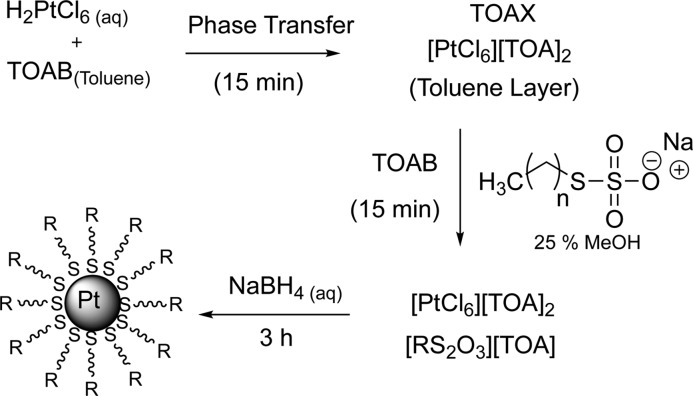
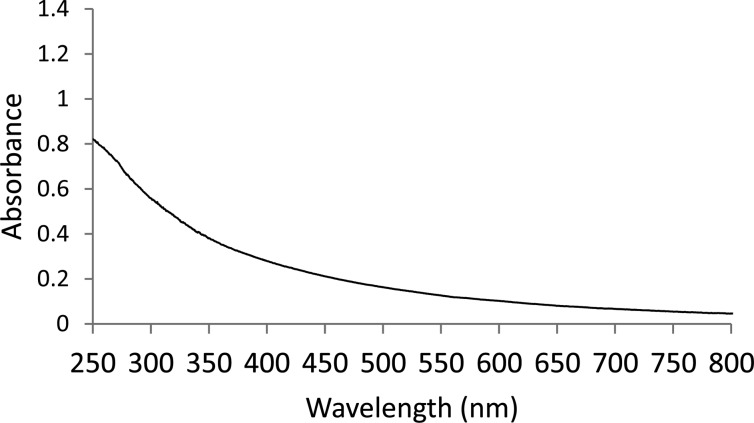
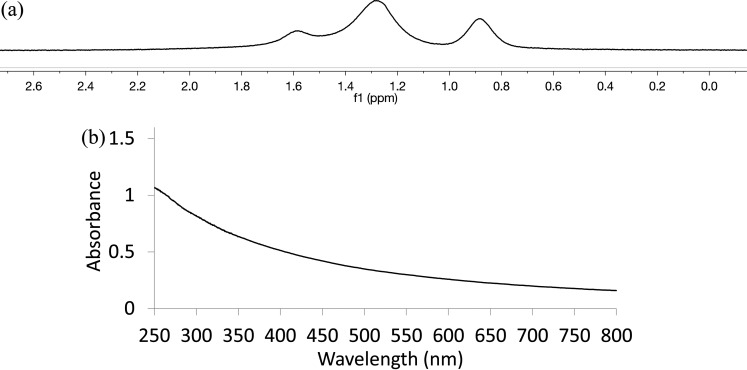
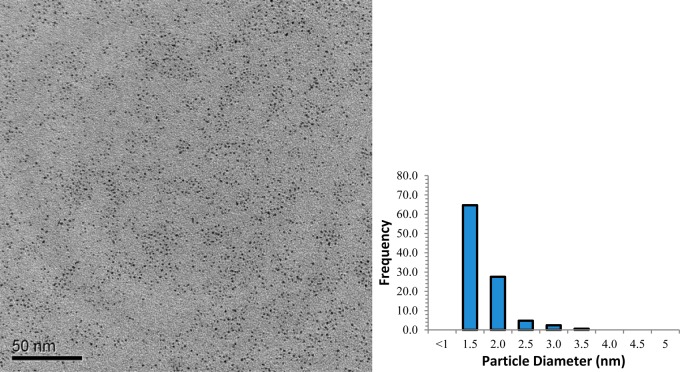
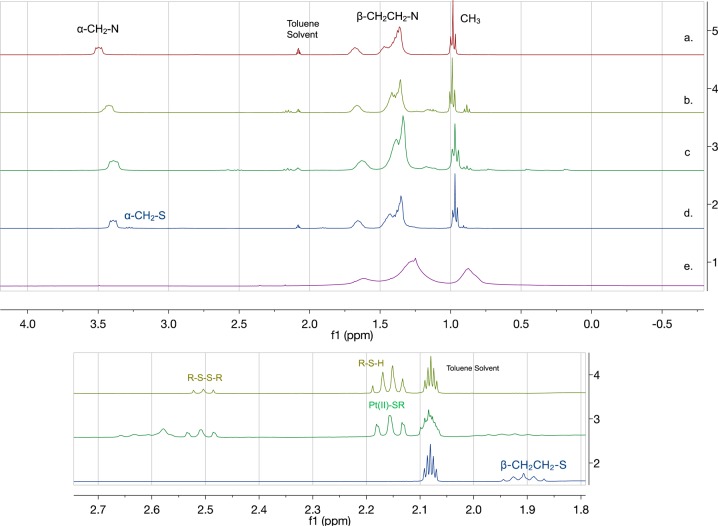
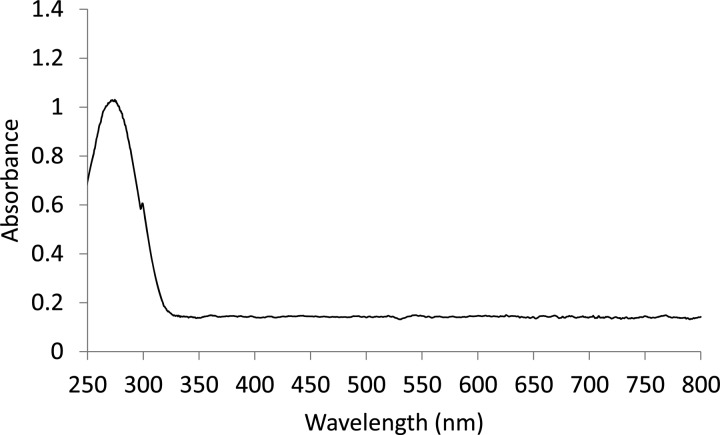
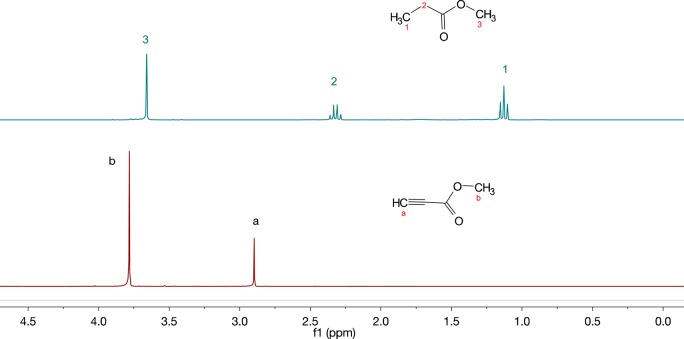
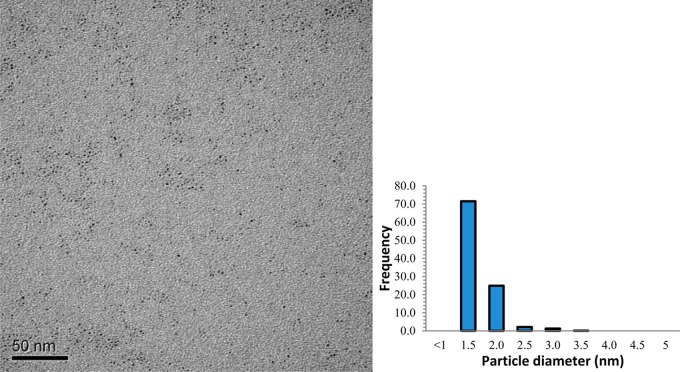
Stable and isolable alkanethiolate-stabilized Pt nanoparticles (PtNP) were synthesized using the two-phase thiosulfate method with sodium S-alkylthiosulfate as ligand precursor. The mechanistic formation of octanethiolate-capped PtNP (Pt-SC) from both sodium S-octylthiosulfate and 1-octanethiol ligands was investigated by using H NMR and UV-vis spectroscopies, which revealed the formation of different Pt complexes as the reaction intermediates. The synthesis using S-octylthiosulfate ligand precursor produced Pt-SC in higher yields than that using 1-octanethiol ligand. The obtained nanoparticles were characterized by H NMR, UV-vis spectroscopy, infrared spectroscopy (IR), thermogravimetric analysis, and transmission electron microscopy (TEM). The results obtained from H NMR, IR, and UV-vis spectroscopy were consistent with the formation of stable and pure alkanethiolate-capped PtNP. TEM images of PtNP confirmed their small average core size (∼1.5 nm) and high monodispersity. The partially poisoned PtNP with thiolate monolayer ligands were further investigated for the hydrogenation of various alkynes to understand the organic ligands-induced geometric and electronic surface properties of colloidal Pt nanoparticle catalysts. The high catalytic activity of activated terminal alkynes, but the significantly low activity of internal alkynes and unactivated terminal alkynes, were observed under the mild reaction conditions (room temperature and atmospheric pressure). These results indicated that the presence of alkanethiolate ligands could decrease the coordination activity of PtNP surface especially for the bulkier and unactivated substrates.
使用两相硫代硫酸盐法,以 S- 烷基硫代硫酸盐作为配体前体,合成了稳定且可分离的烷硫醇稳定的 Pt 纳米粒子(PtNP)。通过使用 H NMR 和 UV-vis 光谱研究了来自于正辛基硫代硫酸盐和 1- 辛硫醇配体的八硫醇封端 PtNP(Pt-SC)的形成机制,结果表明反应中间体形成了不同的 Pt 配合物。使用 S- 辛基硫代硫酸盐配体前体制备的 Pt-SC 的产率高于使用 1- 辛硫醇配体的产率。通过 H NMR、UV-vis 光谱、红外光谱(IR)、热重分析和透射电子显微镜(TEM)对得到的纳米粒子进行了表征。H NMR、IR 和 UV-vis 光谱的结果与稳定且纯的烷硫醇封端 PtNP 的形成一致。PtNP 的 TEM 图像证实了其较小的平均核尺寸(约 1.5nm)和高度单分散性。用硫醇单层配体部分中毒的 PtNP 进一步研究了各种炔烃的加氢反应,以了解胶体 Pt 纳米粒子催化剂中有机配体诱导的几何和电子表面性质。在温和的反应条件(室温、大气压)下,观察到末端炔烃的高催化活性,但内部炔烃和未活化的末端炔烃的活性明显较低。这些结果表明,烷硫醇配体的存在可以降低 PtNP 表面的配位活性,特别是对于更大和未活化的底物。