Watanabe Sumiyo, Ogasawara Toru, Tamura Yoshifuru, Saito Taku, Ikeda Toshiyuki, Suzuki Nobuchika, Shimosawa Tatsuo, Shibata Shigeru, Chung Ung-Il, Nangaku Masaomi, Uchida Shunya
Center for Disease Biology and Integrative Medicine, Faculty of Medicine, The University of Tokyo, Hongo Bunkyo-ku, Tokyo, Japan.
Division of Nephrology and Endocrinology, The University of Tokyo, Graduate School of Medicine, Hongo, Bunkyo-ku, Tokyo, Japan.
PLoS One. 2017 Mar 2;12(3):e0168638. doi: 10.1371/journal.pone.0168638. eCollection 2017.
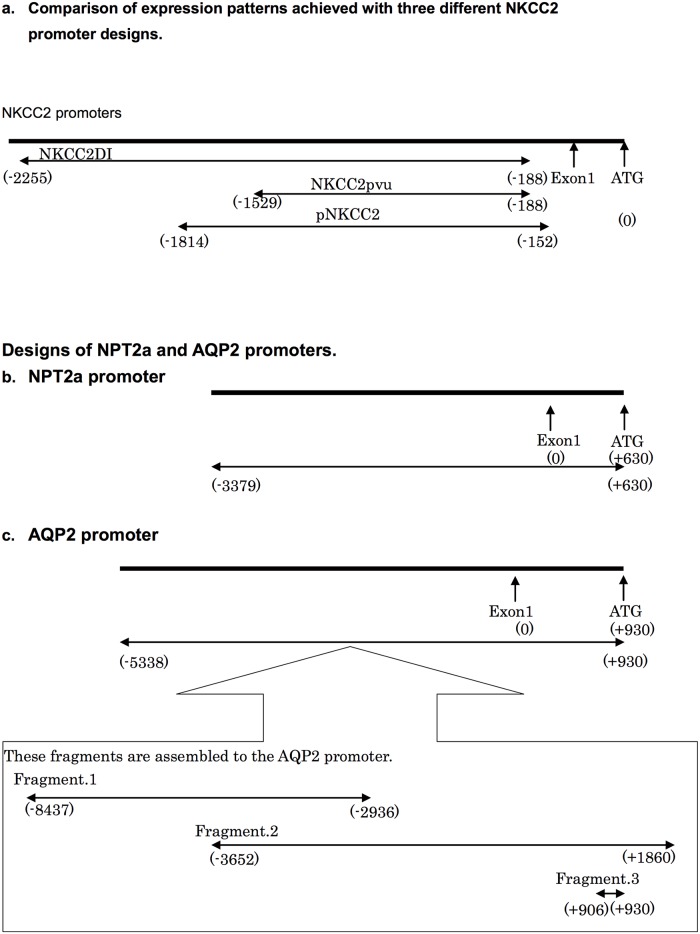
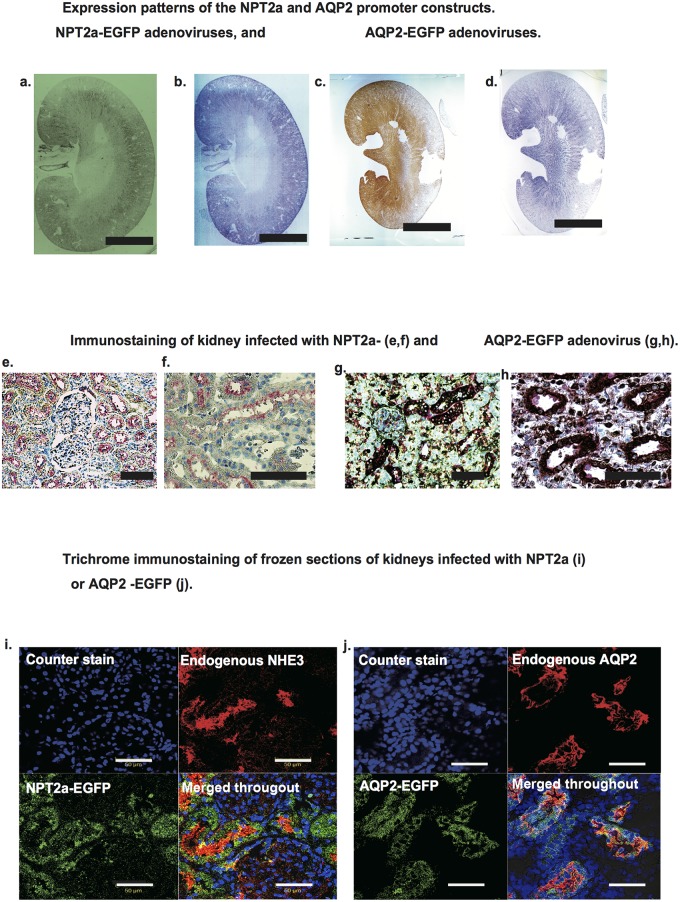
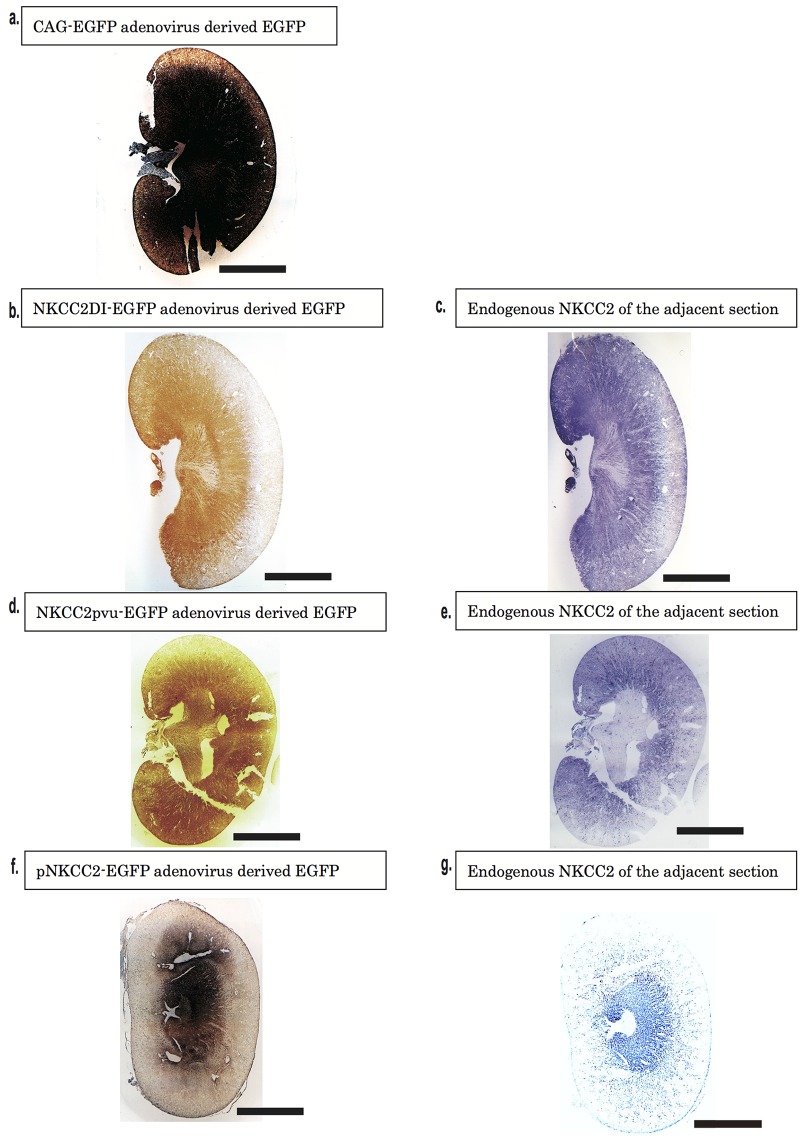
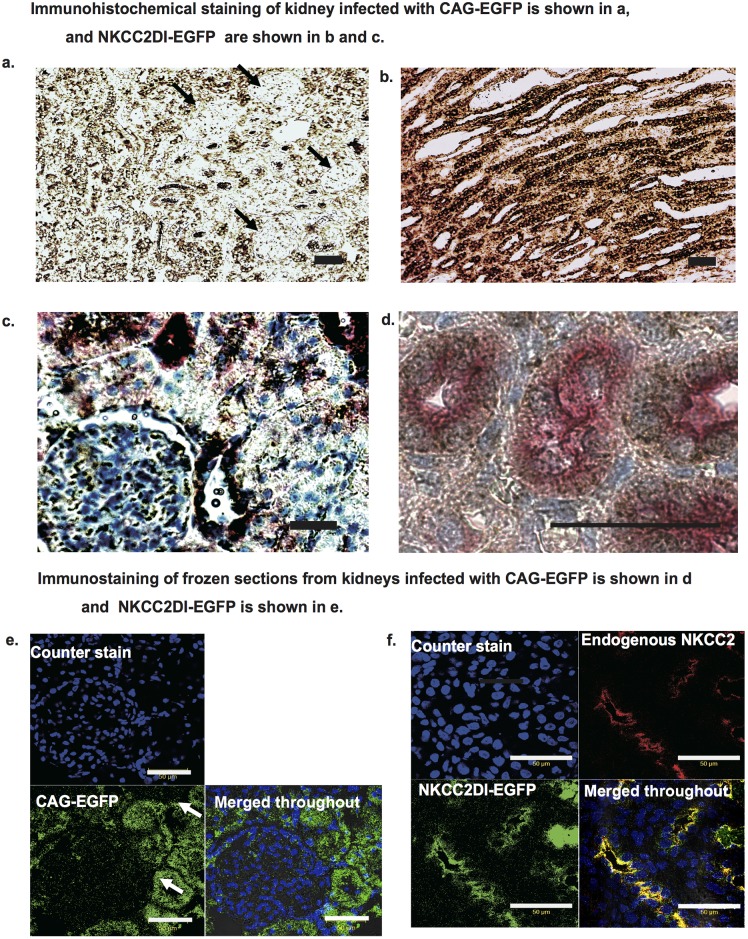
Although techniques for cell-specific gene expression via viral transfer have advanced, many challenges (e.g., viral vector design, transduction of genes into specific target cells) still remain. We investigated a novel, simple methodology for using adenovirus transfer to target specific cells of the kidney tubules for the expression of exogenous proteins. We selected genes encoding sodium-dependent phosphate transporter type 2a (NPT2a) in the proximal tubule, sodium-potassium-2-chloride cotransporter (NKCC2) in the thick ascending limb of Henle (TALH), and aquaporin 2 (AQP2) in the collecting duct. The promoters of the three genes were linked to a GFP-coding fragment, the final constructs were then incorporated into an adenovirus vector, and this was then used to generate gene-manipulated viruses. After flushing circulating blood, viruses were directly injected into the renal arteries of rats and were allowed to site-specifically expression in tubule cells, and rats were then euthanized to obtain kidney tissues for immunohistochemistry. Double staining with adenovirus-derived EGFP and endogenous proteins were examined to verify orthotopic expression, i.e. "adenovirus driven NPT2a-EGFP and endogenous NHE3 protein", "adenovirus driven NKCC2-EGFP and endogenous NKCC2 protein" and "adenovirus driven AQP2-EGFP and endogenous AQP2 protein". Owing to a lack of finding good working anti-NPT2a antibody, an antibody against a different protein (sodium-hydrogen exchanger 3 or NHE3) that is also specifically expressed in the proximal tubule was used. Kidney structures were well-preserved, and other organ tissues did not show EGFP staining. Our gene transfer method is easier than using genetically engineered animals, and it confers the advantage of allowing the manipulation of gene transfer after birth. This is the first method to successfully target gene expression to specific cells in the kidney tubules. This study may serve as the first step for safe and effective gene therapy in the kidney tubule diseases.
尽管通过病毒转导实现细胞特异性基因表达的技术已经取得了进展,但许多挑战(如病毒载体设计、将基因转导到特定靶细胞中)仍然存在。我们研究了一种新颖、简单的方法,即利用腺病毒转导来靶向肾小管的特定细胞,以表达外源蛋白。我们选择了编码近端小管中钠依赖性磷酸盐转运体2a(NPT2a)、髓袢升支粗段(TALH)中的钠-钾-2-氯共转运体(NKCC2)以及集合管中的水通道蛋白2(AQP2)的基因。将这三个基因的启动子与绿色荧光蛋白(GFP)编码片段相连,然后将最终构建体整合到腺病毒载体中,接着用其产生基因操作病毒。在冲洗循环血液后,将病毒直接注射到大鼠的肾动脉中,使其在肾小管细胞中进行位点特异性表达,然后对大鼠实施安乐死以获取肾脏组织用于免疫组织化学分析。用腺病毒衍生的增强型绿色荧光蛋白(EGFP)和内源性蛋白进行双重染色,以验证原位表达,即“腺病毒驱动的NPT2a-EGFP和内源性NHE3蛋白”、“腺病毒驱动的NKCC2-EGFP和内源性NKCC2蛋白”以及“腺病毒驱动的AQP2-EGFP和内源性AQP2蛋白”。由于缺乏有效的抗NPT2a抗体,使用了一种针对另一种也在近端小管中特异性表达的蛋白(钠-氢交换体3或NHE3)的抗体。肾脏结构保存良好,其他器官组织未显示EGFP染色。我们的基因转移方法比使用基因工程动物更容易,并且具有允许在出生后进行基因转移操作的优势。这是首次成功将基因表达靶向肾小管特定细胞的方法。这项研究可能作为肾小管疾病安全有效基因治疗的第一步。