Shim Vickie, Gather Andreas, Höch Andreas, Schreiber David, Grunert Ronny, Peldschus Steffen, Josten Christoph, Böhme Jörg
Auckland Bioengineering Institute, University of Auckland, 70 Symonds Street, Auckland, New Zealand; Menzies Health Institute, Griffith University, Gold Coast, QLD, Australia.
Department of Trauma, Plastic and Reconstructive Surgery, University of Leipzig, Liebigstr. 20, 04103 Leipzig, Germany.
Comput Math Methods Med. 2017;2017:9403821. doi: 10.1155/2017/9403821. Epub 2017 Feb 1.
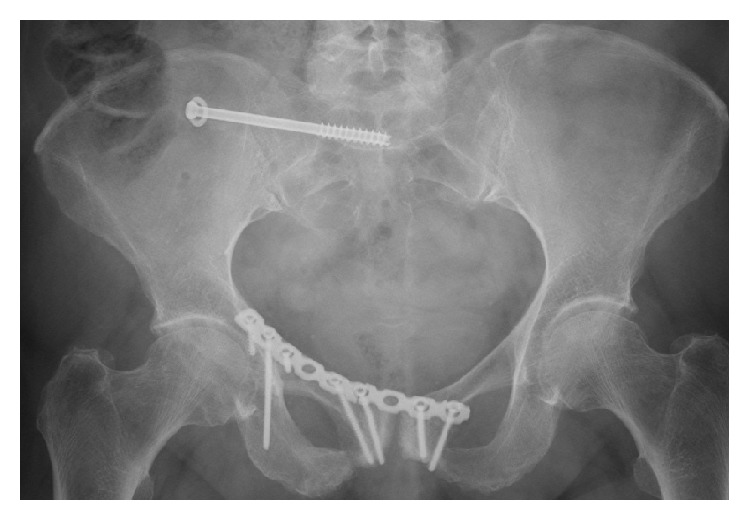
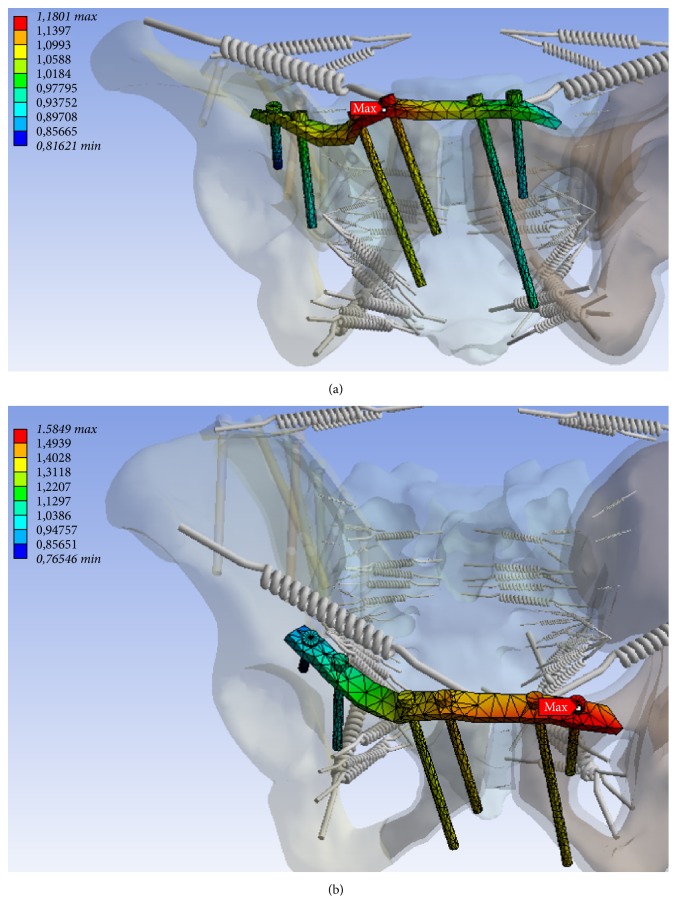
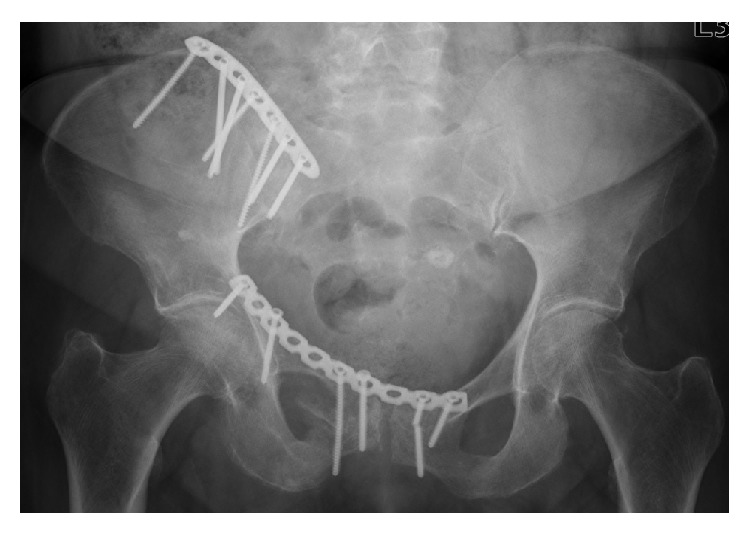
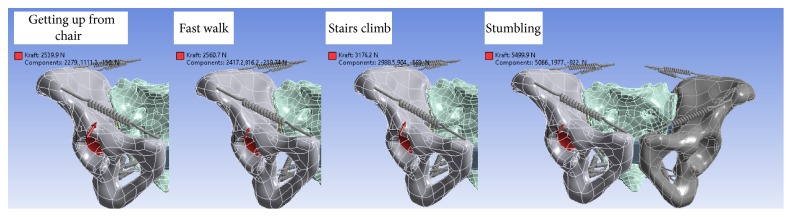
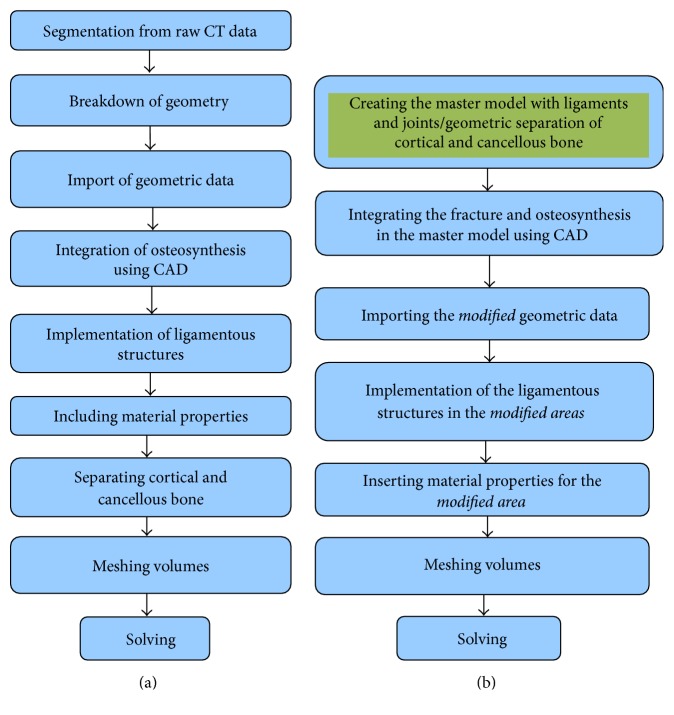
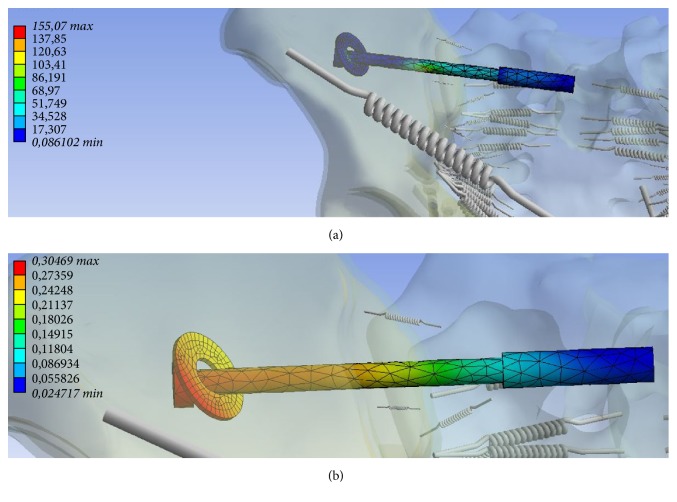
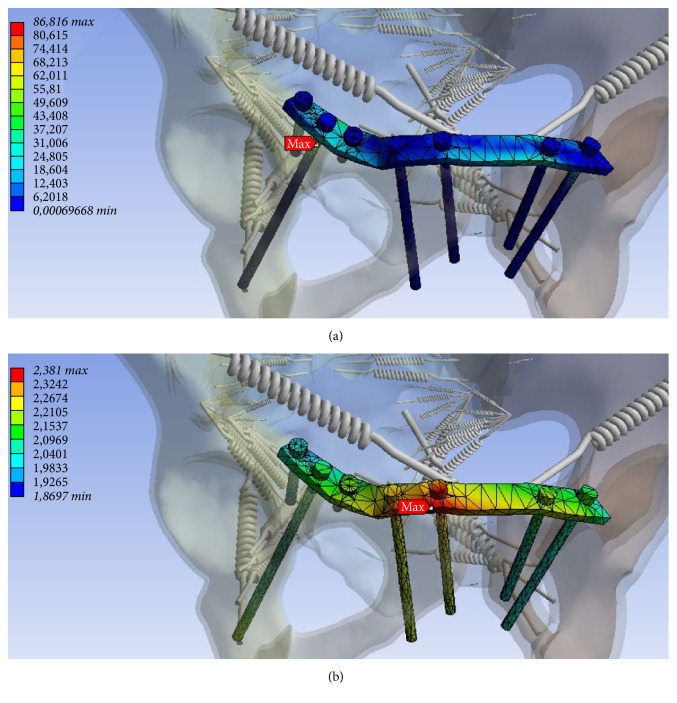
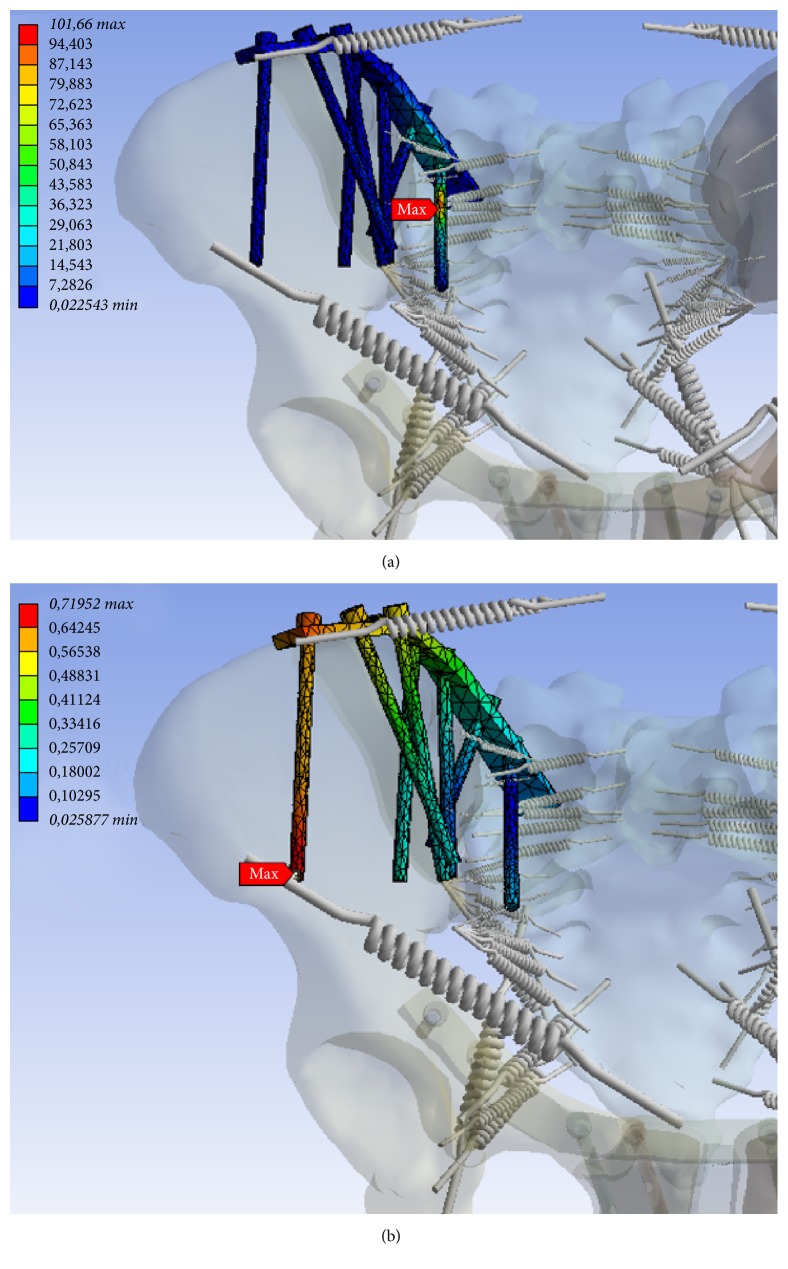
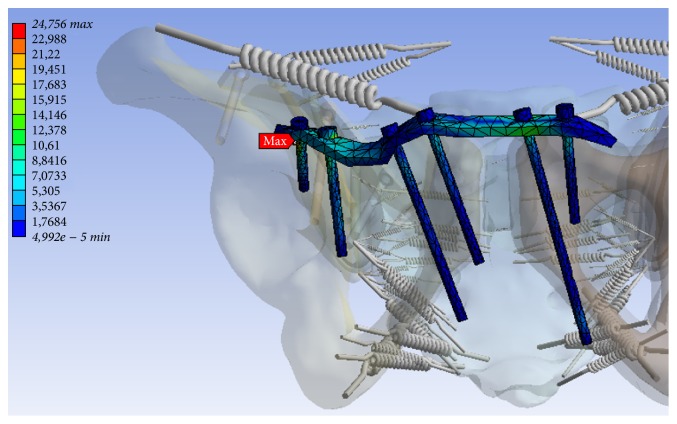
The main purpose of this study is to develop an efficient technique for generating FE models of pelvic ring fractures that is capable of predicting possible failure regions of osteosynthesis with acceptable accuracy. Patient-specific FE models of two patients with osteoporotic pelvic fractures were generated. A validated FE model of an uninjured pelvis from our previous study was used as a master model. Then, fracture morphologies and implant positions defined by a trauma surgeon in the preoperative CT were manually introduced as 3D splines to the master model. Four loading cases were used as boundary conditions. Regions of high stresses in the models were compared with actual locations of implant breakages and loosening identified from follow-up X-rays. Model predictions and the actual clinical outcomes matched well. For Patient A, zones of increased tension and maximum stress coincided well with the actual locations of implant loosening. For Patient B, the model predicted accurately the loosening of the implant in the anterior region. Since a significant reduction in time and labour was achieved in our mesh generation technique, it can be considered as a viable option to be implemented as a part of the clinical routine to aid presurgical planning and postsurgical management of pelvic ring fracture patients.
本研究的主要目的是开发一种高效技术,用于生成骨盆环骨折的有限元模型,该模型能够以可接受的精度预测骨合成的可能失效区域。生成了两名骨质疏松性骨盆骨折患者的个体化有限元模型。我们之前研究中经验证的未受伤骨盆的有限元模型用作主模型。然后,由创伤外科医生在术前CT中确定的骨折形态和植入物位置作为三维样条手动引入主模型。使用四种加载情况作为边界条件。将模型中的高应力区域与随访X线片中确定的植入物断裂和松动的实际位置进行比较。模型预测与实际临床结果匹配良好。对于患者A,张力增加和最大应力区域与植入物松动的实际位置吻合良好。对于患者B,模型准确预测了前部区域植入物的松动。由于我们的网格生成技术显著减少了时间和工作量,因此可以将其视为作为临床常规的一部分实施的可行选择,以辅助骨盆环骨折患者的术前规划和术后管理。