Abbastabar H, Alizadeh A, Darparesh M, Mohseni S, Roozbeh N
Islamshahr Health and Treatment Network, Department of Health, Tehran University of Medical Sciences, Tehran, Iran.
Department of Public Health, Faculty of Health, Hormozgan University of Medical Sciences, Bandar Abbas, Iran.
J Med Life. 2015;8(Spec Iss 2):99-104.
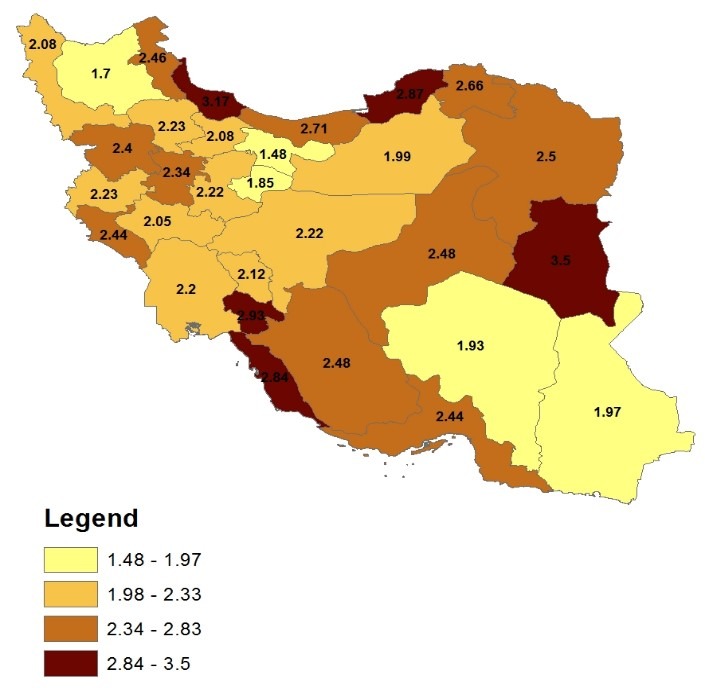
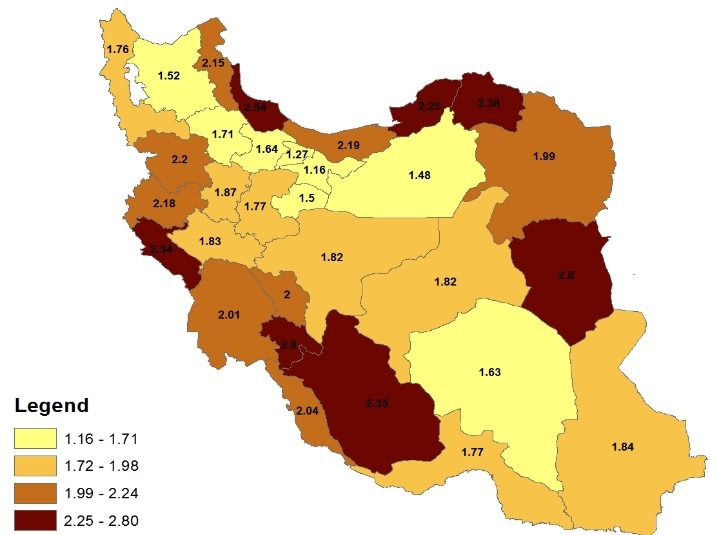
To identify the spatial distribution and prevalence of speech disorder in Iran. First, the prevalence of speech disorder in 2006 and 2011 was mapped via GIS for each province. Moreover, the prevalence of this disorder was calculated and classified according to age, sex, and residential area. The prevalence in the majority of provinces indicated an overall decrease. Furthermore, its prevalence among the whole population of Iran in 2006 and 2011 was 2.2 and 2 per 1000 people, respectively. The highest prevalence was observed among people aged 75 years and older. Results showed that speech disorders are more prevalent among men compared to women and also among rural residents compared to those in urban areas. It is necessary to identify the high-risk areas in order to well organize the limited facilities to meet the actual needs of patients with speech disorder.
为确定伊朗言语障碍的空间分布和患病率。首先,通过地理信息系统(GIS)绘制了2006年和2011年各省份言语障碍的患病率地图。此外,还根据年龄、性别和居住地区计算并划分了这种障碍的患病率。大多数省份的患病率总体呈下降趋势。此外,2006年和2011年伊朗全体人口中言语障碍的患病率分别为每1000人中有2.2人和2人。75岁及以上人群的患病率最高。结果表明,男性言语障碍的患病率高于女性,农村居民言语障碍的患病率高于城市居民。有必要确定高风险地区,以便合理安排有限的设施,满足言语障碍患者的实际需求。