Zhang Hongyong, Wang Yufeng, Liu Zhikui, Yao Bowen, Dou Changwei, Xu Meng, Li Qing, Jia Yuli, Wu Shengli, Tu Kangsheng, Liu Qingguang
Department of Hepatobiliary Surgery The First Affiliated Hospital of Xi'an Jiaotong University China.
FEBS Open Bio. 2016 Nov 7;6(12):1227-1237. doi: 10.1002/2211-5463.12139. eCollection 2016 Dec.
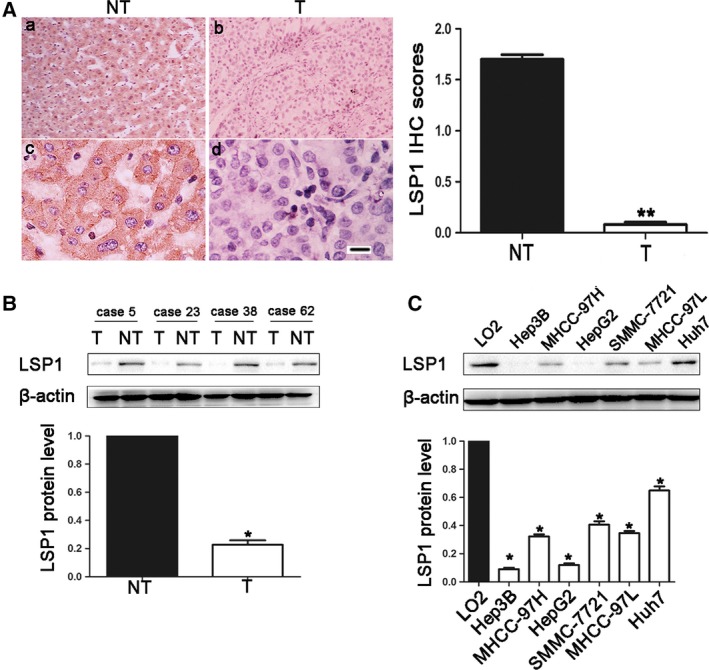
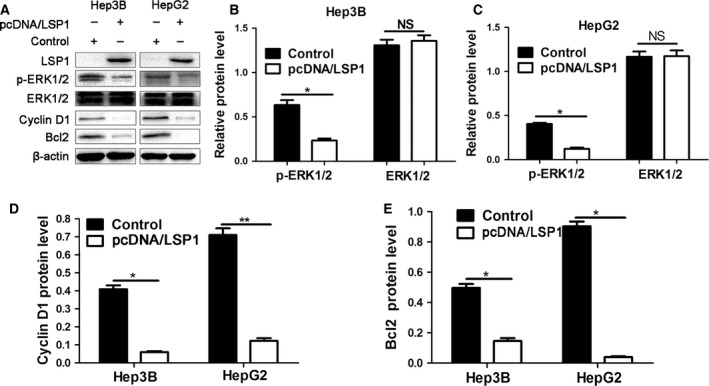
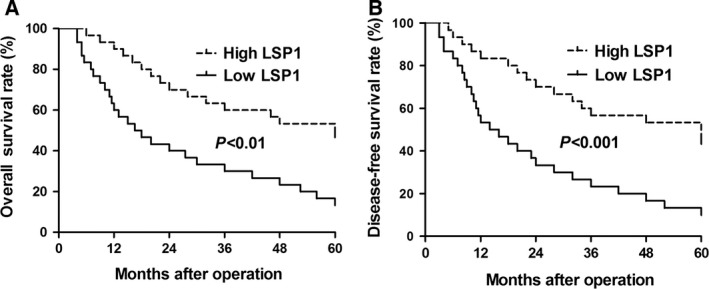
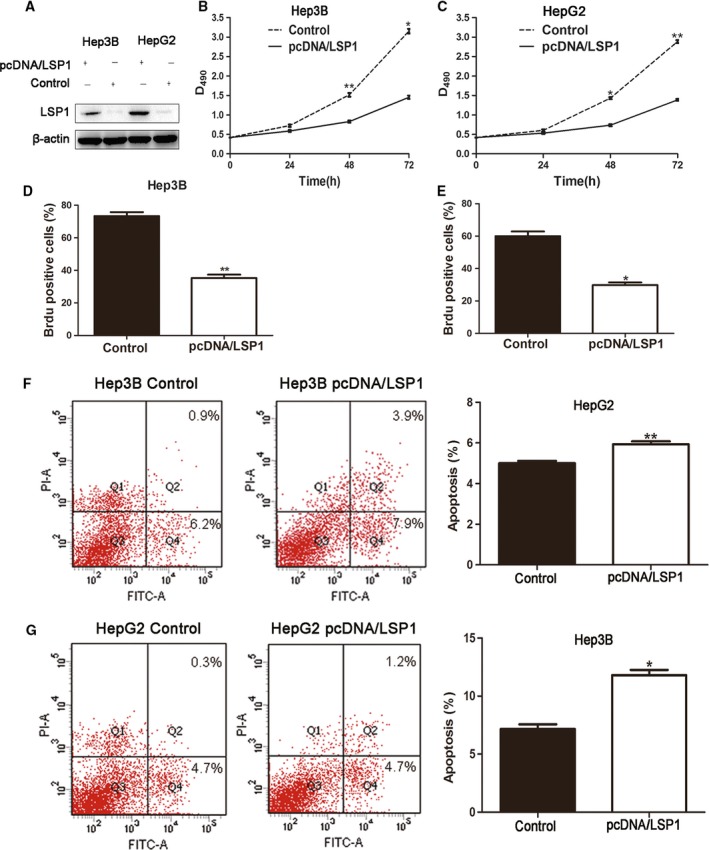
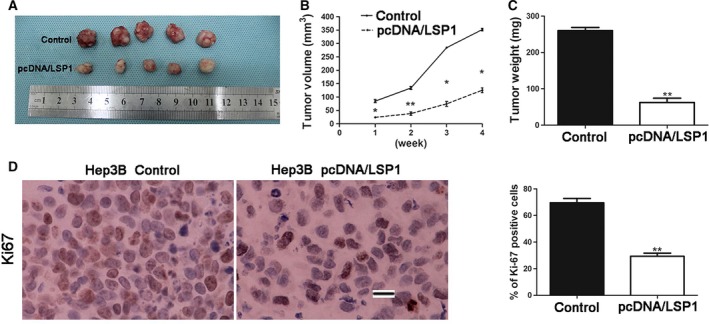
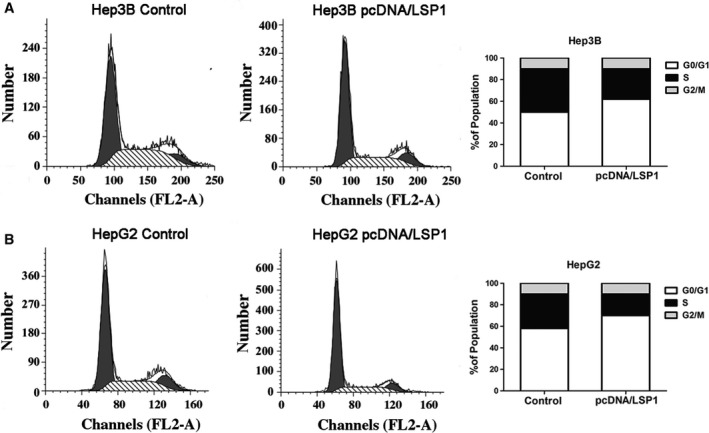
Lymphocyte-specific protein 1 (LSP1) has been reported to regulate cell biology in several human cancers including lymphoma and breast cancer. However, the functions of LSP1 in human hepatocellular carcinoma (HCC) are still unknown. In this study, we found that LSP1 expression was downregulated in HCC tissues and cell lines, and lower LSP1 expression was correlated with poor clinicopathological features including large tumor size, high Edmondson-Steiner grading and advanced tumor-node-metastasis (TNM) stage. Additionally, we demonstrated that patients with high LSP1 expression had significantly better overall survival and disease-free survival. Moreover, LSP1 was found to be an independent factor for predicting the prognosis of HCC patients. and assays showed that overexpressing LSP1 inhibited HCC growth by inducing both apoptosis and growth arrest. Mechanistically, we found that expression of phosphorylated extracellular regulated protein kinases 1 and 2 (ERK1/2) was downregulated after LSP1 overexpression, indicating LSP1 could suppress HCC growth by inhibiting the ERK pathway in HCC cells. Taken together, these results indicate that LSP1 may serve as a prognostic marker and a potential therapeutic target in human HCC.
淋巴细胞特异性蛋白1(LSP1)已被报道可调节包括淋巴瘤和乳腺癌在内的多种人类癌症中的细胞生物学行为。然而,LSP1在人类肝细胞癌(HCC)中的功能仍不清楚。在本研究中,我们发现LSP1在HCC组织和细胞系中的表达下调,且较低的LSP1表达与不良的临床病理特征相关,包括肿瘤体积大、Edmondson-Steiner分级高和肿瘤-淋巴结-转移(TNM)分期晚。此外,我们证明LSP1表达高的患者总生存期和无病生存期明显更好。而且,LSP1被发现是预测HCC患者预后的独立因素。细胞凋亡和细胞周期分析表明,过表达LSP1通过诱导细胞凋亡和生长停滞来抑制HCC生长。机制上,我们发现LSP1过表达后磷酸化细胞外调节蛋白激酶1和2(ERK1/2)的表达下调,表明LSP1可通过抑制HCC细胞中的ERK通路来抑制HCC生长。综上所述,这些结果表明LSP1可能作为人类HCC的预后标志物和潜在治疗靶点。