Meunier F, Couvreur V, Draye X, Vanderborght J, Javaux M
Earth and Life Institute-Environment, Université catholique de Louvain, Louvain-la-Neuve, Belgium.
Department of Land, Air and Water Resources, University of California, Davis, CA, USA.
J Math Biol. 2017 Nov;75(5):1133-1170. doi: 10.1007/s00285-017-1111-z. Epub 2017 Mar 2.
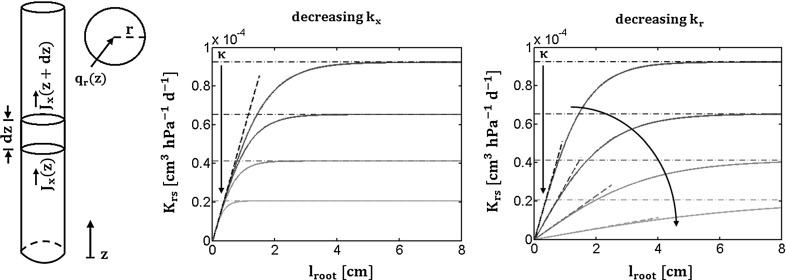
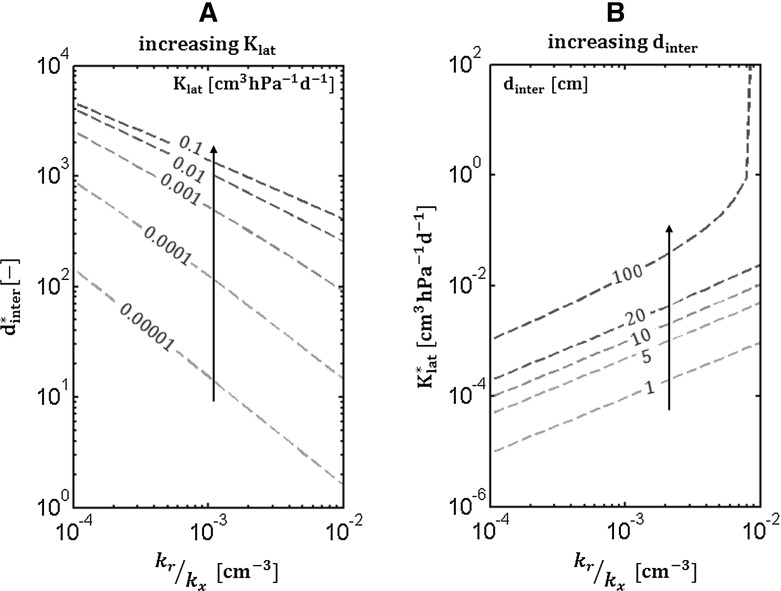
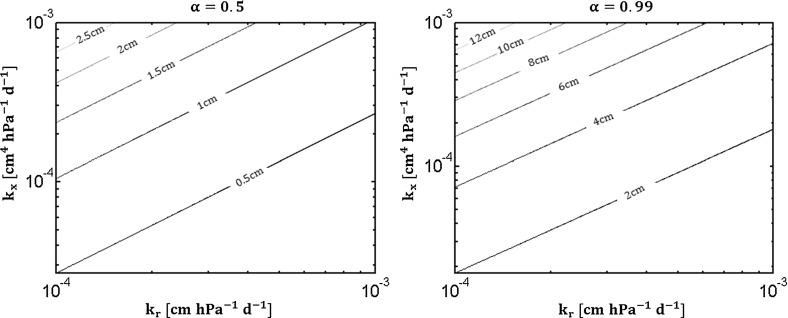
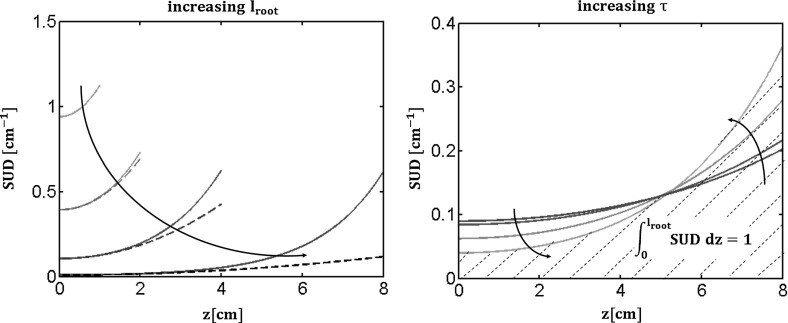
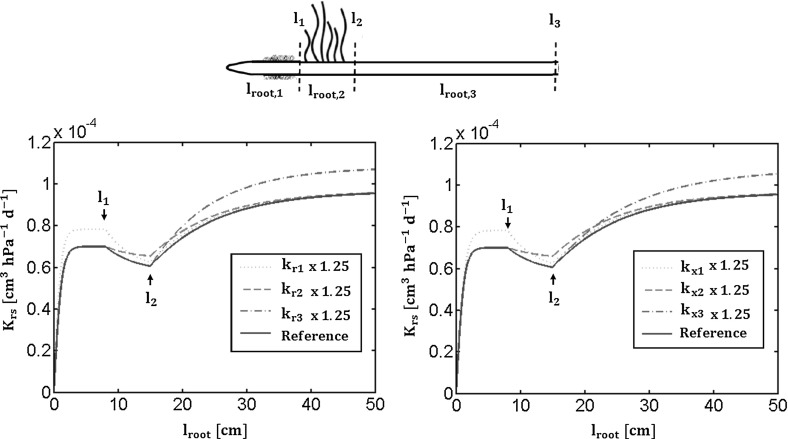
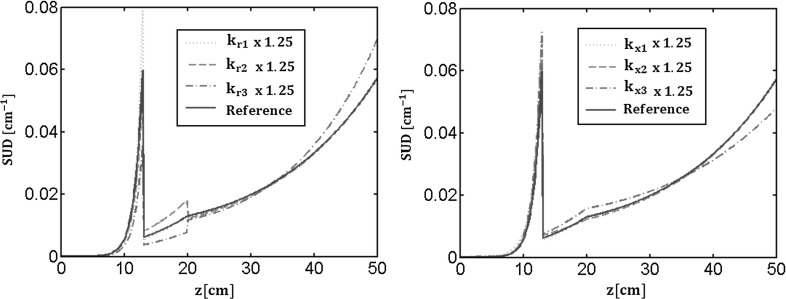
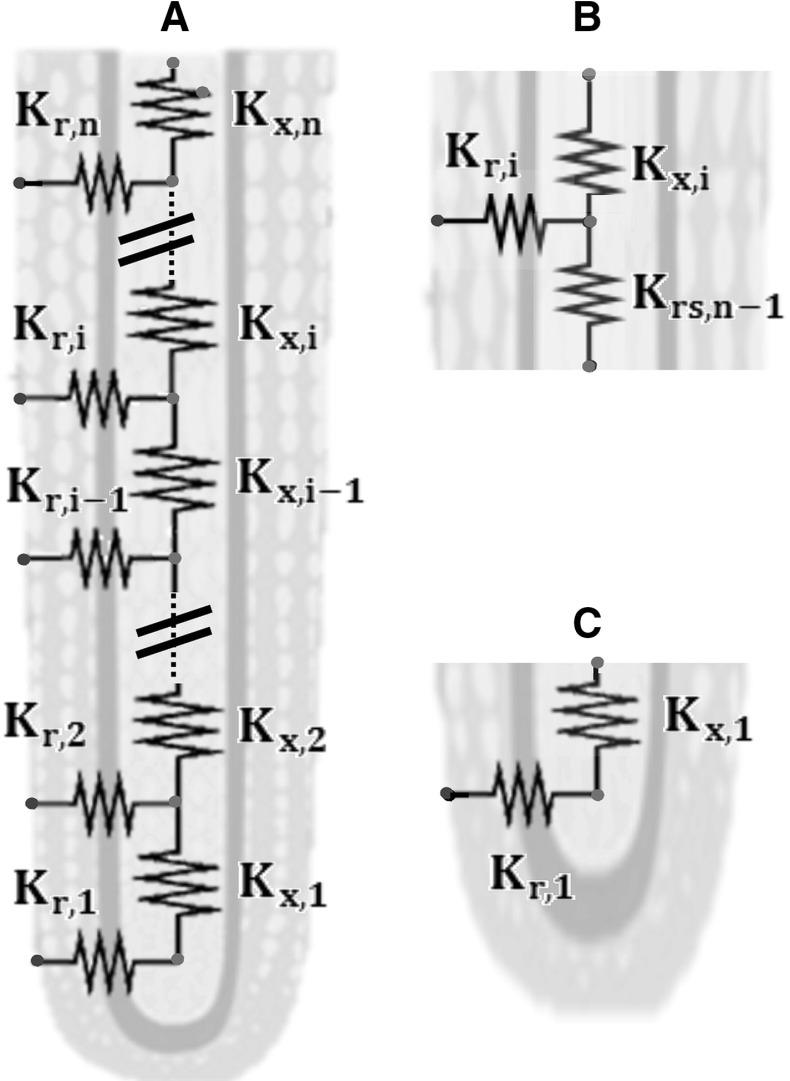
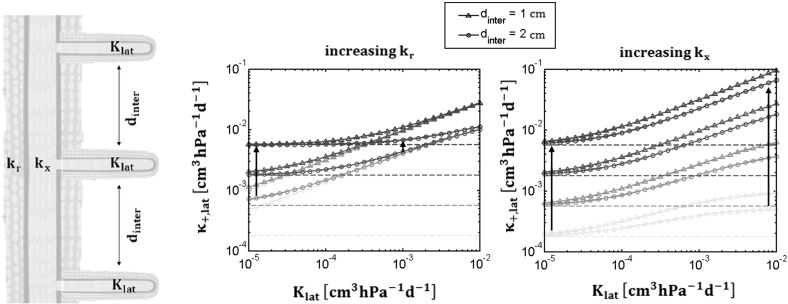
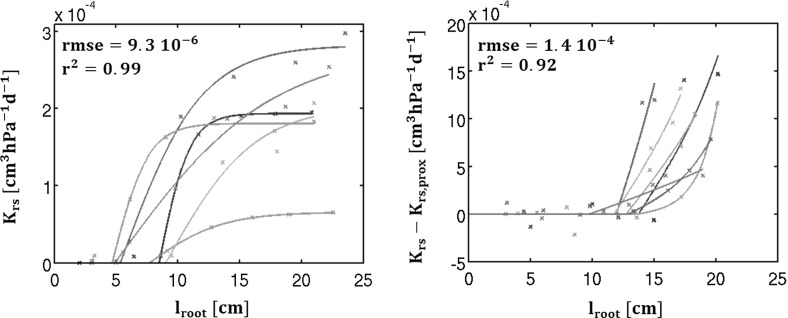
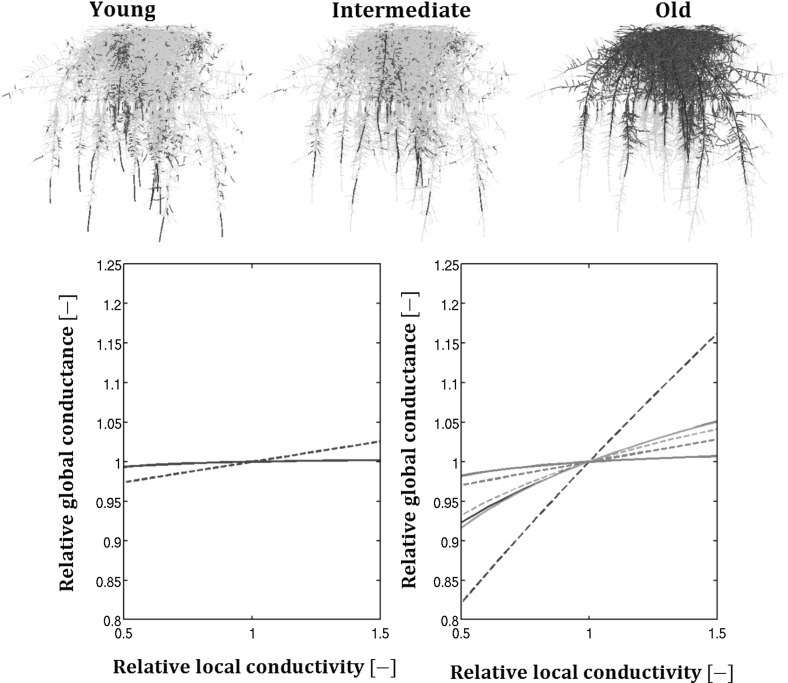
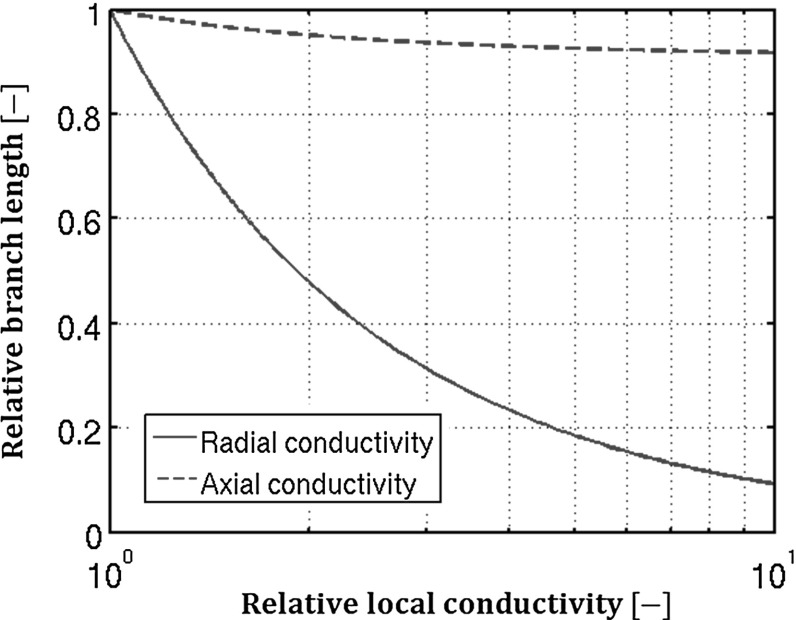
Predicting root water uptake and plant transpiration is crucial for managing plant irrigation and developing drought-tolerant root system ideotypes (i.e. ideal root systems). Today, three-dimensional structural functional models exist, which allows solving the water flow equation in the soil and in the root systems under transient conditions and in heterogeneous soils. Yet, these models rely on the full representation of the three-dimensional distribution of the root hydraulic properties, which is not always easy to access. Recently, new models able to represent this complex system without the full knowledge of the plant 3D hydraulic architecture and with a limited number of parameters have been developed. However, the estimation of the macroscopic parameters a priori still requires a numerical model and the knowledge of the full three-dimensional hydraulic architecture. The objective of this study is to provide analytical mathematical models to estimate the values of these parameters as a function of local plant general features, like the distance between laterals, the number of primaries or the ratio of radial to axial root conductances. Such functions would allow one to characterize the behaviour of a root system (as characterized by its macroscopic parameters) directly from averaged plant root traits, thereby opening new possibilities for developing quantitative ideotypes, by linking plant scale parameters to mean functional or structural properties. With its simple form, the proposed model offers the chance to perform sensitivity and optimization analyses as presented in this study.
预测根系对水分的吸收和植物的蒸腾作用对于管理植物灌溉和培育耐旱根系理想型(即理想根系)至关重要。目前,存在三维结构功能模型,这使得在瞬态条件下以及非均质土壤中求解土壤和根系中的水流方程成为可能。然而,这些模型依赖于根系水力特性三维分布的完整表示,而这并非总是容易获得。最近,已经开发出了新的模型,这些模型能够在不完全了解植物三维水力结构且参数数量有限的情况下表示这个复杂系统。然而,先验估计宏观参数仍然需要一个数值模型以及完整三维水力结构的知识。本研究的目的是提供解析数学模型,以根据局部植物一般特征(如侧根间距、初生根数量或径向与轴向根系导水率之比)来估计这些参数的值。这样的函数将使人们能够直接从平均植物根系性状来表征根系系统的行为(以其宏观参数为特征),从而通过将植物尺度参数与平均功能或结构特性联系起来,为开发定量理想型开辟新的可能性。由于其形式简单,所提出的模型提供了进行本研究中所示的敏感性和优化分析的机会。