Reid Emma S, Williams Hywel, Anderson Glenn, Benatti Malika, Chong Kling, James Chela, Ocaka Louise, Hemingway Cheryl, Little Daniel, Brown Richard, Parker Alasdair, Holden Simon, Footitt Emma, Rahman Shamima, Gissen Paul, Mills Philippa B, Clayton Peter T
Centre for Translational Omics, Genetics and Genomic Medicine, UCL Great Ormond Street Institute of Child Health, 30 Guilford Street, London, WC1N 1EH, UK.
Histopathology Department, Great Ormond Street Hospital NHS Foundation Trust, Great Ormond Street, London, WC1N 3JH, UK.
J Inherit Metab Dis. 2017 May;40(3):385-394. doi: 10.1007/s10545-017-0025-7. Epub 2017 Mar 2.
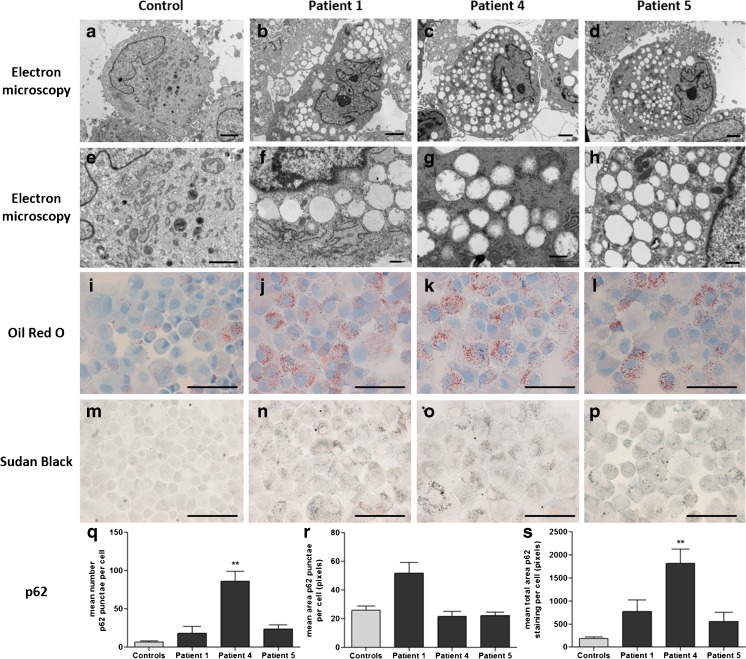
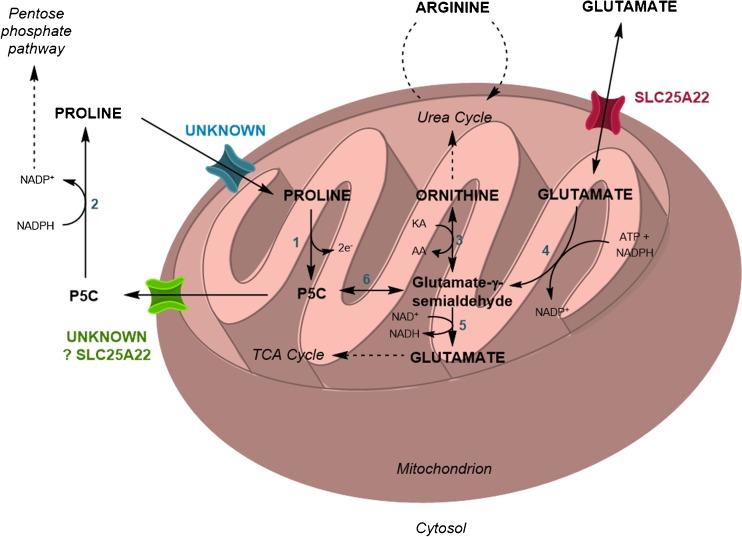
Mutations in SLC25A22 are known to cause neonatal epileptic encephalopathy and migrating partial seizures in infancy. Using whole exome sequencing we identified four novel SLC25A22 mutations in six children from three families. Five patients presented clinical features similar to those in the literature including hypotonia, refractory neonatal-onset seizures and developmental delay. However, the sixth patients presented atypically with isolated developmental delay, developing late-onset (absence) seizures only at 7 years of age. Abnormal metabolite levels have not been documented in the nine patients described previously. One patient in our series was referred to the metabolic clinic because of persistent hyperprolinaemia and another three had raised plasma proline when tested. Analysis of the post-prandial plasma amino acid response in one patient showed abnormally high concentrations of several amino acids. This suggested that, in the fed state, when amino acids are the preferred fuel for the liver, trans-deamination of amino acids requires transportation of glutamate into liver mitochondria by SLC25A22 for deamination by glutamate dehydrogenase; SLC25A22 is an important mitochondrial glutamate transporter in liver as well as in brain. Electron microscopy of patient fibroblasts demonstrated widespread vacuolation containing neutral and phospho-lipids as demonstrated by Oil Red O and Sudan Black tinctorial staining; this might be explained by impaired activity of the proline/pyrroline-5-carboxylate (P5C) shuttle if SLC25A22 transports pyrroline-5-carboxylate/glutamate-γ-semialdehyde as well as glutamate.
已知SLC25A22基因突变会导致新生儿癫痫性脑病和婴儿期迁移性部分性癫痫发作。通过全外显子组测序,我们在来自三个家庭的六个儿童中鉴定出四个新的SLC25A22基因突变。五名患者表现出与文献中相似的临床特征,包括肌张力减退、难治性新生儿期发作和发育迟缓。然而,第六名患者表现不典型,仅有孤立性发育迟缓,仅在7岁时出现迟发性(失神)发作。在先前描述的九名患者中未记录到代谢物水平异常。我们系列中的一名患者因持续性高脯氨酸血症被转诊至代谢门诊,另外三名患者在检测时血浆脯氨酸升高。对一名患者餐后血浆氨基酸反应的分析显示几种氨基酸浓度异常升高。这表明,在进食状态下,当氨基酸是肝脏的首选燃料时,氨基酸的转氨基作用需要SLC25A22将谷氨酸转运到肝线粒体中,由谷氨酸脱氢酶进行脱氨基作用;SLC25A22是肝脏和大脑中一种重要的线粒体谷氨酸转运体。患者成纤维细胞的电子显微镜检查显示广泛的空泡化,油红O和苏丹黑染色显示其中含有中性和磷脂;如果SLC25A22同时转运脯氨酸/吡咯啉-5-羧酸(P5C)和谷氨酸-γ-半醛,这可能是由于脯氨酸/吡咯啉-5-羧酸穿梭活性受损所致。