Michiels Ellen D G, Vergauwen Lucia, Hagenaars An, Fransen Erik, Dongen Stefan Van, Van Cruchten Steven J, Bervoets Lieven, Knapen Dries
Zebrafishlab, Veterinary Physiology and Biochemistry, Department of Veterinary Sciences, University of Antwerp, Universiteitsplein 1, 2610 Wilrijk, Belgium.
Systemic Physiological and Ecotoxicological Research (SPHERE), Department of Biology, University of Antwerp, Groenenborgerlaan 171, 2020 Antwerp, Belgium.
Int J Mol Sci. 2017 Mar 2;18(3):539. doi: 10.3390/ijms18030539.
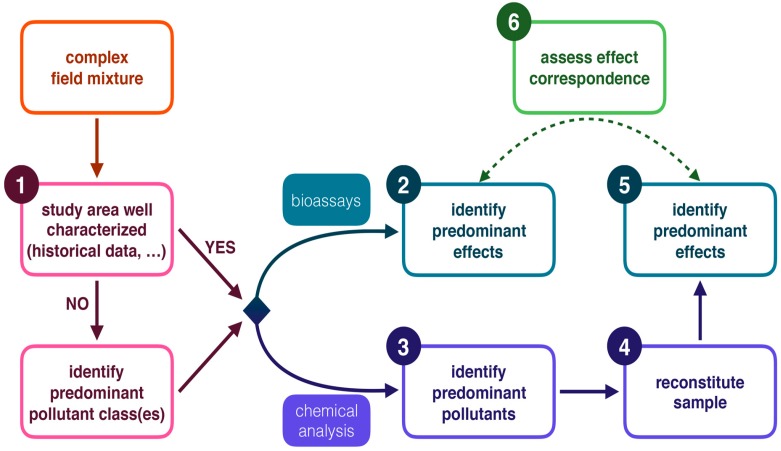
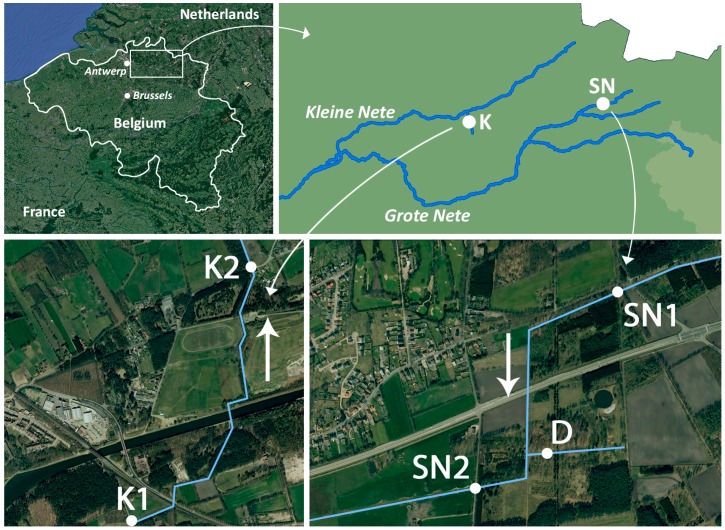
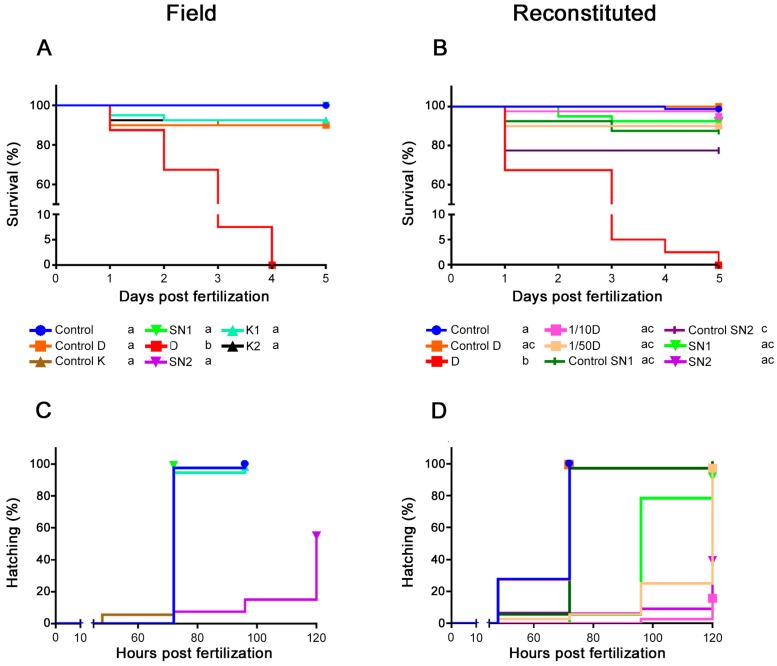
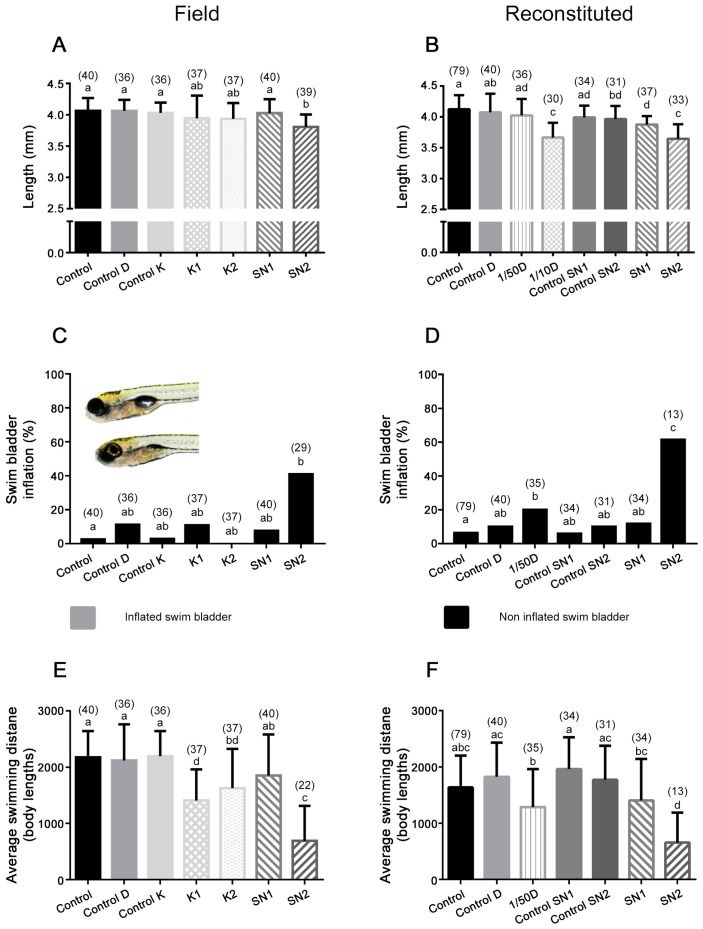
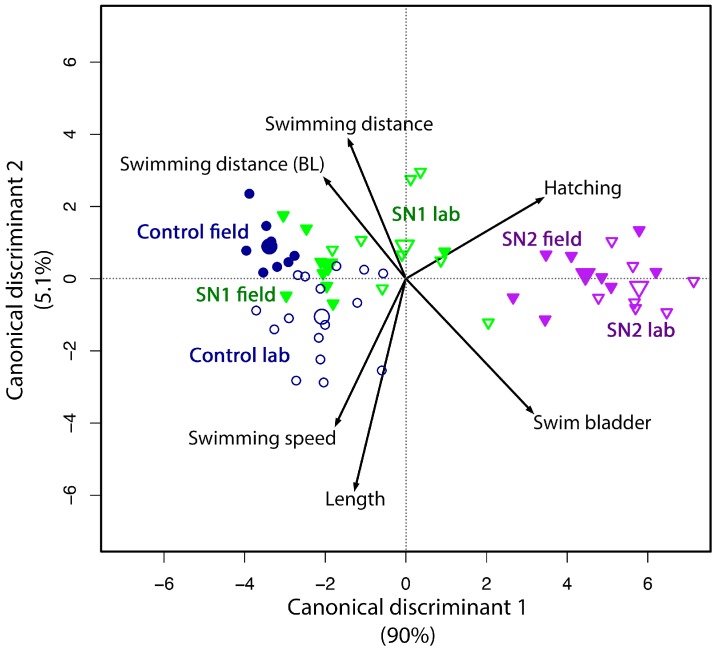
Accurately assessing the toxicity of complex, environmentally relevant mixtures remains an important challenge in ecotoxicology. The goal was to identify biological effects after exposure to environmental water samples and to determine whether the observed effects could be explained by the waterborne metal mixture found in the samples. Zebrafish embryos were exposed to water samples of five different sites originating from two Flemish (Mol and Olen, Belgium) metal contaminated streams: "Scheppelijke Nete" (SN) and "Kneutersloop" (K), and a ditch (D), which is the contamination source of SN. Trace metal concentrations, and Na, K, Mg and Ca concentrations were measured using ICP-MS and were used to reconstitute site-specific water samples. We assessed whether the effects that were observed after exposure to environmental samples could be explained by metal mixture toxicity under standardized laboratory conditions. Exposure to "D" or "reconstituted D" water caused 100% mortality. SN and reconstituted SN water caused similar effects on hatching, swim bladder inflation, growth and swimming activity. A canonical discriminant analysis confirmed a high similarity between both exposure scenarios, indicating that the observed toxicity was indeed primarily caused by metals. The applied workflow could be a valuable approach to evaluate mixture toxicity that limits time and costs while maintaining biological relevance.
准确评估复杂的、与环境相关的混合物的毒性仍然是生态毒理学中的一项重要挑战。目标是确定暴露于环境水样后的生物效应,并确定观察到的效应是否可以由样品中发现的水溶性金属混合物来解释。斑马鱼胚胎暴露于来自比利时弗拉芒地区两条受金属污染的溪流(“Scheppelijke Nete”(SN)和“Kneutersloop”(K))以及作为SN污染源的一条沟渠(D)的五个不同地点的水样中。使用电感耦合等离子体质谱法(ICP-MS)测量痕量金属浓度以及钠、钾、镁和钙的浓度,并用于重新配制特定地点的水样。我们评估了在标准化实验室条件下,暴露于环境样品后观察到的效应是否可以由金属混合物毒性来解释。暴露于“D”或“重新配制的D”水样会导致100%的死亡率。SN和重新配制的SN水样对孵化、鳔充气、生长和游泳活动产生了类似的影响。典型判别分析证实了两种暴露情况之间的高度相似性,表明观察到的毒性确实主要由金属引起。所应用的工作流程可能是一种评估混合物毒性的有价值方法,它在保持生物学相关性的同时限制了时间和成本。